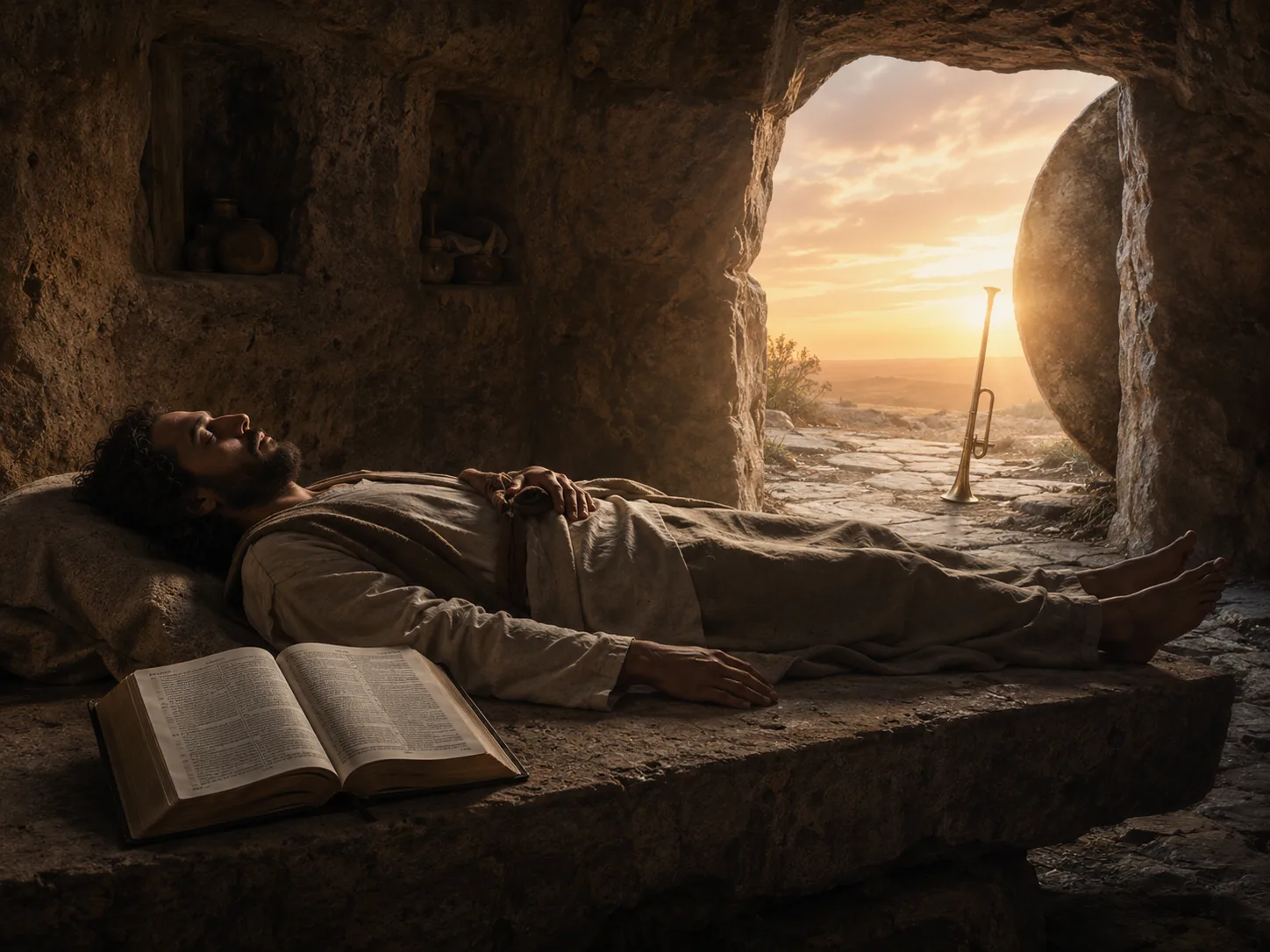
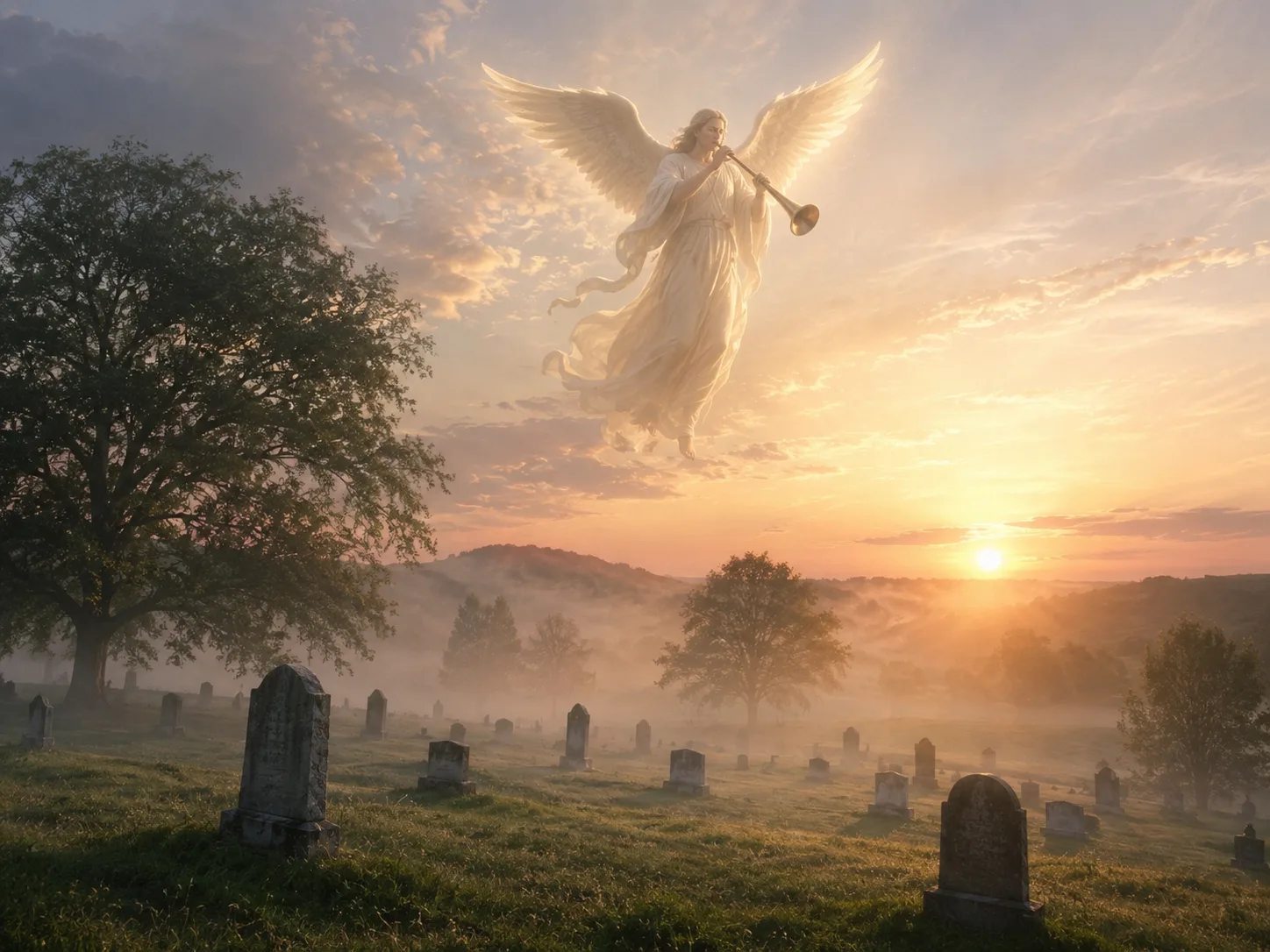
"The dead know not any thing… for the living know that they shall die: but the dead know not any thing."
Ecclesiastes 9:5, KJV
Few questions in religion divide the world as sharply as the question of what happens at death. The mainstream Christian answer is that the soul is naturally immortal: the body dies but the conscious person continues, ascending immediately to heaven, descending to hell, or pausing in purgatory. The Eastern answer is reincarnation: the soul cycles through countless lives, working off karma until it reaches a state of bliss. The pagan and spiritist answer is contact: the dead continue conscious in another realm and can be consulted, venerated, and channelled.
The biblical answer is none of these. Scripture teaches that life is a gift God gave by joining dust with breath, that death is the undoing of that gift — an unconscious sleep, not a translation to another world — that the hope of the believer is bodily resurrection at the return of Christ, and that the dead, in the interval, know nothing at all. This article walks the doctrine in order: the formula for life, the two voices in Eden, the Hebrew vocabulary, the God of the living, the long roll of Scripture itself, the pagan corruptions that produced the modern teaching, and the closing-day deception for which the corruption has prepared the world.
The Formula for Life
"And the LORD God formed man of the dust of the ground, and breathed into his nostrils the breath of life; and man became a living soul."
Genesis 2:7, KJV
Scripture's formula for human life has three terms. The first is the dust of the ground — the material substance, which by itself is inert. The second is the breath of life — the divine spark God gives that animates the matter. The third, when the two are joined, is the living soul. Notice carefully: the text does not say that man received a soul. It says that man became a living soul. The person, the soul, is not an immaterial passenger inside the body. The person is the body-plus-breath, the integrated whole.
Dust of the ground + breath of life = living soul.
A modern scientist will recognise this formula. There is no chemical difference between a cell that is alive and a cell that has just died. Every enzyme, every molecule, every structural component is identical — except that one is alive and the other is not. The difference is something no laboratory can isolate and no chemist can synthesise. We can preserve life by freezing it; we have never restored death to life. That difference, the difference that no science can manufacture, is what the Hebrews called the breath of life. It is God's, and God gives it.
Two Voices in Eden
God spoke first, and He was unambiguous: "Of the tree of the knowledge of good and evil, thou shalt not eat of it: for in the day that thou eatest thereof thou shalt surely die" (Genesis 2:17). To die is to cease living. The penalty for transgression is the undoing of the formula for life: the breath is withdrawn, and the dust returns to dust.
The serpent spoke second, and he contradicted God: "Ye shall not surely die" (Genesis 3:4). On the face of the text, the contradiction is total. God said dying. The serpent said not dying. One of the two was telling the truth, and one of the two was lying. The New Testament settles which: "Ye are of your father the devil… he was a murderer from the beginning, and abode not in the truth, because there is no truth in him. When he speaketh a lie, he speaketh of his own: for he is a liar, and the father of it" (John 8:44).
And yet the lie has spread further than the truth. The great majority of the world today — including the great majority of Christendom — believes some version of the serpent's position: that man does not really die, that the conscious person continues in some other place, that death is merely a transition rather than a cessation. Hinduism teaches it under the name of reincarnation. Spiritism teaches it under the name of communication. Catholic and most Protestant theology teaches it under the name of the immortal soul. Underneath the different vocabularies stands one ancient claim: ye shall not surely die. The believer who would be safe at the end of the age must learn to recognise that claim wherever it appears, and to answer it from the plain text of Scripture.
The Hebrew Vocabulary
Two Hebrew words drive almost the entire biblical discussion of death. The first is ruach (Strong's 7307), which the King James most often renders as spirit but which also carries the meanings of breath, wind, mind, blast, and air. The second is nephesh, which the King James most often renders as soul but which also carries the meanings of life, person, mind, creature, body, self — in short, the living being.
The relationship between these two terms is exactly the relationship Genesis 2:7 lays out. The ruach is the breath, the lifegiving principle that comes from God. The nephesh is the living being that exists when God's ruach is breathed into formed dust. The book of Job restates the formula in a single line using Hebrew parallelism: "All the while my breath is in me, and the spirit of God is in my nostrils" (Job 27:3). Breath and spirit are the same thing. They are the gift of life from the Father.
And the nephesh, the soul, can die. The King James uses the word soul some sixteen hundred times, and not a single time does it qualify the soul with the adjective immortal. The phrase "immortal soul" does not occur in the Bible. The phrase mortal soul, by contrast, is implicit on every page. Ezekiel states it plainly: "the soul that sinneth, it shall die" (Ezekiel 18:4, 20). The soul is mortal because the soul is the living person, and the living person dies when the body dies.
The God of the Living, Not the God of the Dead
Three of the four Gospels record the same exchange between Christ and the Sadducees. They had asked Him a trick question about the resurrection. He answered with a citation: "I am the God of Abraham, and the God of Isaac, and the God of Jacob. God is not the God of the dead, but of the living" (Matthew 22:32; cf. Mark 12:27; Luke 20:38).
The line is sometimes read as evidence that the patriarchs are now alive in heaven. That is exactly the inverse of what the context establishes. Christ is in the middle of arguing for the resurrection. He is saying that because God is the God of the living, and because He calls Himself the God of Abraham, Isaac, and Jacob, the patriarchs must one day live again. They are not now alive as disembodied spirits; they are presently asleep in death, but in God's purpose and promise they are as good as alive, because He has bound Himself to raise them. The argument requires the resurrection. The argument disappears if the patriarchs are already in heaven.
The contrast is sharper still in the ancient religious world. Egypt worshipped Osiris as the god of the dead — the deity who weighed the soul, presided over the underworld, and held out the promise of conscious bliss beyond the grave. The God of Israel was the diametric opposite: Yahweh the Saviour, the God of the living, before whom the cult of the dead was an abomination. The contrast was not incidental. It was central. To worship the God of Israel was to refuse the cult of the dead, and to embrace the cult of the dead was to deny the God of Israel.
Death Is a Sleep
The Bible uses the language of sleep for the state of the dead more than fifty times. The pattern begins in the Pentateuch and runs through the Prophets into the New Testament. Moses sleeps with his fathers (Deuteronomy 31:16). David sleeps with his fathers (1 Kings 2:10). Job longs for sleep: "Now shall I sleep in the dust" (Job 7:21). Daniel is told that the righteous shall awake at the end: "Many of them that sleep in the dust of the earth shall awake, some to everlasting life, and some to shame and everlasting contempt" (Daniel 12:2). And Daniel himself is given the same promise: "Go thou thy way till the end be: for thou shalt rest, and stand in thy lot at the end of the days" (Daniel 12:13).
Jesus uses the same language. In the New Testament, He twice calls death a sleep from which He has the authority to wake the sleeper: of Jairus's daughter ("the damsel is not dead, but sleepeth," Matthew 9:24) and of Lazarus ("Our friend Lazarus sleepeth," John 11:11). Paul uses it of the believers at Thessalonica ("them which are asleep," 1 Thessalonians 4:13-15) and of those who fell in the witness of the resurrection ("the firstfruits of them that slept," 1 Corinthians 15:20). Stephen, the first martyr, "fell asleep" under the stones of his accusers (Acts 7:60).
Sleep is not consciousness in another room. Sleep is the cessation of the waking mind. The biblical metaphor would be cruelly misleading if the sleeper were in fact awake in another realm. The metaphor is exact. The dead in Christ rest until Christ returns to wake them.
The Witness of Lazarus
No single Bible narrative settles the question of the conscious state of the dead more decisively than the raising of Lazarus in John 11. The text is unusually careful with its words.
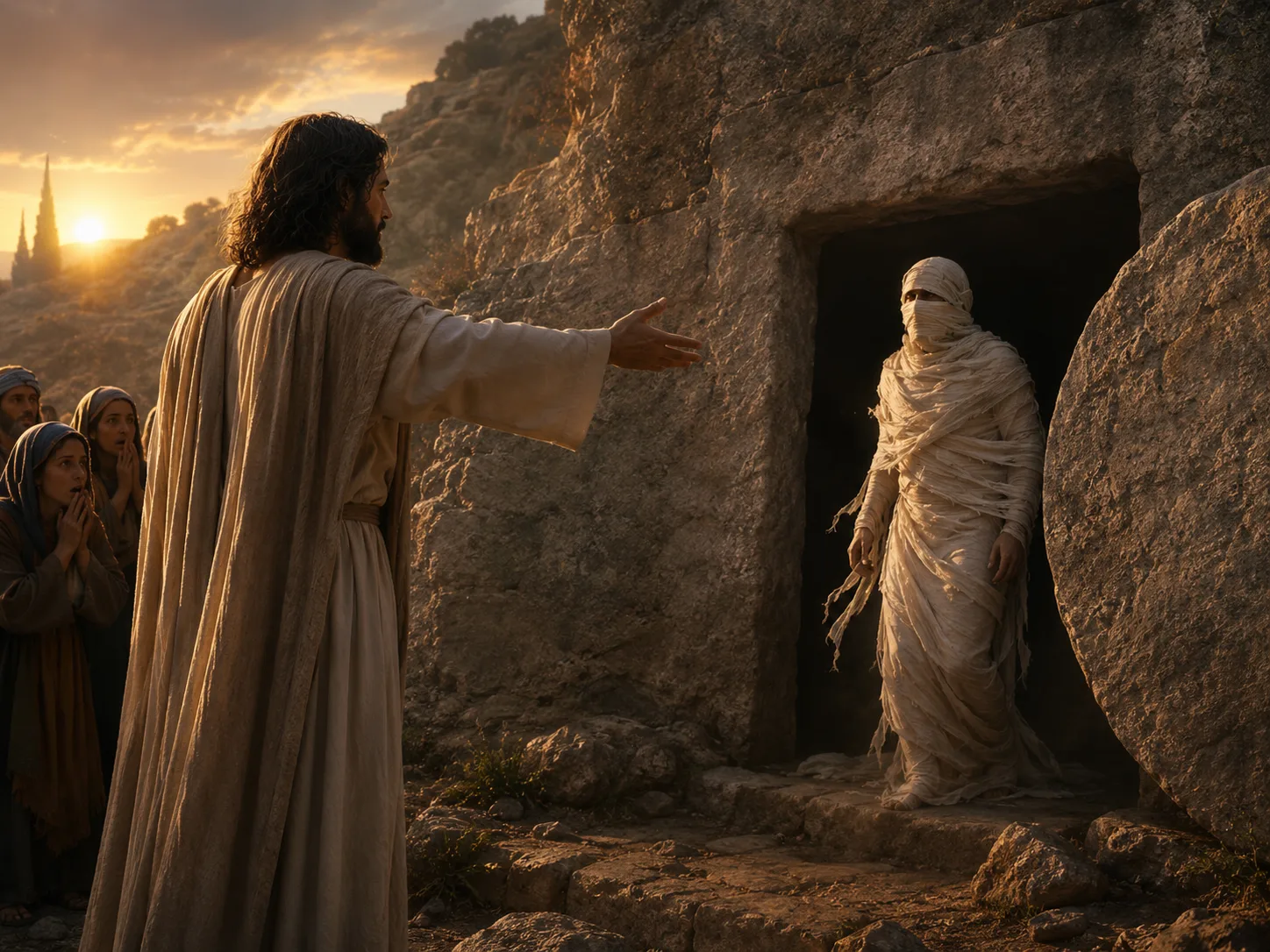
When word reaches Jesus that Lazarus is sick, He delays. By the time He arrives, Lazarus has been dead four days. On the road He tells the disciples, "Our friend Lazarus sleepeth; but I go, that I may awake him out of sleep" (John 11:11). The disciples, taking Him literally, assume Lazarus will recover from a normal sleep. Christ corrects them in language He does not normally use: "Then said Jesus unto them plainly, Lazarus is dead" (John 11:14). Christ Himself glosses His own metaphor: when He says sleep, He means death.
At the tomb, Martha confesses the biblical hope. She does not say what the modern Christian would say — "I know that he is now in heaven." She says, "I know that he shall rise again in the resurrection at the last day" (John 11:24). That is the doctrine she has been taught. That is the doctrine the New Testament teaches.
And then Christ commands: "Lazarus, come forth" (John 11:43). Lazarus comes out of the tomb. The narrative records what he says when he emerges. He says nothing. He gives no account of four conscious days in paradise, no description of the throne room, no message from departed loved ones. The man who has been dead four days speaks no word of any conscious experience in those four days — because he had none. He had been asleep in death. The body of evidence is overwhelming and the evangelist evidently sees no need to add to it.
The Witness of Scripture
The biblical case does not depend on a small handful of proof-texts. It is woven into the Old and New Testaments at every layer. The catalogue below organises the principal passages by theme. The reader is invited to test the doctrine on the breadth of the Bible itself.
Death is the return of dust to dust
- Genesis 3:19 — "for dust thou art, and unto dust shalt thou return."
- Psalm 104:29 — "thou takest away their breath, they die, and return to their dust."
- Ecclesiastes 3:20 — "all are of the dust, and all turn to dust again."
- Ecclesiastes 12:7 — "Then shall the dust return to the earth as it was: and the spirit shall return unto God who gave it."
Death entered by sin
- Romans 5:12 — "by one man sin entered into the world, and death by sin… for that all have sinned."
- Romans 6:23 — "the wages of sin is death; but the gift of God is eternal life through Jesus Christ our Lord."
- 1 Corinthians 15:22 — "as in Adam all die, even so in Christ shall all be made alive."
The soul (nephesh) can die
- Ezekiel 18:4 — "the soul that sinneth, it shall die."
- Ezekiel 18:20 — "the soul that sinneth, it shall die. The son shall not bear the iniquity of the father."
- Matthew 10:28 — "fear him which is able to destroy both soul and body in hell."
- Acts 3:23 — "every soul, which will not hear that prophet, shall be destroyed from among the people."
- Revelation 16:3 — "every living soul died in the sea."
Death is described as sleep
- Job 14:12 — "so man lieth down, and riseth not: till the heavens be no more, they shall not awake, nor be raised out of their sleep."
- Psalm 13:3 — "consider and hear me, O LORD my God: lighten mine eyes, lest I sleep the sleep of death."
- Daniel 12:2 — "many of them that sleep in the dust of the earth shall awake, some to everlasting life, and some to shame and everlasting contempt."
- Daniel 12:13 — "go thou thy way till the end be: for thou shalt rest, and stand in thy lot at the end of the days."
- John 11:11-14 — "Our friend Lazarus sleepeth… Then said Jesus unto them plainly, Lazarus is dead."
- Acts 7:60 — "and when he had said this, he fell asleep." (Stephen)
- Acts 13:36 — "David… fell on sleep, and was laid unto his fathers, and saw corruption."
- 1 Corinthians 15:6 — "above five hundred brethren at once; of whom the greater part remain unto this present, but some are fallen asleep."
- 1 Corinthians 15:20 — "Christ… the firstfruits of them that slept."
- 1 Thessalonians 4:13-15 — "I would not have you to be ignorant, brethren, concerning them which are asleep… them also which sleep in Jesus will God bring with him."
The dead know nothing
- Job 14:21 — "his sons come to honour, and he knoweth it not; and they are brought low, but he perceiveth it not of them."
- Psalm 6:5 — "for in death there is no remembrance of thee: in the grave who shall give thee thanks?"
- Psalm 88:10-12 — "shall the dead arise and praise thee?… Shall thy lovingkindness be declared in the grave? or thy faithfulness in destruction?"
- Psalm 115:17 — "the dead praise not the LORD, neither any that go down into silence."
- Psalm 146:3-4 — "put not your trust in princes… his breath goeth forth, he returneth to his earth; in that very day his thoughts perish."
- Ecclesiastes 9:5-6 — "the living know that they shall die: but the dead know not any thing… also their love, and their hatred, and their envy, is now perished."
- Ecclesiastes 9:10 — "there is no work, nor device, nor knowledge, nor wisdom, in the grave, whither thou goest."
- Isaiah 38:18-19 — "the grave cannot praise thee, death can not celebrate thee… the living, the living, he shall praise thee."
The dead are not in heaven
- John 3:13 — "no man hath ascended up to heaven, but he that came down from heaven, even the Son of man."
- Acts 2:29 — "let me freely speak unto you of the patriarch David, that he is both dead and buried, and his sepulchre is with us unto this day." (Peter at Pentecost)
- Acts 2:34 — "for David is not ascended into the heavens."
- Hebrews 11:13, 39-40 — "these all died in faith, not having received the promises… God having provided some better thing for us, that they without us should not be made perfect."
Consulting the dead is forbidden
- Leviticus 19:31 — "regard not them that have familiar spirits, neither seek after wizards, to be defiled by them: I am the LORD your God."
- Leviticus 20:6 — "the soul that turneth after such as have familiar spirits… I will even set my face against that soul."
- Leviticus 20:27 — "a man also or woman that hath a familiar spirit, or that is a wizard, shall surely be put to death."
- Deuteronomy 18:10-12 — "there shall not be found among you any one that maketh his son or his daughter to pass through the fire, or that useth divination, or an observer of times, or an enchanter, or a witch, or a charmer, or a consulter with familiar spirits, or a wizard, or a necromancer. For all that do these things are an abomination unto the LORD."
- 1 Samuel 28:7 — Saul seeks a woman with a familiar spirit at Endor; the verses preceding (1 Samuel 28:3, 9) record the kingdom's standing ban on the practice.
- 1 Chronicles 10:13-14 — "Saul died for his transgression which he committed against the LORD… and also for asking counsel of one that had a familiar spirit, to enquire of it… therefore he slew him."
- Isaiah 8:19-20 — "when they shall say unto you, Seek unto them that have familiar spirits, and unto wizards that peep, and that mutter: should not a people seek unto their God? for the living to the dead? To the law and to the testimony: if they speak not according to this word, it is because there is no light in them."
- Numbers 19:11-16 — "he that toucheth the dead body of any man shall be unclean seven days… whosoever toucheth one that is slain… or a dead body, or a bone of a man, or a grave, shall be unclean seven days." (Worship and the cult of the dead are ceremonially incompatible.)
The resurrection is the hope
- Job 14:14-15 — "if a man die, shall he live again? all the days of my appointed time will I wait, till my change come. Thou shalt call, and I will answer thee: thou wilt have a desire to the work of thine hands."
- Job 19:25-27 — "I know that my redeemer liveth, and that he shall stand at the latter day upon the earth: and though after my skin worms destroy this body, yet in my flesh shall I see God."
- Isaiah 26:19 — "thy dead men shall live, together with my dead body shall they arise. Awake and sing, ye that dwell in dust."
- Hosea 13:14 — "I will ransom them from the power of the grave; I will redeem them from death."
- John 5:28-29 — "all that are in the graves shall hear his voice, and shall come forth; they that have done good, unto the resurrection of life; and they that have done evil, unto the resurrection of damnation."
- John 6:39-40, 44, 54 — "this is the Father's will… that of all which he hath given me I should lose nothing, but should raise it up again at the last day."
- John 11:23-25 — "thy brother shall rise again… I am the resurrection, and the life: he that believeth in me, though he were dead, yet shall he live."
- Romans 8:11 — "he that raised up Christ from the dead shall also quicken your mortal bodies."
- 1 Corinthians 15:51-54 — "we shall not all sleep, but we shall all be changed… this corruptible must put on incorruption, and this mortal must put on immortality."
- 1 Thessalonians 4:16-17 — "the Lord himself shall descend from heaven with a shout… and the dead in Christ shall rise first: then we which are alive and remain shall be caught up together with them in the clouds, to meet the Lord in the air."
- Philippians 3:20-21 — "we look for the Saviour, the Lord Jesus Christ: who shall change our vile body."
- Revelation 20:6 — "blessed and holy is he that hath part in the first resurrection."
Only God is immortal; immortality is the gift of grace
- 1 Timothy 1:17 — "now unto the King eternal, immortal, invisible, the only wise God, be honour and glory for ever and ever."
- 1 Timothy 6:15-16 — "the King of kings, and Lord of lords; who only hath immortality, dwelling in the light which no man can approach unto."
- Romans 2:7 — "to them who by patient continuance in well doing seek for glory and honour and immortality, eternal life."
- 2 Timothy 1:10 — "our Saviour Jesus Christ, who hath abolished death, and hath brought life and immortality to light through the gospel."
- 1 Corinthians 15:53-54 — "this mortal must put on immortality."
The wicked perish, not endure
- Psalm 37:20 — "the wicked shall perish… they shall consume; into smoke shall they consume away."
- Malachi 4:1, 3 — "the day cometh, that shall burn as an oven… it shall leave them neither root nor branch… they shall be ashes under the soles of your feet."
- Obadiah 1:16 — "they shall be as though they had not been."
- Ezekiel 28:18-19 — "I will bring thee to ashes upon the earth in the sight of all them that behold thee… thou shalt be a terror, and never shalt thou be any more."
- Matthew 10:28 — "fear him which is able to destroy both soul and body in hell."
- 2 Peter 3:10 — "the earth also and the works that are therein shall be burned up."
- Revelation 20:14-15 — "death and hell were cast into the lake of fire. This is the second death."
- Revelation 21:4 — "there shall be no more death, neither sorrow, nor crying, neither shall there be any more pain: for the former things are passed away."
The Bible Forbids the Cult of the Dead
The biblical case against consulting the dead is not built on a single verse. It runs from Leviticus through Isaiah to the New Testament. God's standing instruction to His covenant people was that the cult of the dead, in every form, was an abomination — and the reason the verses listed above gave for the prohibition follows directly from the doctrine of the unconscious state. If the dead truly know nothing, then any voice claiming to speak for them is not, in fact, their voice. The voice belongs to another speaker. Scripture is explicit about who that speaker is.
Necromancy — the consultation of the dead — is therefore not merely forbidden as an outdated cultural practice. It is forbidden because it is fundamentally deceptive. The medium, the channeler, the spiritist, the Ouija board, the seance, the witch of Endor, the New Age "ascended master," the Catholic petitioner praying to a deceased saint, the African petitioner praying through an ancestor — all are by Scripture's own analysis interacting with the same set of intelligences: not the dead, but the spirits of demons (Revelation 16:14), who have every interest in impersonating those who have died and every capacity to do so convincingly. "Satan himself is transformed into an angel of light" (2 Corinthians 11:14). A spirit that arrives claiming to be a departed loved one, a Marian apparition, an ascended buddha, or any of the long roll of channelled identities is — on the Bible's account — not what it claims to be. It is a demon working under a false name.
The Pagan Origin of the Immortal-Soul Doctrine
The teaching that the soul is naturally immortal did not come into Christianity from Scripture. It came in from Egypt, by way of Alexandria, into the Greek philosophical schools, and from there into the Hellenised Judaism of the Sadducees and the post-apostolic church.
Egyptian religion was the great ancient cult of the dead. Osiris, the god of the dead, presided over the underworld; Anubis, the jackal-headed weigher of souls, judged the deceased; the elaborate funerary literature later collected as the Book of the Dead set out the journey of the conscious soul through the realms beyond. The pyramids themselves were preserving-machines for that journey. The whole apparatus rested on one premise: that death is not really death, only a passage. That premise contradicts Genesis 2:7.
By the third century BC, Alexandria had become the foremost intellectual capital of the Greek-speaking Mediterranean. Hellenised Jewish students went there to be educated in the philosophical schools that synthesised Greek thought with Egyptian religious assumptions. The Sadducees — or at least the Alexandrian-trained wing of Second-Temple Jewish thought — came back importing the immortal-soul doctrine into the synagogues. They taught that the righteous went immediately to the bosom of Abraham, that the unrighteous descended to a place of torment, and that the dead, in either case, were consciously alive in the interval. They held this together with a denial of the resurrection (Matthew 22:23) — because if the dead are already in heaven, the resurrection becomes redundant.
When the apostolic generation passed and Christian theology came progressively under Greek philosophical influence in the second and third centuries AD, the same Alexandrian synthesis re-entered the church — this time through Christian Platonists like Origen. The immortal-soul doctrine displaced the biblical doctrine of conditional immortality and resurrection. By the medieval period it had so thoroughly captured Western Christian imagination that the resurrection, while still confessed, had become almost an afterthought to the more vivid drama of the soul's immediate destination at death. The Catholic doctrine of purgatory, the prayers to the saints, the indulgences for the relief of souls in torment — all of it flows from the same Egyptian-Greek root.
The Cathedrals of the Cult of the Dead
The architectural witness is striking. The great mediaeval cathedrals of Europe — Notre-Dame, Saint Peter's, Westminster, the cathedral at Cologne, the basilica at Vezelay, dozens of others — were built, almost without exception, on the sites of pre-Christian pagan worship. Many follow the older Druidic plan: a long avenue of standing stones (now translated into the great pillars of the nave) leading to a circular sacred space (the apse with its central altar). The altar itself, by canon law, must contain or stand above the relic — the bone of a saint — without which the mass cannot be celebrated. Beneath the floor are interred the bodies of bishops, kings, and benefactors; along the walls are the tombs of the great. The cathedral is, in functional terms, a mortuary; the worship offered in it is offered over the bones of the dead.
This was precisely what God forbade Israel. Numbers 19:11-16 set seven days of ceremonial uncleanness on anyone who touched a dead body, a bone, or even a grave — with the explicit intent of separating the worship of the living God from the cult of the dead. Leviticus 21:1 commanded that the priests of the LORD should not defile themselves for the dead. The Roman and Eastern Christian inversion of this principle — building the place of worship over the place of burial, requiring the bone of a saint at the altar, prescribing prayer through the deceased — is not a small ceremonial difference. It is the systematic re-introduction of the very cult God set Israel apart from. The doctrine and the architecture stand or fall together.
Modern Spiritism — A Closing-Day Preparation
On the night of 31 March 1848, in a small cottage at Hydesville, New York, the three Fox sisters — Margaret, Kate, and Leah — reported that they had begun to communicate with a "spirit" that answered their questions through coded rapping sounds. The event has been treated by historians ever since as the beginning of modern spiritism. The Fox sisters' headstone records the founding creed of the movement they began: "There is no death. There are no dead."
The reader will recognise the line. It is the serpent's line in Eden, transposed into the nineteenth century in plain English. Within a generation, spiritism had spread across Europe and North America, drawn in many of the most distinguished public figures of the age (Conan Doyle, Sir Oliver Lodge, William Crookes), and embedded itself permanently in the modern religious landscape. It is no coincidence that the same year — 1848 — lies within the same decade as the close of the 2300-day prophecy and the rise of the closing-day Advent message. As God's last warning began to sound, the great counter-deception began to sound with it. The earth is being prepared, by the spiritist re-opening of the cult of the dead, for an end-time deception in which "spirits of devils, working miracles" (Revelation 16:14) will gather the inhabitants of the earth to the final controversy.
The Marian apparitions, the ascended-master communications of the New Age, the channelled "saints" of folk Catholicism, the ancestor-spirits of African and Asian traditional religion, and the modern medium's seance are not, on the Bible's account, isolated phenomena. They are facets of the same closing-day system. The believer who has not understood that the dead know nothing is structurally unprepared for what the closing crisis will require him to discern.
The Thief on the Cross
One passage is often cited against the doctrine of unconscious sleep: Christ's word to the dying thief in Luke 23:43. The English of the King James reads: "Verily I say unto thee, To day shalt thou be with me in paradise." On its face the sentence appears to teach that the thief went consciously to paradise on the day of his death.
The reading collapses under a few details of the original text. First, the Greek manuscripts contain no punctuation. The comma is a translator's choice. Placed after thee, the sentence promises paradise that very day. Placed after today, the sentence promises paradise — with the emphatic I say unto thee today reinforcing the solemnity of the assurance — at some future moment. Both placements are grammatically permissible. The first contradicts the rest of Scripture; the second is consistent with it.
Second, the rest of Scripture is decisive. Christ Himself did not ascend to the Father on the day of the crucifixion. The Friday of the crucifixion was followed by the Sabbath rest in the tomb (Luke 23:54-56). On the morning of the first day of the week, the risen Christ told Mary at the empty tomb, "Touch me not; for I am not yet ascended to my Father" (John 20:17). If the Saviour Himself had not yet ascended to the Father on Sunday morning, He cannot have taken the thief with Him to paradise on Friday afternoon. The comma after today is therefore the only reading consistent with the rest of the Gospel record.
The promise to the thief is real. It is a promise of resurrection to eternal life in the kingdom that is to come. It is not a promise of conscious continuation in the interval. No such promise is given anywhere in the Bible to anyone.
The Rich Man and Lazarus
The second passage commonly raised against the doctrine of unconscious sleep is the story of the rich man and Lazarus in Luke 16:19-31. The rich man dies and finds himself in conscious torment; Lazarus dies and is carried by angels to "Abraham's bosom"; the rich man begs Abraham to send Lazarus back to warn his brothers. The narrative appears to depict consciousness on both sides of the grave.
It is essential to read the passage in its narrative setting. Luke 16 is one of a sequence of parables Christ was speaking to the Pharisees and the Sadducees, and the imagery the Saviour uses in this parable is the imagery of the Sadducean afterlife — the imagery they had imported from Alexandrian Egyptian Greek philosophy: the bosom of Abraham, the torment-place across an impassable gulf, the conscious continuation. Christ is not endorsing this picture as cosmology. He is taking the Sadducees' own theology and turning it inside out for a polemical purpose.
Notice what He does with it. The rich man — on the Sadducean reading, the candidate most assured of a place in Abraham's bosom because of his wealth and standing — goes to the wrong side of the gulf. The poor man — on the Sadducean reading, the candidate least likely to find favour with Abraham — goes to the bosom. The story inverts every Sadducean expectation. And the closing moral — "if they hear not Moses and the prophets, neither will they be persuaded, though one rose from the dead" (Luke 16:31) — is itself a direct rebuke of the Sadducees, who denied both the prophetic word and the resurrection.
The parable is a rhetorical device, not a doctrinal description. Christ uses His audience's own framework to indict their priorities. The text cannot be turned into a doctrinal description of the intermediate state without committing the further error of taking parabolic detail as cosmological assertion — the same error that turns "Abraham's bosom" into a geographical location and the "great gulf fixed" into a literal canyon. The plain teaching of the Bible on the state of the dead must be drawn from the plain texts catalogued above, not from a single parabolic passage.
The Final Punishment of the Wicked
The biblical doctrine of final punishment must be read on the same vocabulary the rest of the doctrine of death has used. The fire that consumes the wicked is real fire (2 Peter 3:10; Revelation 20:14-15); the destruction is real destruction (Matthew 10:28). What it is not is endless conscious torment of beings to whom God has refused to permit the gift of immortality.
Three Greek and Hebrew terms control the discussion. The Hebrew sheol and the Greek hades mean simply the grave — the unconscious place of the dead. The Greek gehenna — the word Christ uses in Matthew 10:28 — refers to the Valley of Hinnom outside Jerusalem, the dumping-ground where refuse and the carcasses of unclean animals were burned. The defining fact about gehenna is that the fire there consumed what was put into it. Things burned in gehenna did not burn forever; they burned until they were gone. That is the image Christ uses for the fate of the wicked. They are destroyed, not eternally tortured.
The Hebrew vocabulary of everlasting reinforces this. Jude 7 says Sodom and Gomorrah were destroyed by "the vengeance of eternal fire." The cities are not still burning today. The fire was eternal in its consequence — the destruction is permanent and irreversible — not in its ongoing duration. The same vocabulary applies to the lake of fire. The wicked are consumed; the destruction is final; they "shall be as though they had not been" (Obadiah 1:16). Even of Satan himself it is written: "I will bring thee to ashes upon the earth in the sight of all them that behold thee, and never shalt thou be any more" (Ezekiel 28:18-19).
The doctrine of endless conscious torment is not a biblical teaching. It is a Catholic teaching, defined more by its rhetorical utility for medieval social control than by exegesis of the relevant texts. The Council of Trent locked it into Roman Catholic doctrine; the doctrine of purgatory was added beside it as a pastoral relief mechanism. The Bible knows nothing of either. It knows of the second death (Revelation 20:14) — final, definitive, irreversible — in which the wicked perish and sin is removed entirely from the universe.
The New Earth
Once the wicked are consumed and sin is removed, the entire creation is renewed. Peter writes that "the earth also and the works that are therein shall be burned up" (2 Peter 3:10) and is then replaced — "we, according to his promise, look for new heavens and a new earth, wherein dwelleth righteousness" (2 Peter 3:13).
The final vision of Revelation is the same. "And I saw a new heaven and a new earth: for the first heaven and the first earth were passed away… And God shall wipe away all tears from their eyes; and there shall be no more death, neither sorrow, nor crying, neither shall there be any more pain: for the former things are passed away" (Revelation 21:1-4). The biblical hope is not the disembodied flight of an immortal soul to a non-physical heaven. It is the resurrection of a physical body to a renewed and physical earth, in which the redeemed dwell with the Father and the Son for ever.
This is what makes the doctrine of death and resurrection so much more than an item of curiosity. It is the substance of the Christian hope. The believer rests in the certainty of a Person, not the consolation of a philosophy. Death is not a doorway he must pass through to greater life; it is an enemy that Christ has defeated and will at last abolish. "The last enemy that shall be destroyed is death" (1 Corinthians 15:26).
A Call to Hope and to Discernment
The biblical doctrine of the state of the dead is not, on Scripture's account, an esoteric corner of theology. It is the watershed between the gospel of the living God and the cult of the dead. It is the difference between resting in Christ's certainty and being moved by every spirit that claims to speak from beyond the grave. It is the difference between honouring departed loved ones in the sober assurance of their resurrection and venerating them in the false assurance of their present consciousness. And, in the closing controversy of the age, it is the difference between hearing the voice of the Shepherd and being deceived by spirits of devils working miracles.
The reader who grasps the doctrine clearly is set free from the great fear that drove the cult of the dead in every culture in which it arose — the fear that something terrible could be happening to those we have loved and lost. There is no terrible thing happening. They sleep. Christ holds the keys of death and of hell (Revelation 1:18). One day He will call, and they will hear, and they will come forth. Until that morning, the believer's task is to trust the Father, to walk in the way of the Son, and to put away every voice claiming to speak for the dead.
Key Takeaways
- Man does not have an immortal soul. Man became a living soul when dust and breath were joined (Genesis 2:7).
- Death is the undoing of that joining: the dust returns to the earth, the breath (ruach) returns to God, and the person sleeps unconsciously until the resurrection.
- The Bible never qualifies "soul" with the word "immortal." Only God has immortality (1 Timothy 6:15-16). The redeemed are given immortality at Christ's return (1 Corinthians 15:53-54).
- Death is consistently called "sleep" in both Testaments — an unconscious state from which Christ will wake His people at the resurrection.
- The dead know nothing, do nothing, praise no one, and cannot communicate. The verses that say this are uniform across the Old and New Testaments.
- Any voice claiming to speak for a dead person is, by Scripture's analysis, not the dead person speaking — it is a demonic intelligence impersonating the dead (Revelation 16:14; 2 Corinthians 11:14).
- The immortal-soul doctrine entered Christianity through Alexandrian Egyptian-Greek philosophy, not from the Hebrew Bible. Its full architectural expression is the medieval cathedral with bones beneath the altar — a direct violation of the Levitical separation between worship and the cult of the dead.
- Modern spiritism, beginning publicly in 1848 with the Fox sisters at Hydesville, is the closing-day re-issue of the serpent's line. The same set of intelligences works through Marian apparitions, ascended-master communications, channelled saints, ancestral consultation, and the seance.
- The thief on the cross was promised paradise, but not on the Friday of the crucifixion — Christ Himself did not ascend to the Father until the Sunday (John 20:17). The comma in Luke 23:43 belongs after "today," not before.
- The rich man and Lazarus is a parable that uses the Sadducees' own (Alexandrian) afterlife imagery to indict their priorities. It is not a doctrinal description of the intermediate state.
- The wicked are destroyed in the second death (Revelation 20:14). They are not kept alive for endless conscious torment. Sodom's "eternal fire" (Jude 7) burned until it consumed the cities — and they are not still burning. The result is eternal; the process is not.
- The Christian hope is the resurrection of the body at the return of Christ, the renewal of the earth (Revelation 21:1-4), and unending life with the Father and the Son in the new creation. Not flight from the body; restoration of it.