In brief
The greatest city on earth was promised permanent desolation. The visitor today sees it.
The Hebrew prophets Isaiah and Jeremiah, writing in the eighth and seventh centuries BC, both made specific predictions about the future of the city of Babylon — predictions so far at variance with the obvious historical trajectory of the city in their own day that the predictions themselves can fairly be called a falsifiable test. Babylon in the eighth century was the cultural and political jewel of the ancient Near East: the Hanging Gardens ranked among the Seven Wonders of the World; the Ishtar Gate was clad in glazed blue brick; the Tower of Etemenanki rose two hundred feet above the surrounding plain; the city walls were so wide, the Greek historian Herodotus claimed, that a four-horse chariot could turn around upon them. To predict, in that setting, that this city would one day be a permanent uninhabited ruin in which wild beasts howled and owls nested was a high-confidence prophetic gamble.
The article that follows sets the prophecies of Isaiah 13–14 and Jeremiah 50–51 next to the photographic, archaeological, and political reality of the Babylon site in modern Iraq. It addresses honestly the question of staged fulfilment — Babylon was not destroyed in a single overnight catastrophe the way Sodom was — and considers Saddam Hussein’s much-publicised twentieth-century attempt to rebuild the city as the test case in the modern era. And it closes with the apostle John’s prophetic recapitulation in Revelation 17–18, where Babylon becomes the name of a spiritual system whose final fall is yet future.
1. What the prophets said
The biblical predictions about Babylon’s eventual fate are unusually specific. They are not generic predictions of defeat or temporary humiliation; they are detailed descriptions of permanent uninhabitability, accompanied by specific zoological and topographical predictions. Read Isaiah’s description with the modern site in mind:
And Babylon, the glory of kingdoms, the beauty of the Chaldees’ excellency, shall be as when God overthrew Sodom and Gomorrah. It shall never be inhabited, neither shall it be dwelt in from generation to generation: neither shall the Arabian pitch tent there; neither shall the shepherds make their fold there. But wild beasts of the desert shall lie there; and their houses shall be full of doleful creatures; and owls shall dwell there, and satyrs shall dance there.
Notice four specific predictions in those three verses. First: permanent uninhabitation — not merely defeated, not merely diminished, but never inhabited from generation to generation. Second: Arabian nomads will not pitch tents there — an oddly specific prediction, given that nomadic Arabs would, in the natural course of regional history, be expected to encamp at any abandoned settlement with accessible water. Third: shepherds will not make their folds there — another oddly specific prediction, given that abandoned ruin-fields are typical shepherding ground in the ancient Near East. And fourth: a list of the specific creatures that will occupy the site — wild desert beasts, owls, the various translations of tziyim, iyim, and tannim — which the Authorised Version renders as “doleful creatures,” “wild beasts of the islands,” and “dragons.”
Jeremiah’s independent prophecy, composed perhaps a century later than Isaiah’s, repeats and intensifies the picture:
Therefore the wild beasts of the desert with the wild beasts of the islands shall dwell there, and the owls shall dwell therein: and it shall be no more inhabited for ever; neither shall it be dwelt in from generation to generation. As God overthrew Sodom and Gomorrah and the neighbour cities thereof, saith the LORD; so shall no man abide there, neither shall any son of man dwell therein.
The parallel to Sodom is the controlling image in both prophecies. Sodom is the biblical archetype of a site so thoroughly destroyed that no subsequent human civilisation ever rebuilt on it. The prophets are explicitly invoking that template: Babylon shall be as Sodom was — a site no longer inhabited, ever.
2. The historical difficulty — staged fulfilment
The honest reader must immediately notice a complication. Babylon was not destroyed in a single overnight cataclysm of the kind the Sodom analogy seems to suggest. When the Persian king Cyrus the Great took Babylon in 539 BC — the event recorded in Daniel 5, the night of Belshazzar’s feast and the handwriting on the wall — he did so without destroying the city. The Babylonian Chronicle records that Cyrus entered Babylon peacefully, was welcomed by elements of the population, and established the city as a major administrative centre of his new Persian Empire. Under the Persians, and again under the Macedonian successors of Alexander the Great, Babylon continued as an inhabited city for several centuries after the prophecies were given.
The decline of Babylon was therefore not catastrophic but gradual, occurring over the course of perhaps eight hundred years. Alexander the Great died in Babylon in 323 BC; the city was still functional then. Under the Seleucid dynasty that followed, the population gradually relocated to the new Seleucid capital at Seleucia-on-Tigris, forty miles to the north, beginning in approximately 275 BC. By the late first century BC, the Greek geographer Strabo could write that “the great city is become a great desert” (Geography 16.1.5). By the early Christian centuries the site was abandoned. By the eighth century AD, when the Abbasid Caliphate established nearby Baghdad as its capital, Babylon was already a ruin-field of mud-brick mounds from which local villagers scavenged bricks for construction.
The fulfilment is therefore real but staged. The prophets did not predict a single overnight catastrophe; they predicted a permanent eventual end-state, in which the city would never again be inhabited. The honest question to ask is not whether Babylon was instantaneously levelled (it was not) but whether the prophesied end-state has, in fact, been reached. The remainder of this article examines that question.
3. The site today — what the visitor actually sees
The ruins of ancient Babylon lie approximately fifty-five miles south of modern Baghdad, on the eastern bank of the Euphrates near the modern Iraqi town of Hillah. Hillah itself is a busy provincial city of approximately four hundred thousand people; the actual archaeological zone of Babylon is a separate site, walled off and managed as a protected ruin field. The distinction matters: Hillah is the modern inhabited city of the area; Babylon proper is the uninhabited archaeological ruin two miles to the north.
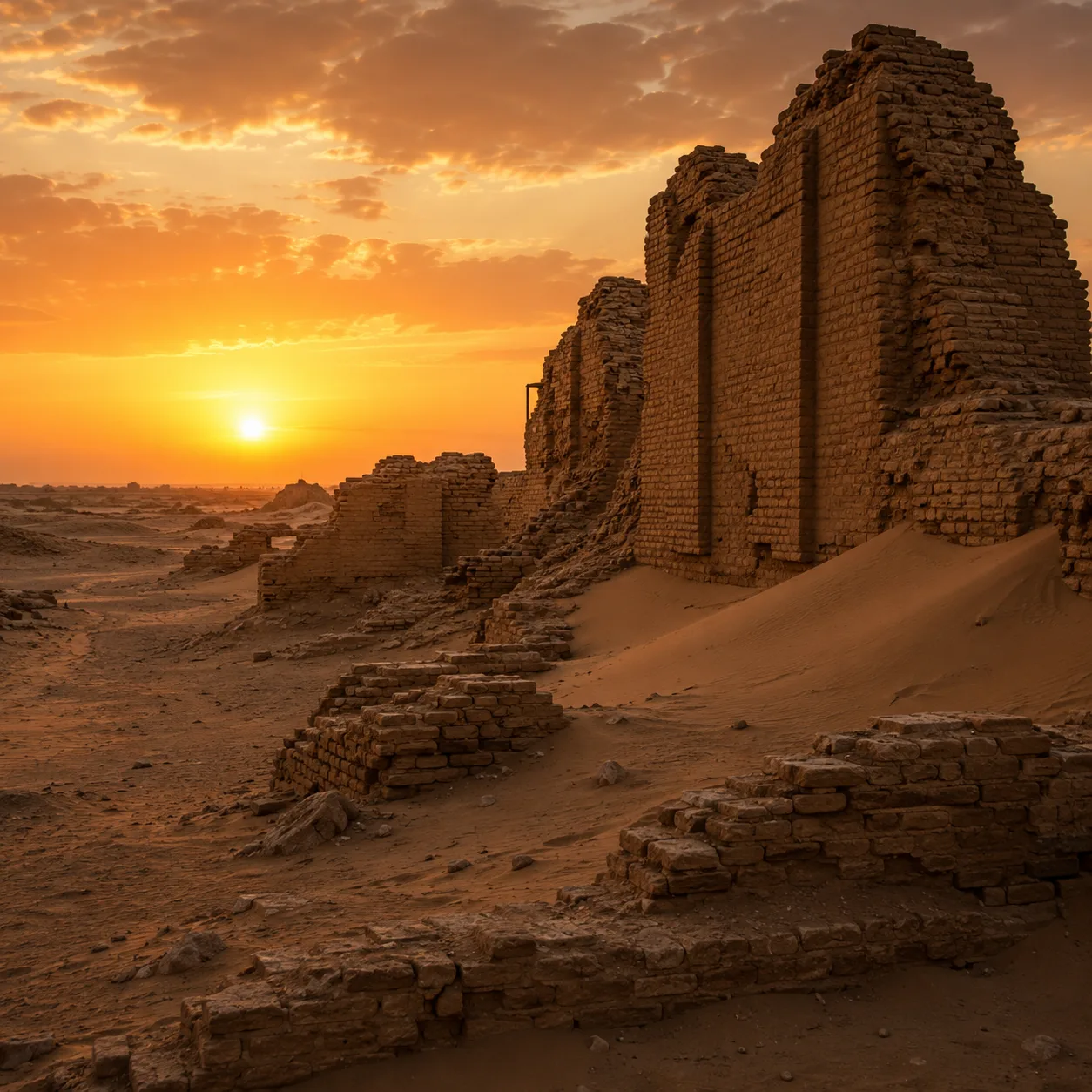
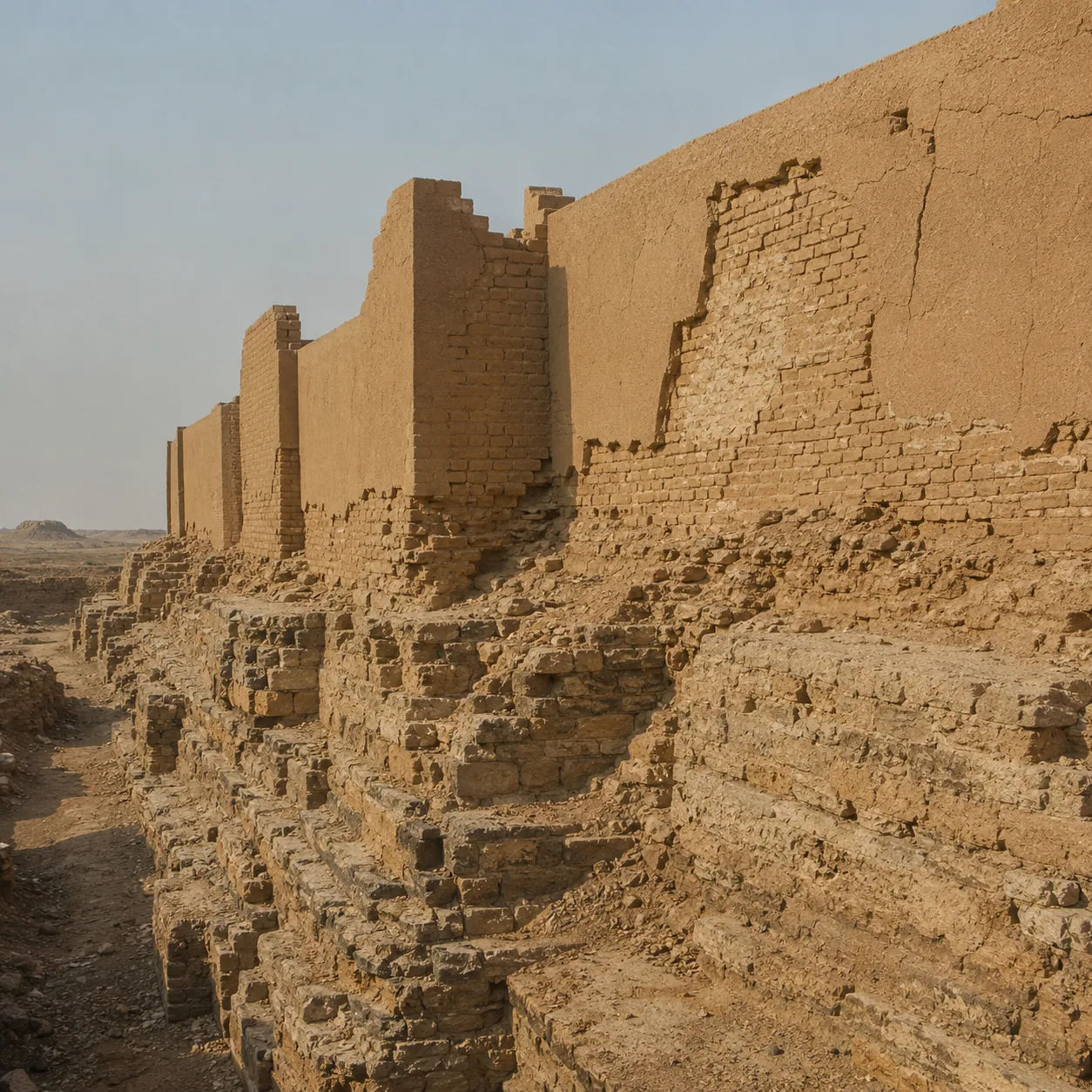
What the visitor to the ruin sees today is what the prophets predicted. The walls of the inner city are ruined mud-brick mounds; the great temple of Marduk is a rubble field; the foundations of the Ishtar Gate are pitted depressions; the canals that once watered the city are dry trenches collecting wind-blown dust. Nothing of the ancient population, the ancient culture, or the ancient religion remains. There are no inhabitants. There is no commerce. The site receives a small number of tourist visitors, all of whom return at the end of the day to Hillah, Karbala, Najaf, or Baghdad. No one lives in Babylon.
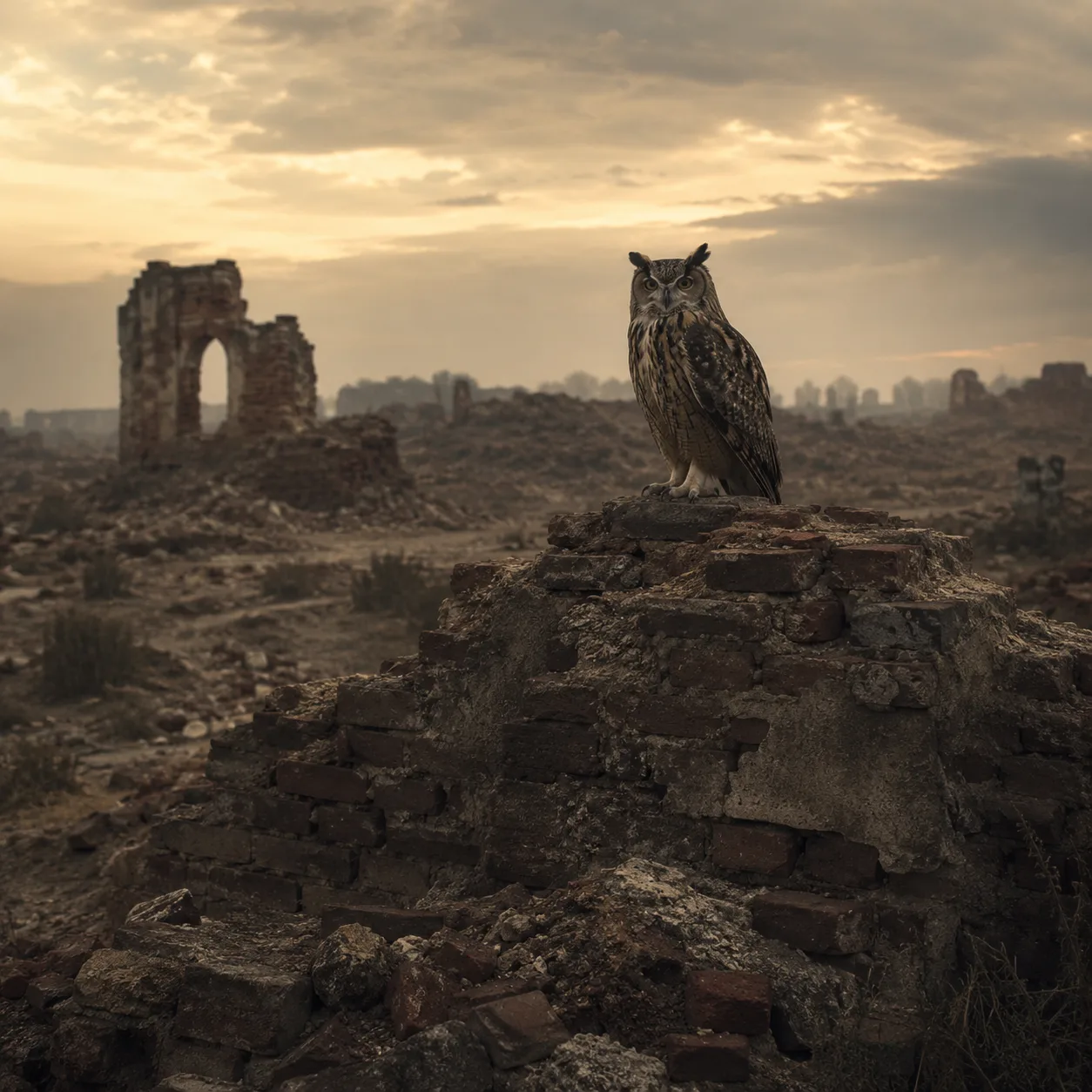
Two more granular details of the prophetic fulfilment are worth recording. First: the wild-animal picture is substantively accurate. Owls nest in the broken vaults of the ruin. Wild dogs and jackals patrol the perimeter, howling at night. Wild pigeons and bats inhabit the partially-rebuilt galleries. Snakes, monitor lizards, and desert hares occupy the rubble of the temple complex. Bedouin Arabs do not encamp inside the ruin: the archaeological zone is fenced and patrolled, and the ruin’s mud-brick foundations are unsuitable for camp-pitching. Shepherds do not graze their flocks among the ruins: the dust-and-rubble surface offers no fodder. The specific zoological predictions of Isaiah 13:21 and the negative predictions about Arab encampment and shepherding (Isaiah 13:20) are, today, photographically observable facts.
Second: the prediction of Isaiah 14:23 — “I will also make it a possession for the bittern, and pools of water” — is also substantively visible. The bittern is a marsh bird; pools of water in the middle of the ruined site are exactly the habitat it requires. The local rise of the Euphrates water table, accelerated by the dam construction upstream during the twentieth century, has produced standing pools across portions of the ancient ruin field that did not exist in Nebuchadnezzar’s day. Wild marsh birds, including the Eurasian bittern, are recorded at these pools.
4. Saddam Hussein’s rebuilding — the modern test of the prophecy
The most direct twentieth-century challenge to the prophecy of Babylon’s permanent uninhabitability was the rebuilding project undertaken by the Iraqi dictator Saddam Hussein beginning in 1983. Saddam saw himself as the political successor of Nebuchadnezzar — the imagery was explicit in Iraqi propaganda of the era — and committed substantial national resources to the physical rebuilding of the ancient capital. New walls were erected along the original foundation lines; replicas of the great gates were constructed; a vast new palace for Saddam himself was built on an artificial hill directly overlooking the site; and, in conscious imitation of Nebuchadnezzar’s ancient practice of inscribing his name into the bricks of his public works, Saddam ordered millions of new bricks stamped with the inscription “Built by Saddam Hussein, son of Nebuchadnezzar, to glorify Iraq.” The bricks were laid directly atop the ancient twenty-five-hundred-year-old foundations.
Saddam’s rebuilding project was, by intent and by rhetoric, a direct attempt to falsify the prophetic prediction. It failed. The 1991 Gulf War interrupted the construction; the 2003 invasion ended the regime; in the chaos following Saddam’s fall, the partially-rebuilt site was vandalised, looted, and partially occupied by United States military forces who built a fortified base (“Camp Alpha”) directly across the ancient ruins. UNESCO subsequently documented the resulting damage in detail. Saddam’s palace was abandoned without ever being occupied by anyone but its builder, who never actually lived in it. The half-rebuilt walls now stand empty in the desert sun. The site was inscribed as a UNESCO World Heritage Site in 2019, but as a ruin to be preserved, not as a city to be reinhabited. No Iraqi government, no foreign developer, and no religious community has attempted to reverse the verdict. The prophecy of Isaiah 13:20 — that Babylon will not be inhabited “from generation to generation” — has withstood the deliberate twentieth-century attempt of a sovereign state to overturn it.
5. Babylon in Revelation — the spiritual fulfilment
The Hebrew prophets’ prediction of Babylon’s permanent desolation is not the last word the Bible has on Babylon. In the closing book of the New Testament, the apostle John reuses the name Babylon in a deliberately symbolic register — not for the physical city in Mesopotamia, but for a world-historical spiritual system whose final fall is the central judgement scene of the Apocalypse.
And he cried mightily with a strong voice, saying, Babylon the great is fallen, is fallen, and is become the habitation of devils, and the hold of every foul spirit, and a cage of every unclean and hateful bird. For all nations have drunk of the wine of the wrath of her fornication, and the kings of the earth have committed fornication with her…
The vocabulary is deliberately drawn from the same Isaianic and Jeremianic prophecies of the literal Babylon’s fall. The “habitation of devils, hold of every foul spirit, cage of every unclean and hateful bird” in Revelation 18:2 recapitulates, in spiritual register, the wild-beast-and-owl picture of Isaiah 13:21. The connection is not accidental. Babylon, in the prophetic vocabulary of Scripture, is the type-image of organised human rebellion against God — the system founded at the Tower of Babel (Genesis 11), embodied in Nebuchadnezzar’s empire (Daniel 1–5), and recapitulated in the last-days spiritual confederation against the people of God (Revelation 17–18).
On the Adventist reading — the editorial tradition of the present institute — the “Mystery Babylon” of Revelation 17:5 is identified with the religious system that arose in the centuries after the apostolic age, consolidating in the medieval and modern eras into a worldwide confederation of professed Christianity that has substituted human authority for the authority of Scripture. The companion article on this site, Come Out of Babylon, treats that identification at length. For the present article, the relevant point is that the literal Babylon’s fulfilled desolation stands as the archaeological guarantee of the spiritual Babylon’s coming fall. The same prophetic word that emptied the physical capital of the Chaldees of every inhabitant has spoken the doom of its spiritual successor — and the word that fulfilled itself once will fulfil itself again.
6. The cumulative case
The prophetic verdict on Babylon was an unusually specific and high-risk prediction. The greatest city of the ancient Near East was promised permanent desolation — not merely diminishment, not merely defeat, but permanent uninhabitability of a kind without parallel in the history of major urban centres. The promise was made twice, in independent prophecies a century apart, by Isaiah and by Jeremiah. The promise specified the absence of Arab encampment and shepherding; the presence of specific wild-animal species; the rising of pools of water; and the permanent termination of any human community on the site.
Twenty-seven hundred years later, the visitor to the archaeological site of Babylon in modern Iraq encounters a fenced ruin field in the desert, occupied by owls and wild dogs and standing pools of water, on which no one lives, where no Bedouin encamps, where no shepherd grazes a flock, and where the most ambitious twentieth-century attempt at reinhabitation by the most powerful man in the region — Saddam Hussein, with the full resources of an oil-rich modern state — failed catastrophically within twenty years of its commencement. Saddam now lies in a numbered grave; his half-built palace stands empty across from the unrebuilt walls of Nebuchadnezzar’s city. The two ruins overlook one another from opposite sides of the same dust plain.
The reader is invited to consider whether a prophetic word capable of standing accurate over twenty-seven centuries, across the rise and fall of the Persian, Macedonian, Parthian, Sasanian, Abbasid, Ottoman, British-mandate, and Ba’athist regimes, and capable of defeating the directly opposed efforts of a modern dictator with state resources, can be safely assumed to have reached the limit of its predictive accuracy — or whether the larger prophetic system from which the Babylon prediction comes ought to be taken seriously when it speaks of matters yet future.
Scripture testimony
The full text of the principal Babylon prophecies and the Revelation recapitulation:
- Isaiah 13:19–22
- And Babylon, the glory of kingdoms, the beauty of the Chaldees' excellency, shall be as when God overthrew Sodom and Gomorrah. It shall never be inhabited, neither shall it be dwelt in from generation to generation: neither shall the Arabian pitch tent there; neither shall the shepherds make their fold there. But wild beasts of the desert shall lie there; and their houses shall be full of doleful creatures; and owls shall dwell there, and satyrs shall dance there. And the wild beasts of the islands shall cry in their desolate houses, and dragons in their pleasant palaces…
- Isaiah 14:23
- I will also make it a possession for the bittern, and pools of water: and I will sweep it with the besom of destruction, saith the LORD of hosts.
- Jeremiah 50:39–40
- Therefore the wild beasts of the desert with the wild beasts of the islands shall dwell there, and the owls shall dwell therein: and it shall be no more inhabited for ever; neither shall it be dwelt in from generation to generation. As God overthrew Sodom and Gomorrah and the neighbour cities thereof, saith the LORD; so shall no man abide there, neither shall any son of man dwell therein.
- Jeremiah 51:37
- And Babylon shall become heaps, a dwellingplace for dragons, an astonishment, and an hissing, without an inhabitant.
- Revelation 18:2
- And he cried mightily with a strong voice, saying, Babylon the great is fallen, is fallen, and is become the habitation of devils, and the hold of every foul spirit, and a cage of every unclean and hateful bird.
Sources
- Joan Oates, Babylon (Thames & Hudson, revised edition 1986) — standard scholarly history of the ancient city from its founding to its abandonment, with full discussion of the Hellenistic and Roman-period decline.
- Strabo, Geography 16.1.5 — the first-century-BC Greek geographer’s contemporary description of Babylon as a desolate site (“the great city is become a great desert”).
- Stephanie Dalley, The Mystery of the Hanging Garden of Babylon (Oxford University Press, 2013) — comprehensive treatment of the city’s ancient extent and its progressive abandonment.
- UNESCO World Heritage Centre, Babylon: Nomination Dossier and State of Conservation (2019) — the official documentation prepared for the 2019 World Heritage inscription, with photographic record of the site’s current ruined condition and post-2003 damage.
- John M. Russell, “Stolen Stones: The Modern Sack of Nineveh,” Archaeological Institute of America (1997) — for the parallel destruction history of the related Assyrian capital, and methodological framework for assessing modern damage to ancient Mesopotamian sites.
- Floyd Hamilton, The Basis of Christian Faith (Harper & Brothers, 1927), chapter on fulfilled prophecy — classical treatment of the Babylon prophecies as a test case for biblical prediction.
- Ellen G. White, The Great Controversy (Pacific Press, 1888), chapters on “The Snares of Satan” and “The Bible and the French Revolution” — the Adventist editorial tradition’s reading of the Babylon prophecies as both fulfilled in the literal city and recapitulated in the spiritual Babylon of Revelation 17–18.
- Roger Atwood, “Inside the Abandoned Babylon That Saddam Hussein Built,” Atlas Obscura (2018) — contemporary on-site reportage on Saddam’s failed rebuilding project and the current state of the ruins.