The book of Revelation does not picture the final crisis of earth’s history as a quarrel between human institutions. It pictures a spiritual controversy — a contest over worship, truth, and authority. At the centre of that controversy stands a system the Bible calls Babylon.
This study is not written to wound anyone. It is written to invite sincere readers to test long-standing religious traditions by Scripture, and to listen to the merciful summons of heaven: “Come out of her, my people, that ye be not partakers of her sins.” We will examine Roman Catholic teachings — papal authority, Marian mediation, the Mass, paganized symbols, sun worship, and the doctrine of the trinity — and place them beside the plain words of the Bible.
And I heard another voice from heaven, saying, Come out of her, my people, that ye be not partakers of her sins, and that ye receive not of her plagues.
Babylon in Prophecy
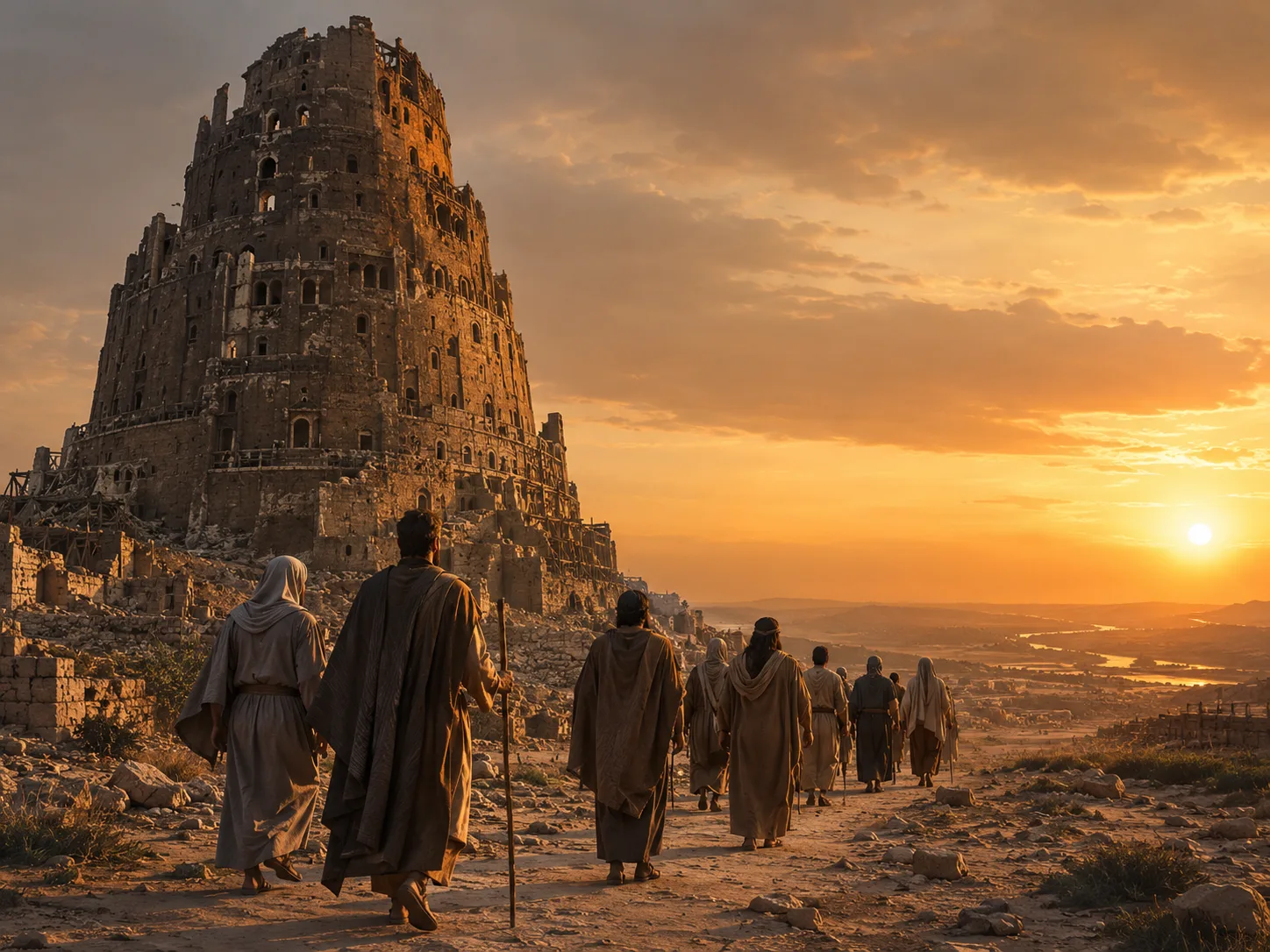
In Scripture, the original Babylon was a city built in defiance of God (Genesis 11). Later it became the empire that carried Israel into captivity. By the time of the prophet John, “Babylon” had become a prophetic symbol of a worldwide religious system in conflict with the truth of God. Revelation 17 pictures her as a great city, a mother of harlots, riding upon a beast, “drunken with the blood of the saints, and with the blood of the martyrs of Jesus” (Revelation 17:6).
She is called “MYSTERY, BABYLON THE GREAT” (Revelation 17:5) — a religious power, not merely a political one. The common identification through the Reformation, and a faithful reading of the prophetic data, points to the Roman papal system as the principal embodiment of this end-time religious power. The wine of her fornication — that is, the false doctrines by which she has intoxicated the nations — is at the heart of this final controversy.
The Threefold Counterfeit Power
Babylon presents the world with a counterfeit Godhead, a counterfeit Mediator, and a counterfeit Sabbath. The pioneer Adventist understanding holds firmly to the biblical teaching: there is one God, the Father, the source of all things, and one Lord Jesus Christ, His only-begotten Son (1 Corinthians 8:6; John 3:16). The Holy Spirit is the divine presence and power proceeding from the Father and the Son — not a third divine being separate from Them, but the Spirit of God and the Spirit of Christ ministering to His people (Romans 8:9).
For there is one God, and one mediator between God and men, the man Christ Jesus.
Babylon, by contrast, offers another God (the trinity), another mediator (Mary and the priesthood), and another day of worship (Sunday). Each of these substitutions will be examined in turn.
The Papacy — A Counterfeit Authority
The Roman Catholic Church teaches that the pope is the visible head of the Church on earth, the successor of Peter, and the vicar of Christ. He is held to speak infallibly when defining doctrine on faith and morals. Scripture knows no such office. Jesus said, “Call no man your father upon the earth: for one is your Father, which is in heaven” (Matthew 23:9). Christ alone is the Head of the Church (Ephesians 1:22-23; Colossians 1:18), and He alone is our High Priest before the Father.
Peter himself rejected veneration. When Cornelius fell at his feet, Peter said, “Stand up; I myself also am a man” (Acts 10:25-26). Peter calls himself an elder among elders, not a sovereign pontiff (1 Peter 5:1-3). The papal claim to supreme spiritual authority — and the titles attached to it — is a counterfeit of the authority that belongs only to Christ.
Mary as Queen of Heaven — A Counterfeit Mediator
Rome calls Mary the Queen of Heaven, co-redemptrix, and mediatrix of all graces. She is venerated, prayed to, and assigned a role in salvation that Scripture does not give her. The Bible honours Mary as a faithful believer chosen to bear the Saviour, but it never calls her sinless, never invites prayer to her, and never makes her a channel of grace.
Paul writes, “For there is one God, and one mediator between God and men, the man Christ Jesus” (1 Timothy 2:5). The phrase “Queen of Heaven” in Scripture is not a title of honour at all — it is the name of a pagan goddess whose worship the Lord condemned through Jeremiah (Jeremiah 7:18; 44:17-25). To exalt Mary into the place of Christ as Mediator is to repeat an ancient error under a Christian name.
The Mass — A Counterfeit Sacrifice
The Mass is taught to be an unbloody re-presentation of the sacrifice of Christ, in which the bread and wine are said to become His literal body and blood. Scripture teaches that Christ’s sacrifice was once for all. Hebrews says, “by one offering he hath perfected for ever them that are sanctified” (Hebrews 10:14). The Lord’s Supper is a memorial of that finished work — not its renewal.
Jesus said, “this do in remembrance of me” (Luke 22:19). The bread and the cup are symbols pointing back to Calvary, not means of re-sacrificing the Saviour. To claim otherwise is to obscure the perfect sufficiency of the cross.
Paganized Symbols and Practices
Many features of Roman worship trace not to Scripture but to the religions of pre-Christian Babylon, Egypt, and Rome. Holy water, ceremonial vestments, processions, incense, statues, rosaries, the veneration of relics, the worship of a mother and child long predated Christianity in pagan forms. When converted Christianity met the pagan empire, these symbols were not abolished — many were absorbed, renamed, and continued.
The Lord said through Jeremiah, “Learn not the way of the heathen” (Jeremiah 10:2). Israel was warned not to worship the true God in the manner the nations worshipped their gods (Deuteronomy 12:30-31). The gospel calls Christians to a worship that is pure, simple, and in spirit and in truth (John 4:23-24).
Sun Worship and the Change of the Sabbath
Perhaps the most far-reaching change Rome introduced was the change of the day of worship from the seventh-day Sabbath of the Lord to Sunday, the venerable day of the sun. The fourth commandment is plain: “Remember the sabbath day, to keep it holy… the seventh day is the sabbath of the LORD thy God” (Exodus 20:8-10). Jesus, the apostles, and the early church kept the seventh day.
Sunday worship was elevated gradually, especially under emperors sympathetic to sun worship, and was eventually enforced by ecclesial and civil decree. Rome herself has admitted the change. She points to Sunday observance as evidence of her authority to alter divine times and laws (compare Daniel 7:25). To follow her tradition over the plain commandment of God is to acknowledge her authority above His.
The trinity and Rome’s Wine
The doctrine of the trinity — the teaching that one God exists in three co-equal, co-eternal persons — was not received from the apostles. It was formalised in the fourth and fifth centuries through the councils of Nicaea, Constantinople, and Chalcedon, under heavy imperial and ecclesial pressure, and was carried forward as a Roman Catholic doctrine.
The Bible nowhere teaches three co-equal persons in one essence. It teaches one God, the Father (1 Corinthians 8:6), and His only-begotten Son, Who was sent by the Father (John 3:16; John 17:3), Who calls the Father “my God” (John 20:17), and Who lives to make intercession before Him (Hebrews 7:25). The Holy Spirit is the presence of God and of Christ with His people — the Spirit of the Father (Matthew 10:20) and the Spirit of Christ (Romans 8:9) — not a third individual God.
This is not a minor point. The trinity is a defining doctrine Rome passed to the Protestant world, and many modern Christians have received it without ever examining it from Scripture. To return to the biblical Godhead is part of coming out of Babylon.
Why the Call Is “Come Out”
Heaven’s message in Revelation 18 is tender and urgent. God does not call His people Babylonian. He calls them “my people” — even while they are still within her. He sees the sincere souls in every communion that has drunk of her wine, and He sends a message of mercy: separate from her teachings before her judgments fall.
Come out of her, my people, that ye be not partakers of her sins, and that ye receive not of her plagues.
The call is not to leave Christ. The call is to leave the false teachings about Christ, His Father, His Spirit, His sacrifice, and His day, and to return to the Scriptures alone as our guide.
The True Refuge
The answer to Babylon is not another Babylon. The answer is the living God Himself, revealed in His Son, accessed in His Word. To come out of Babylon is to come to Christ — to trust His finished sacrifice, to receive His Spirit, to worship the Father in spirit and in truth, and to keep His commandments because we love Him (John 14:15).
Peter declared, “Neither is there salvation in any other: for there is none other name under heaven given among men, whereby we must be saved” (Acts 4:12). There is no salvation in a system; there is salvation in a Saviour. He is faithful. He has paid the price. He invites every seeking soul to come.
Supporting Bible Verses
Revelation 18:4
And I heard another voice from heaven, saying, Come out of her, my people, that ye be not partakers of her sins, and that ye receive not of her plagues.
Revelation 17:5
And upon her forehead was a name written, MYSTERY, BABYLON THE GREAT, THE MOTHER OF HARLOTS AND ABOMINATIONS OF THE EARTH.
1 Timothy 2:5
For there is one God, and one mediator between God and men, the man Christ Jesus.
1 Corinthians 8:6
But to us there is but one God, the Father, of whom are all things… and one Lord Jesus Christ, by whom are all things.
John 3:16
For God so loved the world, that he gave his only begotten Son, that whosoever believeth in him should not perish, but have everlasting life.
Matthew 6:9
After this manner therefore pray ye: Our Father which art in heaven, Hallowed be thy name.
Hebrews 7:25
Wherefore he is able also to save them to the uttermost that come unto God by him, seeing he ever liveth to make intercession for them.
Exodus 20:8-10
Remember the sabbath day, to keep it holy… but the seventh day is the sabbath of the LORD thy God.
Jeremiah 10:2-4
Learn not the way of the heathen… For the customs of the people are vain: for one cutteth a tree out of the forest…
John 4:23
But the hour cometh, and now is, when the true worshippers shall worship the Father in spirit and in truth.
Acts 4:12
Neither is there salvation in any other: for there is none other name under heaven given among men, whereby we must be saved.
Conclusion: A Voice from Heaven
The final controversy is not about hating Roman Catholic people. It is about whether we will receive the Bible alone as the rule of faith, and whether we will worship the Father and His Son in the way they have appointed. Rome’s teachings on the pope, on Mary, on the Mass, on tradition, on Sunday, and on the trinity all stand or fall by Scripture — and Scripture testifies against them.
Heaven is not silent. A voice is still calling, “Come out of her, my people.” Those who hear that voice and answer it find not less of Christ but more — the unveiled face of the Father, the unmediated nearness of the Son, and the indwelling Spirit who leads into all truth.
Foundational text
“And I heard another voice from heaven, saying, Come out of her, my people, that ye be not partakers of her sins, and that ye receive not of her plagues.”
— Revelation 18:4