…which are a shadow of things to come; but the body is of Christ.
The Old Testament is not a separate book with a separate hero. It is the same story told in shadow before it was told in substance — and the substance is always Christ. A type is a real person, object, or event that God shaped in advance to prefigure something greater, so that when the greater thing arrived, the pattern would be unmistakable. There are far more of these than most readers ever count. What follows is a catalogue — one short entry at a time — of the many places the shadow of the cross falls across the pages of the Old Testament. For the method behind it — why God taught the gospel in shadow for two thousand years — see the companion study, Typology.
How to read a type
One honest word before the list, because typology can be abused. A type is not an allegory you invent; it is a pattern God built. So we keep two levels clearly apart. Some types Scripture itself names — Paul calls Adam “the figure of him that was to come,” Jesus points to Jonah, John lifts up the serpent. Those are not opinions; they are the Bible interpreting the Bible, and they are beyond dispute.
Others are strong parallels the Bible does not label — Joseph rejected by his brothers and exalted to save them, Boaz the kinsman-redeemer. These are pattern, not proof; we present them as the resemblance they are, never pressing every detail or forcing a meaning onto what was silent. The rule is simple: the confirmed types carry the argument, the inferred ones enrich it, and we never dress up a guess as a doctrine. Read this way, the sheer number of them stops looking like coincidence and starts looking like design. A few of the cases gathered below are ones sincere students will debate — that is simply the nature of the inferred parallels — but the great majority, far more than ninety-nine in a hundred, rest on ground the Bible makes plain. And this is nowhere near all of them: there are many more types in Scripture than any list can hold, and careful readers turn up more of them all the time. These are simply some of the ones that stand out most plainly.
Persons who prefigure Christ
Again and again God raised up a man whose life ran, in miniature, along the shape of the coming Redeemer’s.
Adam. The first man is the one type Paul names outright: “the figure of him that was to come” (Romans 5:14). As the first Adam was head of a fallen race and brought death to all in him, so Christ, the last Adam, is head of a new race and brings life to all in Him (1 Corinthians 15:22, 45). Every man is born into one head or the other.
Abel. The righteous shepherd, murdered by his own brother out of envy, whose accepted lamb-offering pointed forward and whose blood still “speaketh” (Genesis 4; Hebrews 12:24). His blood cried for justice; the blood of Christ speaks better things — mercy.
Melchizedek. King of Salem and “priest of the most high God,” without recorded beginning or end of days, both king and priest at once (Genesis 14; Hebrews 7). The book of Hebrews spends a whole chapter on him precisely because he prefigures a priesthood that does not pass from father to son but abides forever in Christ.
Isaac. The long-promised, beloved son whom the father was willing to offer up on a mountain in the land of Moriah, carrying the wood for his own sacrifice up the hill (Genesis 22). Abraham received him back “in a figure” of resurrection (Hebrews 11:19), and the ram caught in the thicket died in his place.
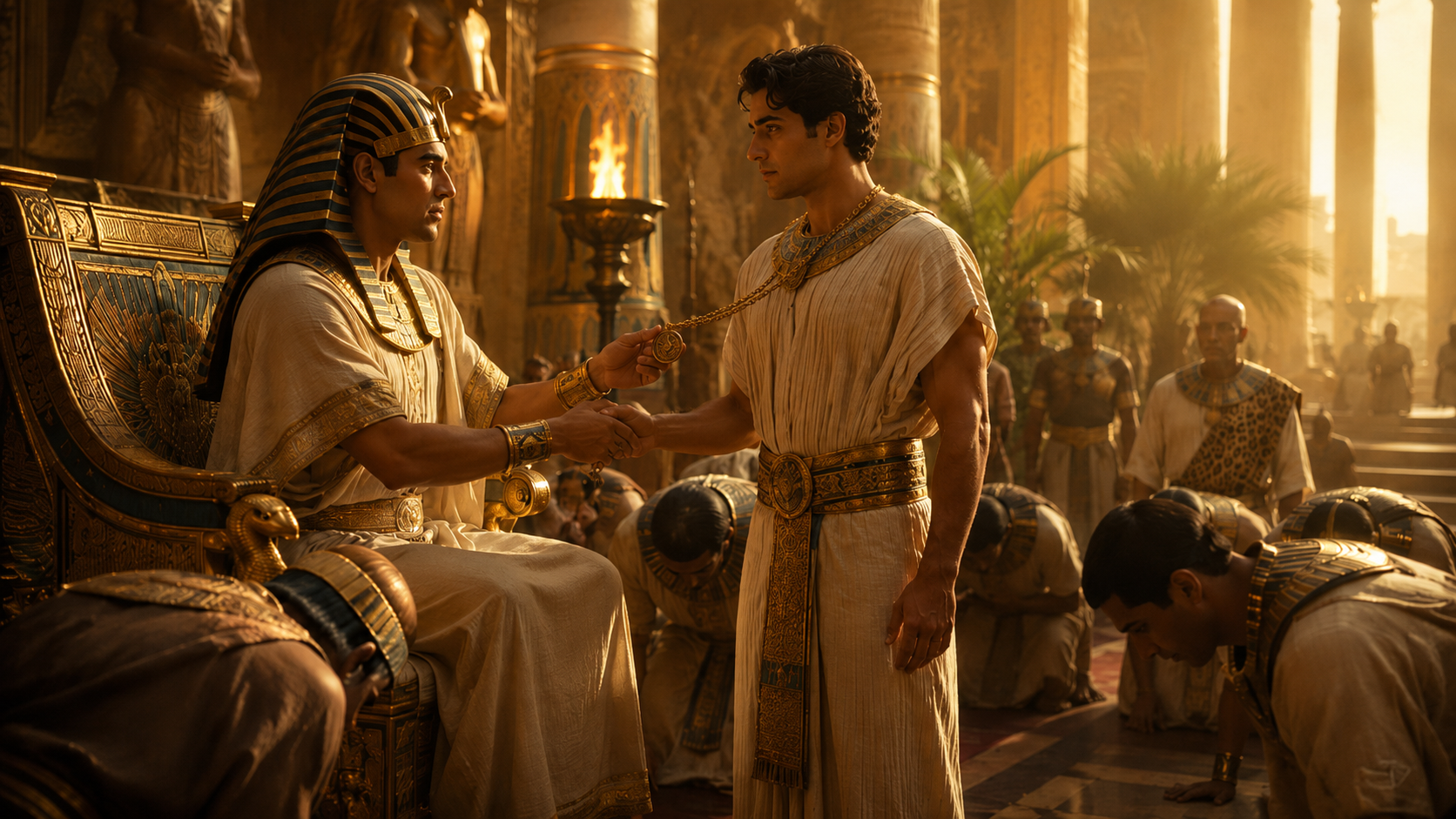
Joseph. Scripture never calls him a type, yet no life traces the pattern more fully: loved by his father, hated and sold by his brothers for silver, reckoned as good as dead, humbled unjustly, then raised to the right hand of the throne — where the very brothers who betrayed him bow, and he feeds and forgives them (Genesis 37–50). “Ye thought evil against me; but God meant it unto good.”
Moses. The deliverer who left a palace to share the affliction of his people, the mediator who stood between God and a rebellious nation and offered to be blotted out for them (Exodus 32:32). Of him God said, “A Prophet shall the Lord your God raise up unto you…like unto me” — a word Peter applies straight to Christ (Deuteronomy 18:15; Acts 3:22).
Joshua. He even bears the name — Yeshua, Jesus — and does what Moses and the law could not: he leads the people across the river into the promised inheritance and its rest (Hebrews 4:8). The lawgiver brings you to the border; only Jesus brings you in.
Samson. A deliverer betrayed for silver, bound, blinded, and mocked by the enemies of God — who wins his greatest victory not in his life but in his death, arms outstretched against the two pillars, destroying more of the enemy in dying than he ever had while he lived (Judges 16).
Boaz. The kinsman-redeemer of Ruth: the near relative with both the right and the means to buy back a lost inheritance and take a destitute foreign bride as his own (Ruth 2–4). It is the gospel in a village harvest — redemption belongs to the kinsman, and Christ became our kin to redeem us.
David. The shepherd-boy passed over by men but chosen by God, anointed king long before he was crowned, who kills the giant no one else will face and reigns after long rejection and exile. Christ is called the “son of David” and inherits his throne forever (Luke 1:32) — the true Anointed of whom David was the shadow.
Solomon. The son of David whose name means peace, who builds the temple, whose reign is a golden age of rest and wisdom to which the nations stream (1 Kings 3–10). A greater than Solomon is here (Matthew 12:42): the Prince of Peace who builds a living temple and in whom “are hid all the treasures of wisdom.”
Jonah. Jesus named this one Himself: “As Jonah was three days and three nights in the whale’s belly; so shall the Son of man be three days and three nights in the heart of the earth” (Matthew 12:40). The prophet buried in the deep and brought up alive to preach repentance to the Gentiles is the sign of the death and resurrection.
Noah. The one righteous man in a doomed generation, through whom God preserved a remnant, carrying them safely through the waters of judgment in an ark of his own making (Genesis 6–8). Peter reads the flood as a figure of salvation (1 Peter 3:20–21): only those inside the appointed refuge came through.
Aaron. The high priest who alone entered the holy place bearing the names of the tribes on his heart, making atonement for the people year by year. Hebrews sets his whole office against Christ’s — a mortal, sinful priest offering the blood of animals is the shadow; the sinless, eternal High Priest offering His own blood is the body.
Zerubbabel and Joshua the high priest. In Zechariah the crown is set on the head of Joshua the priest and the promise given to Zerubbabel the prince, and the two offices meet in one coming figure called “the BRANCH,” who shall “be a priest upon his throne” (Zechariah 6:12–13) — king and priest in a single Person.
Jacob. The supplanter who wrestled through the night and prevailed, and was renamed Israel — “a prince” who has “power with God and with men” (Genesis 32:24–28). He saw God face to face at Peniel and lived: the man who overcomes by laying hold and refusing to let go.
Judah. From the lion’s whelp of Judah the sceptre would not depart “until Shiloh come” (Genesis 49:9–10) — the royal line running down to the “Lion of the tribe of Juda” who alone was found worthy to open the book (Revelation 5:5).
Jonathan. The king’s son and rightful heir who loved David as his own soul and stripped himself of his robe, his sword, and his bow to clothe the anointed outcast (1 Samuel 18:3–4) — love that gives away its own claim to a throne and covers another with its own righteousness.
Elijah. The prophet who called a backslidden nation home, was fed through famine, and was taken up to heaven without seeing death (2 Kings 2) — the forerunner spirit that turns the hearts, and a figure of those who will be caught up alive at the coming of the Lord.
Elisha. Anointed in Elijah’s place with a double portion, he multiplied bread to feed a hundred, cleansed the leper, opened blind eyes, and raised a dead child by stretching himself upon him (2 Kings 2–5) — a ministry that reads like a rehearsal of the Gospels.
Job. The blameless man stripped of everything by the accuser, who kept his integrity through undeserved agony, prayed for the friends who had wronged him, and was restored to double at the last (Job 1–2; 42) — the righteous sufferer who intercedes for his accusers and is exalted after.
Ruth. Here the shadow falls not on the Redeemer but on the redeemed: a destitute foreigner with no claim, who casts herself on the mercy of the kinsman and is bought, wedded, and brought into the family and the royal line (Ruth 1–4). She is the Gentile bride — the church the Redeemer takes to Himself.
Eliezer, Abraham’s servant. The trusted servant — unnamed through the whole errand — sent by the father into a far country to find a bride for the son, laden with the son’s gifts, who woos her and brings her home (Genesis 24): a picture of the Spirit sent to gather a bride for Christ, drawing her with the gifts of the Son.
Abraham. In offering Isaac, Abraham stands where the Father stands: the father who did not withhold his only son, but bound him and laid him on the altar in obedience to God (Genesis 22:16). Paul echoes the very heart of it — God “spared not his own Son, but delivered him up for us all” (Romans 8:32) — so the mount where the son was offered is a shadow of the Father’s own gift of His Son.
Samuel. Asked of God and given to a barren woman by promise (1 Samuel 1), he was prophet, priest, and judge in one, and “grew on, and was in favour both with the LORD, and also with men” (1 Samuel 2:26) — words the Gospel would use again of the child Jesus (Luke 2:52) — and his hand anointed the king.
Enoch. The seventh from Adam “walked with God: and he was not; for God took him” (Genesis 5:24) — translated to heaven without seeing death. With Elijah he is the standing pledge of those who will be alive and remain at the coming of the Lord, and be “caught up…to meet the Lord in the air” (1 Thessalonians 4:17).
The sanctuary and its service
The whole tabernacle was built “according to the pattern” shown in the mount (Hebrews 8:5) — a working model of the plan of salvation, every board and vessel and offering a shadow of Christ and His ministry.
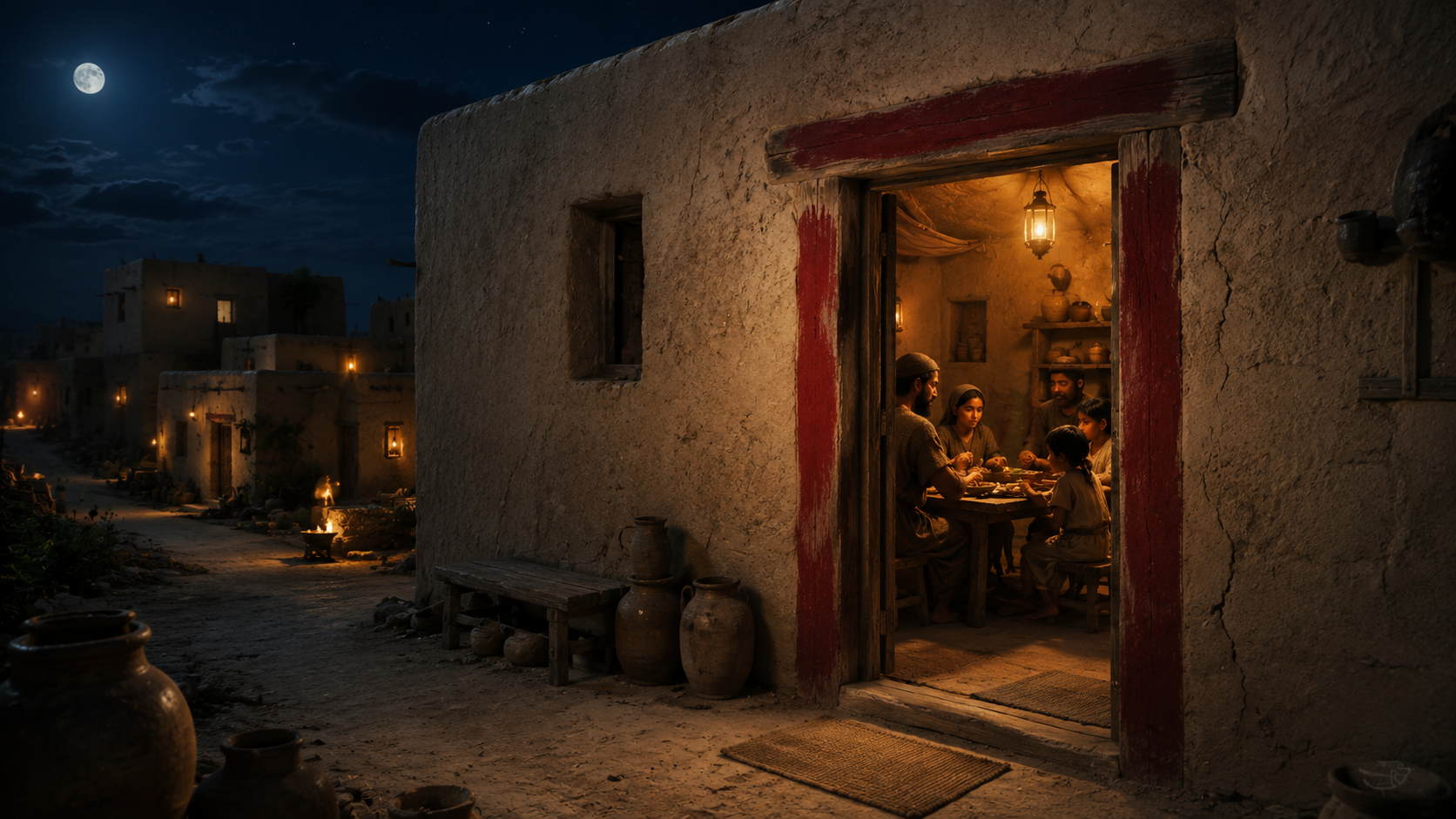
The Passover lamb. A spotless lamb slain, its blood struck on the door so the destroyer would pass over, its body eaten, not a bone broken (Exodus 12). Paul states it flatly: “Christ our passover is sacrificed for us” (1 Corinthians 5:7), and John notes not a bone of Him was broken (John 19:36).
The daily lamb. Morning and evening, without fail, a lamb was offered for the nation (Exodus 29:38–39) — a continual testimony that sin is only ever covered by a life laid down. John the Baptist gathered it all into one sentence: “Behold the Lamb of God, which taketh away the sin of the world” (John 1:29).
The Day of Atonement — the LORD’s goat. Once a year the high priest went in with blood to cleanse the sanctuary, and lots were cast upon two goats (Leviticus 16). The goat “for the LORD” was slain and its blood carried within — the shadow of Christ’s atoning death, and of the closing work of our High Priest above, when the record of sin is at last blotted out.
The scapegoat (Azazel). The second goat was never slain, and its blood was never offered; alive, it was sent away into the wilderness bearing the sins the atonement had already removed (Leviticus 16:8–10, 20–22). A living thing whose blood is not shed cannot picture the Saviour who died for us. It pictures instead the author of sin — Satan — on whom the guilt of all he tempted men to commit is finally rolled back, to bear his own responsibility for ever once the sanctuary is cleansed.
The brazen serpent. When the people were dying of serpent-bites, God told Moses to lift a bronze serpent on a pole, and whoever looked lived (Numbers 21). Jesus made it His own picture of the cross: “As Moses lifted up the serpent…even so must the Son of man be lifted up” (John 3:14).
The rock in the wilderness. Struck once, it poured out water to save a dying people (Exodus 17), and Paul says plainly, “that Rock was Christ” (1 Corinthians 10:4). Smitten once for our life; when Moses struck it a second time in anger, he marred the type, for Christ is offered once.
The manna. Bread that fell from heaven every morning to keep Israel alive in a barren land (Exodus 16). “I am the living bread which came down from heaven,” said Jesus; the fathers ate manna and died, but he that eats this bread lives forever (John 6:48–51).
The ark of the covenant and the mercy seat. The law inside, the blood-sprinkled golden lid above it, and the presence of God between the cherubim — justice and mercy meeting over the broken commandments. Paul uses the very word for that mercy seat of Christ, “whom God hath set forth to be a propitiation” (Romans 3:25).
The veil. The heavy curtain barring the way into the presence of God, torn from top to bottom the hour Christ died (Matthew 27:51). Hebrews names the shadow: the new and living way is opened “through the veil, that is to say, his flesh” (Hebrews 10:20).
The laver. The basin of water where the priests washed before they could serve (Exodus 30:18–21) — the cleansing without which no one draws near, which Christ gives “by the washing of water by the word” (Ephesians 5:26).
The altar of incense. Sweet incense rising continually before the veil, a figure of prayer ascending and accepted (Psalm 141:2; Revelation 8:3–4) through the intercession of our High Priest, who “ever liveth to make intercession” (Hebrews 7:25).
The lampstand. The pure gold candlestick, fed with beaten oil, the only light in the holy place (Exodus 25:31–37) — the Light of the world shining by the Spirit, without which the house is dark.
The showbread. Twelve loaves set continually before the LORD (Leviticus 24:5–8), bread in the presence of God — Christ the Bread of Life, the sustenance of His people set forever before the Father on their behalf.
The tabernacle itself. God’s chosen dwelling in the midst of His people, glory-filled, approachable only by blood. “The Word was made flesh, and dwelt among us” — literally tabernacled among us (John 1:14): God come down to pitch His tent with man.
The red heifer. Its ashes, mixed with water, cleansed those defiled by death (Numbers 19) — a shadow of the blood of Christ that purges the conscience “from dead works to serve the living God” (Hebrews 9:13–14).
The cities of refuge. Six cities where the man who had killed could flee from the avenger and be safe until the death of the high priest (Numbers 35) — a refuge appointed by God, safety found only inside it, and liberty won by the death of the high priest. We “flee for refuge” to Christ (Hebrews 6:18).
The one door. The court had a single gate and the tabernacle a single door — one appointed way in, and no other (Exodus 26:36; 27:16). “I am the door: by me if any man enter in, he shall be saved” (John 10:9).
The altar of burnt offering. Just inside the gate stood the altar where the victim was slain and burned — the first thing met on the way to God, and the ground of all that followed (Exodus 27:1–8). No one approaches except by way of the place of sacrifice: the cross stands at the door.
The offerings. Sin offering, trespass offering, burnt offering, peace offering — each one angle of a single death: the guilt borne, the debt paid, the life wholly given, the peace made (Leviticus 1–7). “Now once in the end of the world hath he appeared to put away sin by the sacrifice of himself” (Hebrews 9:26).
The names on the shoulders and the heart. The high priest bore the names of the tribes cut in onyx on his shoulders and set in twelve jewels on the breastplate over his heart, and carried them so before the LORD (Exodus 28:9–29). Christ bears His people on the shoulder of His strength and on the heart of His love — named and remembered before the Father.
The anointing oil. The holy oil that set apart priest and sanctuary for God (Exodus 30:22–33) is the standing figure of the Holy Spirit, God’s own presence and power, poured out “not by measure” upon the Anointed One (John 3:34; Acts 10:38) — the very word Messiahmeaning “anointed.”
Aaron’s rod that budded. When the priesthood was disputed, twelve dead rods were laid up before the LORD, and only Aaron’s broke overnight into bud, blossom, and ripe almonds (Numbers 17) — life out of a dead stick, God’s own witness to His chosen Priest, as the resurrection vindicated Christ.
The two birds of the leper’s cleansing. To cleanse a leper, two birds were taken: one killed over running water, and the living bird dipped in its blood and let fly away free (Leviticus 14:4–7) — death and resurrection in one rite: the one dies, and by its blood the other goes free into the open sky.
The lamb chosen and proven. The Passover lamb was taken on the tenth day and kept up until the fourteenth (Exodus 12:3–6) — set apart and watched to prove it was without blemish before it was slain. So Christ, in the days before the cross, was examined by rulers, priests, and Pilate, who found “no fault in him” (John 18:38) — the Lamb proved spotless before He was offered.
The hidden manna. A golden pot of manna was laid up before the LORD in the ark, kept from corruption through the ages (Exodus 16:33–34; Hebrews 9:4). Christ, the true bread, promises to him that overcometh “to eat of the hidden manna” (Revelation 2:17) — the life of heaven treasured up and kept for His own.
The feasts of the Lord
The seven appointed feasts of Leviticus 23 are not random festivals; they are a calendar of redemption, and their order is the order of the gospel — the spring feasts already fulfilled at the first coming, the autumn feasts pointing to the last.
Passover. The lamb slain and its blood applied — fulfilled the very day Christ died as our Passover (1 Corinthians 5:7). The feast of redemption begins the year and the story.
Unleavened Bread. Seven days with all leaven — the Bible’s figure of sin — purged from the house (Exodus 12:15). It answers to the sinless body of Christ laid in the tomb and to the call to “keep the feast… with the unleavened bread of sincerity and truth” (1 Corinthians 5:8).
Firstfruits. The first sheaf of the harvest waved before the LORD (Leviticus 23:10–11) — fulfilled when Christ rose, “the firstfruits of them that slept” (1 Corinthians 15:20, 23), the pledge that the whole harvest of the dead will follow.
Pentecost (Weeks). Fifty days after firstfruits, the feast of harvest ingathering — fulfilled when the Spirit was poured out and three thousand were reaped in a day (Acts 2). The firstfruits of the great harvest of the nations.
Trumpets. A day of loud trumpets and solemn warning opening the autumn season (Leviticus 23:24) — the note of the last trump and the final message that wakes the world before the day of judgment.
The Day of Atonement. The one day of cleansing and judgment for the sanctuary and the people (Leviticus 16; 23:27) — the shadow of the closing work of our High Priest, when the record of sin is finally blotted out.
Tabernacles. The joyful ingathering at the year’s end, when Israel dwelt in booths and remembered God’s presence with them (Leviticus 23:34–43) — the shadow of the final harvest home, when the tabernacle of God is at last with men (Revelation 21:3).
Events, objects, and institutions
Beyond persons and the sanctuary, whole events and ordinances were built as shadows — Paul says of Israel’s history that “all these things happened unto them for ensamples” — literally, types (1 Corinthians 10:11).
The flood and the ark. Judgment on a world of sin, and one door of safety through the water — “the like figure whereunto even baptism doth also now save us” (1 Peter 3:20–21). One ark, one door, and everything outside it lost.
The Red Sea. Israel passed through the water out of slavery and left the pursuing enemy drowned behind them — “baptized unto Moses in the cloud and in the sea” (1 Corinthians 10:1–2). Death to the old master, a people brought out to serve God.
The Exodus. The whole deliverance — a people in bondage, redeemed by the blood of the lamb, led out by a mighty hand toward a promised inheritance — is the master-picture of salvation that the New Testament reaches for again and again.
Crossing Jordan. After the wilderness, the river parts and the people enter the land of promise and rest (Joshua 3) — the figure of passing at last, in Christ our Joshua, into the inheritance the law could never give.
Jacob’s ladder. The stairway between heaven and earth with the angels ascending and descending (Genesis 28:12) — which Jesus claimed as Himself: “ye shall see heaven open, and the angels of God ascending and descending upon the Son of man” (John 1:51). He is the one way between the two.
The tree of life. Barred in Eden after the fall, guarded by a flaming sword, and restored at last in the city of God (Genesis 3; Revelation 22) — life forfeited in the first Adam and given back through the second, whose own tree was a cross.
Marriage. The oldest institution, one man and one woman made one flesh — which Paul calls a “great mystery” spoken “concerning Christ and the church” (Ephesians 5:31–32). Every wedding is a rehearsal of the marriage of the Lamb.
The Sabbath and the coming rest. Two things have to be kept apart here. The ceremonial sabbaths — the annual feast-days of Leviticus 23 — were shadows that met their fulfilment in Christ, and it is these that Paul calls “a shadow of things to come” (Colossians 2:16–17). The weekly seventh-day Sabbath, the memorial of creation, was not abolished with them: “there remaineth therefore a rest to the people of God” (Hebrews 4:9). And it too is a sign that points forward — the six days of labour and the seventh of rest are a miniature of the great week of time: six thousand years of the earth’s toil under sin, and then the Sabbath of rest that follows, when the curse is lifted and the whole earth keeps the rest its Maker always intended.
Jubilee. Every fiftieth year debts were cancelled, slaves freed, and lost inheritances restored (Leviticus 25) — the gospel year Jesus opened at Nazareth, come “to preach deliverance to the captives…to set at liberty them that are bruised” (Luke 4:18–19).
Circumcision. The cutting away of the flesh, marking the covenant people (Genesis 17) — a shadow of “the circumcision made without hands…the circumcision of Christ” (Colossians 2:11), the cutting away of the sinful nature that the outward sign only pictured.
The kinsman-redeemer. The law that a lost inheritance and an enslaved relative could be bought back only by a near kinsman with the right and the price (Leviticus 25:47–49) — the legal shape of redemption itself, which is why the Redeemer had to become our brother (Hebrews 2:11–14).
Melchizedek’s bread and wine. When Melchizedek met Abraham he “brought forth bread and wine” and blessed him (Genesis 14:18) — the priest-king serving the very emblems Christ would give His church at His own table.
The ram in the thicket. When the knife was raised over Isaac, God provided a ram caught by its horns to die in the son’s place (Genesis 22:13). The son goes free because the substitute is offered — and Abraham named the place “the LORD will provide.”
The destruction of Sodom. Fire and brimstone out of heaven on a city given wholly to sin, with one family drawn out first by the angels (Genesis 19). Jesus made it a figure of the end: “even thus shall it be in the day when the Son of man is revealed” (Luke 17:28–30; 2 Peter 2:6).
The pillar of cloud and fire. Day and night the LORD went before Israel in a pillar — shade in the heat, light in the dark, a wall of fire between them and the enemy (Exodus 13:21). The presence that led them was Christ Himself (1 Corinthians 10:1–4), and it never once left the camp.
The tree at Marah. The people reached water they could not drink for bitterness, and the LORD showed Moses a tree; he cast it into the waters, and they were made sweet (Exodus 15:23–25). The tree — the cross — thrown into the bitterness of a life is what makes it drinkable.
The fourth man in the fire. Three men were cast bound into a furnace heated sevenfold, and the king saw a fourth walking loose in the flames, “like the Son of God” (Daniel 3:25). He does not always keep His own out of the fire; He meets them in it, and nothing burns but the ropes that bound them.
The scarlet thread. Rahab was told to bind a line of scarlet in her window, and every soul inside that marked house was spared when the walls fell (Joshua 2:18–21). As the blood on the doorpost in Egypt, so the scarlet cord: safety is for all who are under the appointed sign.
The fountain opened. Zechariah saw the promise of a day when “there shall be a fountain opened to the house of David…for sin and for uncleanness” (Zechariah 13:1) — the fountain that flowed at last from the pierced side of Christ, where the guiltiest may wash and be clean.
Leprosy. Of all the diseases of the law, leprosy alone made a man “unclean” and shut him outside the camp — a slow, spreading, incurable defilement that only God could heal (Leviticus 13). It is the Bible’s standing figure of sin itself, which is why every cleansing of a leper is a picture of the gospel.
Naaman’s sevenfold washing. The great captain, a leper, was told to do nothing grand — only dip seven times in the Jordan — and his flesh came again “like unto the flesh of a little child” (2 Kings 5:14). Cleansing comes not by our own great works but by simple, humble obedience to the word, in the water God appoints.
The stone cut without hands. In Nebuchadnezzar’s dream a stone was “cut out of the mountain without hands,” struck the image of the kingdoms of men, and became a great mountain that filled the whole earth (Daniel 2:34–35, 44–45). The kingdom not made by human hands is Christ’s, which shall break all the others in pieces and stand for ever.
The smitten Shepherd. “Awake, O sword, against my shepherd…smite the shepherd, and the sheep shall be scattered” (Zechariah 13:7). Jesus took the words as His own the night He was betrayed: “for it is written, I will smite the shepherd, and the sheep of the flock shall be scattered abroad” (Matthew 26:31).
A bonus type
Pharaoh and Joseph — the Father and the Son
Joseph is a type of the Son — but in one scene the shadow reaches up to take in the Father as well, for there Pharaoh stands where the Father stands. When Joseph had been rejected, sold, and unjustly humbled, Pharaoh raised him from the prison in a single day and set him over everything he had: “Thou shalt be over my house… only in the throne will I be greater than thou” (Genesis 41:40). “See, I have set thee over all the land of Egypt” (41:41) — he gave him the ring off his own hand, his authority, and his name, and commanded that men bow the knee before him (41:42–43).
That is precisely how the Father dealt with His humbled, rejected Son. He “highly exalted him, and given him a name which is above every name: That at the name of Jesus every knee should bow” (Philippians 2:9–10). He “committed all judgment unto the Son” (John 5:22), so that the Son could say, “All power is given unto me in heaven and in earth” (Matthew 28:18). All the authority of the kingdom flows to the Son — and yet the parallel holds down to the last line, for Pharaoh had added, only in the throne will I be greater than thou.
Paul draws that same exception exactly: God has put all things under the Son’s feet, “but when he saith all things are put under him, it is manifest that he is excepted, which did put all things under him” (1 Corinthians 15:27). The One who gave the Son His authority — the Father — is Himself excepted from it, and remains, in the throne, the greater. The Son has all power because the Father gave it Him; and the Father, like Pharaoh over Joseph, keeps the throne.
The whole book points one way
This is a catalogue, not a complete count — the shadows are more than any list holds, and careful readers keep finding them. But the point is not the number. It is the direction. Persons, sacrifices, buildings, feasts, journeys, laws — all of it, from different angles and across two thousand years, leans toward one Person. That is not the fingerprint of many authors improvising; it is the signature of one Author who knew the ending from the beginning.
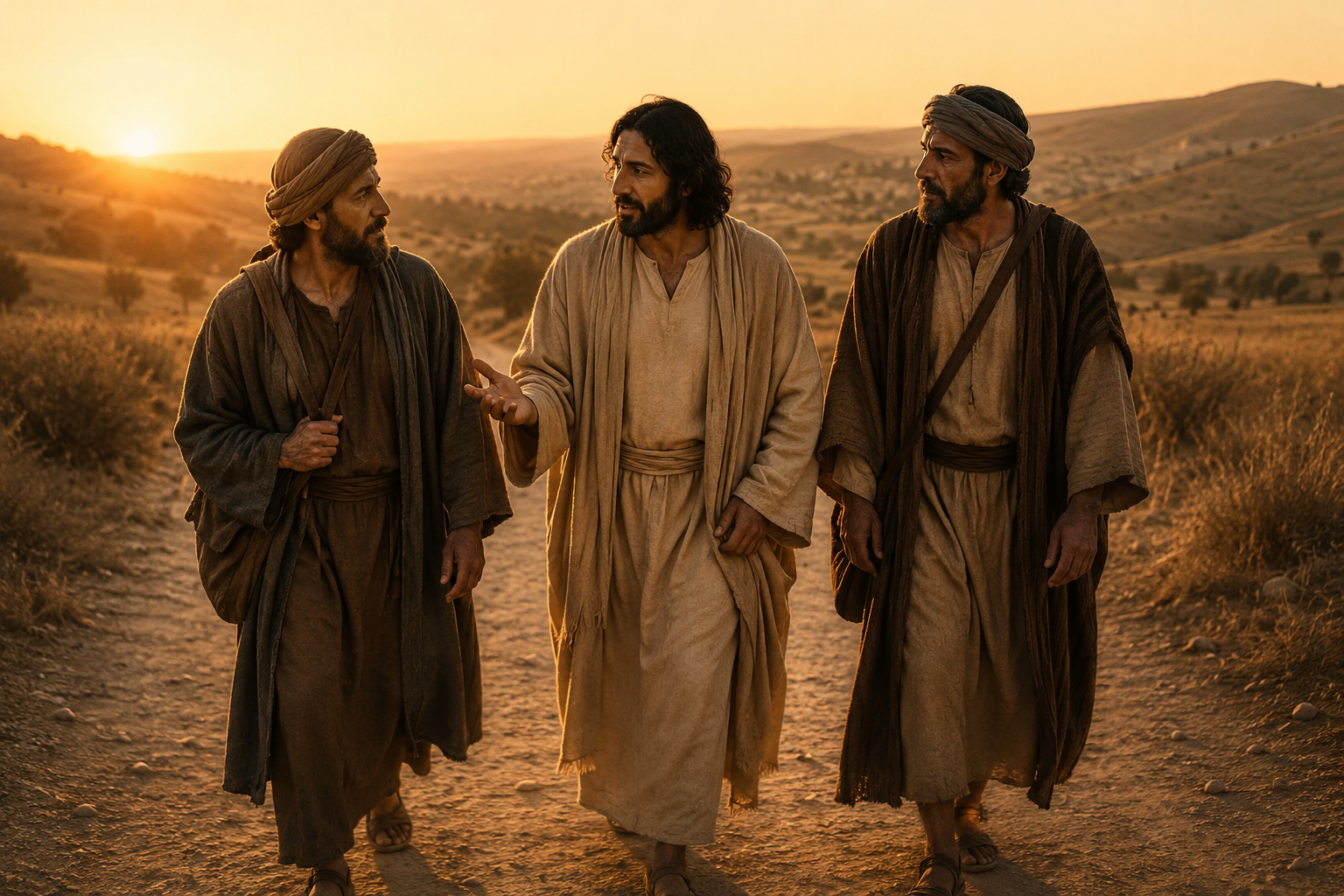
On the road to Emmaus the risen Christ did the only tour of this material that ever really mattered: “beginning at Moses and all the prophets, he expounded unto them in all the scriptures the things concerning himself” (Luke 24:27). Read the Old Testament looking for Him, and the shadows stop being curiosities and start being a witness. The body that cast every one of them is Christ.