Of all the verses Trinitarian apologists cite from the Gospels, John 20:28 is the one most often presented as decisive. Thomas, on the eighth day after the resurrection, sees the risen Christ and exclaims, "My Lord and my God." The standard reading takes the exclamation as a doctrinal declaration: Thomas calls Jesus God; therefore Jesus is God in the Trinitarian sense; therefore God the Son, the second person of the triune Godhead. The whole weight of post-Nicene Christology is hung on a single Greek sentence spoken in shock by a Jewish disciple who had nearly stopped believing in Jesus altogether eight days before.
The reading is not derived from the text. It is imposed upon the text from a doctrinal framework that did not exist until centuries after Thomas died. The Trinity as a developed metaphysical doctrine — three co-equal, co-eternal divine persons sharing one essence — was formulated in the fourth century. Thomas himself was a first-century Jew, raised on the Hebrew Scriptures, walking with Jesus for three and a half years in a culture that had been listening for the Messiah for centuries. He had a head full of Isaiah, Daniel, and the Psalms. The right question is not how a Trinitarian creed produced his exclamation; the question is what a Jewish disciple, reading the Hebrew prophets, would have meant by it.
The Verse and Its Setting
"And Thomas answered and said unto him, My Lord and my God."
John 20:28, KJV
Eight days earlier, Thomas had refused to believe. The other disciples had told him that they had seen the risen Lord, and Thomas had answered, "Except I shall see in his hands the print of the nails, and put my finger into the print of the nails, and thrust my hand into his side, I will not believe" (John 20:25). The doubt was not abstract. It was the cumulative grief of three days of broken messianic hope. The cross had shattered the disciples' confidence that Jesus was indeed the promised Messiah; the Emmaus pilgrims confessed it on the same day: "But we trusted that it had been he which should have redeemed Israel" (Luke 24:21) — past tense, the trust they had once held and had now lost.
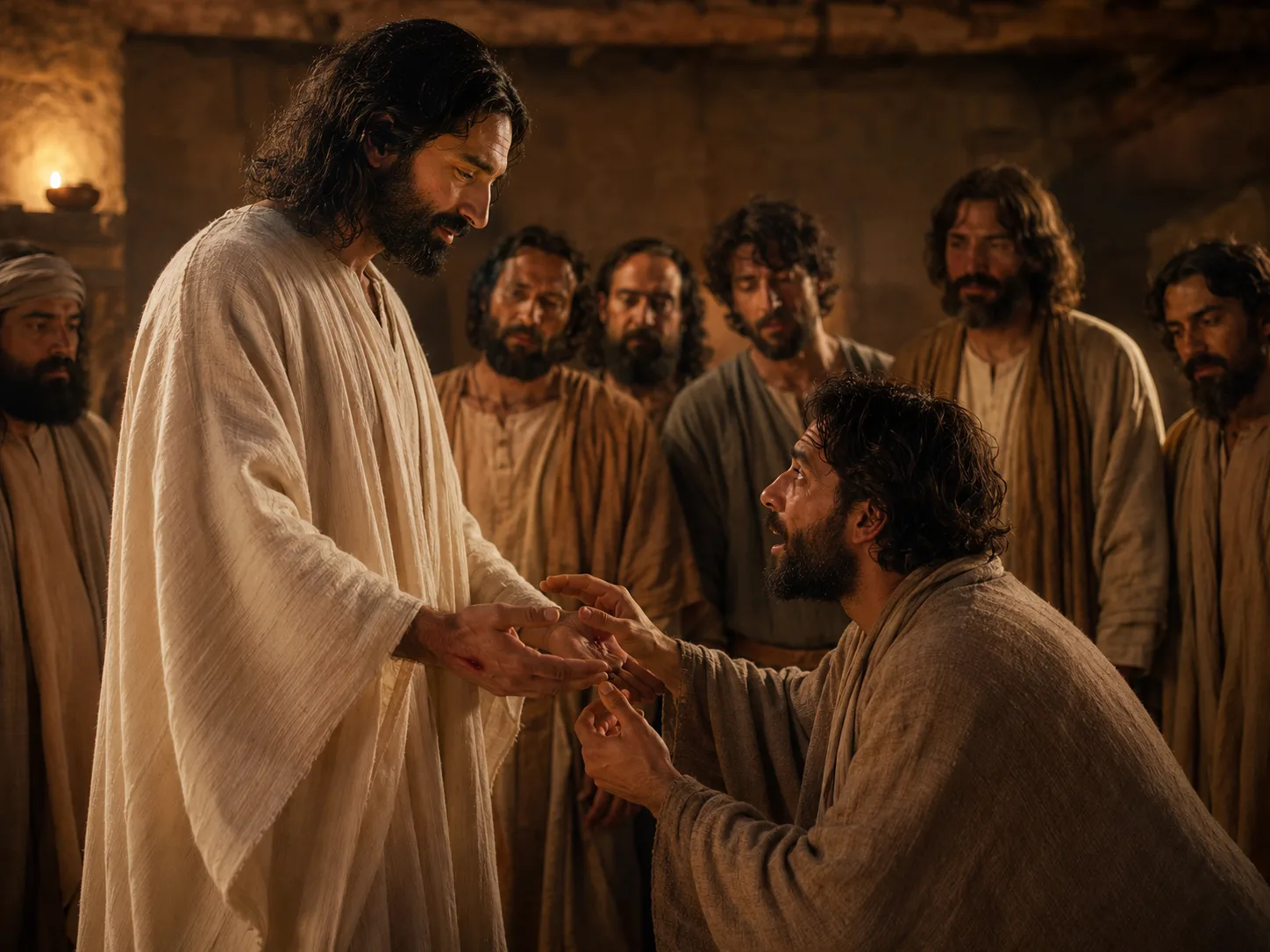
Eight days later Jesus appears, alive, in the room with Thomas. He invites Thomas to put his finger into the wounds. The exclamation comes out of Thomas in the moment of reversal: the messianic hope he had nearly abandoned is suddenly vindicated in front of him. Whatever else his words mean, they mean that. What he says next must be read against what he had stopped believing eight days before — not against a Trinitarian framework that did not yet exist.
Two Readings That Do Not Hold
Two readings of Thomas's exclamation have been widely offered, and neither is satisfactory.
The first is the standard Trinitarian one. Thomas calls Jesus "my God"; therefore Jesus is the second person of the Trinity, fully and equally God with the Father. This reading silently assumes the very thing it is trying to prove — that "God" in a first-century Jewish mouth would have meant a co-equal person within a triune Godhead. It also runs squarely into John 17:3, in the same Gospel, where Jesus calls the Father "the only true God." If Thomas's confession in chapter 20 is meant to teach that Jesus is "the only true God," then John's Gospel contradicts itself across three chapters. A reading that produces that contradiction is not the right reading.
The second reading, offered by some non-Trinitarians, argues that Thomas was speaking to two beings at once — calling Jesus "Lord" and addressing the Father, Who was somehow present, as "God." This reading rescues monotheism but does so by violating the plain grammar of the verse. John writes that Thomas "answered and said unto him" — singular pronoun, addressed to Jesus alone. The text does not split Thomas's address between two persons. The reading reads a theological convenience into the verse and cannot be sustained from the text itself.
Both readings share a common error: they treat Thomas's exclamation as if it were a doctrinal statement about the nature of God rather than what it actually is — the confession of a Jewish disciple, in the language of his Scriptures, that the man standing in front of him is the Messiah his prophets had foretold.
Who Thomas Was
The first thing to remember about Thomas is that he was a Jew. Not a Gentile, not a Greek philosopher, not a twenty-first-century Trinitarian Christian, not someone newly converted from paganism. He was a first-century Jew who had grown up reading or hearing the Hebrew Scriptures every Sabbath, who lived in a culture that argued daily about the identity of the Messiah, and who had spent the previous three and a half years walking with a man he believed to be that Messiah.
It strains credibility to imagine that Thomas — a disciple of Jesus for three and a half years, surrounded by Jewish neighbours, friends, and family — never once made the case to another Jew that this Jesus he was following was the promised Messiah. He would have made it constantly. And he would have made it the only way a first-century Jew could make it: by appealing to the Hebrew prophets. His mouth would have been full of Isaiah, of Daniel, of the Psalms, of every passage that pointed forward to the One Who was to come. When the words "Lord" and "God" come out of him on the eighth day after the resurrection, they come out of a head trained for years on the Hebrew prophecies that used those very titles of the Messiah.
The Prophecy Thomas Knew: Isaiah 40:3
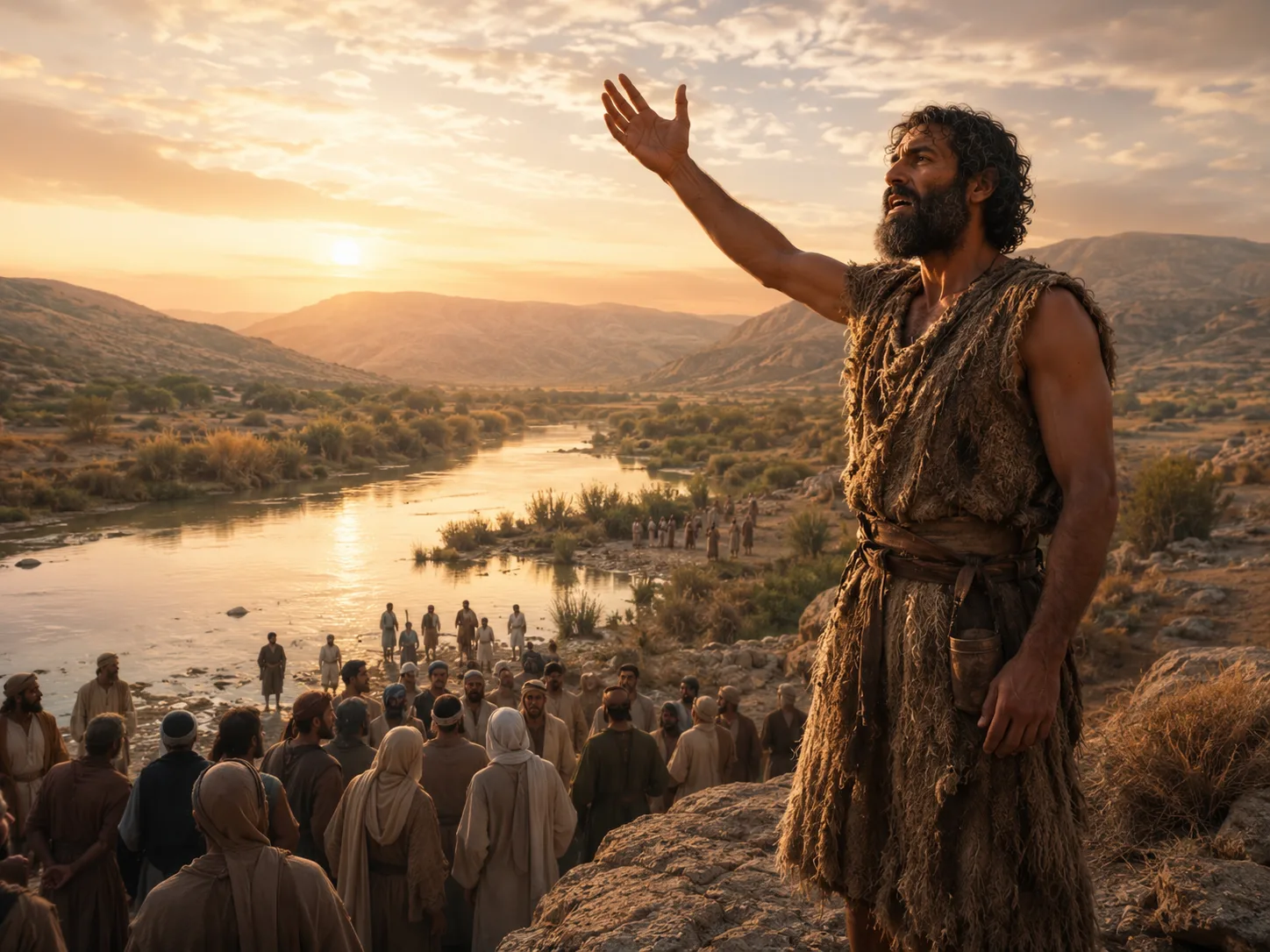
Matthew's Gospel preserves one of the prophecies Thomas certainly knew. Of John the Baptist, Matthew writes:
"For this is he that was spoken of by the prophet Esaias, saying, The voice of one crying in the wilderness, Prepare ye the way of the Lord, make his paths straight."
Matthew 3:3, KJV
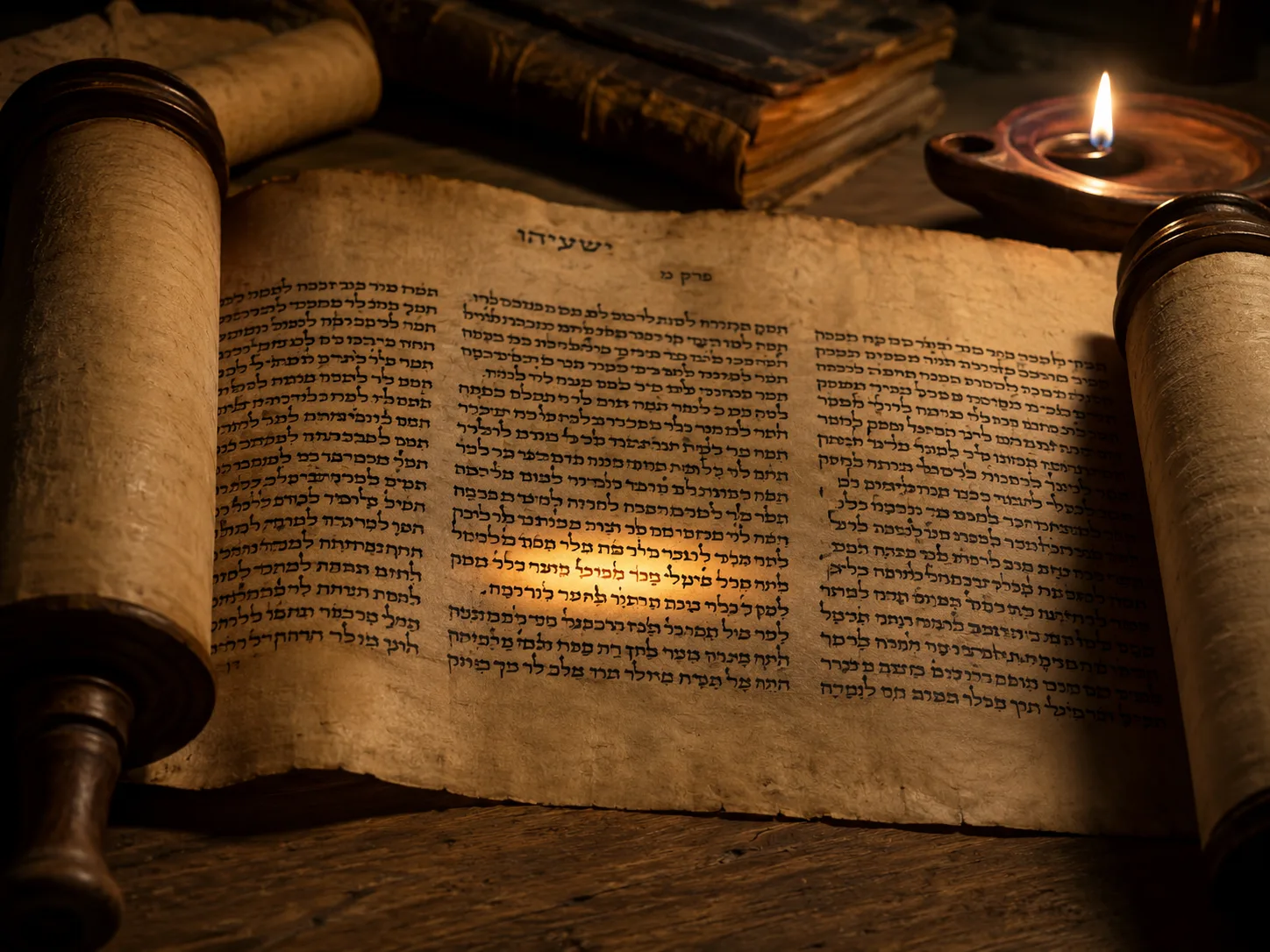
The prophecy Matthew quotes is from Isaiah 40:3. In the Hebrew the verse reads:
"The voice of him that crieth in the wilderness, Prepare ye the way of the LORD [Jehovah / יהוה], make straight in the desert a highway for our God [Elohim / אֱלֹהֵינוּ]."
Isaiah 40:3, KJV
Two divine titles. Jehovah — the covenant Name. Elohim — the divine title. Both are used of the One whose way John the Baptist would prepare. The whole of the New Testament identifies that One as Jesus Christ; Matthew 3:3, Mark 1:3, Luke 3:4, and John 1:23 all apply the Isaiah 40:3 prophecy directly to John the Baptist preparing the way for Jesus. The prophet Thomas had been reading all his life had named the Messiah by both titles — Lord and God, Jehovah and Elohim. The same titles Thomas uses in the upper room.
What Thomas Was Doing
Set the two passages side by side. Isaiah's prophecy: "the way of the LORD… a highway for our God." Thomas's exclamation: "my Lord and my God." The match is not accidental. Thomas, on seeing the risen Jesus — the Jesus he had been told to prepare the way for, the Jesus the Baptist had preceded, the Jesus the prophet had named — is doing exactly what a first-century Jewish disciple would do at the moment his messianic confidence is vindicated. He is quoting the prophecy. He is using the titles Isaiah had used of the Messiah. He is confessing, in the language of the Hebrew Scriptures, that this Jesus is the One Isaiah named.
"My Lord and my God" is therefore not a Trinitarian creedal declaration. It is a messianic confession, framed in the exact vocabulary of the prophet Thomas knew. The Trinitarian reading projects a fourth-century doctrinal framework backward onto a first-century Jewish exclamation and ignores the prophet whose words Thomas was reaching for. The pioneer reading reads Thomas's words in Thomas's own world.
Thomas was not drafting a Trinity creed. He was confessing in the language of Isaiah 40 that the risen Jesus is the prophesied Messiah his nation had been waiting for.
How the Son Carries the Father's Name
A second question follows. Even granting that Thomas was quoting Isaiah, why does Isaiah call the coming Messiah "Lord" and "God"? The Hebrew prophets repeatedly attach divine titles to the Messiah, and the explanation is not Trinitarianism. Scripture itself supplies a clearer framework.
In Exodus 23, the LORD says of the Angel who would go before Israel:
"Behold, I send an Angel before thee, to keep thee in the way, and to bring thee into the place which I have prepared. Beware of him, and obey his voice, provoke him not; for he will not pardon your transgressions: for my name is in him."
Exodus 23:20-21, KJV
The Father's name is IN the Son. The Son carries it not as an equal of the Father, but as the begotten One who has received it. Hebrews makes the same point about the inheritance of the divine name:
"Being made so much better than the angels, as he hath by inheritance obtained a more excellent name than they."
Hebrews 1:4, KJV
The Son inherits the divine name from the Father. He bears it as a Son bears the family name. To call Him "Jehovah" and "Elohim," as Isaiah does, is therefore not a denial that the Father is the only true God (John 17:3); it is an affirmation that the Son truly came forth from the Father and truly carries the Father's divine nature and name. The Son is divine because He is the begotten of the divine Father. The divine titles are His by inheritance, not by coequality.
The Same Pattern Across the Prophets
Once the framework is clear, the broader pattern across the Hebrew prophets falls into place. Each of the following names the Messiah by divine titles, and each does so in the same prophetic-inheritance idiom that Isaiah 40:3 uses.
- Isaiah 9:6. "For unto us a child is born, unto us a son is given… and his name shall be called Wonderful, Counsellor, The mighty God, The everlasting Father, The Prince of Peace." The Son is named with divine titles in His birth and reign.
- Jeremiah 23:5-6. "I will raise unto David a righteous Branch, and a King shall reign and prosper… and this is his name whereby he shall be called, THE LORD OUR RIGHTEOUSNESS." The Messiah is named with the covenant Name itself — Jehovah-Tsidkenu.
- Psalm 45:6-7. "Thy throne, O God, is for ever and ever… therefore God, even thy God, hath anointed thee with the oil of gladness above thy fellows." The Messianic King is addressed as God in verse 6 and is Himself anointed by His own God in verse 7. The same divine title and the same Father-Son distinction held together in two lines.
- Isaiah 7:14. "Behold, a virgin shall conceive, and bear a son, and shall call his name Immanuel" — God with us. The Son's very name carries the divine title; He is God with us because the Father's presence rests upon Him.
Each of these passages, read in the light of John 17:3 (the Father is the only true God) and Hebrews 1:4 (the Son inherits the name), holds the two truths together without strain: the Father alone is the only true God, and the Son truly bears the Father's name and nature because He is the begotten Son. The Trinity's flattening of the Father-Son distinction into co-equality is not required. The Bible's own categories carry the weight.
What Thomas Did Not Mean
Three things, then, Thomas did not mean — and could not have meant — by "my Lord and my God."
- He did not mean that Jesus is the only true God. Because the same Gospel of John, three chapters earlier, records Jesus's own prayer: "And this is life eternal, that they might know thee the only true God, and Jesus Christ, whom thou hast sent" (John 17:3). The Father, not the Son, is the only true God in John's vocabulary. Thomas, who had heard that prayer, would not contradict it eight days after the resurrection.
- He did not mean that Jesus is "God the Son" in the Trinitarian sense. Because that doctrine — the formal Trinitarian definition of three co-equal, co-eternal divine persons sharing one essence — did not exist for at least three centuries after Thomas spoke these words. The phrase "God the Son" does not appear in the New Testament. The doctrine it names was constructed at Nicaea (AD 325) and Constantinople (AD 381). Thomas could not have meant a fourth-century formula in a first-century sentence.
- He did not mean to settle the metaphysics of the Godhead. Because he was not framing a creedal definition. He was confessing the messianic vindication of the risen Christ in the language of Isaiah's prophecy. The setting is not a council chamber; it is the upper room on the eighth day after the resurrection, eight days after the worst hour of Thomas's life.
Christ Is Truly God — but Not the One True God of Israel
Refusing the Trinitarian reading does not mean refusing Christ's divinity. The opposite is true. The biblical doctrine of the Son is unambiguous on this point: Christ is truly God. He is divine in every sense the Bible uses the word. He was with the Father from before the foundation of the world (John 17:5). He was the Word Who was with God and Who was God (John 1:1). All things were made by Him (John 1:3; Colossians 1:16-17). The fulness of the Godhead dwells in Him bodily (Colossians 2:9). He is the express image of His Father's person (Hebrews 1:3). He has life in Himself by the Father's gift (John 5:26). What Thomas confessed in the upper room is true. Jesus is Lord. Jesus is God. He is divine — fully, really, in the strongest sense Scripture allows.
The question this article is engaging is not whether Christ is God. The question is the source of His Godhood, and the relation in which He stands to the Father. The Bible holds two truths together. The Father is the one true God — the God of Abraham, Isaac, and Jacob; the God of Israel; the LORD of the Shema; the One Jesus Himself names in John 17:3 as "the only true God." And Christ is His only begotten Son — not adopted, not created out of nothing, not a lesser being, but truly begotten of the Father (John 3:16; John 1:14, 18; Hebrews 1:5-6). Because He was begotten of God, He IS God. As a son inherits his father's nature, Christ inherits the Father's divine nature. As a son carries his father's name, Christ carries the Father's name (Exodus 23:20-21; Hebrews 1:4). His Godhood is real because His Sonship is real. The Trinity flattens that distinction by collapsing Father and Son into co-equal persons within one essence; the biblical Father-Son framework preserves it by making the Son truly divine and truly begotten of a truly distinct Father.
So when Thomas says "My Lord and my God," he is right, and the article is not minimising what he meant. Jesus is Lord. Jesus is God. Jesus is divine. He carries the Father's name, bears the Father's nature, and exercises the Father's authority. But Jesus is not the Father, and Jesus is not the singular God of Israel's Shema. The one true God — the LORD of the Shema, the God to whom Christ Himself prayed, the One He names in John 17:3 as "the only true God" — is the Father. And this takes nothing from the Son; if anything it exalts Him, for it was the Son who was the visible One of the Old Testament. The One Moses met at the burning bush, the One who appeared to the patriarchs, the Angel in whom the Father's name dwelt (Exodus 23:20-21) — that was the Son, not the Father, "for no man hath seen God at any time; the only begotten Son, which is in the bosom of the Father, he hath declared him" (John 1:18). The Son is God in His own right — God by birthright, as the begotten of God — and He has always been the One who makes the unseen Father known. Yet He is not the source. He is the Son of that God, sent by Him, begotten of Him, bearing His name and His glory into the world. To confess Jesus as Lord and God, in the way Thomas did, is not to confess Him as the singular God of the Shema; it is to confess Him as the divine Son the prophet had named with the Father's own titles.
Christ is God in every meaningful sense Scripture uses the word — but the God of Israel, the singular God of the Shema, is His Father.
What Thomas Did Mean
And one thing, plainly, Thomas did mean. He meant that the Jesus standing before him, alive from the dead, is the One the prophet Isaiah had named — the Lord Whose way the Baptist prepared, the God for Whom the highway was made straight in the desert. He is the Messiah. He is the divine Son sent by the Father, bearing the Father's name by inheritance, coming in the flesh as Isaiah and the prophets had foretold.
Thomas's confession is therefore not a denial of the Father's sole deity, nor a metaphysical absorption of the Son into a triune essence. It is the most direct confession in the Gospels of the messianic identity Jesus had claimed for Himself. "My Lord and my God" means: I see Him now, and He is the One the prophet named.
Why the Trinitarian Reading Was Imposed
A natural question follows. If the Isaiah-40 reading is so obvious, and so consistent with the rest of John's Gospel and with the broader prophetic pattern, why has the Trinitarian reading dominated the verse's reception history? The answer is straightforward. The Trinitarian reading was retroactively imposed onto the text by a doctrinal tradition that came centuries later and that needed proof texts to support a position the original authors did not hold.
After Nicaea (AD 325) and Constantinople (AD 381) formalised the Trinitarian definition of God, the post-apostolic church needed gospel verses that could be cited as evidence of the new doctrine. John 20:28 was an obvious candidate — "my Lord and my God" sounds, on a surface reading, like a Trinitarian confession. The wider context — Thomas's Jewishness, his three-and-a-half-year discipleship, his familiarity with messianic prophecy, his eight days of broken messianic hope, the linguistic match with Isaiah 40:3 — was set aside. The verse was lifted out of its prophetic frame and placed inside a fourth-century creedal one. From that point onward, generations of Christian readers have been trained to read Thomas's exclamation through a doctrinal lens that did not yet exist when he uttered it.
The right move is not to find a clever non-Trinitarian work-around for a Trinitarian verse. The verse was never Trinitarian. The right move is to give Thomas back his own context, the prophet back his own words, and the Father-Son framework back its biblical clarity.
The Confession That Still Stands
Thomas's confession is no less weighty for being non-Trinitarian. It is more weighty. He confessed the risen Christ as the prophesied Messiah of Isaiah, the divine Son sent by the Father, the One Who carries the Father's name by inheritance, the One Whose way John the Baptist prepared. Every word Thomas used had its anchor in the Hebrew Scriptures. His exclamation was not a creedal afterthought; it was the eight-day reversal of his deepest grief and the highest confession a Jewish disciple could give of the One he had nearly given up on.
Read in its own context, John 20:28 is the strongest evidence in the New Testament that the messianic prophecies of Isaiah were fulfilled in the man Jesus of Nazareth. It is not the strongest evidence for the Trinity, because it is not evidence for the Trinity at all. Trained on the Hebrew prophets, schooled by three and a half years of walking with the Messiah, reversed in the upper room from doubt to faith, Thomas confessed exactly what the prophet had said. The Messiah is Lord and God — by the inheritance of the only true God, His Father.
Scripture Index
- John 20:28; John 20:24-29. Thomas's confession in its full context — the doubt, the appearance, the invitation, the exclamation, and Christ's blessing on those who believe without seeing.
- John 17:3. Christ's own prayer naming the Father as the only true God — the verse that decides what "my God" cannot mean in any other mouth in John's Gospel.
- Isaiah 40:3; Matthew 3:3; Mark 1:3; Luke 3:4; John 1:23. The prophecy and its fourfold New Testament citation — the way of the LORD and the highway for our God prepared by John the Baptist for Jesus.
- Exodus 23:20-21. The Father's name is in the Son — the Angel who goes before Israel bears the divine name not as a separate God but as the Father's sent One.
- Hebrews 1:4. The Son has obtained the more excellent name by inheritance — the framework for the Son's carrying of divine titles without coequality with the Father.
- Isaiah 9:6. The Son given a name including "the mighty God" and "the everlasting Father" — messianic divine titles in the prophets' own usage.
- Jeremiah 23:5-6. The Branch of David named "THE LORD OUR RIGHTEOUSNESS" — the Messiah bearing the covenant Name itself.
- Psalm 45:6-7. The throne of the Messianic King is addressed as God's, and the same King is anointed by His own God — the Father-Son distinction inside divine titles.
- Isaiah 7:14. Immanuel — God with us — the Son's very name carrying the divine title because the Father's presence rests upon Him.
- Luke 24:21. The disciples' broken messianic confidence — past tense, the trust they had once held in Jesus as redeemer of Israel and had lost at the cross.