Few questions about Christian practice produce more pastoral anxiety than the question of what must be said at baptism. Some teachers insist that baptism is valid only if the minister says the words "in the name of the Father, and of the Son, and of the Holy Ghost" — verbatim, in that order, with no deviation. Others insist that baptism is valid only if the minister says "in the name of Jesus Christ" — verbatim, alone, never combined with the threefold formula. Both groups treat baptism as a verbal incantation in which the precise recitation of a fixed set of words is the load-bearing element. Both groups, on the same logic from opposite directions, will tell a baptized believer that his baptism is invalid and must be redone.
The pastoral fallout is real. Believers who have given their lives to Christ in good faith are told they have not in fact entered the family of God because the syllables their pastor used were not the right syllables. The Roman Catholic Church in 2022 ruled thousands of baptisms performed by a single Arizona priest invalid because he had habitually said "we baptize you" rather than "I baptize you." Within the wider Christian world, including among non-Trinitarian Adventists, the same parrot-syndrome mentality has produced its own divisions. This article reads Matthew 28:19 in its actual context, walks the apostolic example in Acts, sets out what the words "in the name of" actually mean in biblical idiom, and answers the pastoral question the verbatim-formula school keeps raising: what is in fact required at baptism?
What Matthew 28:19 Actually Says
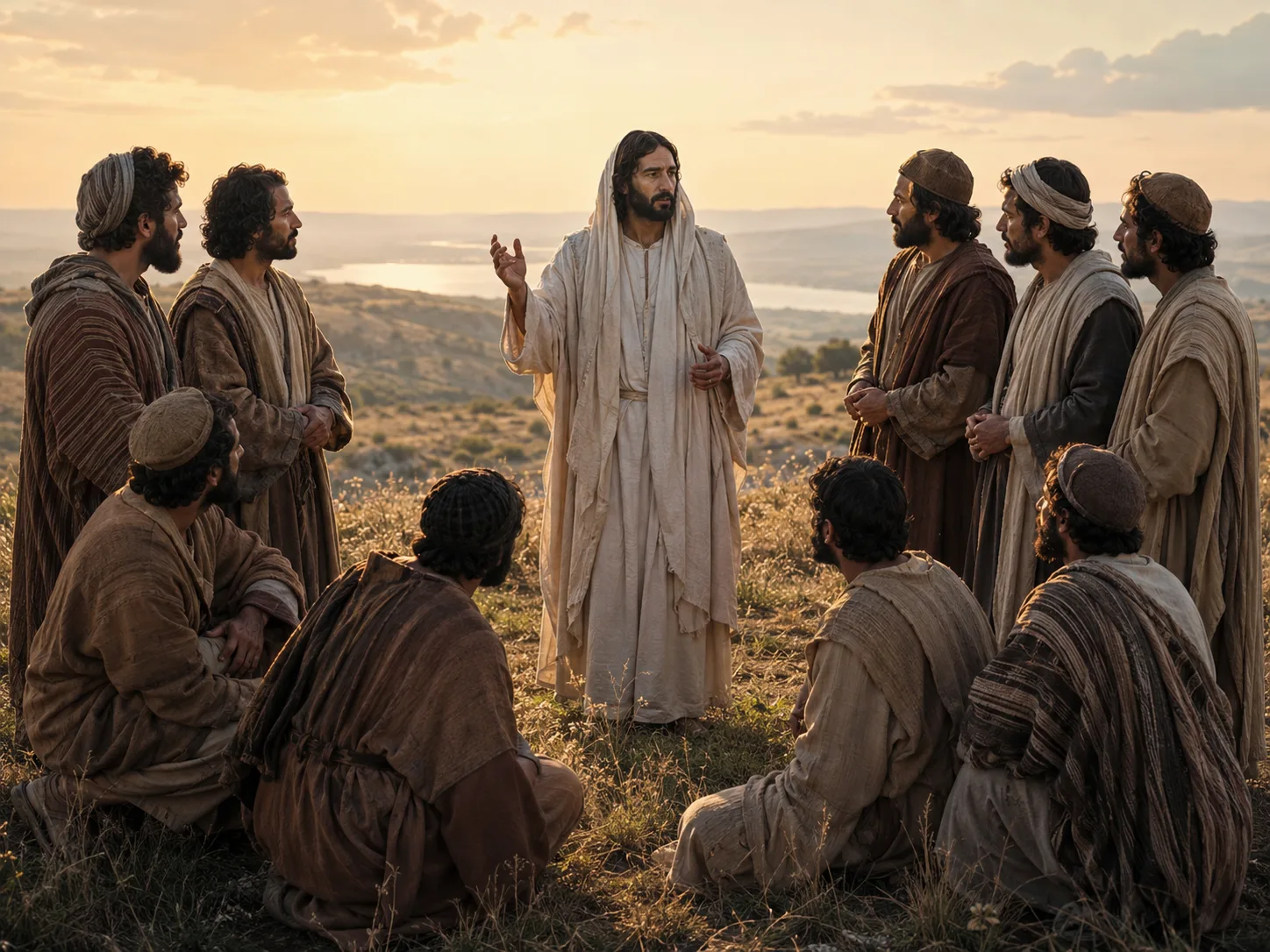
"And Jesus came and spake unto them, saying, All power is given unto me in heaven and in earth. Go ye therefore, and teach all nations, baptizing them in the name of the Father, and of the Son, and of the Holy Ghost: teaching them to observe all things whatsoever I have commanded you: and, lo, I am with you alway, even unto the end of the world. Amen."
Matthew 28:18-20, KJV
The verse is an instruction. It is given by the risen Christ to the eleven disciples at the close of His earthly ministry, immediately before the ascension. It instructs them to do three things: go to all nations, teach them, and baptize them under a particular authority. The verse contains no theological definition of God. It does not use the word "God." It does not assert that the Father, Son, and Holy Ghost are three co-equal, co-eternal persons sharing one essence. It does not define their relation. It does not include the words "Trinity," "triune," "one substance," or "one being." It is silent on every theological question that the post-Nicene tradition would later read into it.
What it does name is three: the Father, the Son, and the Holy Ghost. Each name is real. Each has a settled meaning in the rest of Christ's teaching, which the disciples standing before Him had received over three and a half years. To understand what the verse is instructing them to do, the verse's three names must be filled in with the content Christ Himself had given them.
The Verse Is Not a Trinity Proof Text
Modern Trinitarian apologetics often cites Matthew 28:19 as the strongest single proof of the Trinity. The argument is simple. Three names are listed in one verse, joined by a singular "name." Three-in-one. Therefore the Trinity.
The argument reads into the verse what the verse does not say. Listing three names in one sentence does not mean the three are one being. Paul addresses his letter to the saints "in Christ Jesus" together with "the bishops and deacons" (Philippians 1:1) in a single sentence; this does not mean Christ, bishops, and deacons share one essence. The unity of essence the Trinity asserts is a metaphysical claim that has to come from somewhere; it does not come from the syntax of Matthew 28:19. To read the verse as a Trinitarian proof text, one has to import the Nicene doctrine from outside the text and then claim the text confirms it.
The verse is not, in its own terms, a teaching about the inner being of God. It is a commission about baptism. The identities of the three named are settled by Christ's other teachings, not invented by this single sentence.
The Three As Christ Himself Teaches Them
Christ's own teaching about who the Father, Son, and Holy Spirit are is unambiguous. Each can be read directly from His own words.
The Father is the only true God. In His high-priestly prayer the night before His crucifixion, Christ said:
"And this is life eternal, that they might know thee the only true God, and Jesus Christ, whom thou hast sent."
John 17:3, KJV
The Father is named, by Christ Himself, as "the only true God." Jesus Christ, by the same verse, is the One the Father has sent — distinct from the Father, sent by the Father. The Father is the one God; the Son is His sent One.
The Son is the only begotten of the Father. Christ said of Himself, against the unbelieving Jews who accused Him of blasphemy:
"Say ye of him, whom the Father hath sanctified, and sent into the world, Thou blasphemest; because I said, I am the Son of God?"
John 10:36, KJV
And John's gospel opens with the same identification: "the only begotten of the Father, full of grace and truth" (John 1:14); "the only begotten Son, which is in the bosom of the Father" (John 1:18); "his only begotten Son" (John 3:16). The Son is the begotten Son of the only true God — real Sonship, real begetting, not metaphor.
The Holy Spirit is the Father's and the Son's personal presence. Christ's teaching here requires a careful side-by-side reading of the Synoptic gospels. In Matthew 10:20, instructing the disciples on what to say when they are brought before councils, Christ says:
"For it is not ye that speak, but the Spirit of your Father which speaketh in you."
Matthew 10:20, KJV
In the parallel passage in Mark 13:11, Christ gives the same instruction in identical context, and the words are:
"Take no thought beforehand what ye shall speak, neither do ye premeditate: but whatsoever shall be given you in that hour, that speak ye: for it is not ye that speak, but the Holy Ghost."
Mark 13:11, KJV
The two parallel passages set "the Spirit of your Father" and "the Holy Ghost" in interchangeable position. They are the same Spirit. The Holy Spirit, in Christ's own vocabulary, is the personal presence of the Father — not a third divine person beside the Father, but the Father's own Spirit reaching the disciple. Galatians 4:6 names the same reality from the Son's side: "God hath sent forth the Spirit of his Son into your hearts." The Spirit is the personal presence of both the Father and the Son.
The Spirit of a person is not a different person from the one whose Spirit it is. The Spirit of the Father is the Father's own personal presence. The Spirit of the Son is the Son's own personal presence.
"In the Name Of" Means By the Authority Of
The phrase "in the name of" in biblical Hebrew and biblical Greek is an idiom for "by the authority of." It is the standard ancient construction for acting under another's commission. A Roman soldier acted "in the name of Caesar" — that is, by Caesar's authority. A Hebrew prophet spoke "in the name of the LORD" — that is, by the LORD's authority. The phrase does not necessarily mean repeating the named one's name aloud; it means acting under that one's commissioned authority.
The verse immediately preceding Matthew 28:19 makes the authority framework explicit. Christ's opening words to the eleven, before He gives the baptismal commission, are:
"All power is given unto me in heaven and in earth."
Matthew 28:18, KJV
The Greek word for "power" here is ἐξουσία (exousia) — the standard New Testament word for authority. All authority in heaven and earth has been given to the Son. Verse 19 then opens with "Go ye therefore" — that is, on the basis of the authority just declared. The disciples are commissioned to baptize "in the name of" the Father, the Son, and the Holy Spirit because that name is the authority that has been given to the Son and which He now extends through them.
Why "Name" Singular, Not Plural
A second feature of the verse confirms the authority reading. The verse says "the name" (singular) — not "the names" (plural). Three persons are named, but the name under which they jointly act is one. One authority. One commission. One commissioned act of baptism.
The biblical framework for this singular-name relationship runs back to Exodus 23:21, where the LORD says of the Angel He is sending before Israel: "Beware of him, and obey his voice, provoke him not; for he will not pardon your transgressions: for my name is in him." The Father's name is in the Son. The Son carries the Father's name by inheritance (Hebrews 1:4). The Spirit is the Father's and Son's personal presence in the believer. There is one name in three personal manifestations — the Father (Who owns it), the Son (Who bears it by inheritance), and the Spirit (who delivers it into the heart of the believer). To baptize "in the name" is to baptize under that single, undivided divine authority.
Instruction or Verbal Formula?
With the verse's framework in place, the central question can be put plainly. Did Christ intend the disciples to recite the exact phrase "in the name of the Father, and of the Son, and of the Holy Ghost" verbatim at every baptism, on pain of invalidating the act if they varied the words? Or did He intend them to perform baptism under the authority just named, with the verbal form left to the meaning the words must convey?
The decisive evidence is the practice of the apostles in the book of Acts. The eleven men who stood before Christ on the mount and heard the commission directly from His own lips became, in the immediately following months, the apostles of the first New Testament church. They baptized many thousands of converts. The book of Acts records, in narrative form, the words used. The pattern is uniform.
The Baptisms of Acts
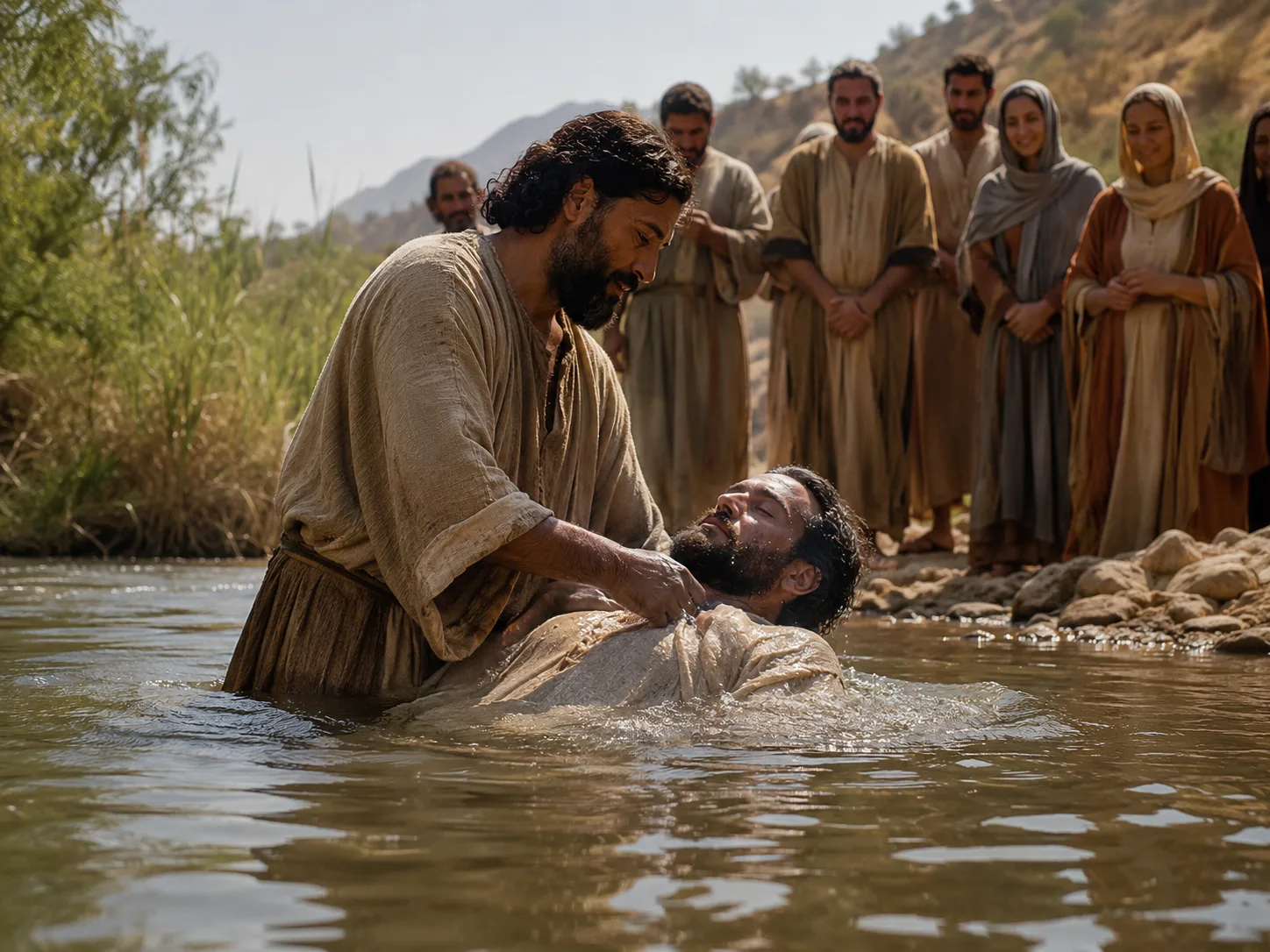
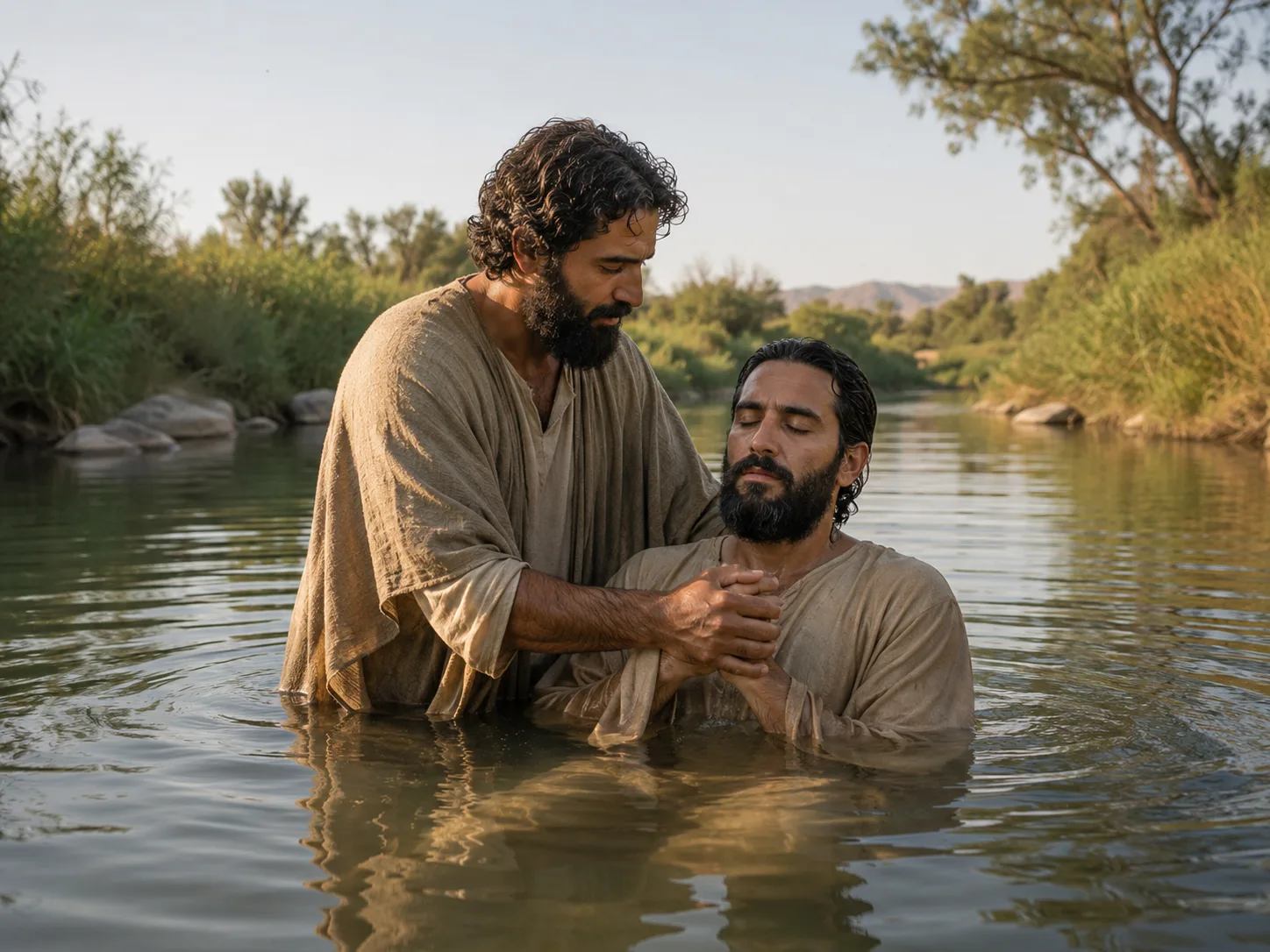
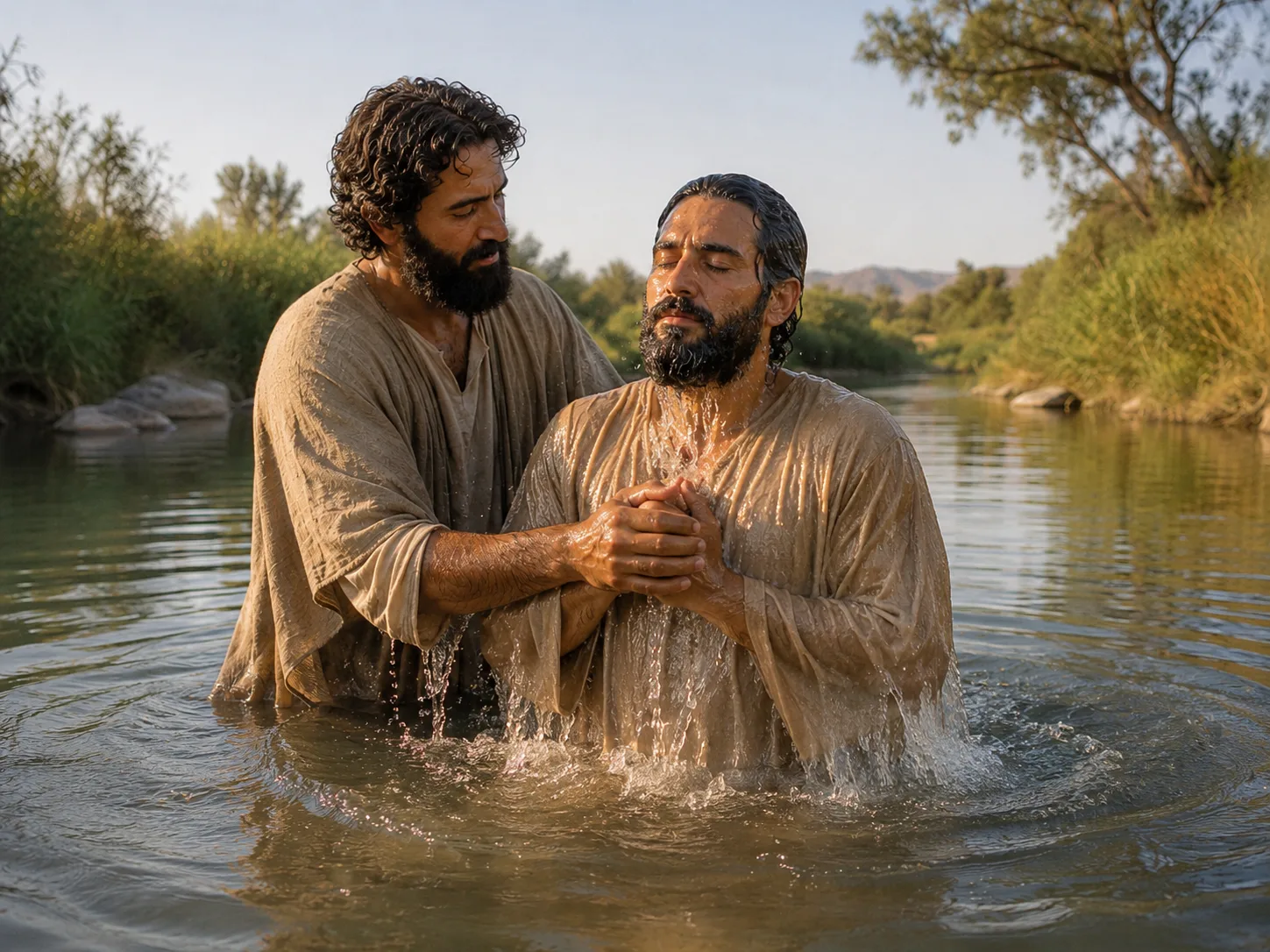
Every recorded baptism in the book of Acts is performed in the name of Jesus.
- Acts 2:38 — Peter at Pentecost. On the day the church is born, Peter, preaching the first New Testament sermon under the direct inspiration of the Spirit poured out from the ascended Christ, tells the convicted multitude: "Repent, and be baptized every one of you in the name of Jesus Christ for the remission of sins, and ye shall receive the gift of the Holy Ghost." Three thousand are baptized that day, in the name of Jesus Christ.
- Acts 8:12-16 — The Samaritan converts. Philip preaches "the things concerning the kingdom of God, and the name of Jesus Christ" in Samaria. Men and women believe and are baptized. When Peter and John come down to lay hands on them for the Spirit, the text is explicit: "they were baptized in the name of the Lord Jesus."
- Acts 10:48 — Cornelius and his household. After the Spirit falls on the Gentile household of Cornelius, Peter commands "them to be baptized in the name of the Lord."
- Acts 19:5 — The disciples at Ephesus. Paul finds twelve men who had been baptized only into John's baptism. He explains the gospel of Christ. They are rebaptized: "they were baptized in the name of the Lord Jesus."
- Acts 22:16 — Paul's own baptism. Ananias instructs the newly-converted Saul: "arise, and be baptized, and wash away thy sins, calling on the name of the Lord."
Every recorded baptism in the New Testament era is performed in the name of Jesus Christ. The eleven apostles who heard Matthew 28:19 directly from Christ's own lips did not understand Him to be giving them a verbatim mantra. They understood Him to be commissioning them to baptize under His authority — and they expressed that authority by naming Him.
Why Jesus's Name Fulfills the Instruction
The apostolic practice is not a contradiction of Matthew 28:19. It is the fulfillment of it. The reason becomes clear once the Father-Son-Spirit framework Christ taught is held in mind.
The Son is the only way to the Father. "I am the way, the truth, and the life: no man cometh unto the Father, but by me" (John 14:6). To baptize a believer into reconciliation with the Father is to baptize him into Christ, by Whom alone the Father is reached.
The Son is the giver of the Spirit. "If any man thirst, let him come unto me, and drink. He that believeth on me, as the scripture hath said, out of his belly shall flow rivers of living water. (But this spake he of the Spirit, which they that believe on him should receive)" (John 7:37-39). And again: "It is expedient for you that I go away: for if I go not away, the Comforter will not come unto you; but if I depart, I will send him unto you" (John 16:7). The Spirit comes through the Son.
The authority of heaven is vested in the Son. "All power is given unto me in heaven and in earth" (Matthew 28:18). To baptize under any authority is to baptize under His.
To baptize in the name of Jesus is therefore, on every count, to baptize in the name of the Father (Whose Son He is and Whose authority He bears), of the Son (Whose name He bears), and of the Holy Spirit (whom He gives). The single name of Matthew 28:19 finds its fulfilled form in the apostolic naming of Jesus. The instruction is kept. The verbal form by which it is kept is not a recitation; it is a confession.
The Parrot Syndrome
The fanaticism that turns Matthew 28:19 into a verbatim mantra goes back to the same religious instinct that produced the Pharisees' treatment of the Mosaic law. The instinct is to make the right religious act consist in the exact performance of a prescribed verbal or physical motion, in such a way that any deviation invalidates the act. The Pharisees did this with the Sabbath, with handwashing, with tithing, with fasting. The same instinct, transposed onto baptism, produces what may justly be called a parrot syndrome — the conviction that the believer's baptism is valid only if the celebrant's lips move in the prescribed sequence.
The clearest modern parable of the parrot syndrome is the 2022 Roman Catholic ruling on baptisms performed by Fr. Andres Arango of Phoenix, Arizona. For decades Fr. Arango had habitually said "we baptize you in the name of the Father, and of the Son, and of the Holy Spirit" rather than the formula's prescribed "I baptize you." The Vatican's Congregation for the Doctrine of the Faith ruled, when the variation came to light, that every one of the thousands of baptisms Fr. Arango had performed was invalid. The wording outside the verse itself — the change of pronoun from "I" to "we" — was sufficient, in the Vatican's judgment, to nullify the sacrament. Fr. Arango resigned to dedicate himself to "remedying" the affected baptisms.
The same instinct, in a different denominational setting, produces the believer who insists that baptism in the name of Jesus is invalid because it does not recite the Matthew 28:19 wording — or, from the opposite direction, the believer who insists that baptism in the threefold name is invalid because it does not recite the Acts 2:38 wording. Both are operating on the parrot premise: that the verbal form of the act is the load-bearing element. Both invalidate, against each other, baptisms the apostles themselves would have recognised as valid.
The Pharisees Forbade the Name
A specific feature of the apostolic record deserves notice. The Pharisees and Sanhedrin in the days immediately after Pentecost actively forbade the apostles to speak in the name of Jesus.
"And they called them, and commanded them not to speak at all nor teach in the name of Jesus."
Acts 4:18, KJV
"Saying, Did not we straitly command you that ye should not teach in this name? and, behold, ye have filled Jerusalem with your doctrine, and intend to bring this man's blood upon us."
Acts 5:28, KJV
The apostolic response is famous: "We ought to obey God rather than men" (Acts 5:29). And they continued, daily in the temple and in every house, to teach and preach Jesus Christ. The opposition that singles out the name of Jesus for prohibition is therefore not a new phenomenon. It was the very first organised opposition the post-Pentecost church faced. Any teacher today who would forbid baptism in the name of Jesus — on the grounds that the only valid baptism uses a verbatim threefold formula and Jesus's name alone is inadmissible — has placed himself, perhaps without realising it, in the position of those who originally forbade the apostles to use that name. The pattern is the same. Beware of those who forbid the use of the name of Jesus.
The Sons of Sceva: Words Without Faith
The mirror error is equally instructive. Acts 19:13-16 records the case of seven sons of a Jewish chief priest named Sceva, who attempted to use Jesus's name as a verbal incantation in an exorcism:
"Then certain of the vagabond Jews, exorcists, took upon them to call over them which had evil spirits the name of the Lord Jesus, saying, We adjure you by Jesus whom Paul preacheth. And there were seven sons of one Sceva, a Jew, and chief of the priests, which did so. And the evil spirit answered and said, Jesus I know, and Paul I know; but who are ye? And the man in whom the evil spirit was leaped on them, and overcame them, and prevailed against them, so that they fled out of that house naked and wounded."
Acts 19:13-16, KJV
The sons of Sceva were trying to use the name of Jesus as a verbal formula divorced from faith in the Son of God. They got the words right. They identified the Jesus they meant ("whom Paul preacheth"). And the evil spirit nevertheless rejected them, because the words were not backed by the personal relation with Christ that gives the name its power. Words without faith have no efficacy in either direction. The power of the name of Jesus belongs to those who actually know Him and are commissioned by His authority. The parrot can repeat the syllables. The believer carries the reality.
The Apostolic Council and the Spirit of Adding Ritual
A third New Testament parallel illuminates the modern dispute. Acts 15 records the controversy in the early church over whether Gentile converts must be circumcised to be saved. Certain men "came down from Judaea" and taught the Gentile brethren: "Except ye be circumcised after the manner of Moses, ye cannot be saved" (Acts 15:1). The apostolic council met in Jerusalem and ruled decisively that no such ritual burden was to be laid on the Gentile believers (Acts 15:19-29).
The spirit at work in the Judaean teachers was the spirit of adding ritual requirements to the simple gospel. Today the same spirit, in the question of baptism, takes the form of "Except ye be baptized using the right words, in the right order, with no deviation, your baptism is invalid." It is the same instinct in a different ritual. The apostolic answer is the same as it was in Acts 15: no such burden is to be laid on the believer. The gospel is faith in Jesus Christ. The baptism is its outward seal. The exact verbal form of the baptismal pronouncement is not a salvation issue.
What Should Be Said at Baptism
With all of this in view, the pastoral question becomes simple. What should be said at baptism?
The answer is: words that convey the meaning of what is happening. The minister may, with no biblical objection, use the wording of Matthew 28:19 directly. He may, with no biblical objection, use the Acts 2:38 wording — "in the name of Jesus Christ." He may combine the two. He may speak words that name what the believer is confessing and what the baptism is for, without strict adherence to either verbal pattern. The point is the meaning. The meaning is fourfold: repentance toward the Father (the only true God); faith in the Son (His only begotten); reception of the Spirit (their personal presence in the believer); and the act performed under the divine authority vested in the name of Jesus.
A faithful pronouncement might therefore sound something like this:
"Brother [or sister], because of your testimony of repentance toward God the Father, and your faith in His only begotten Son, that you might receive the gift of the Holy Spirit, I now baptize you in the name of the Lord Jesus Christ."
This pronouncement holds together everything the New Testament names. The repentance is named (Acts 2:38 — "repent and be baptized"). The Father is named as the One to Whom repentance is directed (Acts 20:21 — "repentance toward God"). The only begotten Son is named as the object of faith (John 3:16). The gift of the Holy Spirit is named as the promise (Acts 2:38; John 7:39). The authority of Jesus is named as the name under which the act is performed (Acts 19:5). Matthew 28:19 is kept. Acts 2:38 is kept. The meaning of both is held together.
No believer should be told that this pronouncement, or any faithful pronouncement that conveys these realities, has invalidated the baptism. The believer who has been baptized in the name of the Father, Son, and Holy Spirit with faith in Christ has been validly baptized. The believer who has been baptized in the name of Jesus with faith in Christ has been validly baptized. The variation in verbal form does not undo the apostolic act when the meaning held by both believer and minister is faithful.
When Re-baptism Is Warranted
There is one circumstance in which the New Testament records a deliberate re-baptism, and it is instructive. Acts 19:1-5 records Paul's encounter with twelve men at Ephesus who had been baptized only with John's baptism — that is, the baptism of repentance, before the gospel of Christ's death, resurrection, and gift of the Spirit was fully made known. Paul does not tell these men that John's baptism was sufficient. He preaches Christ to them. When they hear and believe, they are baptized again — this time in the name of the Lord Jesus.
The principle is that re-baptism is warranted when the original baptism did not include the gospel of Christ — when the believer's previous baptism was given before he understood and confessed the Son of God. It is not warranted by a verbal variation in the form of a baptism that already named Christ. The believer who has been baptized confessing the gospel — with whatever verbal form — has fulfilled the apostolic act. The believer whose previous baptism preceded his understanding of Christ may legitimately seek to be baptized again in His name.
Baptism Is About Jesus, Not About Words
The whole weight of the New Testament treatment of baptism falls on what baptism IS, not on what is SAID at it. Romans 6:3-4 describes baptism as union with the death of Christ and rising with Him to walk in newness of life. Colossians 2:12 describes baptism as buried with Him and risen with Him through the faith of the operation of God. 1 Peter 3:21 describes baptism as the answer of a good conscience toward God, by the resurrection of Jesus Christ. Galatians 3:27 says that as many as have been baptized into Christ have put on Christ. Every passage names the substance — death, burial, resurrection, union with Christ, the indwelling of the Spirit, entrance into the body of believers. None of them treats the syllables of the baptismal pronouncement as the load-bearing element.
The Captain Who commissioned the apostles to baptize and the Captain in Whose name they baptized is the same Captain. The believer whose faith is in Him, whose repentance is real, and whose immersion is performed by a believing minister under His authority, has been baptized — regardless of the precise verbal arrangement of the pronouncement. The forces that would invalidate that baptism on the grounds of a verbal variation are pulling against the apostolic example itself.
Conclusion: Liberty in Form, Fidelity in Meaning
The closing word can be put compactly. Liberty in the form. Fidelity in the meaning. Anchor in Christ. Where these three hold, no biblical authority can invalidate a baptism. Where any of them fails, more than a verbal correction is needed.
Beware of those who forbid the name of Jesus to be spoken at baptism. Beware of those who forbid the Matthew 28:19 wording. Beware of the spirit of fanaticism that turns the apostolic ordinance into a magical recitation. Receive every believer who has confessed Christ and been buried with Him in the waters of baptism. Welcome them into the family of God. And press the question, where it must be pressed, on the meaning of what was confessed and on the reality of the faith that did the confessing. The substance is Christ. The form serves the substance. The believer who has Christ has been baptized into Him; the form that conveyed the act is the form, and the form is not the act.
Scripture Index
- Matthew 28:18-20. The Great Commission — Christ's authority, the instruction to baptize all nations in the name of the Father, Son, and Holy Spirit, and His promise to be with the disciples to the end of the age.
- Acts 2:38; 8:12-16; 10:48; 19:5; 22:16. The apostolic record of baptism — every recorded New Testament baptism is performed in the name of Jesus.
- John 17:3; John 10:36; John 3:16; John 1:14, 18. Christ's own teaching on the identity of the three named in Matthew 28:19 — the Father as the only true God, the Son as His only begotten.
- Matthew 10:20; Mark 13:11; Galatians 4:6. The Holy Spirit identified as the Father's and Son's own personal presence — the synoptic parallel and Paul's explicit statement that God has sent forth the Spirit of His Son into the heart of the believer.
- John 14:6; John 7:37-39; John 16:7. The Son as the only way to the Father and as the giver of the Spirit — why baptism in His name fulfills the threefold instruction.
- Exodus 23:21; Hebrews 1:4. The Father's name is in the Son; the Son has inherited a more excellent name — the framework for the single "name" of Matthew 28:19.
- Acts 4:18; 5:28; 5:40-42. The Pharisees forbade the apostles to speak in the name of Jesus; the apostles continued to teach and preach Jesus Christ daily.
- Acts 19:13-16. The sons of Sceva — the name of Jesus used as a verbal formula without underlying faith is powerless. Words without the reality they describe carry no authority.
- Acts 15:1-29. The apostolic council — the spirit of adding ritual requirements to the gospel ("Except ye be circumcised…") was rejected by the early church. The same spirit today says "Except ye be baptized with these exact words…" — and the apostolic answer is the same.
- Romans 6:3-4; Colossians 2:12; Galatians 3:27; 1 Peter 3:21. The New Testament theology of baptism — what baptism IS (death, burial, resurrection, union with Christ, putting on Christ, answer of a good conscience). The substance, not the syllables.