Few subjects grip the modern Christian imagination like the rapture — and almost no one who repeats the popular version has ever laid it beside what the Bible actually says about the coming of the Lord. When you do, the two-stage scheme comes apart, and something far more sobering, and far more glorious, stands in its place.
The two-stage coming most people were taught
The pre-tribulation view splits the return of Christ into two events years apart. First a secret, silent rapture: Jesus comes for His saints, invisibly, and catches them away before any trouble begins. Then, seven years later, He comes with His saints, visibly, to end the Tribulation and reign. The rapture is the escape hatch; the Tribulation is for everyone else.
Say plainly what this requires: two comings, or one coming in two stages — one hidden, one open. Everything in the scheme hangs on that split.
The argument is usually filed under “pre-tribulation versus post-tribulation” — is the church caught away before the tribulation or after it? But that very framing concedes the fatal premise: that there is a secret, separate rapture to be timed at all. Take that away, and the Bible’s picture is single and plain — one coming, at the very end, with God’s people carried safely through the trouble to meet Him.
The Bible knows one coming, and it is anything but secret
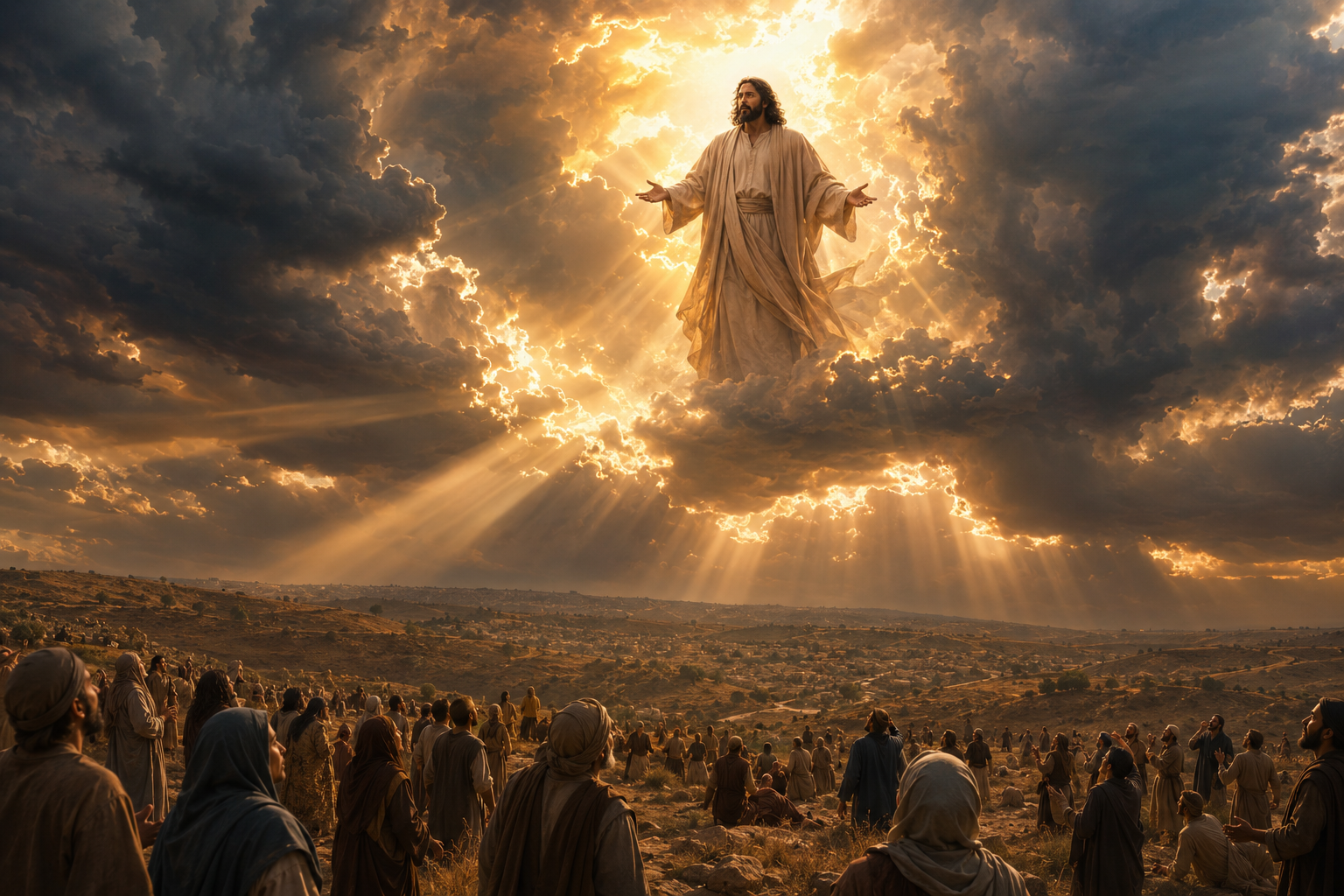
Jesus went out of His way to rule out a secret coming. “For as the lightning cometh out of the east, and shineth even unto the west; so shall also the coming of the Son of man be” (Matthew 24:27). Lightning across the whole sky is the opposite of a quiet disappearance. “And then shall appear the sign of the Son of man in heaven…and they shall see the Son of man coming in the clouds of heaven with power and great glory” (Matthew 24:30).
John leaves no room for a private event: “Behold, he cometh with clouds; and every eye shall see him, and they also which pierced him” (Revelation 1:7). Not the eye of the church only — every eye. Paul describes the same moment as a thunderclap: the Lord descends “with a shout, with the voice of the archangel, and with the trump of God” (1 Thessalonians 4:16). A shout, an archangel’s voice, and the trumpet of God are not the machinery of a secret.
There is no text anywhere that describes a silent, invisible coming to remove the church. Every description of His return is loud, visible, and worldwide.
“Caught up” — at the last trumpet, with the whole church
The word “rapture” comes from the Latin of one real text: “then we which are alive and remain shall be caught up together with them in the clouds, to meet the Lord in the air” (1 Thessalonians 4:17). The living saints will indeed be caught up. But read the verse before it: this happens at the same moment the dead are raised, when the Lord descends with the shout and the trumpet. It is not a separate secret event — it is the public second coming.
Paul dates it exactly elsewhere: “We shall all be changed, in a moment, in the twinkling of an eye, at the last trump” (1 Corinthians 15:51-52). The last trumpet — not a first, secret one seven years earlier. The resurrection of the righteous, the changing of the living, and the catching up all fall together, at one final, unmistakable blast.
Paul settles the timing outright
The Thessalonians had been shaken by a rumour that the day of Christ was already upon them, and Paul wrote to steady them in words that quietly demolish the pre-tribulation scheme: “Let no man deceive you by any means: for that day shall not come, except there come a falling away first, and that man of sin be revealed” (2 Thessalonians 2:3).
Read it slowly. The gathering to Christ does not happen until the great apostasy and the man of sin have already come. Paul puts the church on earth through the rise of the antichrist power — not evacuated safely before it. Were the saints raptured away first, his entire argument would be impossible.
God keeps His people through the fire, not out of it
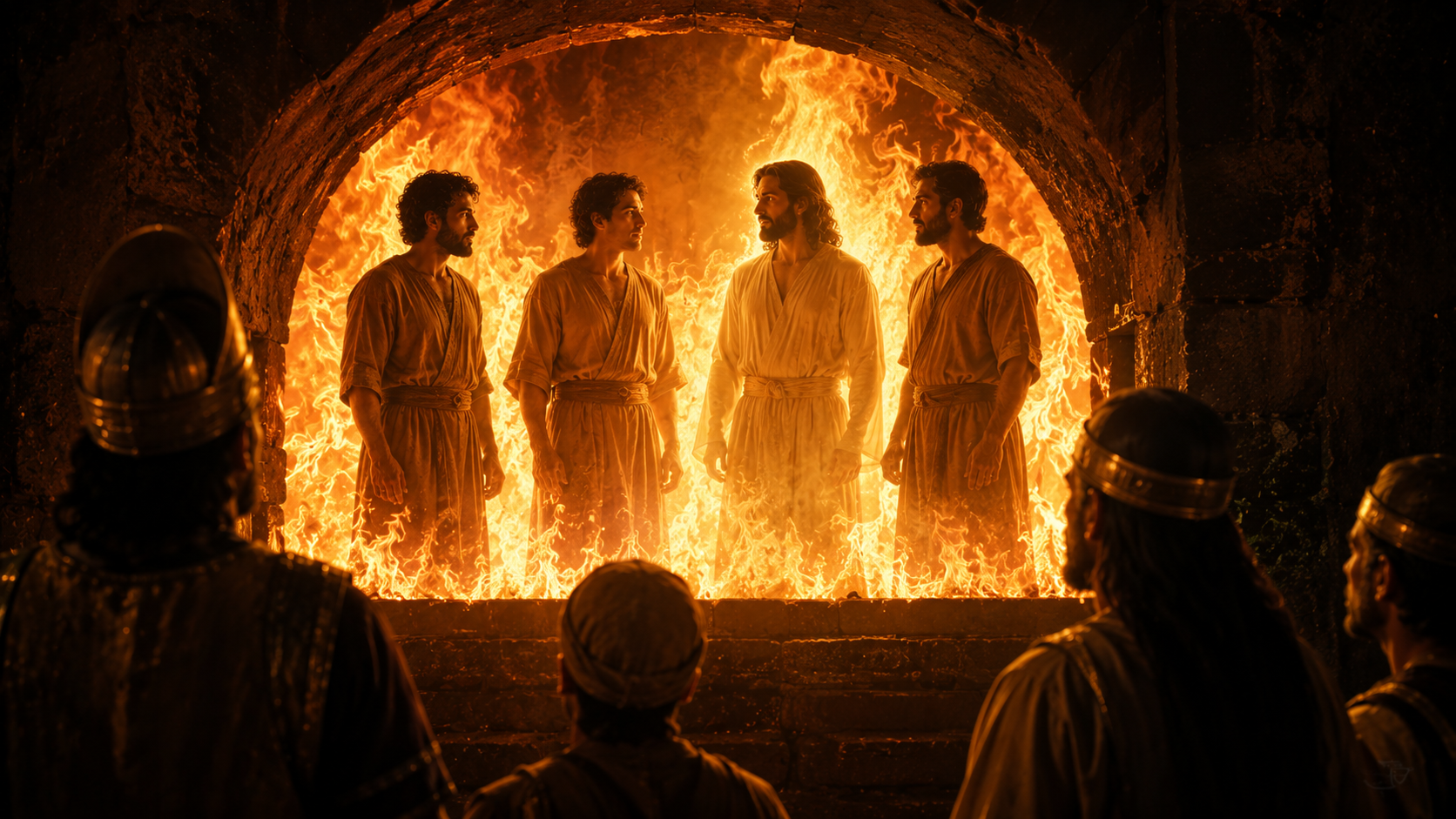
The deepest fault in the secret rapture is that it misreads how God has always dealt with His people. He does not spare them trouble by removing them from the world; He carries them through it. Noah was not lifted off the earth — he was preserved through the flood, shut safely inside the ark while the judgment fell. Israel was not evacuated from Egypt before the plagues — they were sheltered under the blood while the plagues struck all around them. The three Hebrews were not kept out of the furnace; the Son of God met them in it, and nothing burned but their bonds.
Jesus made it His own prayer: “I pray not that thou shouldest take them out of the world, but that thou shouldest keep them from the evil” (John 17:15). And Revelation shows the last generation exactly so — a great multitude that “came out of great tribulation” (Revelation 7:14), sealed and kept through it, not exempted from it. The promise is preservation, not escape.
Where the secret rapture actually came from
For eighteen hundred years no Christian taught a secret, pre-tribulation rapture. The Reformers never heard of it. It surfaces in the 1830s, systematised by John Nelson Darby and built on futurism — the reading first advanced by the Jesuit Francisco Ribera to deflect the Reformation’s charge that the papacy is the antichrist, by pushing the great prophecies off into a short future period. C.I. Scofield stitched the scheme into the margins of his reference Bible in 1909, and from there it spread through the modern church and into the Left Behind novels.
The historic Protestant and Adventist reading — historicism — traces the prophecies down through real history instead, and has no room for a secret escape. The fuller account of the three ways men read prophecy, and why two of them were engineered in Rome, is told in the companion study on the historicist method.
Why it matters — and it does
This is no quarrel over a detail. A teaching that promises the church will be gone before the final crisis leaves people unprepared to stand in it. If the trumpet the theory waits for is the last one, and the trouble comes first, then a whole generation has been told it will never face what it will in fact face — and told to expect an exit that never comes.
The Bible’s hope is better and braver than a secret escape. It is “that blessed hope, and the glorious appearing of the great God and our Saviour Jesus Christ” (Titus 2:13) — one coming, seen by every eye, when the dead rise and the living are changed and caught up together to meet Him. He does not promise to spare His people the storm; He promises to bring them through it, and to come for them Himself, in the open, at the last trumpet. “Watch therefore: for ye know not what hour your Lord doth come” (Matthew 24:42).