

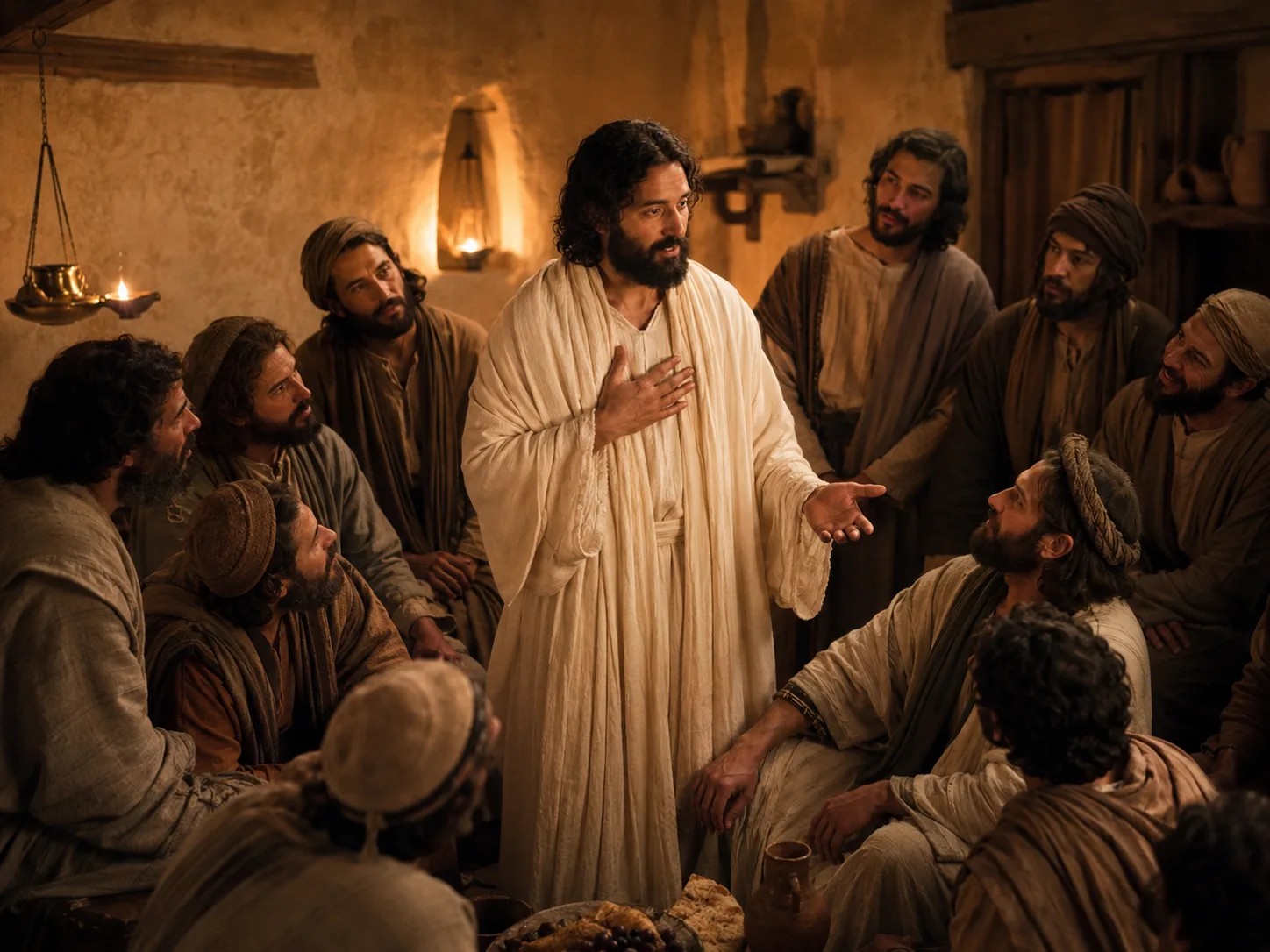
At the close of the long teaching He gave His disciples on the night before His crucifixion, Jesus paused and told them, in a single sentence, how they should have been reading everything He had just said. The sentence is John 16:25: “These things have I spoken unto you in proverbs: but the time cometh, when I shall no more speak unto you in proverbs, but I shall shew you plainly of the Father.” For nearly three chapters of the Gospel of John — the farewell discourse, John 14 through 16 — Jesus had been teaching in figurative speech, the kind of dark sayings and illustrations the King James calls proverbs and the synoptic Gospels call parables. He says so explicitly. He says the time is coming when He will stop and speak plainly. The plain speech follows immediately, and the disciples notice the difference.
This single hermeneutic key, given by Christ Himself, governs how the Comforter passages in John 14, 15, and 16 should be read. They are part of the parabolic teaching He just identified. They are not plain speech. Read as parables — read the way the Good Shepherd parable and the Vine and Branches parable in the same discourse are read — they identify the Comforter not as a third co-equal divine person, but as Christ Himself, returning to His disciples after His ascension in a new and inward form, by the Spirit. The doctrine of the Trinity teaches a Holy Spirit who is a third co-equal person of the Godhead. The Bible, read with Christ’s own stated hermeneutic, teaches something different.
Christ’s own hermeneutic key
The farewell discourse is the longest single block of Christ’s teaching the Bible records. It begins immediately after Judas leaves the Last Supper (John 13:30) and runs through the high-priestly prayer of John 17. Only John records it. The other three gospels give the impression that Jesus left the supper room and walked directly to His arrest; John tells us there was something else in between — a private, intimate, sustained teaching given to the eleven disciples who would carry the gospel into the world after Christ’s departure.
Most of the discourse is unfamiliar to readers who know only the synoptic gospels. There are no public parables here, no Sermon on the Mount, no exorcisms. Instead there are deep figures and illustrations woven through the discourse: the door, the vine, the branches, the way, the truth, the life, the Good Shepherd, the woman in travail, the Father in the Son, the Son in the believer. Jesus is teaching in figurative speech the whole time — and at John 16:25 He says so:
“These things have I spoken unto you in proverbs: but the time cometh, when I shall no more speak unto you in proverbs, but I shall shew you plainly of the Father.”
John 16:25, KJV
The King James “proverbs” translates the Greek paroimia — figurative or dark saying, the same family of words used for the parables in the synoptic gospels. (The Greek of the synoptics is parabolē; paroimia and parabolē overlap in meaning, and the same dynamic governs both: the surface meaning is not the intended meaning.) Jesus is telling His disciples that the teaching He has just given them is parabolic. It is not to be read as plain literal speech. The Father, Who is the burden of the whole discourse, is what He has been illustrating through these figures.
And then He says the time is coming when He will stop and speak plainly. Watch what happens next:
“I came forth from the Father, and am come into the world: again, I leave the world, and go to the Father.”
John 16:28, KJV
The shift is immediate. He stops speaking in figures and identifies Himself plainly: He came forth from the Father. The disciples notice the change at once:
“Lo, now speakest thou plainly, and speakest no proverb. Now are we sure that thou knowest all things… by this we believe that thou camest forth from God.”
John 16:29–30, KJV
In one passage, in one evening, Jesus contrasts His own parabolic speech with His own plain speech, and the disciples draw the line themselves. The parabolic speech is everything before John 16:25 — including all four mentions of the Comforter. The plain speech is what comes after — His begotten Sonship from the Father.
This is the hermeneutic key. The Comforter passages of John 14–16 are parable language. They cannot be read as plain literal speech without violating Christ’s own stated method. The article that follows reads them the way Christ said they should be read.
What triggered the parable teaching
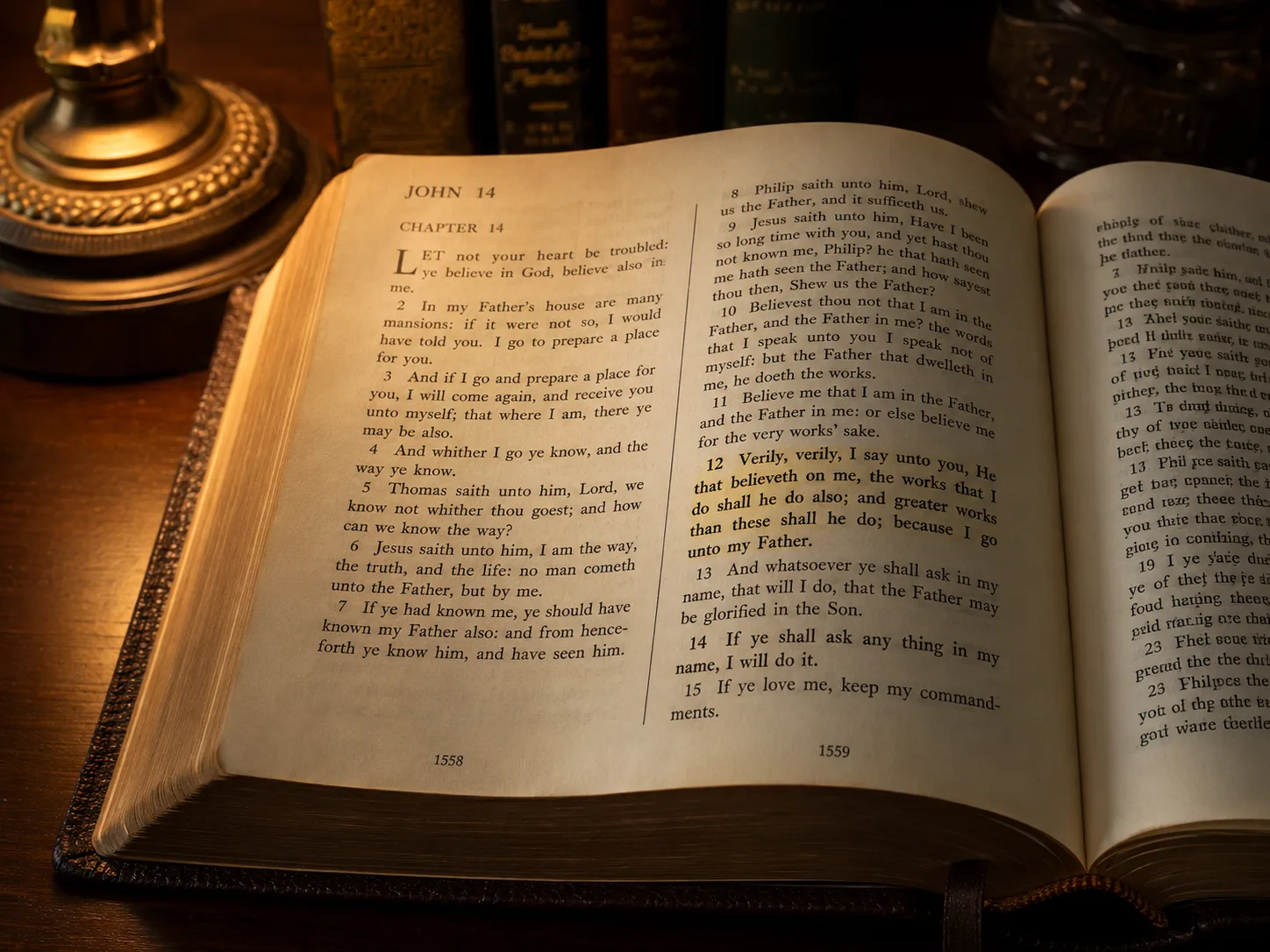
The discourse opens with one of Christ’s most familiar declarations:
“I am the way, the truth, and the life: no man cometh unto the Father, but by me.”
John 14:6, KJV
He follows this immediately with the assurance that to know Him is to know the Father:
“If ye had known me, ye should have known my Father also: and from henceforth ye know him, and have seen him.”
John 14:7, KJV
Philip speaks up from the group with a question that betrays how much the disciples were still missing:
“Lord, shew us the Father, and it sufficeth us.”
John 14:8, KJV
Christ’s response carries audible disappointment:
“Have I been so long time with you, and yet hast thou not known me, Philip? he that hath seen me hath seen the Father; and how sayest thou then, Shew us the Father?”
John 14:9, KJV
Having tried plain speech and met blank incomprehension, Jesus shifts gears. From this point forward — for the rest of the discourse — He teaches in figurative speech, illustrations, parables. His burden remains the same throughout: He is the only way to the Father; He and the Father are one; to see Him is to see the Father; to receive Him is to receive the Father. But He communicates that truth in figures from John 14:10 onward, because plain speech wasn’t getting through.
The Comforter passages live inside this parabolic teaching. They are the figurative answer to Philip’s question — how Christ will continue to reveal the Father to the disciples once He is physically gone.
First occurrence: John 14:16–18
“And I will pray the Father, and he shall give you another Comforter, that he may abide with you for ever; even the Spirit of truth; whom the world cannot receive, because it seeth him not, neither knoweth him: but ye know him; for he dwelleth with you, and shall be in you. I will not leave you comfortless: I will come to you.”
John 14:16–18, KJV
Read these three verses as a single unit. They are not three separate statements to be cherry-picked individually. Jesus introduces the Comforter in verse 16, identifies the Comforter as the Spirit of truth in verse 17, and then names the Comforter in plain self-identification in verse 18: “I will not leave you comfortless: I will come to you.”
Christ Himself is the One Who is coming. The Comforter is not a third party arriving in His place. The Comforter is Christ Himself, returning to His disciples in a new form — no longer beside them in the flesh, but inwardly, by the Spirit. Verse 18 is the master verse. It governs the interpretation of verses 16 and 17.
“Another” — the Greek word
The Greek word translated “another” in verse 16 is
allos
, not heteros. The distinction matters:
- allos another of the same kind — identical in nature, just another instance.
- heteros another of a different kind — distinct, separate, qualitatively other.
Jesus uses allos. He is promising another Comforter of the same kind — another Comforter just like Himself. The disciples had had a Comforter while Christ walked beside them in the flesh: He was their Teacher, their Defender, their Guide, their Advocate. Now He is promising the same Comforter, in a new mode — by the Spirit instead of in the flesh. Same person. Same character. Same comfort. Different form.
A parable misread elsewhere
There is another well-known passage in the Gospels that gets misread the same way the Comforter passage does. Jesus tells a story of a rich man and a beggar named Lazarus, both of whom die — the beggar carried into Abraham’s bosom, the rich man tormented in flames, the two of them speaking to one another across a great gulf (Luke 16:19–31). Most of Christendom reads this story as plain literal teaching about what happens at death and builds the entire doctrine of the conscious afterlife on it.
But it is a parable. Jesus is teaching the impossibility of post-mortem repentance through a story, not giving a topographical description of the next world. The rest of Scripture — sixty-five other books — teaches that the dead sleep, that the soul is mortal, that there is no consciousness in death. None of that evidence shifts readers who have anchored their doctrine to a parable read as plain speech.
The same hermeneutical mistake produces the Trinitarian doctrine of the Holy Spirit. Readers anchor to the phrase “another Comforter” and treat it as plain speech. The rest of Scripture — Christ’s self-identification two verses later, the explicit parable disclaimer at John 16:25, the apostle John’s own naming of the Paraklētos as Christ in his epistle, the apostolic pattern in Acts — does not shift them. A parable read as plain speech has produced a doctrine the rest of Scripture does not teach.
Second occurrence: John 14:25–26
“These things have I spoken unto you, being yet present with you. But the Comforter, which is the Holy Ghost, whom the Father will send in my name, he shall teach you all things, and bring all things to your remembrance, whatsoever I have said unto you.”
John 14:25–26, KJV
Verse 25 carries an unspoken implication: Christ has been teaching them while present with them. Verse 26 explains what is going to change. The Comforter — the Holy Ghost — will teach them all things and bring His own words to their remembrance. The change is not a change of speakers, with Christ retiring and a new Teacher taking over. The change is a change of mode — Christ continuing His teaching in a new and inward way.
The objection at this point is predictable. “Jesus says he will teach them, not I will teach them. Therefore the Comforter must be someone other than Jesus.” The objection collapses under the next argument.
Christ speaks of Himself as “he” elsewhere — parabolically
In the same gospel of John, Christ describes the Good Shepherd in third-person language:
“He that entereth in by the door is the shepherd of the sheep. To him the porter openeth; and the sheep hear his voice: and he calleth his own sheep by name, and leadeth them out… And a stranger will they not follow, but will flee from him.”
John 10:2–5, KJV
And three verses later Christ identifies the Good Shepherd:
“I am the good shepherd: the good shepherd giveth his life for the sheep.”
John 10:11, KJV
Same speaker, same parabolic register. He speaks of “the shepherd” and “him” and “his” — and then says, “I am that one.” No reader of John 10 concludes that the Good Shepherd is a person distinct from Jesus. Everyone reads it as Christ speaking of Himself in figurative third-person, the way parables work.
The synoptic gospels do the same. Jesus describes the Son of Man in third person — “the Son of man cometh, and all the angels with him; he shall send his angels to gather his elect” (Matthew 25:31; 24:31) — and we all read these as Christ speaking of Himself. The third-person form is parabolic distance. It does not introduce a different person.
To take the Comforter passages as literal third-person reference (a different person from Christ) while taking the Good Shepherd and Son-of-Man passages as parabolic third-person reference (Christ speaking of Himself) is inconsistent. There is no exegetical principle that justifies the difference. The only thing that justifies it is the prior theological commitment to a Trinitarian Holy Spirit — which the disciples did not have, and which Christ’s own hermeneutic at John 16:25 rules out.
The discourse is full of parables
Two other parables sit inside the same farewell discourse, both teaching the same Father–Son–disciple connection from different angles.
In John 15, Christ gives the parable of the Vine and the Branches:
“I am the true vine, and my Father is the husbandman… Abide in me, and I in you. As the branch cannot bear fruit of itself, except it abide in the vine; no more can ye, except ye abide in me.”
John 15:1, 4, KJV
The Father is the husbandman; Christ is the vine; the disciples are the branches. Life flows from the Father through the vine to the branches. There is no fourth element. The vine is the connecting link between Father and disciples, just as Christ is the only way to the Father, and the Comforter is the means by which Christ continues to be that connecting link after His ascension.
The Good Shepherd parable in John 10 teaches the same connection from a different angle. Christ is the door (verse 7), the shepherd (verse 11), the One Who knows His sheep and is known of them (verse 14), the One through Whom the sheep enter into safety (verse 9). The figures vary; the meaning is constant: Christ is the personal mediator between the Father and His people.
No reader takes the Vine as a literal botanical specimen, the Good Shepherd as a literal animal handler, or the Door as a literal wooden plank. The parabolic register is universally recognized. The Comforter passages, sitting inside the same parabolic register, deserve the same reading.
Third occurrence: John 15:26
“But when the Comforter is come, whom I will send unto you from the Father, even the Spirit of truth, which proceedeth from the Father, he shall testify of me.”
John 15:26, KJV
Four identifications in one verse:
- Sent by Christ from the Father Jesus is the sender; the Father is the source.
- Spirit of truth And Jesus is the truth (John 14:6).
- Proceedeth from the Father Comes forth from the Father — the language of personal procession from the Father, not begetting (which is reserved for the Son).
- Testifies of Christ Bears witness to who Christ is.
Notice that the verse does not say the Spirit was begotten of the Father. The language of “begotten” is used in Scripture only of the Son (John 3:16, 1 John 4:9). The Spirit proceeds from the Father — comes forth as the Father’s own personal outgoing presence — and is sent by the Son to the disciples.
The objection at this point is that the Spirit “testifies” of Christ, and testimony implies a separate witness. But how does a spirit testify of someone? Christ Himself tells us in the same discourse:
“At that day ye shall know that I am in my Father, and ye in me, and I in you.”
John 14:20, KJV
The Spirit testifies of Christ by making the words and the presence of Christ a living reality in the disciple. “At that day” — the day of the Comforter’s arrival, which Acts identifies as Pentecost — the disciples will know experientially what Christ had been telling them propositionally: that He is in the Father, that they are in Him, and that He is in them. The testimony is not the report of a witness separate from Christ. The testimony is Christ’s own continued presence in the believer, attested by the believer’s changed life.
Fourth occurrence: John 16:7
“Nevertheless I tell you the truth; It is expedient for you that I go away: for if I go not away, the Comforter will not come unto you; but if I depart, I will send him unto you.”
John 16:7, KJV
Notice the strange dependency. The Comforter cannot come until Christ goes away. If the Comforter were a third person of the Godhead in His own right, why would He be dependent on the departure of Christ? Why wouldn’t He come at any time the Father chose to send Him?
The dependency makes sense only on the reading the rest of the discourse supports. The Comforter is intrinsically linked to the person of Christ. The Spirit cannot be sent until Christ is glorified — compare John 7:39: “the Holy Ghost was not yet given; because that Jesus was not yet glorified.” The Spirit’s arrival in the believer is Christ’s arrival in the believer, and that arrival waits on the cross, the resurrection, and the ascension. If the Comforter were a separate person, none of this should be necessary.
Is the Spirit a person?
A Trinitarian counter-argument at this point is that the New Testament treats the Holy Spirit as a person — He teaches, He leads, He can be grieved, He speaks. Therefore He must be a separate person from the Father and the Son.
The first premise is true. The Spirit is a person. The conclusion does not follow, because Scripture distinguishes between being a person and being a different person.
“For what man knoweth the things of a man, save the spirit of man which is in him? even so the things of God knoweth no man, but the Spirit of God.”
1 Corinthians 2:11, KJV
Paul gives the analogy directly. Your spirit is your inner you — your mind, your character, your invisible self. It is the part of you that knows your own thoughts. Your spirit is a person — it has consciousness, it knows things, it acts — but it is not a different person from you. You are not two persons. Your spirit is you, in your inner aspect.
In the same way, says Paul, the Spirit of God is God’s own inner aspect — God’s personal, knowing, conscious self. It is a person. But it is not a different person from God. And because the Father has given the Son to have life in Himself (John 5:26) and the Father indwells the Son, the Spirit of God is also the Spirit of Christ. Paul says so plainly:
“But ye are not in the flesh, but in the Spirit, if so be that the Spirit of God dwell in you. Now if any man have not the Spirit of Christ, he is none of his. And if Christ be in you, the body is dead because of sin; but the Spirit is life because of righteousness.”
Romans 8:9–10, KJV
Three terms in three consecutive sentences: Spirit of God, Spirit of Christ, Christ in you. Paul uses them interchangeably because they refer to one and the same reality — the personal indwelling presence of the Father and the Son in the believer, by the Spirit they share. The Spirit is a person. The Spirit is not a different person from Christ.
When Jesus shifted to plain speech
Return now to the hermeneutic key. Christ said the time was coming when He would speak plainly. That time arrives at John 16:25.
“These things have I spoken unto you in proverbs: but the time cometh, when I shall no more speak unto you in proverbs, but I shall shew you plainly of the Father.”
John 16:25, KJV
Three verses later, the plain speech arrives:
“I came forth from the Father, and am come into the world: again, I leave the world, and go to the Father.”
John 16:28, KJV
The disciples notice the shift instantly:
“His disciples said unto him, Lo, now speakest thou plainly, and speakest no proverb. Now are we sure that thou knowest all things, and needest not that any man should ask thee: by this we believe that thou camest forth from God.”
John 16:29–30, KJV
What were they sure of? That He came forth from God. The plain speech is His begotten Sonship — His coming forth from the Father before the world was. Their response is the same confession Peter made earlier:
“Thou art the Christ, the Son of the living God.”
Matthew 16:16, KJV
Inside this single evening, Jesus contrasts His own parabolic speech (the Comforter passages of John 14–16) with His own plain speech (His begotten Sonship from the Father). The disciples draw the line themselves. The plain speech reveals who Christ is. The parabolic speech, read in light of the plain speech, reveals who the Comforter is — Christ Himself, coming to His people in a new way after His ascension.
The Spirit of His Son
Paul makes the identification explicit elsewhere. The Spirit the believer receives is named by whose Spirit it is:
“And because ye are sons, God hath sent forth the Spirit of his Son into your hearts, crying, Abba, Father.”
Galatians 4:6, KJV
The Father sends the Spirit of His Son into the heart of the believer. Not a third person. The Spirit OF the Son. The believer’s adoption into the family of God is the result of receiving the Son’s own Spirit — the same Spirit by which the Son cries Abba, Father to His own Father.
Paul calls this the spirit of adoption (Romans 8:15). The believer becomes a son or daughter of God by receiving the Spirit of the only begotten Son. If the Spirit received is anyone other than the Son’s own Spirit — if the Spirit is a third person — then the adoption becomes metaphorical rather than real. We become sons by sharing in the Son’s Spirit, not by receiving a third party’s Spirit. The integrity of the gospel of adoption depends on the Comforter being Christ’s own Spirit.
John’s final witness
The apostle who recorded the Comforter passages in his Gospel wrote a letter to the early church many years later. In that letter, he names the Comforter himself — and the Greek word he uses confirms the identification.
“My little children, these things write I unto you, that ye sin not. And if any man sin, we have an advocate with the Father, Jesus Christ the righteous.”
1 John 2:1, KJV
The word translated “advocate” is the Greek
paraklētos
— the same word translated “Comforter” in the Gospel of John. This is its only other appearance in the New Testament. John uses it once to describe the Comforter Christ promised in the upper room, and once again here to name the believer’s Advocate as Jesus Christ Himself.
The man who heard Christ’s words that evening, who recorded the discourse for posterity, who taught the church for sixty years after Pentecost, names the Paraklētos plainly: Jesus Christ the righteous. He understood the parable. So did the early church he taught.
But what about Matthew 28:19?
A Trinitarian reader at this point will reach for the great commission:
“Go ye therefore, and teach all nations, baptizing them in the name of the Father, and of the Son, and of the Holy Ghost.”
Matthew 28:19, KJV
Three names; therefore three persons, the argument runs. The reading is too quick. Christ does not say “in the names” (plural). He says “in the name” (singular) — one name shared by the Father, the Son, and the Holy Spirit. That name, throughout Scripture, is the Father’s name. The Father’s name is in the Son: “Beware of him, and obey his voice, provoke him not; for he will not pardon your transgressions: for my name is in him” (Exodus 23:21, of the angel of the LORD Who led Israel — the pre-incarnate Christ). The Spirit, as the Father’s and the Son’s own personal presence, carries the same name. Baptism in this name is baptism into the family relationship — into the Father, His only begotten Son, and the Spirit through whom Father and Son indwell the believer.
The book of Acts confirms this reading. Every recorded baptism in Acts is performed not in the triple formula of Matthew 28:19 but in the name of Jesus Christ alone:
- Acts 2:38 “Be baptized every one of you in the name of Jesus Christ.”
- Acts 8:16 “They were baptized in the name of the Lord Jesus.”
- Acts 10:48 “He commanded them to be baptized in the name of the Lord.”
- Acts 19:5 “They were baptized in the name of the Lord Jesus.”
- Acts 22:16 “Arise, and be baptized, and wash away thy sins, calling on the name of the Lord.”
If the apostles understood Christ’s command in Matthew 28:19 as a Trinitarian formula naming three distinct persons, they never once used it that way. They baptized in the singular name through which the Father indwells the Son and the Son indwells the believer.
Why this matters
The misunderstanding of the Comforter is not a small theological error. It re-shapes the believer’s relationship with God in three serious ways.
First, it interposes a third divine person between the believer and Christ. The pastoral promise of John 14:18 — “I will come to you” — is muffled. Instead of Christ Himself coming to dwell in the believer, a third party is imagined to do the work. The believer’s relationship with Christ becomes indirect. The intimacy Christ promised is replaced by a triangulation Christ never taught.
Second, it splits the doctrine of God. If the Spirit is a third co-equal person, then the New Testament’s repeated naming of the Father as “the only true God” (John 17:3) and Paul’s plain statement that there is “but one God, the Father” (1 Corinthians 8:6) have to be rewritten as something other than what they say. The doctrine of the Trinity necessarily metaphorises both the Father’s status as the only true God and the Son’s status as the only begotten. Once those are metaphorised, the whole biblical doctrine of God collapses into an abstract three-in-one that no apostle ever named.
Third, it severs the Spirit from Christ. The Comforter that Christ promised, John tells us, would be Christ’s own continued presence in His disciples. The Trinitarian Comforter is, by definition, a separate person from Christ. The Spirit that the believer receives on the Trinitarian reading is not the personal presence of Jesus — it is the presence of a third person to whom Jesus also prays. The promise of John 14:18 is, in effect, replaced by a different promise altogether.
Ellen White names the work of the Spirit with the same plainness Christ used. Of the believer at conversion she wrote:
Christ gives them the breath of his own spirit — the life of his own life. The Holy Spirit is the breath of spiritual life in the soul. The impartation of the Spirit is the impartation of the life of Christ.
(The Desire of Ages, p. 805.) The Spirit is Christ’s breath; the impartation of the Spirit is the impartation of Christ’s life. The pioneer position aligns with the apostolic position aligns with Christ’s own teaching: the Comforter is Christ Himself living in His people.
Christ has not left His people comfortless
Read John 14:18 one more time.
“I will not leave you comfortless: I will come to you.”
John 14:18, KJV
This is the promise. Not a third person standing in for Christ. Christ Himself, coming to His people, living in them by the personal presence of the Father and of Himself — the Spirit of truth, the Spirit of the Son, the Spirit of God. One Spirit. One personal presence. One indwelling.
The Comforter is Christ in His people. The Father is the source. The Son is the way. The Spirit is the personal indwelling presence of both. Two persons in the Godhead, sharing one Spirit. Christ has not left His people alone. He has come — and He comes today, to every believer who receives Him.
Scripture index
The biblical passages on which this study rests, gathered for review:
- John 14:6 “I am the way, the truth, and the life: no man cometh unto the Father, but by me.”
- John 14:8–11 Philip’s question — “shew us the Father” — and Christ’s answer that triggers the parabolic teaching.
- John 14:16–18 First Comforter passage. “Another” (allos — same kind) and immediate self-identification: “I will come to you.”
- John 14:20 How the Spirit testifies: by making real to the believer the truth that Christ is in the Father and Christ is in him.
- John 14:25–26 Second Comforter passage. The Holy Ghost will teach all things — Christ continuing His teaching in a new form.
- John 15:26 Third Comforter passage. Sent by Christ from the Father; Spirit of truth; proceedeth from the Father; testifies of Christ.
- John 16:7 Fourth Comforter passage. The Comforter cannot come until Christ goes away — the dependency that only makes sense if the Comforter is Christ.
- John 16:25 Christ’s hermeneutic key. “These things have I spoken unto you in proverbs.”
- John 16:28–30 The shift to plain speech: “I came forth from the Father.” The disciples confess: “now speakest thou plainly, and speakest no proverb.”
- John 10:11; Matthew 25:31 Christ speaking of Himself parabolically as “the Good Shepherd” and “the Son of man” in third person — the same hermeneutic that applies to the Comforter.
- John 7:39 “The Holy Ghost was not yet given; because that Jesus was not yet glorified.”
- John 17:3 Eternal life is to know the only true God — the Father — and Jesus Christ Whom He sent.
- Romans 8:9–10 Spirit of God, Spirit of Christ, Christ in you — three names for one indwelling reality.
- 1 Corinthians 2:11 Your spirit is not another person from you; the Spirit of God is not another person from God.
- 1 Corinthians 8:6 One God, the Father; one Lord, Jesus Christ.
- Galatians 4:6 God sends the Spirit of His Son into the hearts of His people.
- Exodus 23:21 The Father’s name is in the Son.
- Matthew 28:19 “In the name” (singular) of the Father, the Son, and the Holy Spirit — one name, three relationships.
- Acts 2:38; 8:16; 10:48; 19:5; 22:16 Every recorded apostolic baptism is in the name of Jesus alone — the apostles did not read Matthew 28:19 as a Trinitarian formula.
- 1 John 2:1 John names the Paraklētos — same word translated “Comforter” in the Gospel: Jesus Christ the righteous.