
In the second year of his reign, Nebuchadnezzar dreams. He forgets the dream; he demands his wise men reproduce both dream and meaning on pain of death. They cannot. Daniel can — because his God reveals it. What unfolds is a single prophetic sweep from Babylon to the second coming, and every later prophecy in the book refines it.
The dream itself
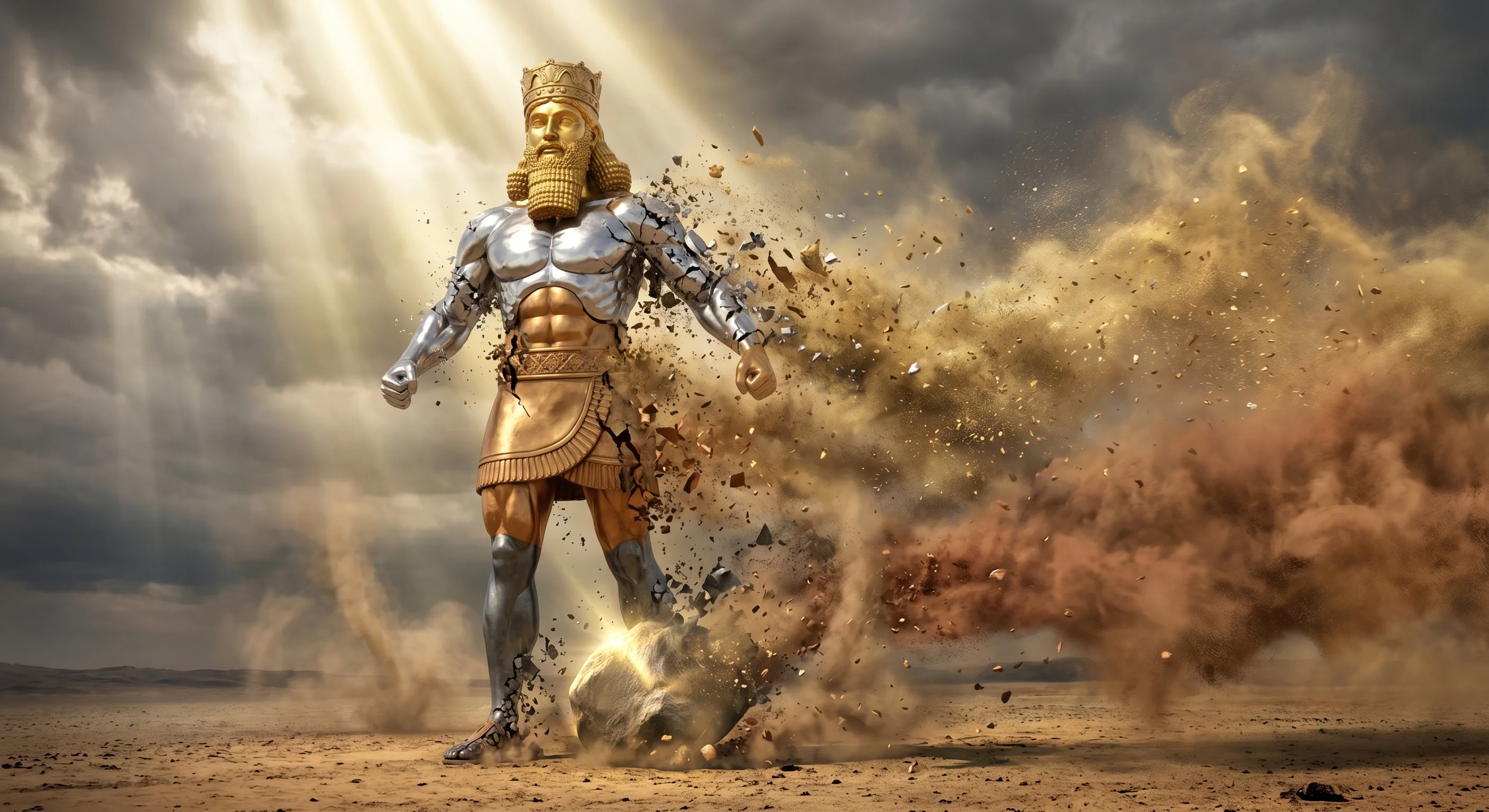
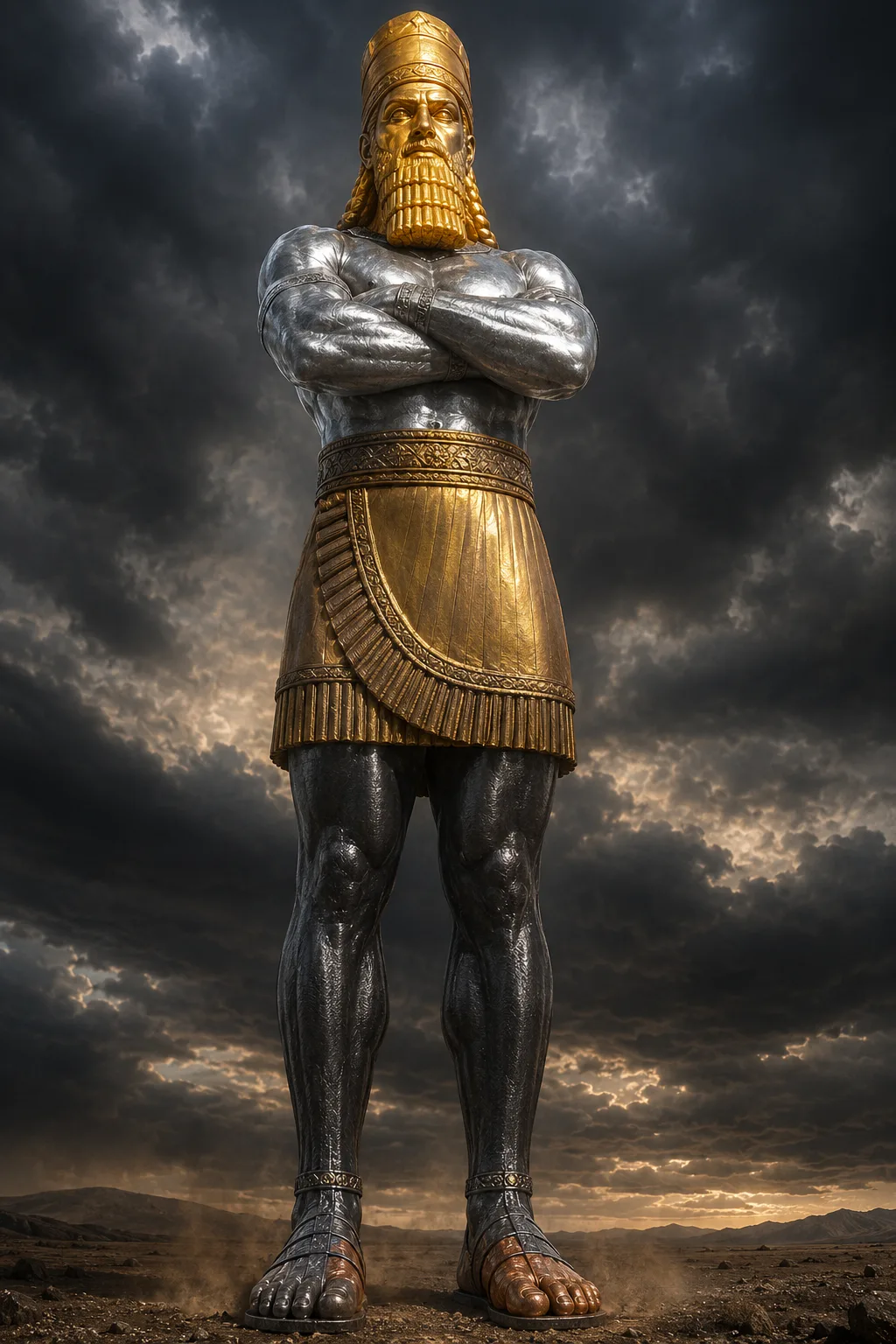
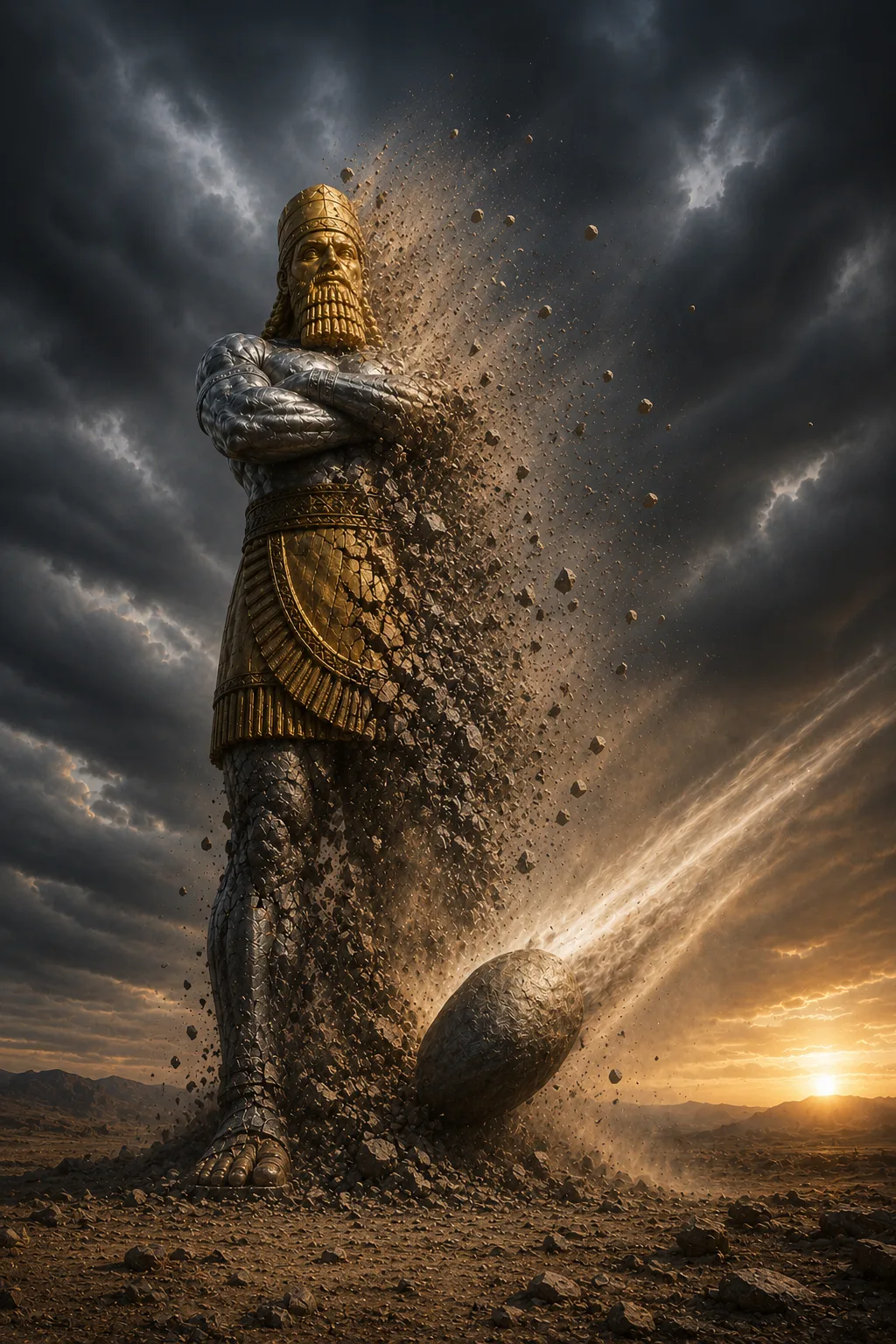
The image is a man-shape composed of five materials descending in value but ascending in hardness: gold head, silver chest and arms, bronze belly and thighs, iron legs, and feet of iron mixed with clay. Then a stone is cut out without hands, strikes the image on its feet, and breaks the whole structure to chaff that the wind carries away. The stone becomes a mountain filling the earth.
Thou sawest till that a stone was cut out without hands, which smote the image upon his feet that were of iron and clay, and brake them to pieces. … And the stone that smote the image became a great mountain, and filled the whole earth.
Daniel then interprets without speculation: each metal is a kingdom. Babylon, the head of gold, is identified by name (Dan 2:38). The rest are given in succession but unnamed — a deliberate design that lets history identify them as it unfolds.
The four empires
World history reads this prophecy back. Babylon falls to Medo-Persia in 539 BC. Medo-Persia falls to Greece under Alexander in 331 BC. Greece fragments and is absorbed by Rome at the Battle of Pydna in 168 BC. Rome rules a millennium, then splits east-and-west, and the Western half collapses into the ten Germanic kingdoms of medieval Europe in AD 476. From that point until now, the feet.
| Material | Empire | Dates |
|---|---|---|
| Gold head | Babylon | 605–539 BC |
| Silver chest, arms | Medo-Persia | 539–331 BC |
| Bronze belly, thighs | Greece | 331–168 BC |
| Iron legs | Rome | 168 BC – AD 476 |
| Iron + clay feet, ten toes | Divided Europe | AD 476 – present |
Each material is harder than the one above it, but less precious. The empires grow in raw power and lose in moral substance — a moral arc embedded in the metallurgy itself.
The divided feet
At AD 476 Rome does not give way to a fifth empire. The text is precise on this:
And whereas thou sawest iron mixed with miry clay, they shall mingle themselves with the seed of men: but they shall not cleave one to another, even as iron is not mixed with clay.
Iron is mixed with clay; the strength of the iron remains in the legacy of Roman law, language, and culture, but no unifying political body holds it together. Royal marriages, treaties, holy alliances, empires — they all fragment. Charlemagne, the Holy Roman Empire, Napoleon, Wilhelm, Hitler, the European project: each attempted the reunification the prophecy ruled out in advance, and each failed by the text’s own logic.
The stone strikes the feet
Notice where the stone strikes. Not the head (Babylon). Not the chest (Persia). Not the belly (Greece). Not the legs (imperial Rome). The stone strikes the feet — the divided era we already inhabit. The climax of the prophecy is not behind us; it is exactly where we stand. The next event the dream announces is the stone becoming the mountain that fills the whole earth.
And the stone is cut out without hands. The closing kingdom is not the product of human reunification — not a revived empire, not a global treaty, not even a faithful church’s political ascent. It is set up by the God of heaven (Dan 2:44), and on that day every kingdom that ever was becomes the chaff of summer threshing floors.
Why this is the prophetic spine
The image of Daniel 2 is told once, then retold in sharper detail in Daniel 7 (beasts and a little horn), then refined again in Daniel 8 (a ram, a goat, and a 2300-day terminus), then again in Daniel 11 (kings of the north and south), and finally projected forward into Revelation 13–17 for the end. The whole prophetic architecture of Daniel-and-Revelation is one continuous unveiling of this dream.
That is why this page is the spine of the section. Read the others in its light.
A note on the three plucked horns
When Rome split into the ten kingdoms, three of them — the Heruli, Vandals, and Ostrogoths — were destroyed. Conventional history records them as “Arian heretics.” But the only witnesses are the power that destroyed them, and there is reason to think they may have held a non-Nicene biblical Christianity closer to the apostolic original — including the seventh-day Sabbath. A separate study will treat the historical case in detail.
Further reading
- Daniel 7 — the same sweep retold in beast-form, with the little horn and the 1260 years.
- The historicist hermeneutic — why prophecy reads continuously from Daniel’s day to ours.