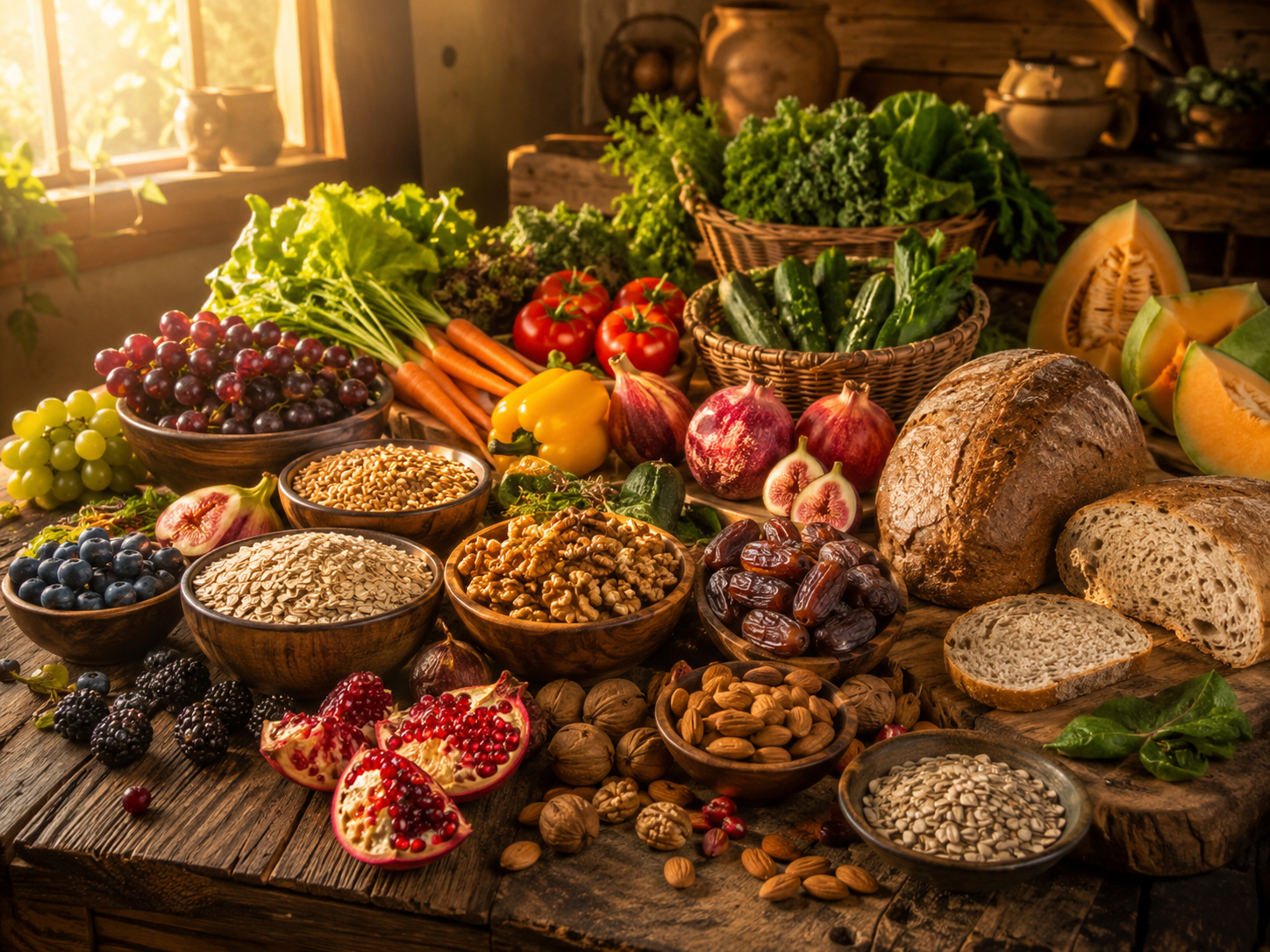

The gospel is not only about the soul. The God who will one day raise the body from the dust cares about the body now, and the same love that saves you wants you well. The apostle John wrote it as a prayer for a friend:
Beloved, I wish above all things that thou mayest prosper and be in health, even as thy soul prospereth.
What follows is not a diet plan or a guilt trip. It is the Bible's quiet, practical kindness about the one body you were given — why it matters to God, how He designed it to thrive, and how living the way He built us turns out, again and again, to be the way of long life and joy.
Your body, His temple
Why should a Christian care about health at all? Not vanity, and not fear of death — a deeper reason. Scripture says the body of a believer is no ordinary house; it is a sanctuary, indwelt and owned:
What? know ye not that your body is the temple of the Holy Ghost which is in you, which ye have of God, and ye are not your own? For ye are bought with a price: therefore glorify God in your body, and in your spirit, which are God's.
Two reasons in one breath: the body is indwelt by God's presence, and it is bought by God's Son. To care for it is therefore not self-worship but stewardship — keeping clean a temple that belongs to Another. That is why Paul can sweep the whole of ordinary life into worship: "whether therefore ye eat, or drink, or whatsoever ye do, do all to the glory of God" (1 Corinthians 10:31). Breakfast can be worship. So this is not a side issue, and it is not legalism; it is love expressed in the most everyday things.
The food God gave
When God finished a perfect world and set His children in it, He handed them a menu. Before sin, before death, this was the diet of Eden:
And God said, Behold, I have given you every herb bearing seed, which is upon the face of all the earth, and every tree, in the which is the fruit of a tree yielding seed; to you it shall be for meat.
Fruits, grains, nuts, and seeds — and after the Fall, the herbs of the field (Genesis 3:18). That original, plant-based table is the ideal the health message points back toward: not as a rule that saves anyone, but as the Maker's own design for the bodies He built. (For what Scripture still teaches about flesh foods — the clean and the unclean — see the linked study; that distinction did not vanish.) And the Bible even records a controlled test of the simple diet, when Daniel asked to be spared the king's rich fare:
Prove thy servants, I beseech thee, ten days; and let them give us pulse to eat, and water to drink … And at the end of ten days their countenances appeared fairer and fatter in flesh than all the children which did eat the portion of the king's meat.
Ten days on pulse and water, and the difference showed on their faces. The principle is older than nutrition science and has only been confirmed by it: the closer the table is to what the Creator gave, the better the temple runs.
The eight simple gifts
The health message has long been summed up in eight plain remedies — not exotic, not expensive, mostly free, and all written into how God made the world. Think of them as eight gifts:
Nutrition — the Eden table: whole, living foods as God grew them, simply prepared (Genesis 1:29). Exercise — the body was made to move; even before the Fall, Adam was put in the garden "to dress it and to keep it" (Genesis 2:15). Water — pure water, inside and out, the drink God gave (Daniel drank it; Christ called Himself its deeper fulfilment, John 4:14). Sunlight — the light God called good on the first day, that heals and gladdens (Malachi 4:2 speaks of healing "in his wings," the sun of righteousness).
Temperance — moderation in every good thing and abstinence from every harmful one (1 Corinthians 9:25). Air — the breath of life God breathed into man (Genesis 2:7); fresh, deep, open-air breathing. Rest — nightly sleep, "for so he giveth his beloved sleep" (Psalm 127:2), and the weekly Sabbath rest God built into the very first week (see the linked study). Trust in God — the medicine no pharmacy stocks: "A merry heart doeth good like a medicine" (Proverbs 17:22), and the peace that casts out the anxiety that corrodes the body. Eight gifts, freely given, and within reach of nearly anyone.
What love lays down
Caring for a temple means keeping some things out of it. The Bible is not shy that certain things defile and enslave the body, and that love for God — and for the people who need us — will lay them down:
And every man that striveth for the mastery is temperate in all things …
Temperance has two hands. With one it sets aside what only harms — drunkenness ("be not drunk with wine, wherein is excess," Ephesians 5:18), and the drugs and habits that cloud the mind God wants clear enough to hear Him. With the other it keeps even good things in their place, refusing to let appetite become master. This is not gloom or deprivation; it is freedom — the body no longer ruled by cravings, the mind unclouded, the will free. The point was never to earn anything. It was to be unchained.
The proof in the years
Here is the remarkable part, and it requires no special pleading — only the public record. A people who have actually lived this message for generations can be measured, and they have been. Among the small handful of places on earth where people most reliably live past ninety in good health — the regions researchers labeled the Blue Zones — one is not an isolated mountain village but a community defined by this very teaching: the Adventists of Loma Linda, California.
Long-running studies of tens of thousands of them have found that those who keep the message — a plant-based diet, no alcohol or tobacco, regular exercise, the weekly rest, and a life of faith — outlive their neighbors by roughly seven to ten years. Not a promise of escaping death; a measurable gift of added, healthier life, documented in mainstream medical research that had no interest in proving the Bible right. The counsel given long before anyone could test it has been tested — and the years are in the body to show for it.
A gift, not a test
One thing must be said plainly, because it is easy to get backwards. None of this saves you. You are not made righteous by a salad, and you do not lose Christ over a cup of coffee. Salvation is the gift of God through His Son, received by faith, and it is never for sale at the price of a perfect diet. Anyone who turns the health message into a ladder to climb, or a stick to beat themselves or others with, has misread it entirely.
It is the other way around. Because you are bought and loved and indwelt — already, freely — you tend the temple out of gratitude, the way you would care for any gift from someone who loves you. Paul puts the order exactly right: "I beseech you therefore, brethren, by the mercies of God, that ye present your bodies a living sacrifice …" (Romans 12:1). First the mercies; then, in answer, the body offered back. Health is not the road to God's favor. It is one of the ways we say thank you for it.
Glorify God in your body
The same gospel that promises your soul eternal life does not despise the house you live in now. It asks only that the whole of you — spirit, mind, and body — be turned toward the One who made and bought you:
… and I pray God your whole spirit and soul and body be preserved blameless unto the coming of our Lord Jesus Christ.
Eat and drink and rest and move and breathe and trust — and do it all to His glory. It is not a burden laid on you; it is a kindness offered to you, by a Maker who knows exactly how He built you, and a Redeemer who intends to raise this very body, made new, on the last day. Care for the temple. Its Owner is coming home.
Go deeper
Two threads of this study are opened more fully elsewhere on the site: