
Ask a devout Muslim friend whether they will go to Paradise, and the honest answer is usually, “I hope so. Only God knows.” It is said with humility, and humility before God is right. But underneath it, many carry a quiet weight: on the Day of Judgment, will my good deeds be enough? This study is for anyone who carries that question, Muslim or Christian. The Bible gives a different answer, and it is good news.
The question many carry quietly
Muslims pray five times a day, fast in Ramadan, give to the poor and guard their speech. Many do these things with real devotion. Yet the same devotion often comes with uncertainty. Have my prayers been accepted? Have my sins been forgiven? Will my scale be heavy enough? There is no way to know until the Day itself.
We want to speak to that uncertainty gently. It is not a sign of weak faith. It is what any honest person feels who looks at God’s holiness and then at his own heart.
The scales
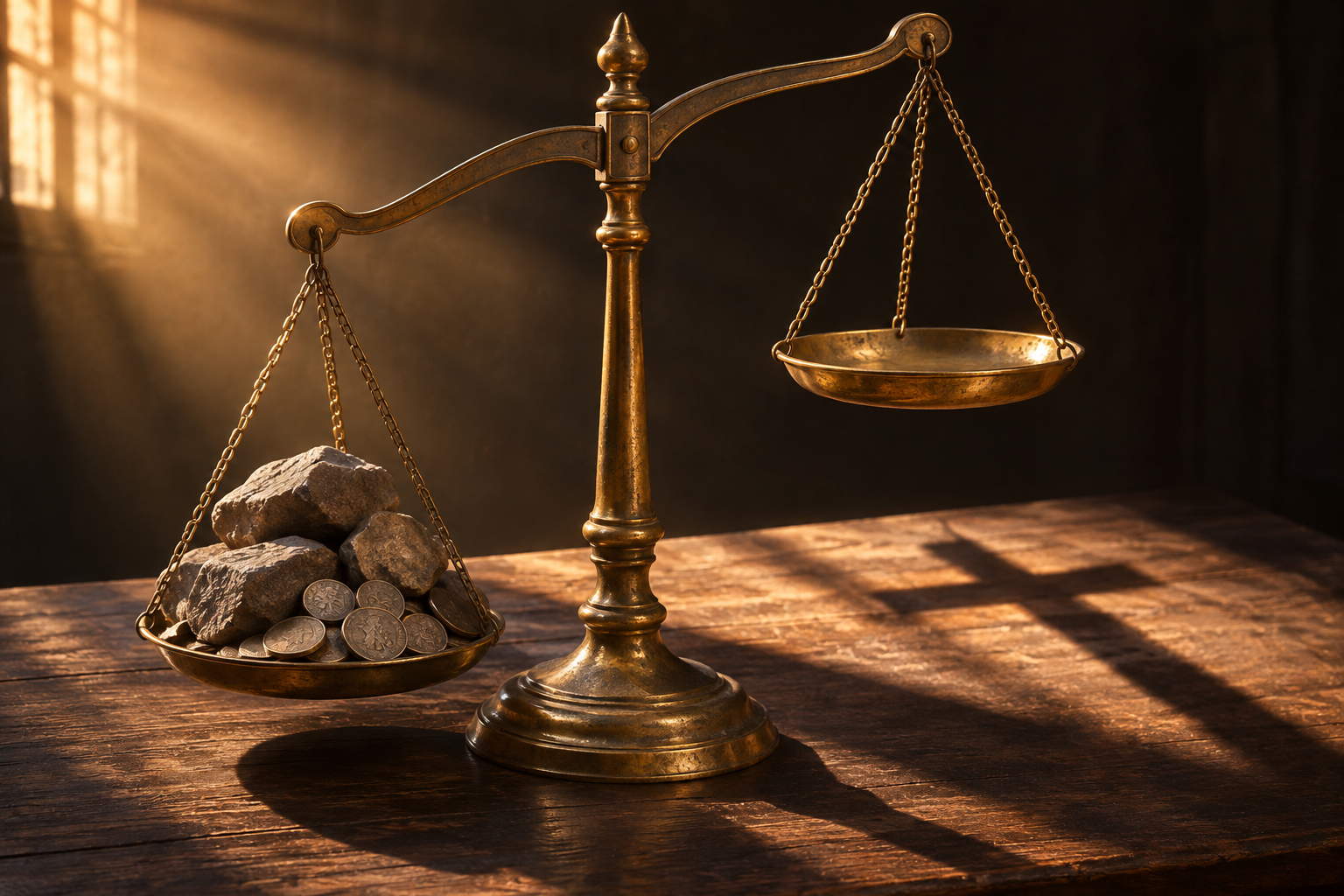
The Qur’an pictures the Day of Judgment as a weighing. (Quotations are from the Sahih International translation.)
And the weighing [of deeds] that Day will be the truth. So those whose scales are heavy – it is they who will be the successful. And those whose scales are light – they are the ones who will lose themselves for what injustice they were doing toward Our verses.
Another verse, speaking of Hell, says, “And there is none of you except he will come to it” (Sura 19:71). Muslim scholars explain it in different ways, but it adds to the weight many feel. And the Qur’an has the Prophet himself say:
Say, “I am not something original among the messengers, nor do I know what will be done with me or with you. I only follow that which is revealed to me, and I am not but a clear warner.”
One of the best-known hadith takes this further. Sahih Muslim (2816) reports that Muhammad said no one could enter Paradise by his deeds alone:
They said: Allah’s Messenger, not even you? Thereupon he said: Not even I, but that Allah should wrap me in His Grace and Mercy.
To be fair, Islam speaks often of God’s mercy. The Qur’an says, “do not despair of the mercy of Allāh. Indeed, Allāh forgives all sins” (Sura 39:53). But notice what that hadith admits. Even the Prophet could not stand on his deeds, and he could not say for certain that the mercy would be his. So the believer hopes, and works, and waits.
Islam teaches that deeds will be weighed, yet that deeds alone save no one, not even the Prophet. That leaves the believer hoping, but not knowing.
Why the scales cannot save
The Bible agrees that God is a just Judge. But it shows why a scale of good and bad deeds can never save anyone.
Think of a man who robs a bank and then gives generously to charity. If he stands before a judge, his gifts do not cancel the robbery. A judge who let him go because his good outweighed his bad would not be a just judge. God is perfectly just, so good deeds cannot pay for sins. The Bible says:
For whosoever shall keep the whole law, and yet offend in one point, he is guilty of all.
And the problem goes deeper than counting. Our best deeds are mixed with pride and selfish motives: “all our righteousnesses are as filthy rags” (Isaiah 64:6). “For all have sinned, and come short of the glory of God” (Romans 3:23). The psalmist asked the question every honest heart must ask, and answered it:
If thou, LORD, shouldest mark iniquities, O Lord, who shall stand? But there is forgiveness with thee, that thou mayest be feared.
If God marked every sin on a scale, no one would stand. The only hope is forgiveness. But forgiveness raises the hardest question of all: how can a just God forgive?
Mercy that is also just
A judge cannot simply overlook a crime. But a judge could pay the fine himself. That is what the Bible says God has done. Isaiah saw it seven hundred years before it happened:
All we like sheep have gone astray; we have turned every one to his own way; and the LORD hath laid on him the iniquity of us all.
At the cross, the one true God, the Father, gave His own Son, and the sinless Son bore the penalty of our sins. The debt was not ignored. It was paid. So God can forgive the sinner and remain perfectly just. That is why the death of Jesus matters so much, as we explain in Did Jesus Die on the Cross?
God does not tip the scales or ignore sin. He paid the debt Himself, in His Son. That is mercy and justice at once.
A gift, not a wage
Because the price has been paid, salvation is not something we earn. It is something we receive.
For the wages of sin is death; but the gift of God is eternal life through Jesus Christ our Lord.
For by grace are ye saved through faith; and that not of yourselves: it is the gift of God: Not of works, lest any man should boast.
Jesus told of two men who went to pray. One listed his good deeds. The other “would not lift up so much as his eyes unto heaven, but smote upon his breast, saying, God be merciful to me a sinner.” Jesus said, “this man went down to his house justified rather than the other” (Luke 18:13–14).
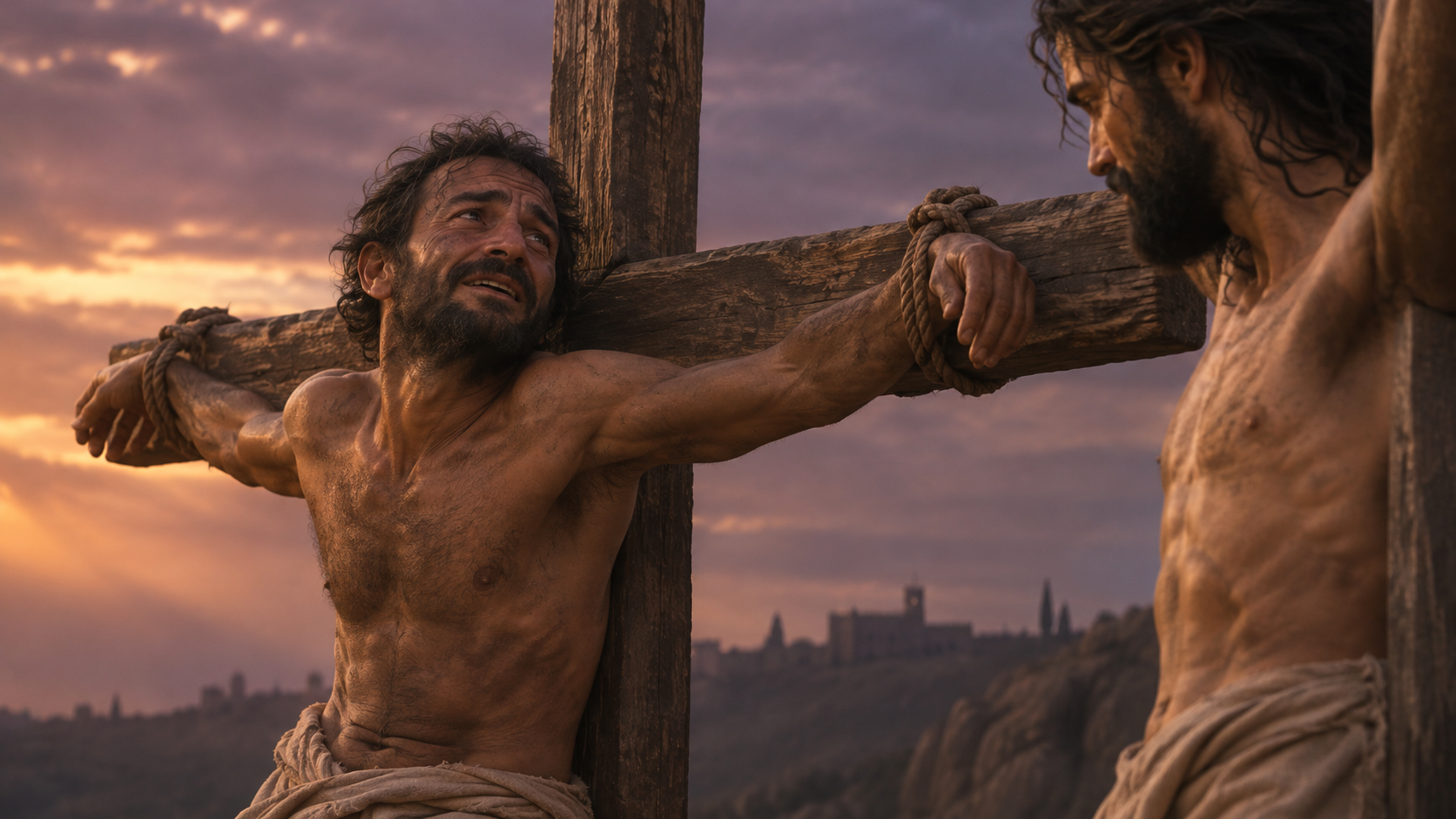
And as Jesus hung on the cross, a criminal beside Him, with no good deeds left to offer, said, “Lord, remember me when thou comest into thy kingdom.” Jesus answered him, “Verily I say unto thee, To day shalt thou be with me in paradise” (Luke 23:42–43). He had nothing to put on a scale. He had only trust in Jesus. It was enough.
You can know
Here is the good news that changes everything. Because salvation rests on what Christ has done, not on what we have done, it can be known. The apostle John wrote a letter for exactly this purpose:
And this is the record, that God hath given to us eternal life, and this life is in his Son. He that hath the Son hath life; and he that hath not the Son of God hath not life. These things have I written unto you that believe on the name of the Son of God; that ye may know that ye have eternal life, and that ye may believe on the name of the Son of God.
“That ye may know.” Not hope. Not guess. Know. Jesus said the same:
Verily, verily, I say unto you, He that heareth my word, and believeth on him that sent me, hath everlasting life, and shall not come into condemnation; but is passed from death unto life.
“Hath everlasting life,” already, now. “Shall not come into condemnation.” Paul wrote, “There is therefore now no condemnation to them which are in Christ Jesus” (Romans 8:1), and “being justified by faith, we have peace with God” (Romans 5:1). Jesus promised that no one can pluck His sheep out of His hand, “and no man is able to pluck them out of my Father’s hand” (John 10:29). And to anyone afraid of being turned away: “him that cometh to me I will in no wise cast out” (John 6:37).
Assurance does not rest on how good you have been. It rests on the Son God gave, and on His promise to receive everyone who comes.
Then why obey?
A Muslim friend may fairly ask: if salvation is a gift, why would anyone obey God? Does this not make people careless? Paul faced the same question:
What shall we say then? Shall we continue in sin, that grace may abound? God forbid. How shall we, that are dead to sin, live any longer therein?
Grace does not end obedience. It changes where obedience comes from. Before, a person obeys to earn God’s favor. Afterward, he obeys because he has received it. God promises, “A new heart also will I give you, and a new spirit will I put within you” (Ezekiel 36:26). Right after saying we are saved “not of works,” Paul adds that “we are his workmanship, created in Christ Jesus unto good works” (Ephesians 2:10). And Jesus said, “If ye love me, keep my commandments” (John 14:15). Obedience is the fruit of salvation, not its price.
This is also not the idea, taught in some churches, that once a person is saved he can never be lost no matter how he lives. Jesus said, “Abide in me, and I in you” (John 15:4). A person may walk away from Christ. But no one can snatch away a believer who stays with Him, and when we stumble, “If we confess our sins, he is faithful and just to forgive us our sins” (1 John 1:9). Our confidence is in Him, not in our record.
Come
If you are a Muslim reading this, you already pray, fast and give, and you long for God’s approval. We are not asking you to stop seeking God. We are telling you that He has come seeking you. The God of Abraham offers what no scale can give: forgiveness that is certain, because it was paid for, and peace that does not depend on how heavy your good deeds are.
Come unto me, all ye that labour and are heavy laden, and I will give you rest.
“Come now, and let us reason together, saith the LORD: though your sins be as scarlet, they shall be as white as snow” (Isaiah 1:18). You can speak to God in your own words, tonight. Tell Him you cannot save yourself. Ask Him to forgive you for the sake of His Son, and to give you a new heart. Then read the Gospel of John, and come to know the One Who gave His life for you. To go deeper, our short course Righteousness by Faith walks through it step by step.
You do not have to wait until the Day to find out. “He that hath the Son hath life.”
Further reading
Short course
Righteousness by Faith
Seven lessons on how God makes sinners right with Himself.
The ransom
Did Jesus Die on the Cross?
Sura 4:157 read fairly, and why the death of the Son matters.
The one true God
How Can God Have a Son?
What the Qur’an rejects, why we reject it too, and what “Son” really means.
Written in love
A Letter to Our Muslim Friends
For all who guard the oneness of God.