

In brief
Ellen White did not make the shape of the earth a test of fellowship, a test of salvation, or a pillar of present truth. Her burden was to lift minds to Christ, the gospel commission, the commandments of God, the faith of Jesus, the second coming, and the preparation of character for the kingdom of God. When pressed on the question, her counsel directed minds away from the controversy and back to Christ’s own words: “What is that to thee? follow thou me” (John 21:22). This piece, the gospel-centred companion to the founder’s personal-position article on the same subject, explains what her posture means for the believer on either side of the question — and why neither side should make this subject a weapon against the other.
Among the contested peripheral questions readers sometimes raise about Ellen White is what she wrote — or whether she wrote anything definitive — about the physical shape of the earth. This piece is the gospel-centred counterpart to the founder’s personal-position article on the same subject.
The two pieces are intentionally separate. The personal-position article carries the founder’s own conviction, with biblical and observational evidence set forth in his voice. This companion piece carries the gospel-centred examination of how Ellen White actually handled the question — what she emphasized, what she refused to emphasize, and what her counsel means for believers on either side. A reader may engage with either piece independently.
A question that can easily become a distraction
Among sincere Bible believers, the subject of the flat earth has become a point of tension. Some are convinced that the commonly accepted globe model is tied to human tradition, worldly science, or assumptions that should be tested by Scripture. Others believe the round earth model is settled and feel that questioning it is unnecessary or even harmful. In many discussions, both sides can quickly become sharp, defensive, or dismissive.
This article is not written to mock those who believe the earth is flat. Neither is it written to promote the flat earth as a doctrine that Christians must accept. The aim is more careful and more spiritual: to ask how Ellen G. White handled this question, and what her counsel suggests for believers who want to be faithful to Christ without turning a non-salvational subject into a point of division.
The evidence from her counsel is plain in its emphasis: the Lord did not give her a burden to settle the shape of the earth for the church. When pressed on the question, she directed minds away from the controversy and toward the work of following Christ. That does not mean a person is forbidden to study nature, creation, or the language of Scripture. It does mean that the church must be careful not to make the shape of the earth the centre of its message.
Her burden was the gospel, not earth-shape controversy
Ellen White repeatedly warned ministers and believers against becoming absorbed in minor theoretical disputes while souls were perishing for lack of the gospel. Her counsel was not that Christians should be careless thinkers. Rather, it was that the most solemn truths must be kept in their proper place. The great themes are Christ, redemption, repentance, obedience, the commandments of God, the faith of Jesus, the heavenly sanctuary, the second coming of Christ, and preparation for eternal life.
Her counsel in Gospel Workers is instructive on this point: labourers for God should not spend their strength on speculative or fanciful theories. Questions that do not directly lead souls to Christ can become distractions, even when they are argued with confidence. The flat-earth question, on her own framework, falls into that category — not because every person who studies it is dishonest, but because the question itself is not the everlasting gospel.
This matters because a person may be right about many details and still lose sight of the central truth. The cross of Christ is the great centre around which every genuine truth gathers. A message that replaces Christ and His righteousness with a debate over cosmology, whether flat or round, has stepped out of its proper order.
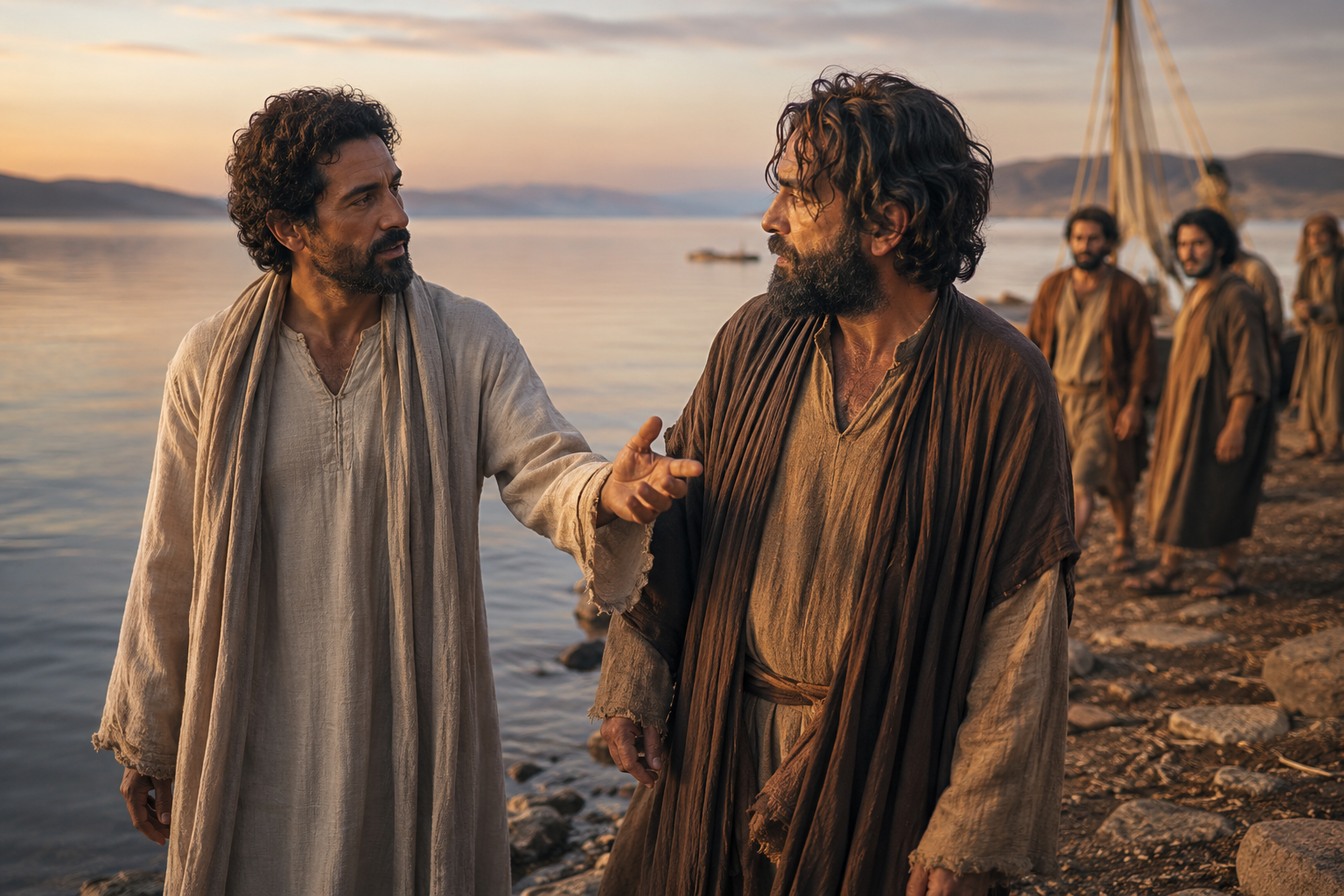
“What is that to thee? follow thou me”
One of the strongest points in the discussion is Ellen White’s refusal to become the church’s authority for settling the flat-earth question. When she was approached about the matter, the answer emphasised the words of Christ:
Jesus saith unto him, If I will that he tarry till I come, what is that to thee? follow thou me.
Those words are deeply important. They do not ridicule the questioner. They do not say that one side is spiritually superior to the other. They call the believer back to discipleship.
This is the tone that should govern the subject. If a believer is persuaded of a flat earth, that person should not be treated as if he or she is automatically outside the faith. If a believer is persuaded of the common round earth model, that person should not be treated as if he or she has automatically bowed to deception. Ellen White’s point was that the Lord had not made this question the burden of the message. Therefore, no believer should make it a test where God has not made it a test.
The question Christ asks the soul is not first, “Can you win a debate about the earth’s shape?” The question is, “Are you following Me?” Are we being converted? Are we growing in humility? Are we receiving the love of the truth? Are we walking in obedience to the light God has clearly given?
Not a test of salvation
The shape of the earth is not presented in Scripture as the condition of salvation. Eternal life is found in knowing the only true God and Jesus Christ Whom He has sent (John 17:3). The sinner is not justified by accepting a cosmological model, but by faith in the Son of God, Who gave Himself for us. The great question remains the same: What must I do to be saved? How may I be reconciled to God? How may I receive a new heart and walk in the commandments of God through the faith of Jesus?
This does not mean that truth is unimportant. God’s people should love truth and reject deception. But Scripture also teaches that truths have order and weight. Some truths are foundational to salvation and worship. Other questions may be interesting, controversial, or personally meaningful, but they are not to be made the substance of the third angel’s message. When a non-salvational subject is elevated to a test, it can become a stumbling block rather than a help.
The danger is not only on one side. A flat-earth believer can become proud and condemn others as deceived. A round-earth believer can become proud and mock others as foolish. Both spirits are wrong. A correct spirit is more important than winning an argument. The servant of Christ must not strive, but must be gentle, patient, and apt to teach.
A balanced position: do not deny, do not exalt
A faithful article on this subject should avoid two extremes. The first extreme is to deny or belittle flat-earth believers as if the subject itself proves they are insincere, ignorant, or unworthy of Christian fellowship. That spirit is not Christlike. Many who raise questions about the earth’s shape are doing so because they want to take Scripture seriously and distrust the pride of man. Their concerns should not be answered with ridicule.
The second extreme is to exalt the flat-earth question until it becomes a required doctrine, a prophetic key, or a test of whether someone truly accepts the Bible. Ellen White’s counsel does not support that use of the subject. A person may personally believe the earth is flat, but that belief should not become the foundation of preaching, the centre of Bible study, or a barrier placed before souls who need Christ.
The safest position is this: leave room for personal conviction and continued study, but do not make the shape of the earth a church test, a salvation test, or a pillar of the Advent message. Present truth is not weakened by refusing to turn every controversy into a doctrine. It is strengthened when Christ is kept at the centre.
The real issue: the shape of the character
The most memorable point in the discussion is the contrast between the shape of the earth and the shape of the character. Ellen White’s concern was not to satisfy curiosity about whether the earth is flat or round, but to call believers to seek a character made complete in Christ. The question is not merely whether the earth is “round” or “flat,” but whether the believer’s life is being formed after the divine pattern.
This is where the subject becomes practical. A person can argue for the flat earth while cherishing bitterness, suspicion, pride, or contempt. A person can argue for the round earth while doing the same. Neither position sanctifies the soul. The fruit of the Spirit is not measured by one’s cosmological model, but by love, joy, peace, longsuffering, gentleness, goodness, faith, meekness, and temperance (Galatians 5:22-23).
God’s final people are not merely people with arguments. They are people with the faith of Jesus and the commandments of God. They are being prepared to stand in the last days, not by mastering every disputed theory, but by surrendering fully to Christ and receiving His character.
Warnings against strife and vain disputes
The apostle Paul warned against striving over words to no profit and against profane and vain babblings that increase ungodliness. These warnings are directly relevant.
Of these things put them in remembrance, charging them before the Lord that they strive not about words to no profit, but to the subverting of the hearers.
When the flat-earth and round-earth debate becomes a battlefield of insults, suspicion, and endless accusation, it has already ceased to be spiritually healthy. Even if someone believes he is defending truth, he may be damaging souls through the spirit in which he contends.
This does not forbid careful study. It does forbid making controversy the atmosphere of faith. The gospel is not advanced when believers spend their best energy accusing one another over a subject Ellen White did not present as a saving truth. The third angel’s message must not be buried under endless debates that leave people more agitated than converted.
The call is not to silence conscience. The call is to keep conscience under the lordship of Christ. Hold personal convictions with humility. Study with prayer. Speak with charity. But do not allow the subject to eclipse Christ, the cross, repentance, righteousness by faith, obedience, and preparation for the soon coming of the Lord.
How this should shape this site’s teaching
For this institute, the subject is handled with restraint and fairness. It is appropriate to explain that Ellen White was asked about the flat-earth question and did not take up the burden of settling it. It is appropriate to warn against ridicule toward flat-earth believers. It is also appropriate to warn flat-earth believers against making the subject a test of faith or a central part of the Advent message.
This piece is not written as a scientific defense of the globe, because that would miss the spiritual point. The sibling personal-position article is the founder’s own examination of the biblical and observational case for the flat-earth view; this piece is the gospel-centred frame in which that personal-position article is held. Ellen White’s counsel presses us toward something higher than either article alone: the work of saving souls and forming characters for the kingdom of God.
Therefore: do not use Ellen White as a weapon to shame flat-earth believers. Do not use the flat-earth subject as a weapon to condemn those who do not see it. The truth of God does not need a harsh spirit to defend it. The church needs clarity, humility, and gospel order.
Conclusion: follow Christ and keep the message in its place
The question of Ellen White and the flat earth is best answered by observing what she emphasized and what she refused to emphasize. She did not present the earth’s shape as a pillar of faith. She did not make it a test of fellowship. She did not direct ministers to preach it. She pointed believers back to Christ and the work He gave His people to do.
This conclusion should not be used to sneer at flat-earth believers. It should humble everyone. If the earth is flat, salvation is still in Christ. If the earth is round, salvation is still in Christ. The commandments of God, the faith of Jesus, the heavenly ministry of Christ, the call out of Babylon, the preparation of character, and the soon coming of the Son of God remain the great themes for the last days.
Let every believer study honestly, but let no one make the earth’s shape the centre of the message. The Saviour’s words remain the safest guide: “What is that to thee? follow thou me.” The church’s highest calling is not to win a debate over the physical form of the world, but to reveal the character of Christ before the world.
Anchor scriptures for this page
Six verses that hold the whole position in tension. Each is worth weighing in its own right.
John 21:22
“If I will that he tarry till I come, what is that to thee? follow thou me.” — Christ’s answer when a peripheral question threatens to distract from discipleship.
John 17:3
“This is life eternal, that they might know thee the only true God, and Jesus Christ, whom thou hast sent.” — Eternal life is centred in knowing the Father and the Son, not in cosmological models.
Revelation 14:12
The last-day people of God are identified by the commandments of God and the faith of Jesus — not by their position on contested scientific questions.
2 Timothy 2:14-17
Paul warns against strife over words and vain disputes that do not edify but rather subvert hearers.
1 Timothy 6:20
The church is warned to keep what has been committed to her trust and to avoid profane and vain babblings.
1 Corinthians 2:2
“For I determined not to know any thing among you, save Jesus Christ, and him crucified.” — The apostolic foundation.
Foundational text
“Jesus saith unto him, If I will that he tarry till I come, what is that to thee? follow thou me.”
— John 21:22