Many Muslims are taught that the Bible itself foretells Muhammad, and that Christians and Jews have missed it or hidden it. It is a serious claim, and it deserves a serious answer. This study looks at the passages most often offered, reads each one in its own context, and asks a fair question: what do they actually say? We weigh them the way we would want our own claims weighed, carefully and without mockery.
The claim
The claim begins in the Qur’an itself. It speaks of the Messenger “whom they find written [i.e., described] in what they have of the Torah and the Gospel” (Sura 7:157). And it records Jesus saying:
And [mention] when Jesus, the son of Mary, said, “O Children of Israel, indeed I am the messenger of Allāh to you confirming what came before me of the Torah and bringing good tidings of a messenger to come after me, whose name is Aḥmad.”
Ahmad comes from the same Arabic root as Muhammad and means “most praised.” So for centuries, Muslim scholars have searched the Bible for Muhammad. Notice what the Qur’an assumes: that he would be found in “what they have,” the Scriptures in Jewish and Christian hands. As we show in Was the Bible Corrupted?, those are the same Scriptures we read today. So we can look.
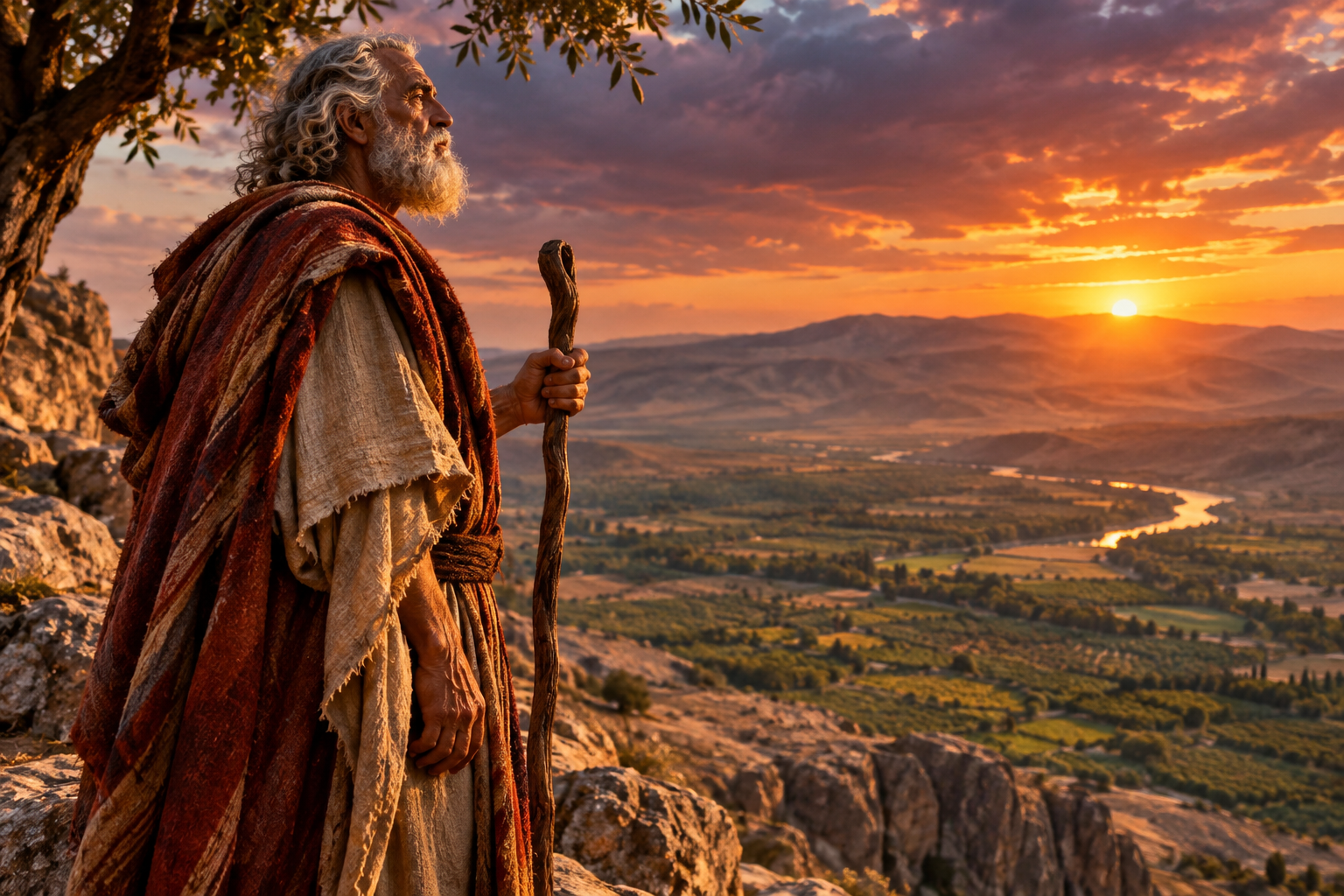
A prophet like Moses
The passage offered most often is Moses’ promise in Deuteronomy:
I will raise them up a Prophet from among their brethren, like unto thee, and will put my words in his mouth; and he shall speak unto them all that I shall command him.
The Muslim reading runs this way: the “brethren” of Israel are the Ishmaelites, their cousins; and Muhammad was like Moses in many ways. He brought a law, led a community, married, fought battles and died a natural death.
But read the same promise three verses earlier, where Moses first gives it:
The LORD thy God will raise up unto thee a Prophet from the midst of thee, of thy brethren, like unto me; unto him ye shall hearken;
“From the midst of thee.” Moses was speaking to Israel. In the very previous chapter he uses the same words about Israel’s future king: “one from among thy brethren shalt thou set king over thee: thou mayest not set a stranger over thee, which is not thy brother” (Deuteronomy 17:15). There “brethren” plainly means fellow Israelites. No one has ever read it as permission to crown an Ishmaelite king over Israel.
And what made Moses unique? The end of the same book says:
And there arose not a prophet since in Israel like unto Moses, whom the LORD knew face to face,
God Himself had said that other prophets would receive visions and dreams, but “with him will I speak mouth to mouth” (Numbers 12:6–8). The likeness that mattered was not marriage or battles. It was knowing God face to face. Many prophets married and led people. Only One came from the very bosom of the Father: “the only begotten Son, which is in the bosom of the Father, he hath declared him” (John 1:18). Jesus said, “had ye believed Moses, ye would have believed me: for he wrote of me” (John 5:46), and He spoke only what the Father commanded Him (John 12:49), exactly as Deuteronomy 18:18 says. The apostle Peter applied this very promise to Jesus in the temple at Jerusalem (Acts 3:22).
The prophet like Moses was to come “from the midst of” Israel and to know God face to face. That describes the Son Who came from the Father’s bosom.
The Comforter
The second passage is Jesus’ promise of “another Comforter” in John 14–16. Some Muslim writers suggest that the Greek word parakletos, “comforter” or “advocate,” was originally periklytos, “praised one,” which would match the name Ahmad.
But there is no manuscript evidence for that. Every Greek manuscript of John reads parakletos, including papyrus copies of John from around AD 200, centuries before Islam. Those who propose the change argue from a guessed-at Aramaic original that no one possesses. And the passage itself tells us who the Comforter is:
And I will pray the Father, and he shall give you another Comforter, that he may abide with you for ever; Even the Spirit of truth; whom the world cannot receive, because it seeth him not, neither knoweth him: but ye know him; for he dwelleth with you, and shall be in you. I will not leave you comfortless: I will come to you.
But the Comforter, which is the Holy Ghost, whom the Father will send in my name, he shall teach you all things, and bring all things to your remembrance, whatsoever I have said unto you.
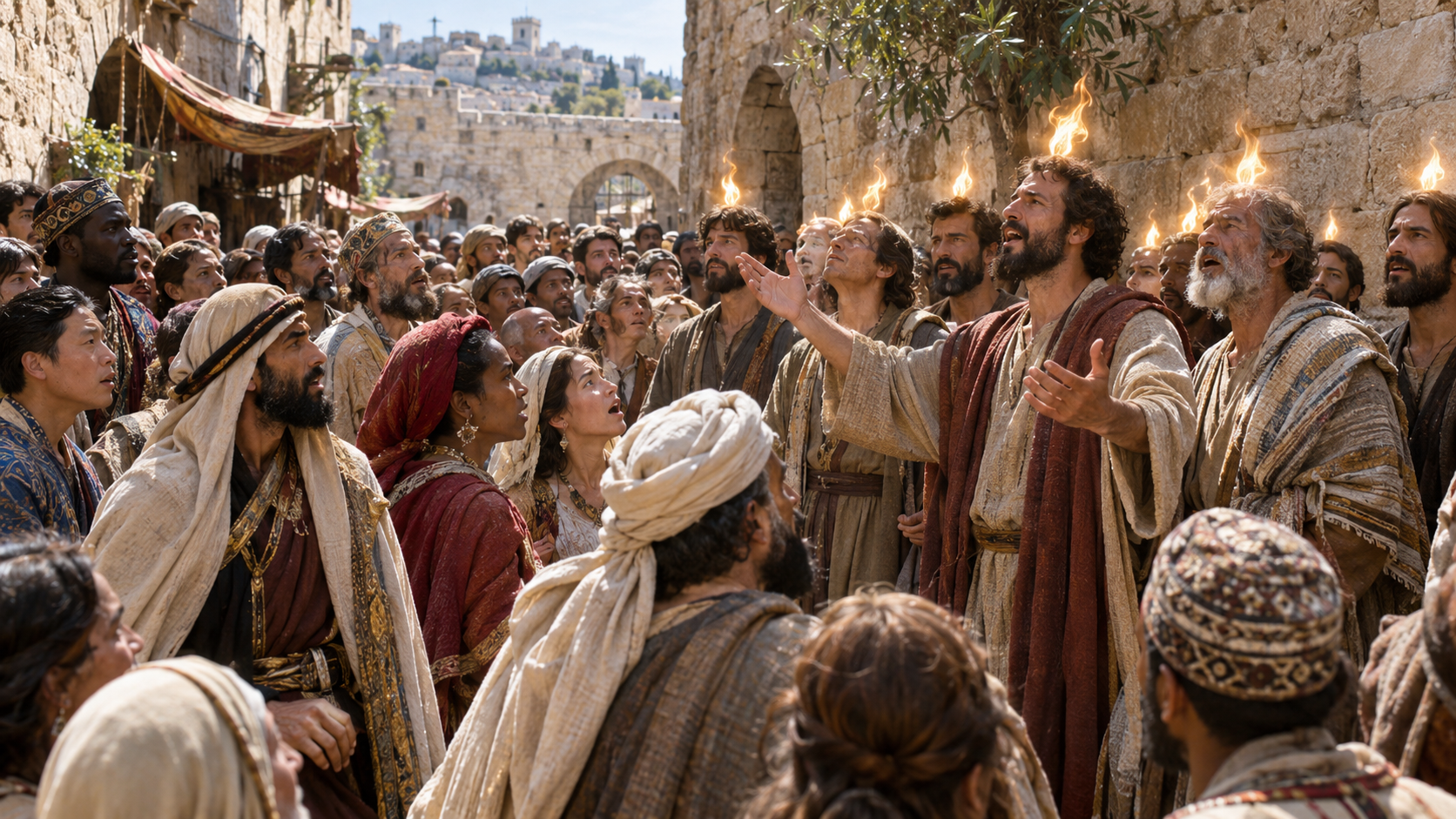
Look at the details. The Comforter is “the Holy Ghost.” The world “seeth him not,” so He is not a man walking among people. The disciples already knew Him: “he dwelleth with you, and shall be in you.” He would “abide with you for ever,” with those same disciples, not arrive six centuries after they died. He would be sent “in my name,” the name of Jesus. And Jesus says of this coming, “I will come to you.” Through the Spirit, Christ Himself comes to dwell with His people. Forty days after rising, Jesus told the same disciples to wait in Jerusalem, for “ye shall be baptized with the Holy Ghost not many days hence” (Acts 1:5). Ten days later, at Pentecost, it happened.
Every manuscript reads “Comforter,” and the text names Him: the Holy Ghost, Who dwelt in the disciples themselves.
“Altogether lovely”
A third passage is Song of Solomon 5:16, where the bride says of her beloved, “yea, he is altogether lovely.” The Hebrew word behind “altogether lovely” is machamaddim, which sounds something like “Muhammad.” Some have suggested his name is written there.
The two words do share an ancient root, ḥ-m-d, which in Hebrew has to do with desire and delight. But the Hebrew word machmad is an ordinary word, not a name. It appears thirteen times in the Old Testament, translated “pleasant things,” “goodly,” “beloved” and “desire.” The treasures of Jerusalem are called her “pleasant things” (Lamentations 1:10). Ezekiel’s wife is called “the desire of thine eyes” (Ezekiel 24:16). In the Song it is plural, describing the bridegroom as wholly desirable. Reading a name into it would mean reading the same name into every one of those verses.
Paran, Kedar and the servant
Other passages are offered because they mention places associated with Ishmael and Arabia.
- Paran. Habakkuk says “the Holy One from mount Paran” (Habakkuk 3:3), and Ishmael “dwelt in the wilderness of Paran” (Genesis 21:21). Some identify Paran with Mecca. But in the Bible, Paran is in the wilderness south of Canaan, where Israel camped after leaving Sinai (Numbers 10:12). Habakkuk is echoing Moses, who sang that “The LORD came from Sinai, and rose up from Seir unto them; he shined forth from mount Paran” (Deuteronomy 33:2). It is a memory of the Exodus, when God came to Israel in the desert.
- Kedar and the servant. Isaiah 42 opens with “Behold my servant, whom I uphold” and later calls on “the villages that Kedar doth inhabit” to sing (Isaiah 42:11). Kedar was a son of Ishmael. But the Gospel of Matthew quotes this very passage of Jesus (Matthew 12:17–18), and the call to Kedar is a call to rejoice in what God’s servant brings, not a statement that the servant comes from Kedar.
- “I am not learned.” Isaiah 29:12 describes a book given to one who says “I am not learned,” and some connect it with the unlettered Prophet and the first command, “Read.” But in context, Isaiah is describing Israel’s spiritual blindness: the vision is like a sealed book that the learned cannot read because it is sealed, and the unlearned cannot read at all (Isaiah 29:9–12). It is a rebuke to a blind people, not a prophecy of a coming messenger.
What the Bible does promise Ishmael
None of this means the Bible ignores Ishmael or the Arab peoples. It speaks of them with real tenderness.
And as for Ishmael, I have heard thee: Behold, I have blessed him, and will make him fruitful, and will multiply him exceedingly; twelve princes shall he beget, and I will make him a great nation. But my covenant will I establish with Isaac, which Sarah shall bear unto thee at this set time in the next year.
God blessed Ishmael and made him a great nation. The covenant line ran through Isaac, the line through which the Messiah would come. But the Messiah came for all peoples, and the prophets foresaw Ishmael’s children coming to Him:
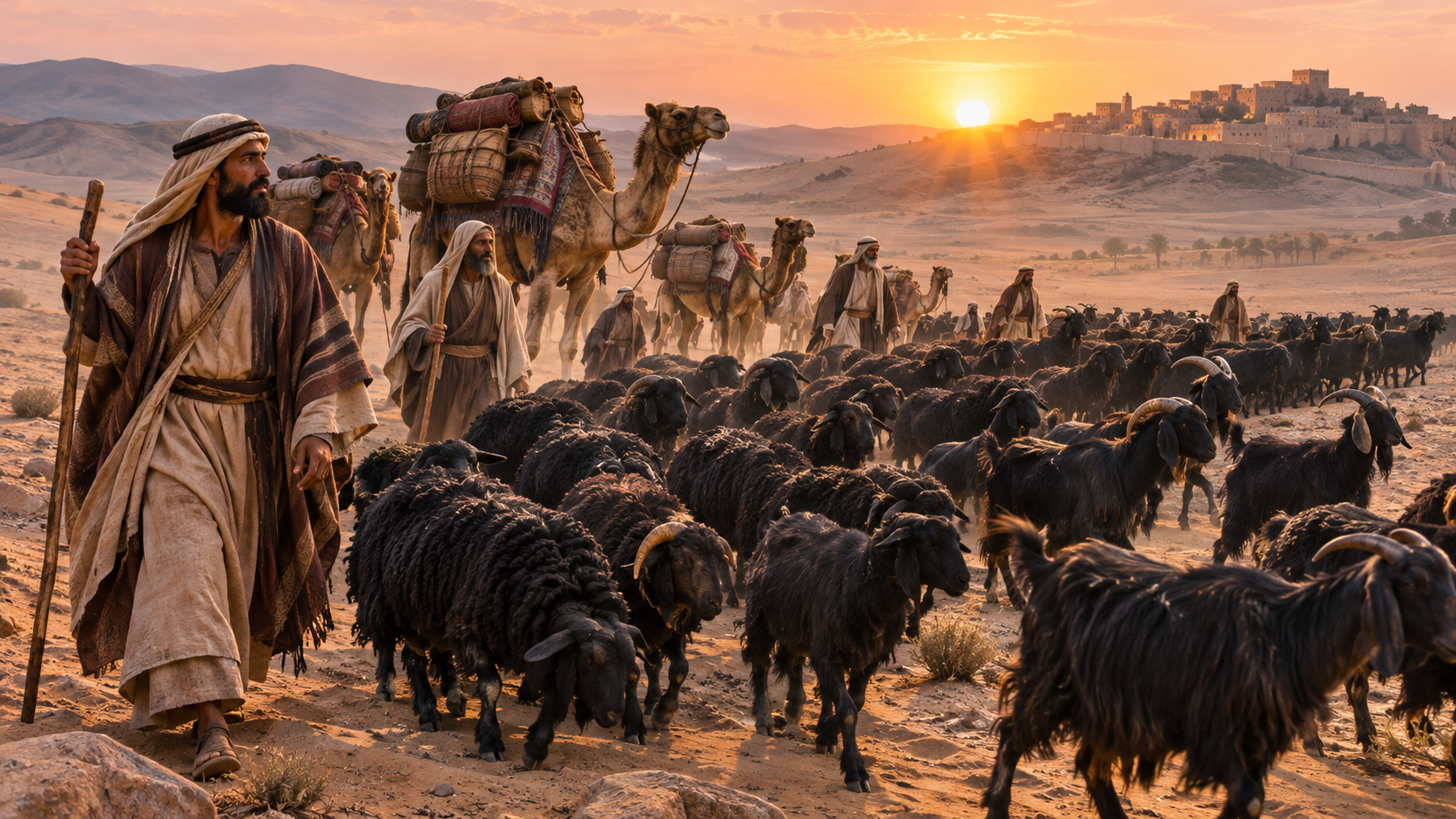
The multitude of camels shall cover thee, the dromedaries of Midian and Ephah; all they from Sheba shall come: they shall bring gold and incense; and they shall shew forth the praises of the LORD. All the flocks of Kedar shall be gathered together unto thee, the rams of Nebaioth shall minister unto thee: they shall come up with acceptance on mine altar, and I will glorify the house of my glory.
Kedar and Nebaioth were sons of Ishmael. Isaiah saw them coming to worship the God of Israel with gladness. And it began early. When the Spirit came at Pentecost, among the crowd were “Cretes and Arabians, we do hear them speak in our tongues the wonderful works of God” (Acts 2:11). Soon afterward, the apostle Paul went “into Arabia” (Galatians 1:17). From the beginning, the gospel was for Ishmael’s children too.
The Bible does foretell the Arab peoples, not as the source of a new prophet, but as honored guests coming to worship the God of Abraham through His Messiah.
How the Bible tests a prophet
We say what follows with respect, because Muslims love Muhammad deeply. But the question is a fair one, and the Bible gives clear tests for anyone who comes in God’s name.
A true prophet’s word must come to pass (Deuteronomy 18:22). Even a prophet who works signs must be refused if he leads away from what God has already revealed (Deuteronomy 13:1–3). Isaiah summed it up:
To the law and to the testimony: if they speak not according to this word, it is because there is no light in them.
The apostles applied the same test to what came after Christ. John wrote, “Every spirit that confesseth that Jesus Christ is come in the flesh is of God” (1 John 4:2), and “Whosoever denieth the Son, the same hath not the Father: (but) he that acknowledgeth the Son hath the Father also” (1 John 2:23). The letter to the Hebrews says that God, Who spoke through the prophets, “Hath in these last days spoken unto us by his Son” (Hebrews 1:2).
By these tests, a later prophet would have to agree with what God had already said: that Jesus is His Son, that He died for sin, and that He rose. The Qur’an, as we have seen in Did Jesus Die on the Cross? and How Can God Have a Son?, denies both the cross and the Sonship. That is the heart of the difference, and it is better to say it honestly than to hide it.
What we are not saying
We are not mocking Muhammad or Muslims, and we do not doubt that many Muslims are sincere seekers of God. We are answering one specific claim, that the Bible foretells Muhammad, by reading the passages offered for it. Where the Bible speaks well of Ishmael and of Arabia, we have said so gladly.
Where this leaves us
When each passage is read in its own setting, the Bible does not foretell Muhammad. The prophet like Moses comes from Israel and knows God face to face. The Comforter is the Holy Ghost, Who came at Pentecost. The “altogether lovely” one is the bridegroom of the Song. Paran is the wilderness of the Exodus. But the Bible does foretell, again and again, One Person: the Messiah of Israel, the Son of God, Who would suffer, die, rise and bring the nations home to God. Ishmael’s children are among those nations, welcomed with joy.
If you are a Muslim reading this, we do not ask you to love Muhammad less. We ask you to look at the One the whole Bible points to, the One your own Book calls the Messiah and God’s word. Read about Him in the Gospels, and see if He is not the Prophet, Priest and King the Scriptures promised. For the prophecies He fulfilled, see The Foretold Messiah.
The Bible is not silent about the future. It foretells one Person, again and again, and it invites Ishmael’s children to come to Him.
Further reading
The question underneath
Was the Bible Corrupted?
Why the Bible we read is the Bible of Muhammad’s day.
The one true God
How Can God Have a Son?
What the Qur’an rejects, why we reject it too, and what “Son” really means.
Written beforehand
The Foretold Messiah
The prophecies the Bible does fulfill in one Person.
Written in love
A Letter to Our Muslim Friends
For all who guard the oneness of God.