Revelation 13 ended dark — a beast bearing the name of blasphemy, a second beast enforcing a mark, a number of a name. Chapter 14 opens with the inverse: a Lamb on Mount Zion, a company of 144,000 with the Father’s name written in their foreheads, and three angels flying through the midst of heaven with one final message for every nation. The two chapters mirror each other across the same axis: who you worship, and how the worship is marked.
The Lamb on Mount Zion
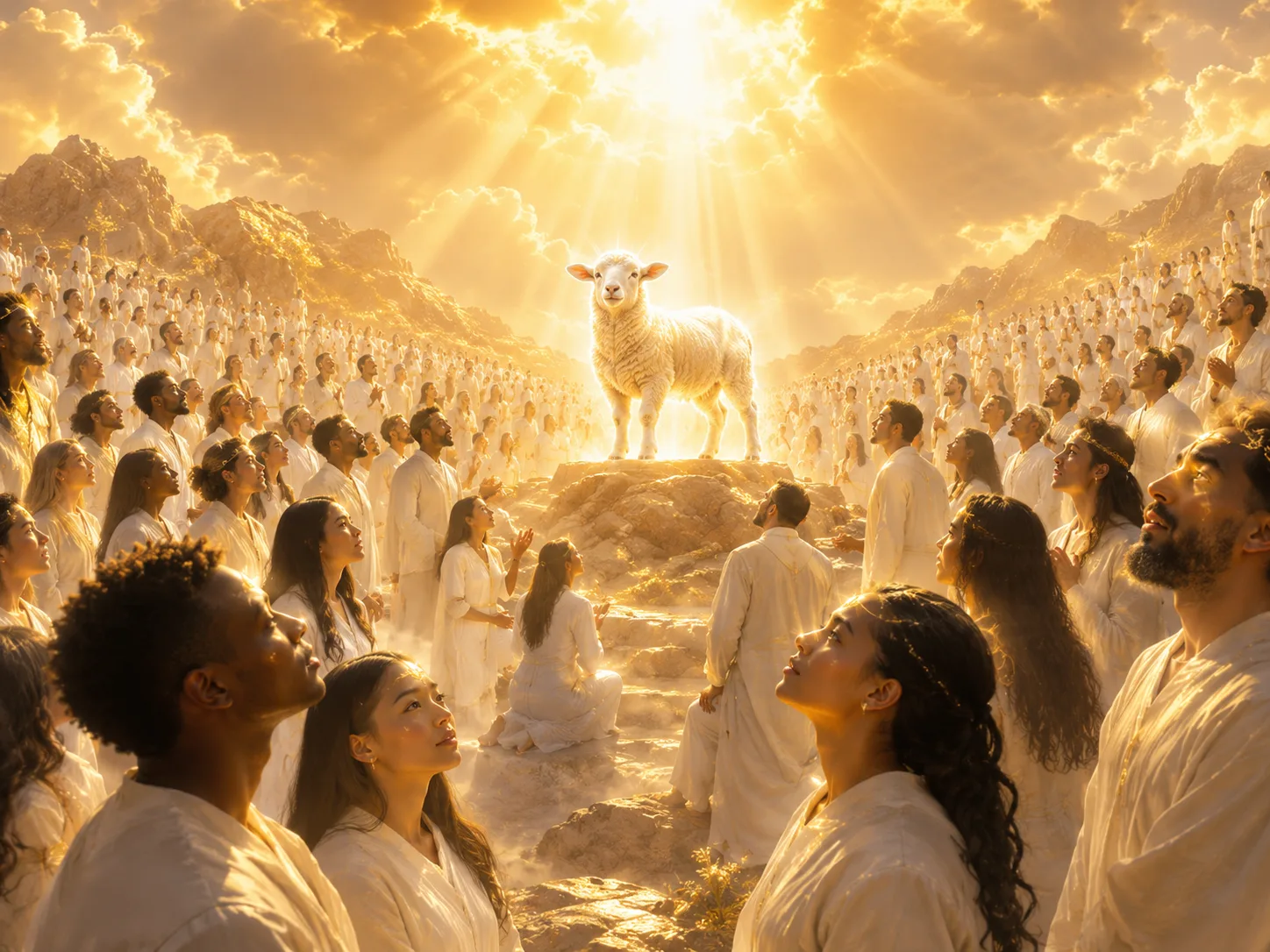
And I looked, and, lo, a Lamb stood on the mount Sion, and with him an hundred forty and four thousand, having his Father’s name written in their foreheads.
The opening verse names the seal of God explicitly. Revelation 7 had described the same sealing without naming its content; here the content is given. The seal is the Father’s name. Not a doctrinal label. Not even, in the first place, a day. A name — that is, an identity — written into the mind of every member of the redeemed company. They know who God is.
The placement is the inverse of the mark of chapter 13. The mark was in the forehead or in the hand. The seal is in the forehead alone — the mind that has settled its worship. From that settled mind the hand will follow, but it is the mind that the seal claims first.
Of this company verses 4–5 say: “these are they which follow the Lamb whithersoever he goeth,” and “in their mouth was found no guile.” Their loyalty is single; their speech is truthful; they have not embraced the deception of the other chapter. They are the people the three angels’ message produces.
The first angel
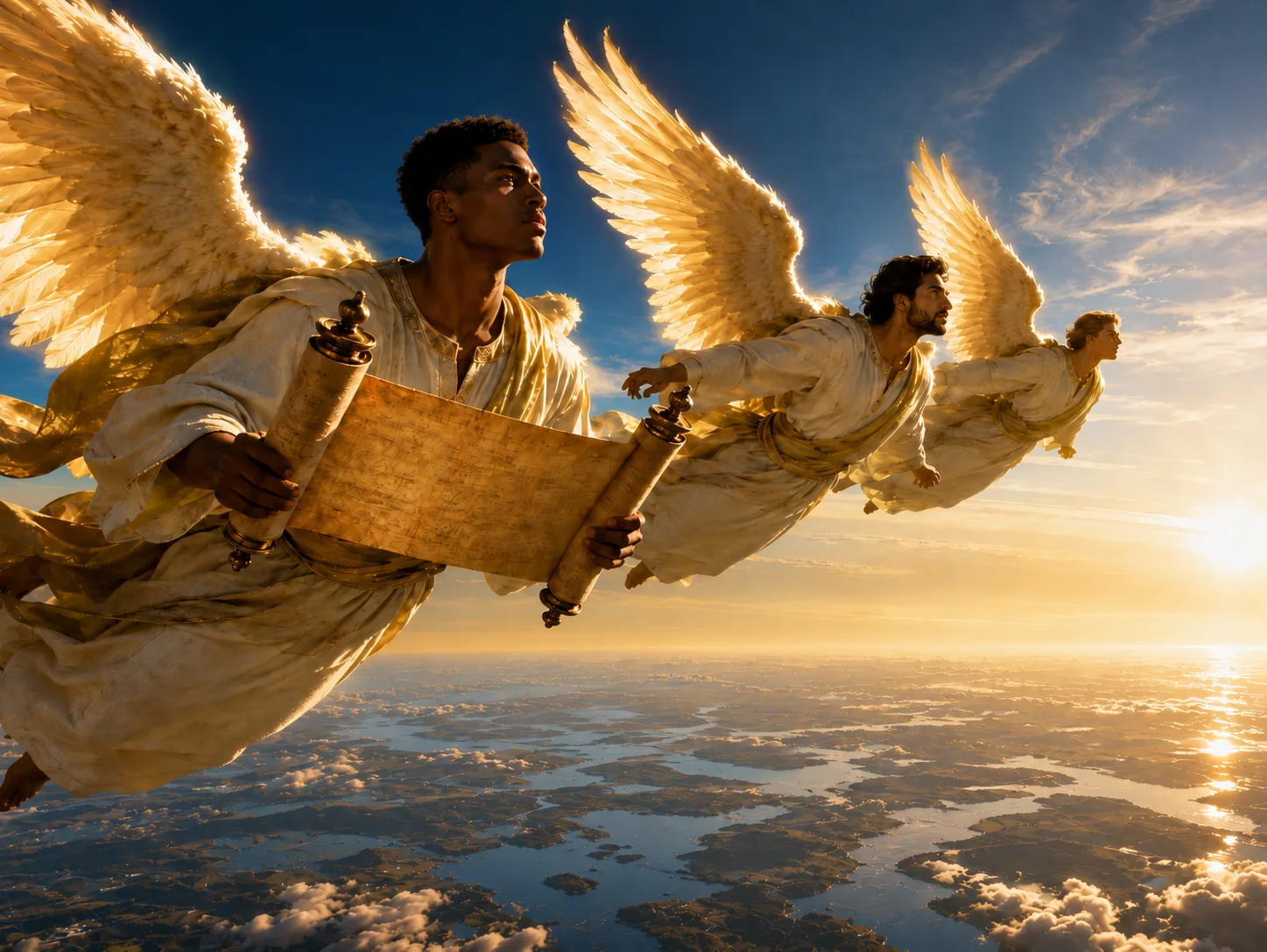
And I saw another angel fly in the midst of heaven, having the everlasting gospel to preach unto them that dwell on the earth, and to every nation, and kindred, and tongue, and people, saying with a loud voice, Fear God, and give glory to him; for the hour of his judgment is come: and worship him that made heaven, and earth, and the sea, and the fountains of waters.
The message is global, unmissable, and structurally the everlasting gospel. Whatever the three angels carry, the text identifies it as the same gospel preached from the beginning — not a new revelation, but the recovery of an old one. Three verbs are addressed to humanity: fear God, give glory to Him, worship Him that made heaven, earth, sea, and fountains of waters.
Who is the Creator addressed?
Jesus answers the question:
I thank thee, O Father, Lord of heaven and earth, because thou hast hid these things from the wise and prudent, and hast revealed them unto babes.
And this is life eternal, that they might know thee the only true God, and Jesus Christ, whom thou hast sent.
But to us there is but one God, the Father, of whom are all things, and we in him; and one Lord Jesus Christ, by whom are all things, and we by him.
The Creator addressed in the first angel’s call is the Father — the only true God, the Lord of heaven and earth, the One of Whom are all things. The first angel’s gospel is the restoration of the knowledge of the Father, before Whom Christ stands as the only begotten Son and the only way (John 14:6). That knowledge has been obscured under centuries of substitute teaching; the first angel’s message recovers it for the last hour.
Notice also the language: “him that made heaven, and earth, and the sea, and the fountains of waters.” The wording is nearly identical to the fourth commandment (Exodus 20:11), which closes with the Sabbath as the memorial of the same creation. The first angel’s call binds the worship of the Father to the memorial sign He Himself gave for it.
The second angel
And there followed another angel, saying, Babylon is fallen, is fallen, that great city, because she made all nations drink of the wine of the wrath of her fornication.
Babylon is the same Babylon Revelation 17 and 18 will describe at length — the great religious system that succeeds and embodies the spirit of ancient Babylon. She has made all nations drunk with her doctrines, and those doctrines (the chapter has just shown in 14:7 and will show in 14:9) are identifiable: a substituted worship and a substituted God. Her fall is announced before the third angel’s warning — that is, before the final enforcement — so that the call to come out can still be answered.
The Babylon in view is corporate, not merely personal: a system that has been building for centuries and is now collapsing under its own contradictions. Those caught inside it are not yet beyond reach. The cry of Revelation 18:4 will spell this out: Come out of her, my people, that ye be not partakers of her sins.
The third angel
And the third angel followed them, saying with a loud voice, If any man worship the beast and his image, and receive his mark in his forehead, or in his hand, the same shall drink of the wine of the wrath of God…
The most solemn warning in the Bible — and it is positive in structure as well as negative. It tells humanity exactly what not to receive, and by implication exactly what to receive instead: not the beast’s mark, but the Father’s name; not a worship directed to a substituted god through an institutional sacrament, but the worship the first angel just called for.
The mark, name, and number of Revelation 13:16–17 stand in view here. The forehead and the hand return. The implicit positive corresponds to chapter 14:1: his Father’s name written in their foreheads.
The patience of the saints
Here is the patience of the saints: here are they that keep the commandments of God, and the faith of Jesus.
The verse is the portrait of the people the three messages produce. Two marks describe them. They keep the commandments of God — all ten, the Sabbath included; the law as it was given, not as it has been edited. And they have the faith of Jesus — better read in the Greek as Jesus’s own faith, the subjective genitive, the faith which Jesus held, lived out in His people. Not bare obedience without trust; not bare trust without obedience; both, held in the same person, in the same hour.
Their patience is the evidence: under the pressure of the enforced mark, when buying and selling are restricted, they do not bend. They are the company of 14:1 — the redeemed with the Father’s name — seen from the side of their endurance rather than from the side of their reward.
The harvest
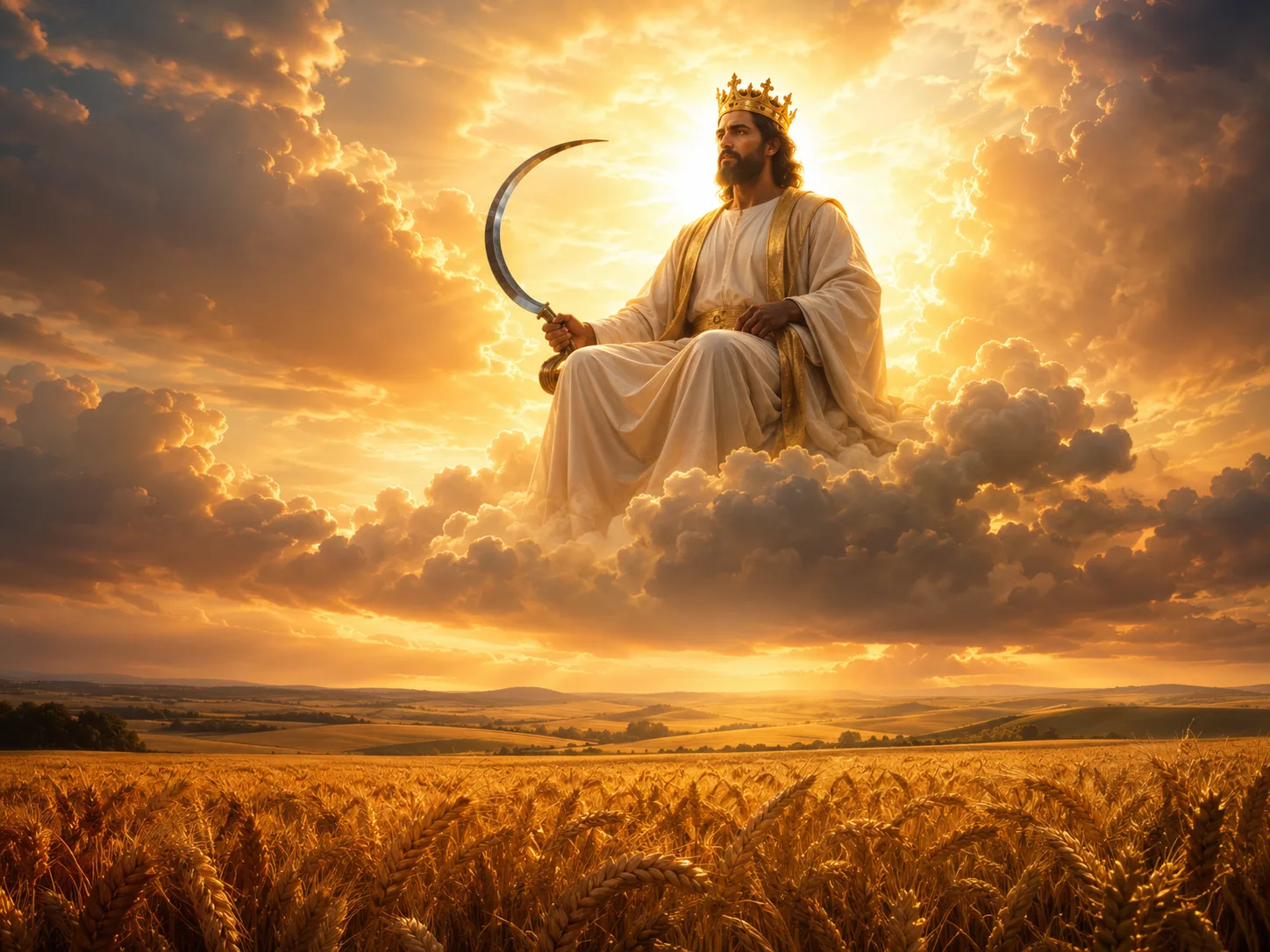
The chapter closes (vv. 14–20) with two harvests. One like a Son of Man on a white cloud reaps the wheat. Another angel gathers the vintage and casts it into the winepress of the wrath of God. The same imagery Jesus used in Matthew 13: a harvest of wheat, a harvest of tares. The three angels have made the decision-line visible to every nation; the harvest collects what has grown on each side of it.
One message in three voices
The three angels are not three separate revelations. They are one message in three voices — an identity-call (the Father, the Creator), a diagnosis (Babylon’s fall), and a decision (refuse the mark). The arc is identity → diagnosis → decision, and that arc is also the arc of every soul that hears it.
Further reading
- Revelation 13 — the chapter this one answers; the beast, the mark, the name.
- The seal and the mark — the two opposites laid out side by side.
- The historicist hermeneutic — why this message is read as the closing call of an ongoing prophetic timeline rather than a still-future mystery.