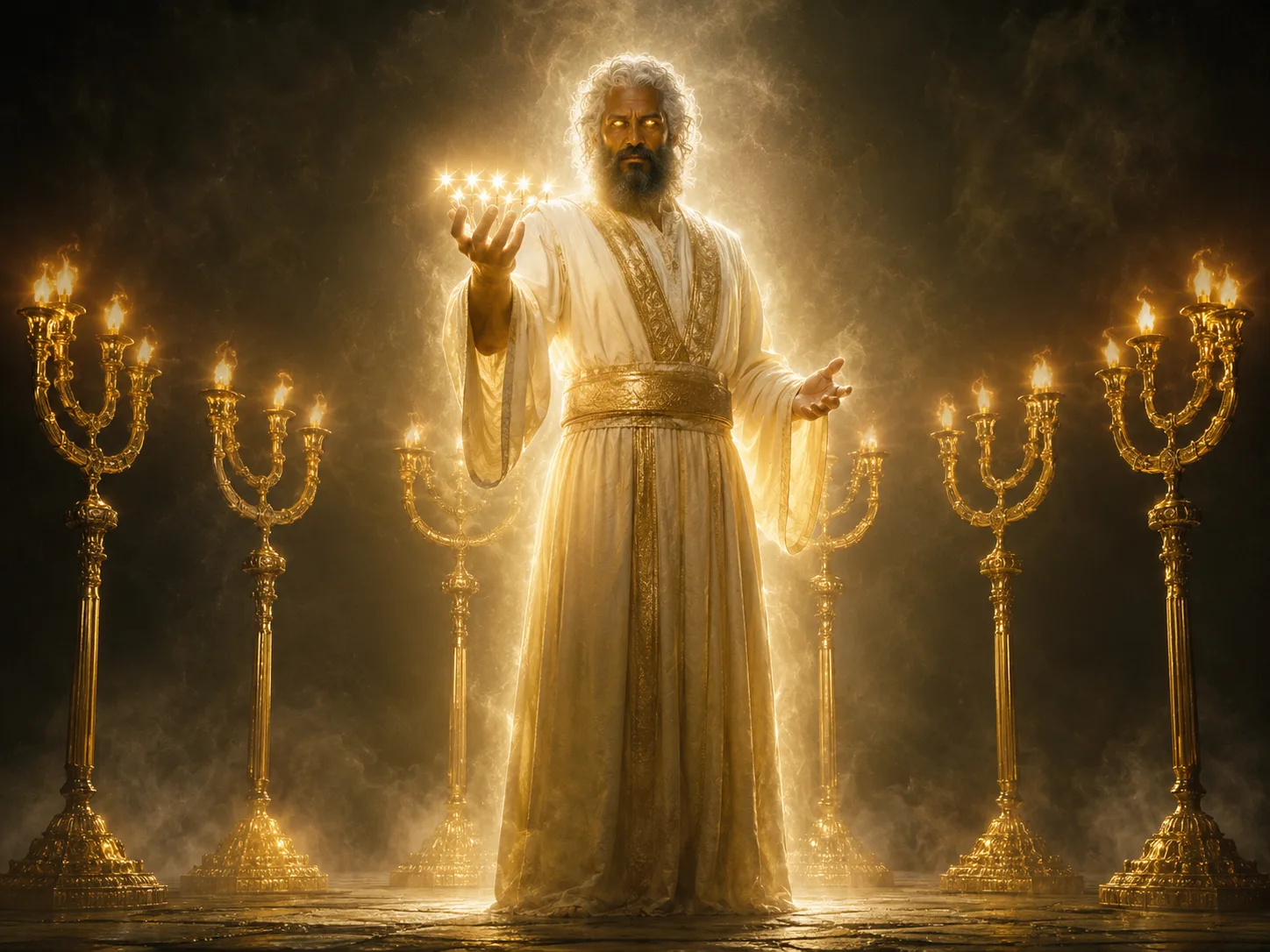
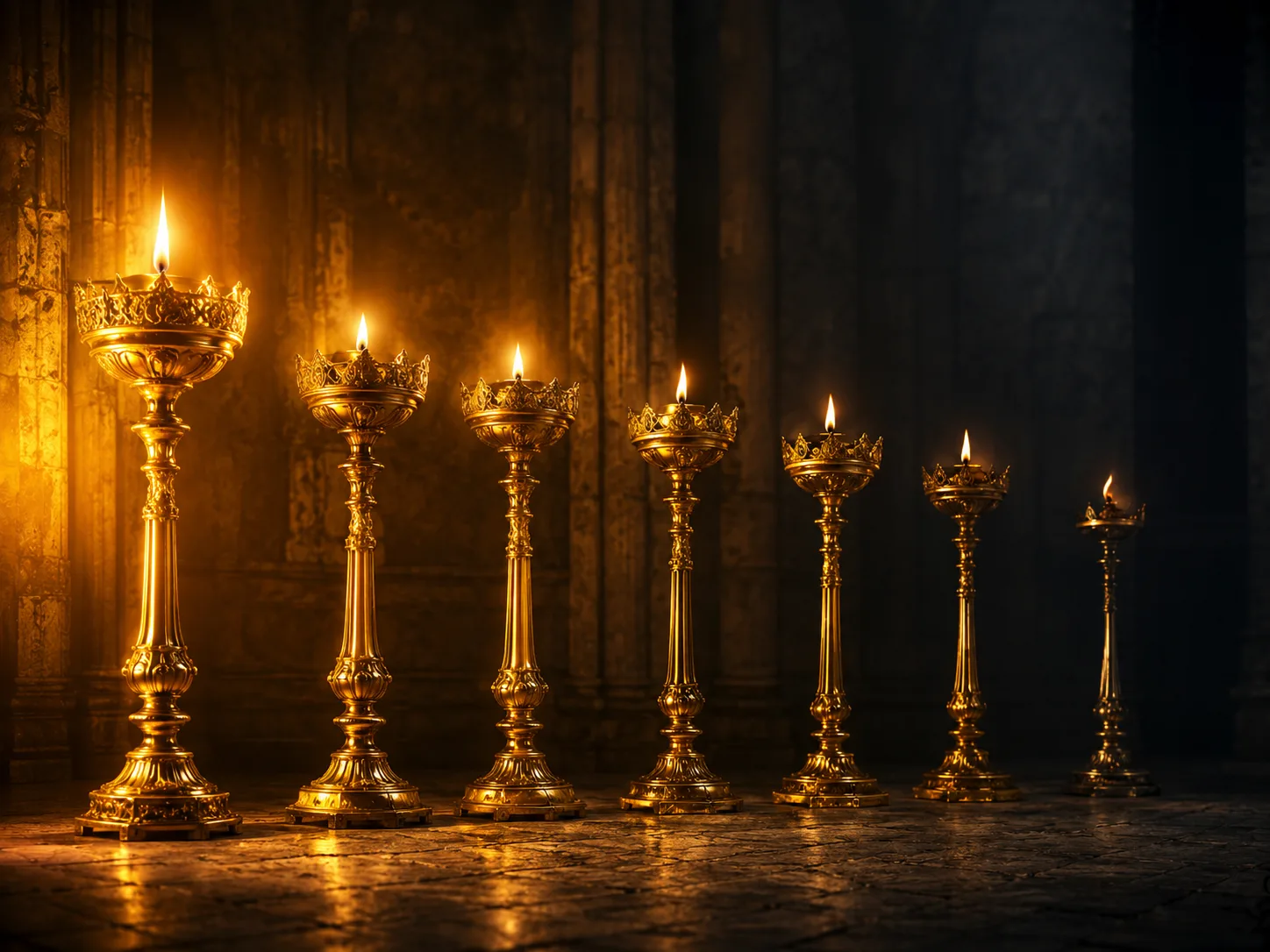
Seven letters to seven real congregations along a real postal route in Asia Minor. And at the same time, seven portraits of the condition of the visible church through seven succeeding eras — apostolic vigor, persecution, compromise, medieval darkness, incomplete reformation, restored mission, lukewarm complacency. These are not three layers of meaning stacked uncomfortably. They are the same pattern read at three scales at once.
Three readings, one text
The seven churches were first what they appear to be: actual first-century congregations whose pastors received actual letters. John knew these churches. Ephesus had a great history; Smyrna was about to enter Diocletian’s fire; Pergamos sat beside the imperial cult and the altar of Zeus.
They are also, second, seven types of congregation that have appeared in every century since — the diligent-but-loveless church (Ephesus), the persecuted church (Smyrna), the compromised church (Pergamos), the institutional church (Thyatira), the half- reformed church (Sardis), the missional church (Philadelphia), the wealthy and blind church (Laodicea). Any pastor can name a congregation today that fits each portrait.
And they are, third, seven eras of the visible church laid end to end from the apostles to the second coming. The seven seals and the seven trumpets cover the same span from different angles. This is the historicist reading the Reformers shared — not invented in the nineteenth century, but recovered from a counter-Reformation eclipse.
The seven eras at a glance
| Church | Era | Condition |
|---|---|---|
| Ephesus | AD ~30 – ~100 | Apostolic labour, losing first love |
| Smyrna | 303 – 313 | Persecution — “ten days” of tribulation |
| Pergamos | ~313 – 538 | Constantinian compromise; the Balaam pattern |
| Thyatira | 538 – 1517 | Long medieval darkness; Jezebel-pattern apostasy |
| Sardis | 1517 – 1798 | Reformation — “a name that thou livest, and art dead” |
| Philadelphia | 1798 – 1844 | Brotherly love; an open door for the world |
| Laodicea | 1844 – present | Lukewarm — rich in knowledge, blind to itself |
The seven eras
1 · Ephesus — apostolic vigor
The first generation of the church, founded by the apostles and labouring without fear. Christ commends almost everything — their works, patience, refusal of false apostles. But one thing is missing: thou hast left thy first love (Rev 2:4). The diagnostic of the apostolic era is theological accuracy with cooling devotion. Already, by the close of the first century, the warning had to be sent.
2 · Smyrna — persecution
“I know thy works, and tribulation, and poverty” (Rev 2:9). Diocletian’s persecution (AD 303–313) is the historical centerpiece — the ten-year span the letter names as “ten days.” Christ commends Smyrna with no reproof; this is one of only two churches Christ does not rebuke. Polycarp, bishop of Smyrna, is martyred under this pressure. The persecuted church loses much, but the fire only burns away what was never the church to begin with.
3 · Pergamos — Constantinian compromise
“Thou dwellest where Satan’s seat is” (Rev 2:13). Pergamos was the historic centre of the Babylonian priesthood after Medo-Persia displaced it from Babylon. The title Pontifex Maximus migrated from Pergamum to the Roman emperor, and from Damasus in AD 378 onward, to the bishop of Rome. The era is named for the move that made it possible — Constantine’s settlement (313) that joined a triumphant Christianity to a still-pagan imperial state. The Balaam pattern of Numbers 22–25: not crushed from outside but seduced from within.
4 · Thyatira — the long medieval era
Thyatira receives the longest letter and the heaviest reproof. “Thou sufferest that woman Jezebel” (Rev 2:20). The Jezebel pattern of 1 Kings 18 and 2 Kings 9: not paganism outright, but a counterfeit covenant — an institutional religion that retains the language of Israel while teaching idolatry. The era runs from AD 538 (the start of the 1260-year prophecy, when Justinian’s decree consolidated papal authority) to 1517 (Luther’s ninety-five theses). Christ’s promise to Thyatira is the most regal of all the letters — because the long captivity required the strongest assurance.
5 · Sardis — the Reformation
“Thou hast a name that thou livest, and art dead” (Rev 3:1). The Reformation recovered the gospel of grace, sola scriptura, and the priesthood of believers — yet the work was left unfinished. Trent regained for Rome what Worms had begun to lose. The Reformation churches that emerged fragmented into national denominations and, slowly, into established state churches that carried the Reformation’s name but not always its life. Wycliffe, Hus, Luther, Tyndale stood; their successors too often sat down.
6 · Philadelphia — the open door
“Brotherly love.” The shortest era and the only church besides Smyrna with no reproof. Beginning at 1798 (the deadly wound on the medieval system) and reaching to 1844 (the close of the 2300 days of Daniel 8), Philadelphia is the era of the global missionary awakening — Carey to India (1793), Morrison to China (1807), Moffat to Africa (1817), the British and Foreign Bible Society (1804), the American Bible Society (1816). The word, suppressed for centuries, ran to every nation. The open door of Revelation 3:8 is, structurally, the door between the holy place and the most holy in the heavenly sanctuary — opened in 1844 as the Philadelphian era yields to Laodicea.
7 · Laodicea — the lukewarm
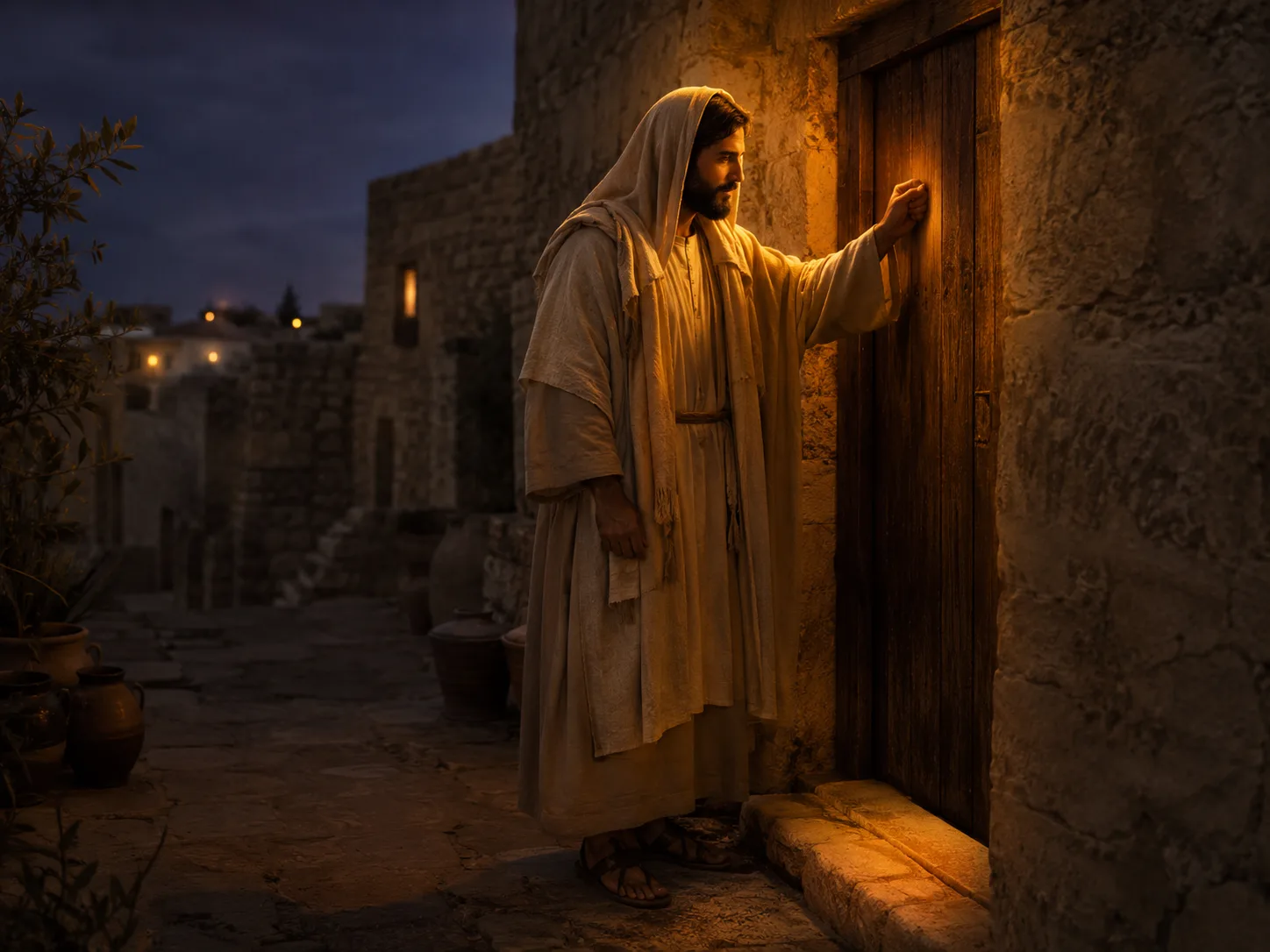
Laodicea was supplied by long aqueducts from hot springs at Hierapolis. The water arrived neither hot nor cold but tepid — good for nothing and apt to be spat out. The portrait is exact: rich in knowledge, increased with goods, in need of nothing, ignorant that it is wretched and miserable and poor and blind and naked. This is the era we now inhabit. Christ’s closing gesture in this final letter is the most intimate of all the seven: He stands at the door and knocks.
Behold, I stand at the door, and knock: if any man hear my voice, and open the door, I will come in to him, and will sup with him, and he with me.
What the letters carry
Each letter follows the same internal structure — a portrait of Christ drawn from the vision of chapter 1, a commendation (except for Laodicea, who receives none), a reproof (except for Smyrna and Philadelphia, who receive none), a call to repent, and a promise “to him that overcometh.” The promises advance across the seven and end where the book ends: the tree of life, the crown of life, the hidden manna, power over the nations, the book of life, a pillar in God’s temple, a seat on Christ’s throne. Read together, they outline the inheritance of the redeemed.
On systems, not people
When the text faults Pergamos for compromise or Thyatira for Jezebel’s teaching, it is the doctrinal and institutional pattern in view, not the people inside it. Every era has had faithful believers — and Christ is the One Who knows them. The letters are diagnostic of systems; salvation is personal.
Further reading
- The historicist hermeneutic — why three different seven-series cover the same history from different angles, rather than stacking end to end.
- Daniel 7 — the same 1260-year span as Thyatira, told from the political side.