
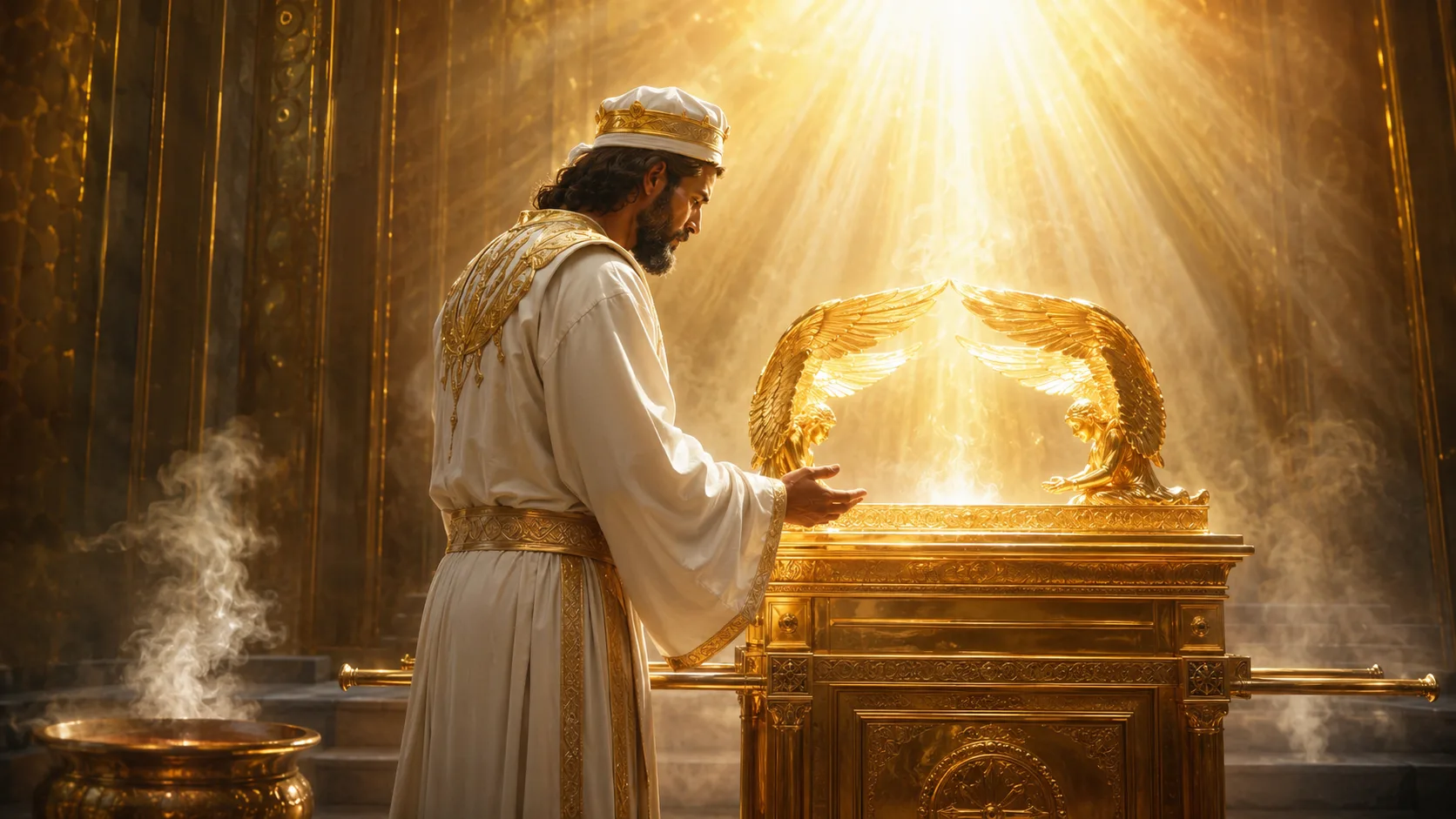
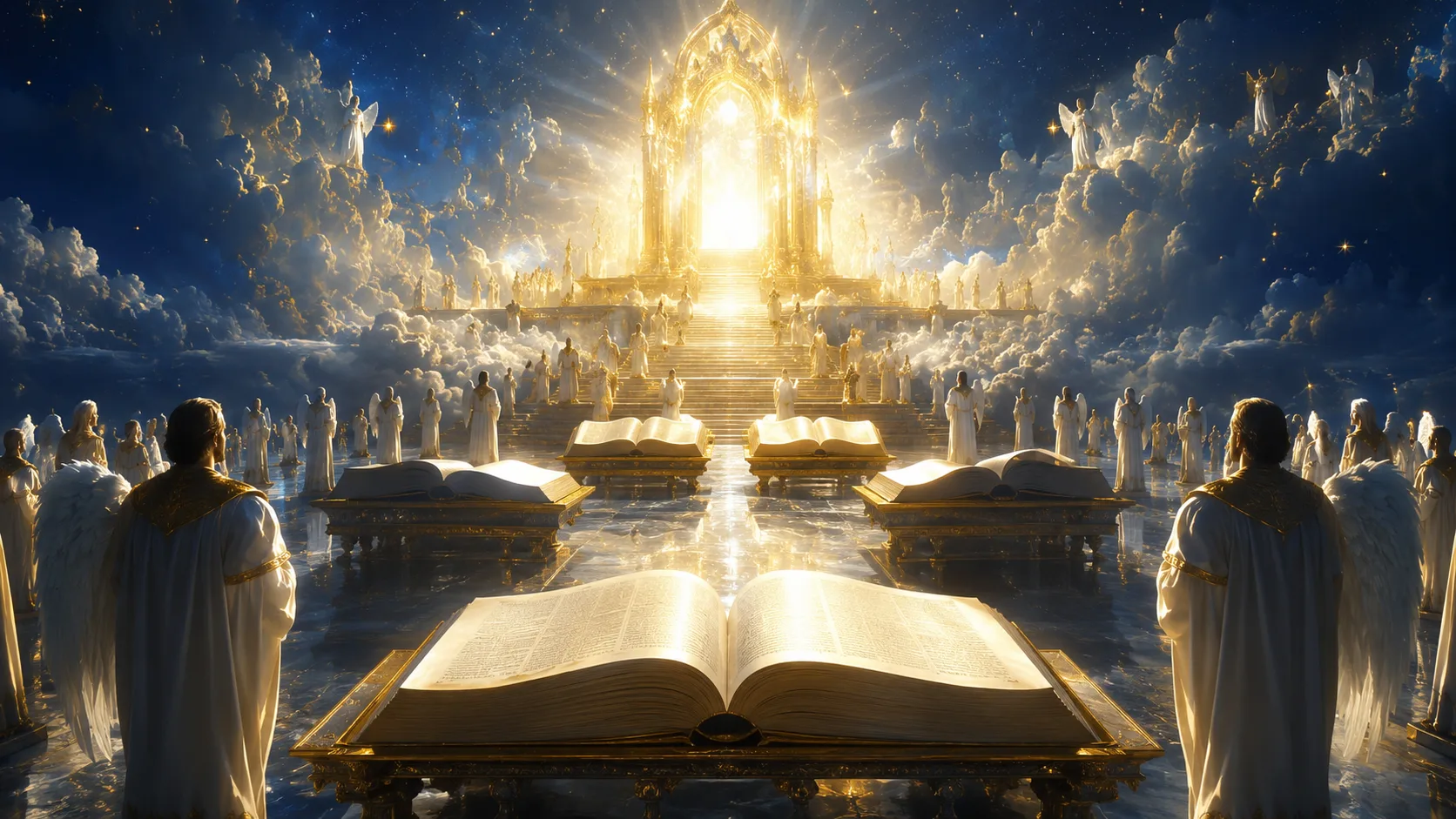
The longest time-prophecy of the Bible — two thousand three hundred days, day for a year — ended in 1844. The event it pointed to was not the second coming of Christ, as a mistaken popular movement of that decade believed. It was the antitypical Day of Atonement: the beginning of a judgement-hour ministry of Christ as High Priest in the heavenly sanctuary itself, on the Leviticus 16 pattern, in session from that hour to this.
Two questions stand together in front of the willing reader. The first is whether the Bible names a judgement that takes place before the second coming of Christ — a judgement of the books rather than the executive judgement by the lake of fire that Lesson 10 treated. The answer, as the first angel of Revelation 14 and the throne-room scene of Daniel 7 both attest, is yes. The second question is whether Scripture tells the reader when that judgement begins — and the answer, as the 2,300-day prophecy of Daniel 8 and its seventy-week key in Daniel 9 together demonstrate, is also yes. The hour is named. The date is settled by the Bible’s own chronological apparatus. The judgement-hour ministry of the High Priest is in session now, and the willing reader is invited to know who is keeping the books, who is pleading the cause, and what response the hour calls for.
Lesson 11 builds on the doctrines already received. The cross secured the redemption (Lesson 5). The law remains the standard of judgement (Lesson 6). The dead sleep in the graves until the resurrection (Lesson 9). The final executive judgement falls at the close of the millennium (Lesson 10). Between the cross and the close of probation stands one more biblical hour: the hour of the investigative judgement, opened in 1844, in session at the moment the reader reads this page. The walk-through that follows lays the case out from Scripture itself.
Question 01
Does Scripture name a judgement that takes place before Christ’s return?
Answer
And I saw another angel fly in the midst of heaven, having the everlasting gospel to preach unto them that dwell on the earth, and to every nation, and kindred, and tongue, and people, saying with a loud voice, Fear God, and give glory to him; for the hour of his judgment is come: and worship him that made heaven, and earth, and the sea, and the fountains of waters.
The first of Revelation’s three angels carries the everlasting gospel to every nation under heaven, and the message includes a verb in the present tense: the hour of his judgment is come. The Greek construction is the perfect tense — has arrived and continues. The angel is not announcing the second coming itself, which Revelation describes separately a few verses later in the imagery of the harvest (Rev 14:14–20). The angel is announcing a judgement — one that has begun, one that is in session at the moment of the proclamation, and one that the gospel call gives the willing reader notice of, that they may stand on the right side of it.
I beheld till the thrones were cast down, and the Ancient of days did sit, whose garment was white as snow, and the hair of his head like the pure wool: his throne was like the fiery flame, and his wheels as burning fire. A fiery stream issued and came forth from before him: thousand thousands ministered unto him, and ten thousand times ten thousand stood before him: the judgment was set, and the books were opened… I saw in the night visions, and, behold, one like the Son of man came with the clouds of heaven, and came to the Ancient of days, and they brought him near before him. And there was given him dominion, and glory, and a kingdom, that all people, nations, and languages, should serve him.
Daniel sees the same hour from the other side. A throne is set, the Ancient of days sits upon it, the books are opened, and the Son of man is brought near before the Father in a courtroom in heaven. The order of events is precise: first the judgement is set and the books are opened; then the Son of man is given dominion and the kingdom. The investigative judgement precedes the kingdom; the books are read before the reward is given. Revelation 14’s angel proclaims the same hour Daniel sees: the hour of God’s judgement, before the second coming, in session in heaven, with the Son of man at the Father’s right hand and the books open.
Because he hath appointed a day, in the which he will judge the world in righteousness by that man whom he hath ordained.
Question 02
What is the heavenly sanctuary, and what does it have to do with the judgement?
Answer
Now of the things which we have spoken this is the sum: We have such an high priest, who is set on the right hand of the throne of the Majesty in the heavens; a minister of the sanctuary, and of the true tabernacle, which the Lord pitched, and not man.
But Christ being come an high priest of good things to come, by a greater and more perfect tabernacle, not made with hands, that is to say, not of this building; neither by the blood of goats and calves, but by his own blood he entered in once into the holy place, having obtained eternal redemption for us… It was therefore necessary that the patterns of things in the heavens should be purified with these; but the heavenly things themselves with better sacrifices than these. For Christ is not entered into the holy places made with hands, which are the figures of the true; but into heaven itself, now to appear in the presence of God for us.
Hebrews is decisive on the existence and the location of the sanctuary at the centre of this lesson. There is a true tabernacle in the heavens, which the Lord Himself pitched and not man. Christ is its high priest. He ministers there in the actual presence of God on the believer’s behalf. The earthly sanctuary built under Moses was the pattern of the heavenly — the Greek word in Hebrews 9:23 is hupodeigma, a copy, a sketch, a working model — and the heavenly is the antitype, the original of which the earthly was a teaching figure. Every detail of the Levitical sanctuary, including the calendar of its ministries, was a divinely instituted symbol of what Christ Himself would do in the real sanctuary in heaven.
And let them make me a sanctuary; that I may dwell among them. According to all that I shew thee, after the pattern of the tabernacle, and the pattern of all the instruments thereof, even so shall ye make it… And look that thou make them after their pattern, which was shewed thee in the mount.
The instructions on Sinai were not the architectural invention of Moses. They were the reproduction, on earth and in shadow, of a heavenly reality God showed him. Whatever is taught in the Levitical sanctuary — the daily ministry, the yearly Day of Atonement, the cleansing of the holy places, the books of remembrance, the high priest, the blood — teaches something about the heavenly reality. And the prophecy of Daniel 8:14, which names the cleansing of the sanctuary at the end of a specific time-period, is therefore a prophecy of an event in the heavenly sanctuary itself.
Question 03
What did the earthly Day of Atonement teach about the cleansing of the sanctuary?
Answer
And he shall make an atonement for the holy place, because of the uncleanness of the children of Israel, and because of their transgressions in all their sins: and so shall he do for the tabernacle of the congregation, that remaineth among them in the midst of their uncleanness… and cleanse it, and hallow it from the uncleanness of the children of Israel… For on that day shall the priest make an atonement for you, to cleanse you, that ye may be clean from all your sins before the Lord. And he shall make an atonement for the holy sanctuary, and he shall make an atonement for the tabernacle of the congregation, and for the altar… And this shall be an everlasting statute unto you, to make an atonement for the children of Israel for all their sins once a year.
The Hebrew sanctuary had two ministries running on two timetables. The daily ministry of the priests, year-round, dealt with individual sins as they were brought and confessed; the sins were, in the language of the symbolism, transferred into the sanctuary through the blood of the sin-offering (Lev 4:5–7). The yearly Day of Atonement, on the tenth day of the seventh month, dealt with the accumulated sins lodged in the sanctuary through the daily ministry. The high priest entered the Most Holy Place once a year with the blood, made atonement for the holy place, and removed the sin-records that had been carried in during the preceding twelve months. The result was the cleansing of the sanctuary — the same word used in Daniel 8:14’s prophecy.
The pattern carries directly into the heavenly reality. The daily ministry of Christ as High Priest, from His ascension forward, has applied His own blood to the cases of confessing sinners across two thousand years — intercession, forgiveness, advocacy. At the close of the 2,300 days a transition occurred in His ministry, on the Day-of-Atonement pattern of Leviticus 16: the investigative phase, the opening of the books, the cleansing of the heavenly sanctuary itself. The transition is not from one Christ to another. It is from one phase of the same ministry to the next, on the calendar God Himself instituted at Sinai for the very purpose of teaching this transition in advance.
Question 04
What does the longest time-prophecy in the Bible actually say?
Answer
Then I heard one saint speaking, and another saint said unto that certain saint which spake, How long shall be the vision concerning the daily sacrifice, and the transgression of desolation, to give both the sanctuary and the host to be trodden under foot? And he said unto me, Unto two thousand and three hundred days; then shall the sanctuary be cleansed.
Daniel hears two heavenly beings discussing the vision of the chapter. One asks the duration; the other answers: unto two thousand and three hundred days; then shall the sanctuary be cleansed. The reply is the longest explicit time-period named anywhere in Scripture. Three elements deserve emphasis. First, the time-period is given in days, but the context is unmistakably symbolic — the vision is full of symbolic beasts (a ram, a rough goat with a notable horn, four notable horns out of the one broken horn, a little horn waxing exceeding great) and the day-for-a-year principle Scripture itself establishes (Num 14:34; Ezek 4:6) applies. The 2,300 days are 2,300 years. Second, the terminus is named: the cleansing of the sanctuary. Third, the starting point is not given here. Daniel does not know when the clock begins, and ends the chapter astonished and understanding-less (Dan 8:27). The starting point will be supplied in Daniel 9.
And the vision of the evening and the morning which was told is true: wherefore shut thou up the vision; for it shall be for many days… And I Daniel fainted, and was sick certain days… and I was astonished at the vision, but none understood it.
Daniel 8 ends with the prophet exhausted by the magnitude of the vision and confessing that he does not understand it. The reader is not therefore left without help. The very next chapter is the heavenly response to Daniel’s confessed perplexity, with the angel Gabriel returning to give him the explanation. The chapter division is editorial, not original; Daniel 8 and Daniel 9 are one connected exposition, and the second unlocks the first.
Question 05
How does Daniel 9 unlock the 2,300-day prophecy?
Answer
Yea, whiles I was speaking in prayer, even the man Gabriel, whom I had seen in the vision at the beginning, being caused to fly swiftly, touched me about the time of the evening oblation. And he informed me, and talked with me, and said, O Daniel, I am now come forth to give thee skill and understanding. At the beginning of thy supplications the commandment came forth, and I am come to shew thee; for thou art greatly beloved: therefore understand the matter, and consider the vision.
Gabriel returns — the same Gabriel Daniel had seen in the previous vision (8:16). He has come specifically to give Daniel skill and understanding, and tells the prophet to consider the vision. The vision in view is the unfinished business of chapter 8 — the vision Daniel did not understand. Gabriel’s message that follows is therefore not a new and unrelated prophecy but the divinely-given key to the prophecy already given.
Seventy weeks are determined upon thy people and upon thy holy city, to finish the transgression, and to make an end of sins, and to make reconciliation for iniquity, and to bring in everlasting righteousness, and to seal up the vision and prophecy, and to anoint the most Holy. Know therefore and understand, that from the going forth of the commandment to restore and to build Jerusalem unto the Messiah the Prince shall be seven weeks, and threescore and two weeks: the street shall be built again, and the wall, even in troublous times. And after threescore and two weeks shall Messiah be cut off, but not for himself: and the people of the prince that shall come shall destroy the city and the sanctuary… And he shall confirm the covenant with many for one week: and in the midst of the week he shall cause the sacrifice and the oblation to cease.
The Hebrew verb behind determined in v. 24 is chathak — the only occurrence of the word in the Hebrew Bible — and its plain lexical sense is to cut off, to sever. Seventy weeks are cut off upon Daniel’s people. The natural question is, cut off from what? The only longer prophetic time-period in the immediate context for the seventy weeks to be cut off from is the 2,300 days of Daniel 8 — the very prophecy Daniel had not understood, the very prophecy Gabriel has now returned to explain. Reading the two chapters together as the unit they are, the seventy weeks of Daniel 9 are the first 490 years of the 2,300 of Daniel 8, sharing the same starting point. Establishing the start of the seventy weeks establishes the start of the 2,300 years.
Question 06
What does the 70-weeks arithmetic actually produce?
Answer
Gabriel names the starting point: the going forth of the commandment to restore and to build Jerusalem (Dan 9:25). The book of Ezra records three Persian decrees affecting Jerusalem — Cyrus in 538 BC (the temple only), Darius in 520 BC (confirming Cyrus on the temple), and Artaxerxes in 457 BC (Ezra 7, the full reconstitution of Jewish civil and religious authority under Ezra). Only the third decree restores and builds Jerusalem as a self-governing city, which is the language of the prophecy. Artaxerxes’s seventh year — the year of the decree — falls in 457 BC by every major chronological apparatus, anchored by Persian astronomical records. The decree was executed in the autumn of that year (Ezra 7:8–9). The clock starts in autumn 457 BC.
The arithmetic that follows is the most decisive single demonstration of fulfilled prophecy in the Bible. Sixty- nine weeks — seven plus threescore and two — from the commandment to Messiah the Prince:
- 457 BC + 483 years = AD 27 — the year Christ was anointed with the Holy Spirit at His baptism (Lk 3:21–22), the act by which He became, in the New Testament’s vocabulary, the Messiah (Hebrew mashiach) — the Anointed One. Mark’s gospel opens His ministry with the announcement, The time is fulfilled, and the kingdom of God is at hand (Mk 1:15) — the time of this prophecy.
- + 3½ years = AD 31 — in the midst of the week he shall cause the sacrifice and the oblation to cease (Dan 9:27). The crucifixion fell in the middle of the seventieth week, AD 31, at which moment the veil of the temple was rent from the top to the bottom (Matt 27:51) — God Himself declaring the Levitical sacrificial system fulfilled and ended in the offering of the Son.
- + 3½ years = AD 34 — the close of the seventieth week, and the close of the 490 years determined upon thy people (Dan 9:24). At about this date the gospel turns to the Gentiles — Stephen is stoned (Acts 7), persecution scatters the church, Paul is converted, and the door of probation that had been specifically Israel’s for two millennia opens to every nation. The seventy weeks cut off from the 2,300 close on schedule.
- 2,300 − 490 = 1,810 years remain. From the close of the seventy weeks in AD 34, the remaining 1,810 years of the longer prophecy run on unbroken.
- AD 34 + 1,810 = AD 1844 — the year named by Daniel 8:14 as the terminus of the 2,300 days. The Day of Atonement of that year fell on October 22, 1844, on the Karaite reckoning of the seventh-month new moon. The cleansing of the heavenly sanctuary — the antitypical Day of Atonement — began on that date.
Three things deserve the willing reader’s attention. First, the first three checkpoints of the prophecy — AD 27, AD 31, AD 34 — have been independently fulfilled in events the New Testament itself records. The historicity of Christ’s baptism in AD 27, His crucifixion in AD 31, and the gospel’s turn to the Gentiles in AD 34 is not in serious dispute by any major chronological apparatus. Second, those three checkpoints sit inside a single 490-year period Gabriel says was cut off from a longer 2,300-year period. If the seventy weeks are read as years — as every major commentary tradition reads them — the 2,300 must be read as years on the same principle. Third, the same arithmetic that produced the verifiable AD 27 / 31 / 34 fulfilments produces AD 1844 for the cleansing of the sanctuary. The prophecy is one prophecy. The reader who accepts the historical fulfilment of the first half on Scripture’s own grounds is positioned to accept the prophetic fulfilment of the second.
Question 07
What is the “cleansing” the prophecy points to — and what began in 1844?
Answer
And he said unto me, Unto two thousand and three hundred days; then shall the sanctuary be cleansed.
And almost all things are by the law purged with blood; and without shedding of blood is no remission. It was therefore necessary that the patterns of things in the heavens should be purified with these; but the heavenly things themselves with better sacrifices than these.
Hebrews makes the claim Daniel’s prophecy assumes: the heavenly things themselves require purification — not through the blood of bulls and goats, but through the better sacrifice of Christ. The cleansing of the heavenly sanctuary at the close of the 2,300 days is the antitypical Day of Atonement, on the Leviticus 16 pattern: Christ, the great High Priest, applies the merit of His own once-shed blood (Heb 9:12) to the sin-records that have accumulated in the sanctuary through His intercession across two thousand years, settling the case of every name written in the books, vindicating the Father’s government before the watching universe.
The investigative phase opened in October 1844. The mistaken nineteenth-century movement that had calculated the same date had expected a different event — the visible return of Christ to the earth — and was disappointed when the date passed without it. The prophecy itself had not failed; the interpretation of the sanctuary as the earth had failed. Subsequent Bible study, in light of the book of Hebrews, recovered the location of the real sanctuary — in heaven, not on earth — and the nature of the cleansing — the antitypical Day of Atonement, not the second advent. The terminus of the prophecy stood; the meaning of the cleansing was clarified. From that hour, the Bible doctrine of the investigative judgement-hour ministry of Christ has stood as one of the distinctive recoveries of historic Adventism — given to the church to carry to the world in the message of Revelation 14:6–12.
Question 08
What is Christ doing in the heavenly sanctuary now — and what is He coming to do?
Answer
But this man, because he continueth ever, hath an unchangeable priesthood. Wherefore he is able also to save them to the uttermost that come unto God by him, seeing he ever liveth to make intercession for them.
For Christ is not entered into the holy places made with hands, which are the figures of the true; but into heaven itself, now to appear in the presence of God for us.
The activity of Christ at the right hand of the Father is not passive enthronement. It is active ministry. He ever liveth to make intercession for those who come unto God through Him. He appears in the presence of God for us. The believer’s confidence in the gospel is anchored not only in what Christ did once at Calvary but in what He is doing now in heaven — the application of the merit of His finished sacrifice to the cases of those who have received Him. The investigative judgement is the courtroom phase of that ongoing ministry, in which the cases on the books are reviewed and settled.
And, behold, I come quickly; and my reward is with me, to give every man according as his work shall be. I am Alpha and Omega, the beginning and the end, the first and the last.
The risen Christ speaks in His own voice the closing words of the Bible, and three claims arrive together. He comes quickly. He brings the reward with Him — not to gather information about cases, but to execute the verdict already settled in the books. And He identifies Himself by the divine self-designation that belongs to Jehovah in the prophets (Isa 41:4; 44:6; 48:12): the Alpha and the Omega, the beginning and the end, the first and the last. The One Who comes with the reward is the One Who has the right to assign it — the divine Son in His own voice, the High Priest Who has settled the cases before He returns to execute the settlement. The investigative judgement is finished before He arrives; the reward is brought with Him.
Question 09
What about the standard objections to the investigative judgement doctrine?
Answer
Six objections are most commonly brought against the biblical case the previous questions have set out. The willing reader deserves them addressed honestly:
| Objection | Scripture’s answer |
|---|---|
| Daniel 8 is about Antiochus IV Epiphanes, not a long-range prophecy | The preterist identification cannot bear the text. The little horn of Daniel 8 arises "out of one of them" (the four divisions of the Greek empire after Alexander), grows "exceeding great toward the south, and toward the east, and toward the pleasant land" (Dan 8:9) — the Roman direction of expansion, not the Seleucid contraction. The horn "stood up against the Prince of the host" (8:11) and "magnified himself even to the prince of the host" — language too lofty for any Seleucid king to fit on the textual marker. And the time-span Gabriel himself names is "two thousand and three hundred days" (8:14), six and a half centuries — multiples beyond the three-and-a-half-year crisis under Antiochus, whose desecration of the temple ran roughly 167–164 BC. Christ Himself, four centuries after Antiochus, names "the abomination of desolation, spoken of by Daniel the prophet" as yet future (Matt 24:15) — a verdict no preterist reading can absorb. |
| The day-for-a-year principle is arbitrary | Scripture itself supplies it twice over. Numbers 14:34 — "after the number of the days in which ye searched the land, even forty days, each day for a year, shall ye bear your iniquities, even forty years." Ezekiel 4:6 — "I have appointed thee each day for a year." The principle is given by God Himself for symbolic time-prophecies, and is applied throughout Daniel and Revelation wherever the prophetic context (symbolic beasts, symbolic horns, symbolic women) signals symbolic time. The 70 weeks of Daniel 9 — universally read as 490 years by every major commentary tradition — is the in-Bible demonstration that the principle works on the longer Daniel timelines. |
| The 457 BC starting date is the wrong year | Daniel 9:25 names "the going forth of the commandment to restore and to build Jerusalem" as the starting point. Ezra records three Persian decrees touching Jerusalem — Cyrus (538 BC, the temple only), Darius (520 BC, confirming Cyrus on the temple), and Artaxerxes (457 BC, Ezra 7, granting full civil and religious authority to restore the Jewish polity). Only the third reconstitutes Jerusalem as a self-governing city, fulfilling the prophecy. Persian chronology, anchored by Ptolemy’s Canon and confirmed by the astronomical tablets of the Babylonian astronomers, places Artaxerxes’s seventh year in 457 BC. The decree was executed in the autumn of that year (Ezra 7:8–9), giving the prophecy an autumn-to-autumn count. |
| Hebrews 9:12 says Christ entered the Holy Place at His ascension, not in 1844 | Hebrews 9:12 — "by his own blood he entered in once into the holy place, having obtained eternal redemption for us." The Greek hagia is the generic plural for the sanctuary, not specifically the second apartment. Hebrews 6:19–20 distinguishes Christ’s ascension entry as forerunner — the inauguration of His high-priestly access — from the daily ministry of intercession that follows (Heb 7:25). The earthly type ran the same way: Aaron entered the first apartment continually for the daily ministry, but went into the most holy place once a year, on the Day of Atonement, to cleanse the sanctuary (Lev 16). The antitypical Day of Atonement, prophesied in Dan 8:14 to begin at the close of the 2,300 days, is the transition from the daily to the yearly phase of Christ’s ongoing ministry in the heavenly sanctuary — not the beginning of His ministry as such. |
| The cleansing was the Maccabean rededication or AD 70 | The Maccabean rededication of December 164 BC restored Antiochus’s defiled altar to ordinary use; it cleansed nothing in the prophetic sense and falls hundreds of years short of any honest 2,300-year count from any starting point Daniel’s text supports. The AD 70 destruction of Jerusalem destroyed the earthly sanctuary; it did not cleanse one. Daniel 8:14 says "then shall the sanctuary be cleansed" — not destroyed and not rededicated by the Maccabees. The two passages of Hebrews 9:23 and Daniel 8:14 together require a heavenly cleansing at the terminus of the prophecy, on the Day-of-Atonement pattern of Leviticus 16, not a calendar event in Maccabean or Roman history. |
| The investigative judgement undermines the believer’s assurance | The investigative judgement is not a re-trial of the cross; it is the application of the cross to the books. The blood that speaks better things than that of Abel (Heb 12:24) is the same blood pleaded in the judgement; Christ Himself appears "in the presence of God for us" (Heb 9:24); the believer’s advocate with the Father is Jesus Christ the righteous (1 Jn 2:1). Far from threatening assurance, the doctrine names the One Who keeps the books and the One Who pleads the case, and tells the believer they are the same Person. The fearful party in the judgement is not the believer; the fearful party is the unrepentant accuser whose case will not stand against the blood pleaded by the Lamb. |
Six objections, six answers from Scripture itself. The 2,300-day prophecy stands; the seventy weeks unlock it; the AD 27 / 31 / 34 fulfilments anchor the arithmetic; the sanctuary in heaven is the location; the cleansing on the Day-of-Atonement pattern is the event; and the investigative judgement is the friend, not the enemy, of the believer’s assurance in Christ.
A note on what is being recovered
The doctrine this lesson recovers is not a doctrine of fear. It is the doctrine of access. The High Priest in the heavenly sanctuary is the same Christ Who died for the believer; the blood pleaded in the investigative judgement is the same blood shed at Calvary; the One Who keeps the books is the same One Who gave Himself for the sinner whose case is in them. The investigative judgement does not put the believer on trial; it puts the believer’s case in the hand of their advocate. The believer’s assurance is not threatened by the doctrine — it is grounded in it. What is being corrected is the popular evangelical collapse of all judgement-hour ministry of Christ into a single completed act at the cross, leaving the believer with no sense of a present heavenly ministry to depend on, and no biblical framework for the present hour of earth’s history. The doctrine corrected is the incompleteness of the gospel as it is commonly preached, not the love of the sincere believer who has been taught a shorter version of the story.
Question 10
What does the hour of God’s judgement call for, from the willing reader?
Answer
Saying with a loud voice, Fear God, and give glory to him; for the hour of his judgment is come: and worship him that made heaven, and earth, and the sea, and the fountains of waters.
The first angel’s call has four verbs and one identifier. Fear God — a reverent recognition that the case of every name will be brought into review before the throne. Give glory to him — live a life that honours, rather than dishonours, the One Who has set the books. Worship him that made heaven, and earth, and the sea, and the fountains of waters — the language of the Sabbath commandment (Ex 20:8–11), the worship of the Creator as Creator, on the day He sanctified for the purpose. And the reason: the hour of his judgment is come. The hour is not future. It is present.
My little children, these things write I unto you, that ye sin not. And if any man sin, we have an advocate with the Father, Jesus Christ the righteous: and he is the propitiation for our sins.
Let us hear the conclusion of the whole matter: Fear God, and keep his commandments: for this is the whole duty of man. For God shall bring every work into judgment, with every secret thing, whether it be good, or evil.
The reader who has heard this lesson stands, by virtue of having heard it, with notice. The judgement is in session. The books are open. The advocate at the bar is Christ. The case can be settled now, on the documents of the gospel, by faith in the One Who bore the wages of sin in the believer’s place and Who pleads His own blood in every case He is given to plead. The hour is not the hour of panic; it is the hour of decision. The next chapter of the willing reader’s life is written under the open books of the great white throne’s preliminary session — and the institute commends to the reader the prayer of the Psalmist:
Search me, O God, and know my heart: try me, and know my thoughts: and see if there be any wicked way in me, and lead me in the way everlasting.
Summary of Lesson 11
- Scripture names a judgement that takes place before the second coming — the first angel’s hour of his judgment is come (Rev 14:6–7); the Ancient-of-days throne-room scene with the books opened and the Son of man brought near (Dan 7:9–14); the appointed day of Acts 17:31.
- There is a real sanctuary in heaven (Heb 8:1–2; 9:11–12, 23–24), of which the Mosaic sanctuary was the pattern shown to Moses in the mount (Ex 25:8–9, 40). Whatever the Levitical sanctuary teaches, the heavenly antitype fulfils.
- The Day of Atonement of Leviticus 16 is the type of the cleansing of the sanctuary the prophecy of Dan 8:14 names. The daily and yearly ministries are the pattern of Christ’s daily-intercessory and yearly-investigative phases.
- Daniel 8:14 names the longest time-period in Scripture — two thousand and three hundred days; then shall the sanctuary be cleansed. Day- for-a-year (Num 14:34; Ezek 4:6) gives 2,300 years.
- Daniel 9 is Gabriel’s return to explain the vision Daniel did not understand (Dan 8:27 → 9:21–23). The seventy weeks of Daniel 9 are cut off (chathak) from the 2,300, sharing the same starting point.
- Starting point: the decree of Artaxerxes (Ezra 7) in autumn 457 BC — the third Persian decree, and the only one restoring Jerusalem as a polity.
- 70-weeks arithmetic: 457 BC + 483 years = AD 27, the anointing of Messiah at His baptism; + 3½ = AD 31, the cross “in the midst of the week,” veil rent; + 3½ = AD 34, the gospel to the Gentiles at the close of the seventy weeks.
- 2,300 − 490 = 1,810 years remain. AD 34 + 1,810 = AD 1844 — the autumn-of-the-year terminus, falling on the antitypical Day of Atonement.
- The cleansing prophesied is the cleansing of the heavenly sanctuary itself (Heb 9:23) — the investigative-judgement phase of Christ’s ongoing High-Priestly ministry, opened in October 1844 and continuing.
- Christ’s own self-designation in Revelation 22:12–13 closes the case: He comes quickly, His reward is with Him, and He is Alpha and Omega, the beginning and the end, the first and the last. The judgement is settled before He arrives.
- The doctrine is the friend of assurance, not its enemy. Christ is the believer’s advocate (1 Jn 2:1); He ever liveth to make intercession (Heb 7:25); He appears in the presence of God for us (Heb 9:24). The investigative judgement is the application of the cross to the books, not a re-trial of the cross.
- The call of the hour, in Revelation 14:7, is fourfold: fear God, give glory to Him, worship the Creator on the day He sanctified, and live under the open books with a conscience settled by the blood of Christ.
Personal response
The biblical doctrine of the investigative judgement is, on first hearing, weightier than the doctrine of a single completed transaction at Calvary with no present heavenly sequel. It is also more comforting. The cross was sufficient, but the cross was not the whole story. Christ rose, ascended, sat down at the right hand of the Father, and entered upon a heavenly ministry the willing reader is now invited to take into account. He intercedes for His people; He pleads His own blood in the cases of those who come unto God by Him; He has, on the calendar of Daniel 8 and Leviticus 16, entered the Day-of-Atonement phase of that ministry as of 1844, and He is at the bar now. The believer who hears the doctrine is not invited to fear; the believer is invited to come.
Father in heaven, the only true God, the keeper of the books, thank You for the plainness of Your word on the hour we are in. I have heard the first angel’s call: the hour of Your judgement is come. I have seen the prophecy that named the hour, the seventy weeks that unlocked it, the Messiah anointed in AD 27, the cross of AD 31, the gospel turned to the nations in AD 34, and the sanctuary cleansing opened in 1844. I have seen the High Priest at Your right hand, my advocate, who ever liveth to make intercession. Search me, O God, and know my heart: try me, and know my thoughts: and see if there be any wicked way in me. Plead the blood of Your Son in my case, that my name may stand at the close of the investigation, written in the book of life. In the name of Him who is Alpha and Omega, the first and the last, Jesus Christ. Amen.
From the doctrine of the judgement-hour in session, the next lesson asks the next question: what did Daniel see? Behind the 2,300-day prophecy of Daniel 8 stands the broader prophetic architecture of Daniel 2 and 7 — the four world-kingdoms from Babylon to the second coming, the rise of the little horn out of the fourth kingdom, and the everlasting kingdom of the Son of man given by the Ancient of Days. Lesson 12 walks the historicist tradition the Protestant Reformation recovered and the modern church has largely surrendered.
Foundational text
“And I saw another angel fly in the midst of heaven, having the everlasting gospel to preach unto them that dwell on the earth… saying with a loud voice, Fear God, and give glory to him; for the hour of his judgment is come.”
— Revelation 14:6–7