There is a building the world is waiting for. For generations there has been a longing to raise a third temple in Jerusalem — the first was Solomon’s, taken by Babylon; the second was Zerubbabel’s, taken by Rome; and ever since, no temple has stood. From time to time the news carries the plans — the architects, the vessels, the priesthood-in-waiting — all to restore the old worship so that, as they say, the presence of God might once again fill a house made for Him. Hold that desire in your mind: the deep wish to build something that will draw down the presence of God. Scripture has already answered it — and the answer is not made of stone.
Presence greater than the contents
Scripture has layers. Some truth lies on the surface; some is set deeper, in patterns that repeat until you cannot miss them. Here is the pattern, stated plainly at the start so you can watch it return: God’s presence was something greater than the contents of the sanctuary — and that is how He desired to dwell with His people. Keep that sentence. We will see it three times, in three pictures, and it overturns a quiet but serious error along the way.
The first picture: the sanctuary
Begin where the Bible begins to build. The whole sanctuary system — its priesthood, its sacrifices, its feasts, its endless detail — was given for one purpose, spoken to Moses in a single line:
And let them make me a sanctuary; that I may dwell among them.
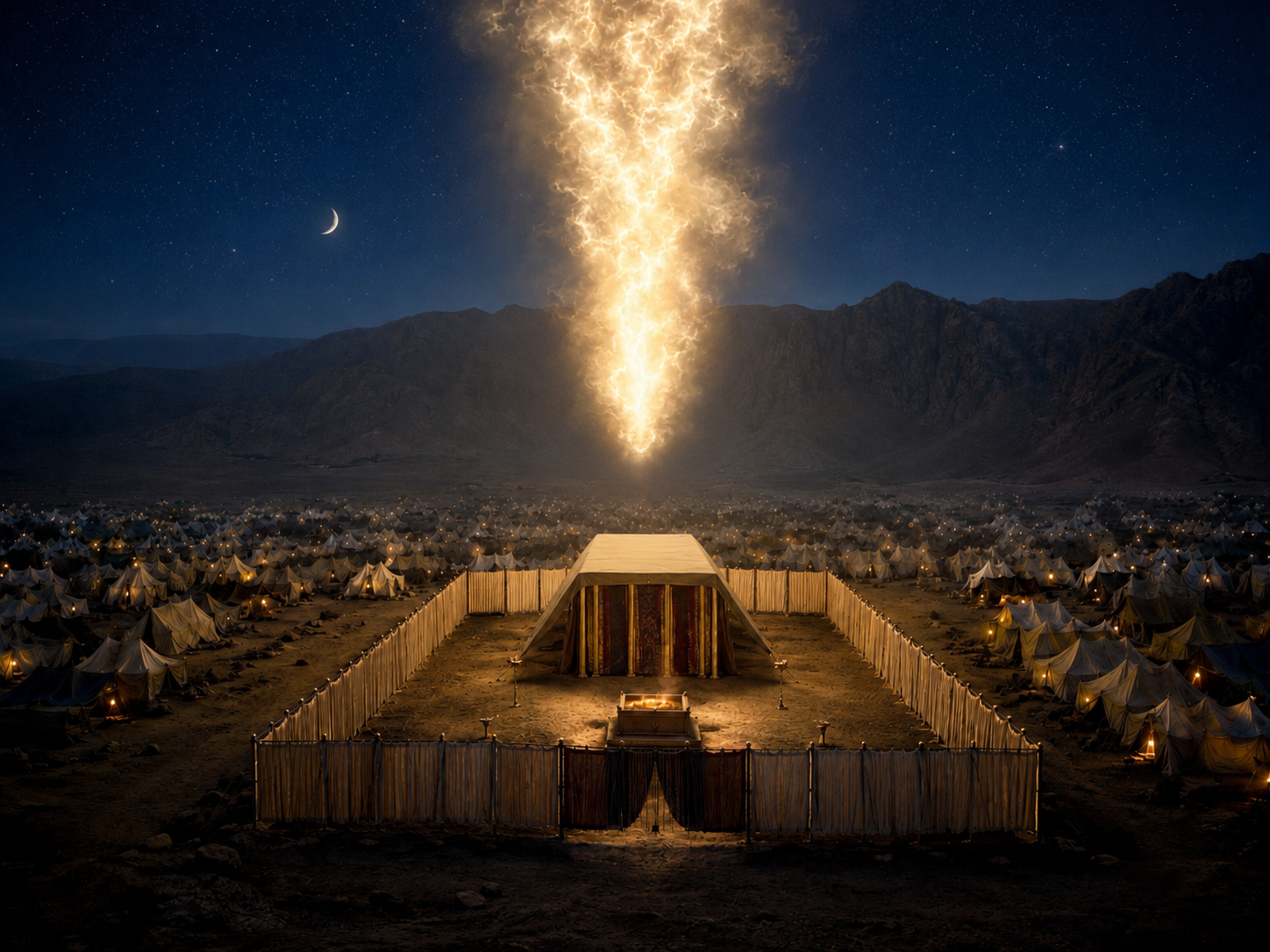
The sanctuary was full of holy contents: the lampstand, the table, the altar; the most holy place with the ark of the covenant; and inside the ark, the law of God — the very words He spoke on Sinai and wrote with His own finger. The most sacred place, holding the most sacred words. And yet — here is the point — not one of those things was the presence of God. His presence came as the shekinah: the pillar of cloud by day and fire by night, the glory that sometimes filled the tent so heavily the priests could not stand to minister. The contents never changed; the glory descended upon them. God’s presence was an addition to what was already there.
So the picture says plainly what we must say plainly: the word of God — even the holy law in the ark — is not the same thing as the presence of God. There is a teaching today that mingles the two, that treats God’s written and spoken word as though it simply were His presence and Spirit. The sanctuary was built, in part, to forbid that confusion. The words lay in the ark; the glory blazed above it. They were not the same.
The shadow and the reality
All of this was a type — a shadow of a greater reality to come, and a shadow is never the substance:
For the law having a shadow of good things to come, and not the very image of the things, can never … make the comers thereunto perfect.
The sanctuary’s very limits proved it was pointing forward: only priests could enter, only once a year into the most holy place, and only in one location. God’s tent stood among the people’s tents — but He did not yet dwell in them. The good things to come included God dwelling with His people in a nearer, more intimate way than a tent pitched among tents. And for that, what was needed was a living tabernacle.
The second picture: Emmanuel
Read the angel’s word to Joseph beside the word God gave to Moses:
… and they shall call his name Emmanuel, which being interpreted is, God with us.
“That I may dwell among them” — “God with us.” The dwelling of God with man was never finally a what; it is a Who, a living Person, the Son of God. But hear the name rightly, because it is easily misread. “God with us” does not mean “Jesus is God, and He is with us.” It means God the Father is with us — in His Son, through His Son. We are not emptying the Son of His divinity; He is the divine Son of God. But the name Emmanuel tells us it is the Father who is with us in Him. The Son said it Himself:
… the words that I speak unto you I speak not of myself: but the Father that dwelleth in me, he doeth the works.
“God was in Christ, reconciling the world unto himself” (2 Corinthians 5:19). To see Him was to see the Father. That is Emmanuel — God with us — and if it were anyone other than the Father in the Son, it could not be Emmanuel at all.
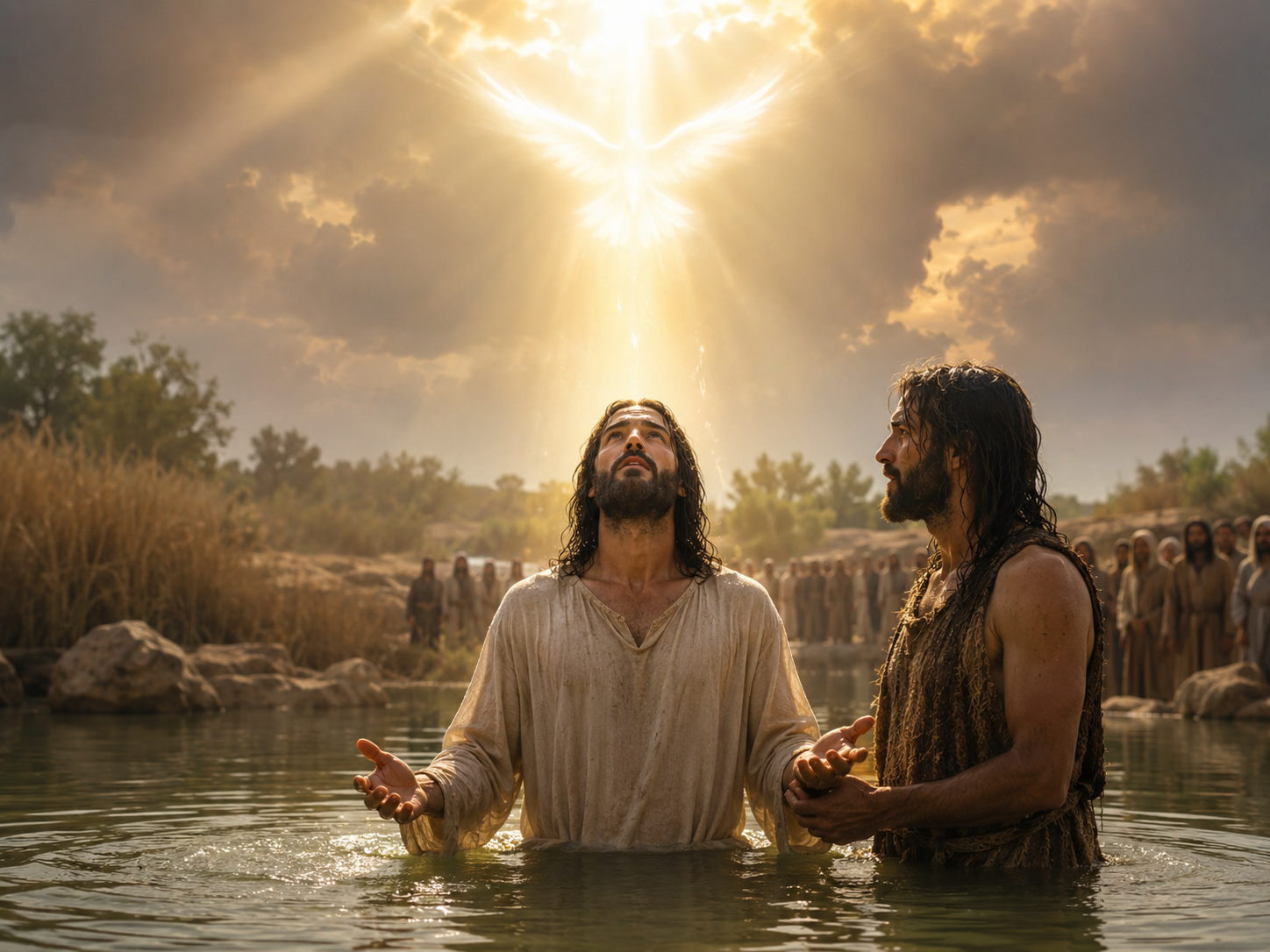
And the baptism makes it visible. Many use that scene to prove a trinity — the Father’s voice above, the Son in the water, and a third Person between them: one, two, three. But listen to the One who was actually there, and who explained it:
And the Father himself, which hath sent me, hath borne witness of me. Ye have neither heard his voice at any time, nor seen his shape.
That word is about the baptism — for at the baptism there was a voice and there was a shape. Whose voice was it? The Father’s. Whose shape was it? The Father’s. Not three persons doing three things, but one Person — the Father — bearing witness in two ways: by His voice (“This is my beloved Son”) and by His Spirit, poured out upon His Son. The “shape” was no literal bird; it was light and glory descending as a dove descends — the glory of God, not a third deity in feathers. So the Spirit that came upon Christ was the presence and glory of the Father Himself, His own life resting on His Son. And notice the sanctuary’s pattern returning exactly: the words (“my beloved Son”) were not the same as the Spirit; the Father spoke, and also sent His Spirit — two things, the presence added to the contents. Jesus already had the word of God in His heart; the Father’s glory came upon Him besides.
The cup and the breath
Before His death, the Son gave His disciples a seal of what was coming:
… This cup is the new testament in my blood, which is shed for you.
Where is the new testament? Not, first of all, in a book. The New Covenant — the New Testament — is a Person: Christ Himself, given to be “a covenant of the people.” The blood is the life; His life is the covenant; and He handed them the cup and said drink — I want this life within you. Then, after He rose, He sealed it a second time:
… he breathed on them, and saith unto them, Receive ye the Holy Ghost.
Blood and breath; life and spirit — the same reality, given out of Himself. For “the last Adam was made a quickening spirit” (1 Corinthians 15:45), and “the Lord is that Spirit” (2 Corinthians 3:17). So when it is objected that we deny the Spirit’s personhood, hear it plainly: the Spirit is a Person — the Person of Christ. Not a different Person standing beside Him, but His own life and presence given to dwell within. The Spirit is not an item, not a set of words, not information to be acquired; He is the living Lord Himself.
The third picture: Pentecost
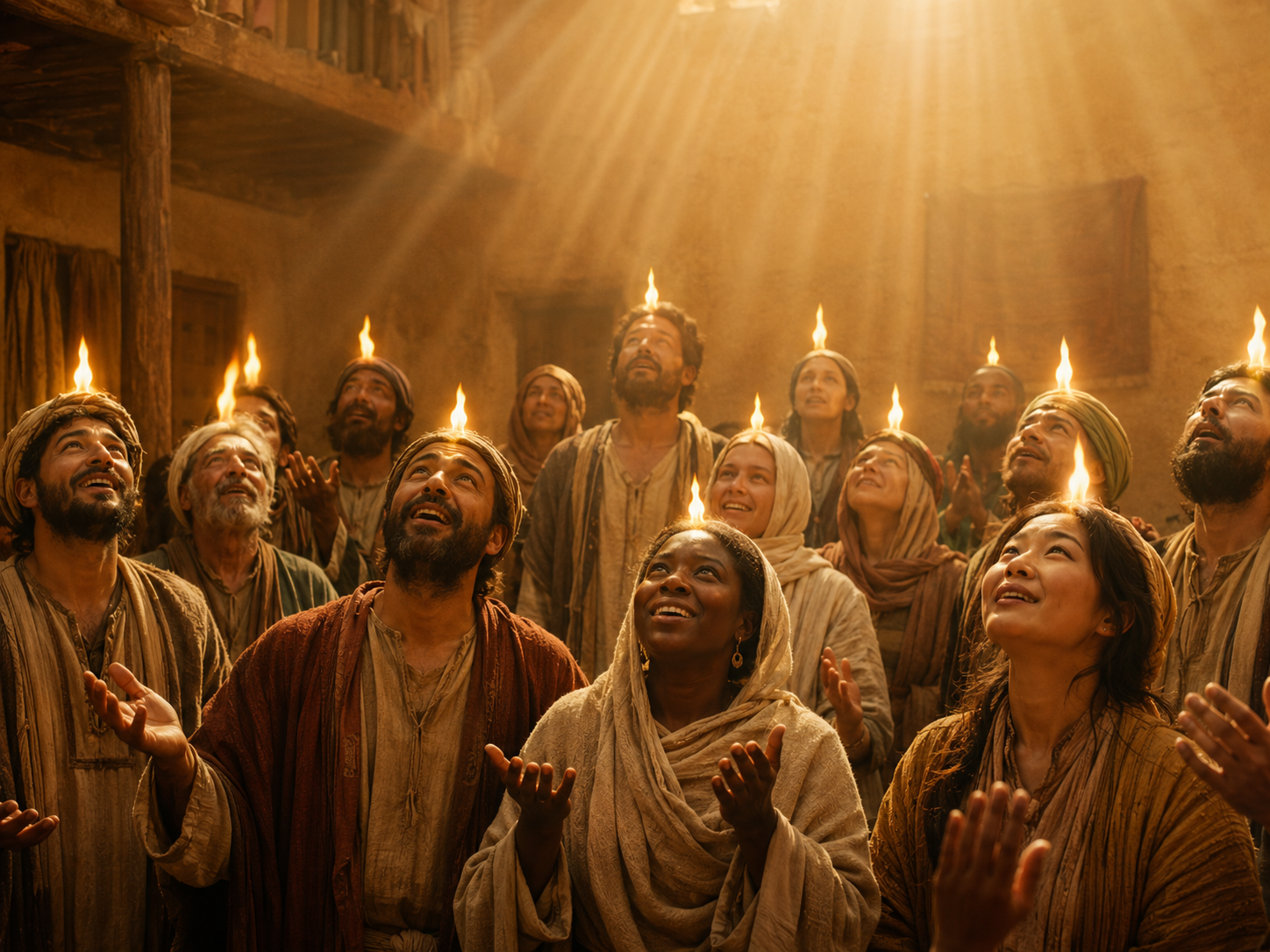
The cup and the breath were anticipation; the reality came at Pentecost, when the risen High Priest poured out His own life upon His people and the tongues of fire rested on their heads. The fire was the visible token of what was happening within — the very life and presence of Christ given to dwell in them. And there is the pattern a third time: light and fire in the sanctuary; light and glory at the baptism; tongues of fire at Pentecost — the same thing, the presence of God added to whatever was already there.
The disciples already knew the Scriptures; they had the word. What more did they need? They needed Him — His own life — and it came as a miracle from heaven, not as more information mastered by effort. There were angels present that day; but no angel was within the disciples. What was within them was the life of the Son. That is the new birth: not the acquiring of facts, but the reception of a Life.
The temple God is building
Now the third temple stands revealed. The first tabernacle was a tent in the wilderness. The second was the living Son of God, the body in which the Father dwelt — the temple the builders tore down to keep their temple of stone. The third is His people, raised and filled by God Himself:
In whom all the building fitly framed together groweth unto an holy temple in the Lord: in whom ye also are builded together for an habitation of God through the Spirit.
Who builds this temple? Not man — God. It is the one house no human hand can raise; the Lord Himself is its builder, of living stones, and He fills it with His own life:
… for ye are the temple of the living God; as God hath said, I will dwell in them, and walk in them; and I will be their God, and they shall be my people.
Summarize it in one word: Emmanuel. The third temple is not a building waiting to go up in Jerusalem; it has been rising since Pentecost — a living temple of people, indwelt by the living God through His Son. The only question the news never asks is the one that matters: are you in it?
The letter and the Spirit
This is why the apostle drew a line we must draw too:
… who also hath made us able ministers of the new testament; not of the letter, but of the spirit: for the letter killeth, but the spirit giveth life.
The letter and the Spirit are not the same — the very distinction the sanctuary, the baptism, and Pentecost each drew between the word and the presence. And this matters, because there is a teaching that quietly reduces the Spirit of God to the words of God — that to “have the Spirit” is simply to know, memorize, and rightly arrange the text of the Bible. But a person may know the whole Book and not have the Life. An entire nation of experts handled the Scriptures daily and did not have the presence of Christ; and when He stood among them — the living Temple — they tore Him down to keep their building.
Let no one mistake this for a low view of Scripture; it is the opposite. The Word is vital: faith comes by hearing it, and a faith not informed by the Word is not biblical faith at all. But the Word is the lamp that points to the Presence — it is not itself the Presence. To fill the temple with information and call it the glory of God is to repeat the very error the sanctuary was built to expose. We are meant to be ministers of a miracle — of a Life received and then shared — and you cannot minister a life you have not received.
Whose presence fills your temple?
So the question turns personal, and it is the gentlest question in the gospel. What fills your temple — the items you have set there, the knowledge and the doctrine and the right words, or the greater presence that only God can give? The contents are good; keep them. But they are not the glory. The glory is a Person, and He asks to come in:
I will not leave you comfortless: I will come to you.
Make Christ — Emmanuel — the priest and presence of your temple. This is the whole of it, the mystery the whole Bible was pointing at: Christ in you, the hope of glory (Colossians 1:27). Not God in a far house of stone; not God merely in a book on the shelf; but God with us — the Father, in His Son, by His Spirit — come at last to dwell in you. That is the third temple. And it is already being built.
Go deeper
The threads of this study are walked out in full elsewhere — the one true God and His Son, the identity of the Spirit, the outpouring at Pentecost, and the sanctuary it all fulfills: