
The silver is mine, and the gold is mine, saith the LORD of hosts.
Somewhere along the way, most Christians picked up a quiet conviction that wanting money is carnal — that the truly spiritual thing is to stay broke, that ambition for wealth is a worldly appetite a believer ought to be ashamed of. It is one of the most widely held beliefs in the church, and it is one of the most clearly unbiblical. The God who wrote the verse above does not share it. So let us ask the question plainly, and answer it from the text: is it evil to want money?
The lie almost everyone swallowed
The belief usually traces back to a single misquoted sentence. Ask the average person what the Bible says about money and you will hear, almost word for word, “money is the root of all evil.” That sentence is not in the Bible. It is a corruption of a real verse — we will study the real one in a moment — and the corruption has done enormous damage, because a lie about money is never just a lie about money. It quietly teaches that the God of heaven is at odds with one of the most ordinary tools of human life, and that the way to please Him is to have less of it.
That idea did not come from Scripture. It came from somewhere, and it is worth asking where, because the enemy of your soul has every reason to keep God’s people poor, dependent, and convinced their poverty is holiness. A church with no resources funds no missions, builds nothing, leaves no inheritance, and rescues no one. If you can persuade a man that wanting money is a sin, you have disarmed him without ever having to fight him. So before we defend the thesis, sit with the possibility that the thing you were taught to call humility was handed to you by someone who did not have your interests at heart.
God calls the gold His own
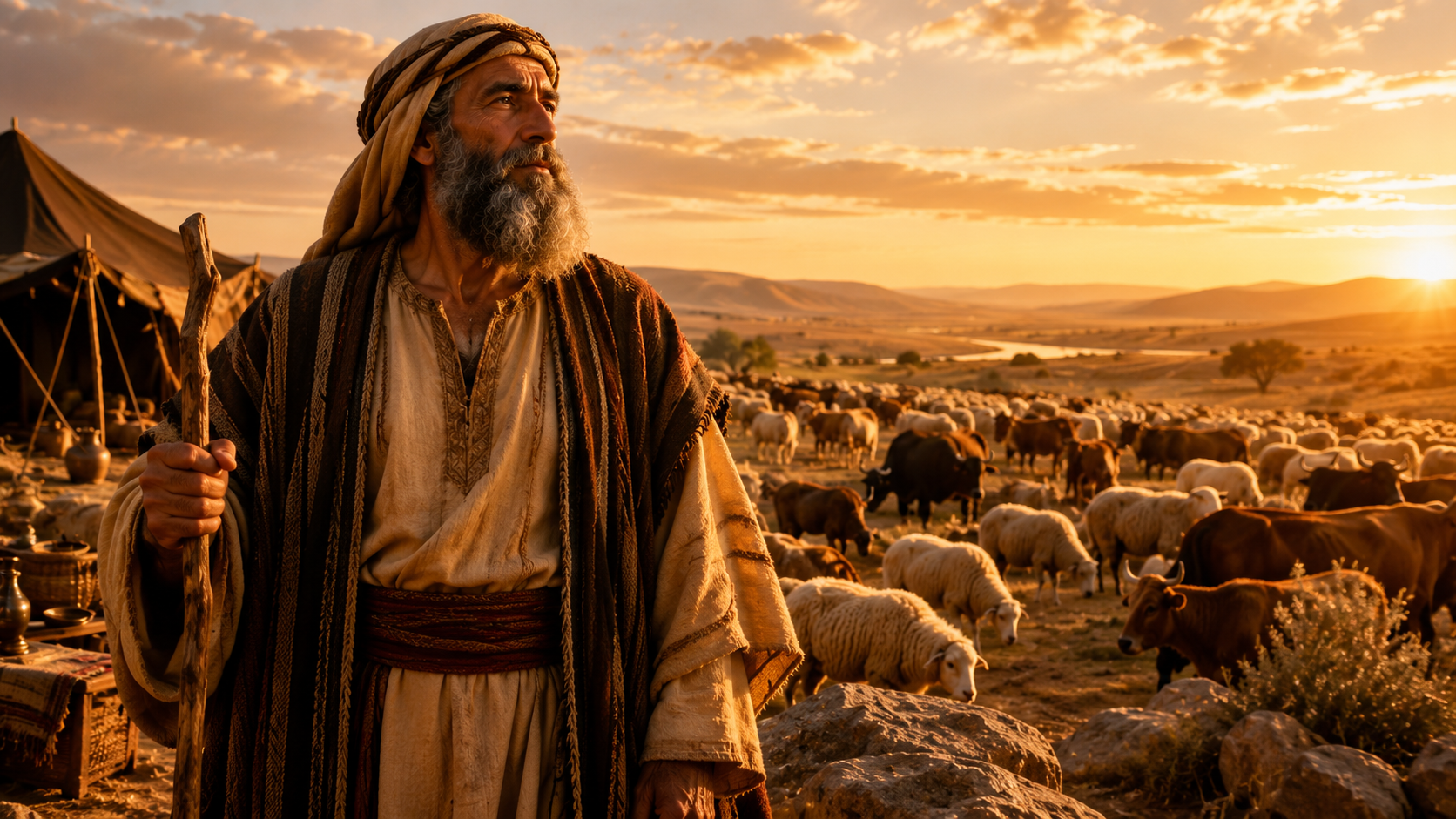
Start where the subject has to start: with ownership. Wealth is not neutral territory that God reluctantly tolerates. He claims it outright, by name, as His personal property.
For every beast of the forest is mine, and the cattle upon a thousand hills. I know all the fowls of the mountains: and the wild beasts of the field are mine. If I were hungry, I would not tell thee: for the world is mine, and the fulness thereof.
The silver is His. The gold is His. The cattle on a thousand hills are His, and so is every hill under them. “The earth is the LORD’s, and the fulness thereof” (Psalm 24:1). Now think about what that means. A man does not despise his own treasury. He does not call the contents of his own vault evil. The One who owns all the silver and all the gold in existence is not embarrassed by wealth — He made it, He holds it, and He gives it out as He pleases — “Both riches and honour come of thee… and in thine hand it is to make great” (1 Chronicles 29:12). The gold is not the devil’s currency that God puts up with. It is God’s, and He signs His name to it.
Wealth is God’s idea, not Satan’s
Wealth did not enter the story as a curse after the fall. It was there in the garden, before sin, and God called the material of it good with His own mouth.
The name of the first is Pison: that is it which compasseth the whole land of Havilah, where there is gold; and the gold of that land is good.
Before there was a single thief, a single miser, a single dishonest scale, there was gold in Eden, and Heaven’s verdict on it was good. Wealth is not a concession to a fallen world; it is part of the world God called very good. And He did not merely permit it — He handed His people the capacity to produce it, and told them plainly Who gave it:
But thou shalt remember the LORD thy God: for it is he that giveth thee power to get wealth, that he may establish his covenant which he sware unto thy fathers, as it is this day.
Read that as the death of the whole “poverty is godliness” theology. The power to get wealth — not merely to scrape by, but to produce, accumulate, build — is named as a gift from God, tied directly to His covenant purposes. And He proved it in the lives of the people He loved most. Abraham was “very rich in cattle, in silver, and in gold” (Genesis 13:2). Isaac sowed and reaped a hundredfold and “waxed great, and went forward, and grew until he became very great” (Genesis 26:13). Jacob “increased exceedingly” (Genesis 30:43). Joseph ran the wealth of an empire. Job was “the greatest of all the men of the east” — and after his testing, God gave him back twice what he had lost (Job 1:3; 42:10). David died “full of days, riches, and honour” (1 Chronicles 29:28). Solomon asked for wisdom, and God added riches on top, unasked. A God who hated wealth would not have buried His dearest friends in it. He did it on purpose, and Scripture reports it without a trace of apology.
The wise get riches
When you actually search the Scriptures for what they say about riches, the surprise is how relentlessly positive the ordinary verdict is. The book of Proverbs — God’s own manual of wisdom — ties wealth to wisdom, diligence, and the fear of the LORD again and again, and ties poverty, just as plainly, to sloth.
The blessing of the LORD, it maketh rich, and he addeth no sorrow with it.
The blessing of the LORD maketh rich. Not the curse of the devil — the blessing of the LORD. And He adds no sorrow with it. The same book says “the hand of the diligent maketh rich”(Proverbs 10:4); that wisdom builds the house and “by knowledge shall the chambers be filled with all precious and pleasant riches” (Proverbs 24:3-4); that “by humility and the fear of the LORD are riches, and honour, and life” (Proverbs 22:4); that “a good man leaveth an inheritance to his children’s children” (Proverbs 13:22). Wisdom herself says, “Riches and honour are with me; yea, durable riches and righteousness… that I may cause those that love me to inherit substance; and I will fill their treasures” (Proverbs 8:18, 21).
Myron Golden put the logic of this in a way that is hard to argue with: if God wanted you broke, He would have to want you lazy, since Scripture ties poverty to the sluggard and wealth to the diligent and the wise. “Love not sleep, lest thou come to poverty”(Proverbs 20:13). God does not command His people toward the very habits that produce lack and then condemn them for having what diligence brings. The whole weight of the wisdom literature runs one direction: wisdom and work produce wealth, and wealth, rightly held, is the gift of God — “every man also to whom God hath given riches and wealth, and hath given him power to eat thereof… this is the gift of God” (Ecclesiastes 5:19).
What the New Testament cannot do
Here someone will say: but that is the Old Testament. Jesus and the apostles took a harder line. And this is the hinge of the whole question, so weigh it carefully. The New Testament cannot contradict the Old, for the simplest possible reason — they have the same Author, and He does not change His mind.
For I am the LORD, I change not; therefore ye sons of Jacob are not consumed.
“Jesus Christ the same yesterday, and to day, and for ever” (Hebrews 13:8). The God who called the gold His own, declared the gold of Eden good, gave His people power to get wealth, and filled Solomon’s house — that same God came in the flesh and did not reverse Himself. So when we reach a verse in the Gospels or the Epistles that sounds like a condemnation of wealth, we already know, before we even open it, that it cannot mean what the poverty theology wants it to mean. It must be read in harmony with the whole counsel of God, not in contradiction to it. And every time you actually study one of those verses in its own words, that is exactly what you find: it is not aimed at wealth at all. It is aimed at the heart. There are only three such verses people lean on, so let us take them one at a time.
The verse that does not say what you think
The famous one. Quote it exactly, because the exactness is the whole point:
For the love of money is the root of all evil: which while some coveted after, they have erred from the faith, and pierced themselves through with many sorrows.
Three things, and each one matters. First, it is not money — it is the love of money. The Greek is philargyria, from philia (love) and argyros (silver): the love of silver, a heart bent on it. The verse indicts an appetite, not an asset. Money sits in your pocket; the love of it sits in your heart, and only one of those two is the problem. Second, look at the article. The Greek says it is a root — “a root of all kinds of evil,” as the more careful translations render it — not the root of all evil, as if money-love were the single source of every wrong in the world. It is one root among many, a soil out of which various evils can grow. Third, watch what Paul does next. If he believed wealth itself were poison, the very next breath would be a command to get rid of it. Instead, a few verses later, he gives the rich their actual marching orders:
Charge them that are rich in this world, that they be not highminded, nor trust in uncertain riches, but in the living God, who giveth us richly all things to enjoy; that they do good, that they be rich in good works, ready to distribute, willing to communicate.
That is the whole doctrine in one passage. Paul does not tell the rich to stop being rich. He tells them not to be highminded and not to trust in their riches — to trust the living God instead, the God “who giveth us richly all things to enjoy.” The cure for the love of money is not the absence of money; it is a heart fixed on God and a hand open to give. The verse that supposedly proves wealth is evil, read in full, turns out to be a manual for holding wealth rightly.
The rich young ruler
The second pillar of the poverty theology is the rich young ruler, whom Jesus told to sell everything. Surely that settles it? It does not — and the reason is that this was a diagnosis written for one patient, not a prescription written for everyone. The man came claiming he had kept the whole law from his youth. Jesus reached past the claim and put a finger on the one thing the man loved more than God:
Then Jesus beholding him loved him, and said unto him, One thing thou lackest: go thy way, sell whatsoever thou hast, and give to the poor, and thou shalt have treasure in heaven: and come, take up the cross, and follow me. And he was sad at that saying, and went away grieved: for he had great possessions.
Notice that Jesus said the same thing to no one else. He did not tell Nicodemus, a ruler of the Jews, to liquidate. He did not tell Joseph of Arimathea, “a rich man” and a disciple (Matthew 27:57), to give it all away. When Zacchaeus volunteered half his goods, Jesus did not hold out for the other half — He said, “This day is salvation come to this house”(Luke 19:9). The command to sell everything was a scalpel aimed at one man’s idol. Myron Golden argues the man was rich not only in goods but in self-righteousness — so sure he had kept every commandment that he could not receive a righteousness he had not earned — and that his refusal to part with his possessions simply exposed that he did not love his neighbour as himself after all. The test was never the wealth. The test was the throne of his heart, and something other than God was sitting on it. Then Jesus says the line everyone stumbles over.
The camel and the needle
…Children, how hard is it for them that trust in riches to enter into the kingdom of God! It is easier for a camel to go through the eye of a needle, than for a rich man to enter into the kingdom of God. And they were astonished out of measure, saying among themselves, Who then can be saved? And Jesus looking upon them saith, With men it is impossible, but not with God: for with God all things are possible.
Three observations dismantle the misreading. First, Jesus Himself supplies the definition. He does not say it is hard for them that have riches; He says it is hard for them that “trust in riches.” The danger named, by the Lord’s own mouth, is trust — making wealth your security, your god, your refuge instead of Him. That is a sin of the heart that a poor man can commit as easily as a rich one. Second, the camel and the needle is a deliberate hyperbole — the same Hebrew style of speech as straining at a gnat and swallowing a camel. It paints a humanly impossible picture on purpose. (It is not, despite a popular story, a small gate in Jerusalem called “the needle’s eye”; there is no real evidence such a gate existed, and the verse does not need the legend.) Third, and decisively, read the disciples’ reaction and the Lord’s answer. They are astonished and cry, “Who then can be saved?” — not “who among the rich,” but who at all. And Jesus does not reassure them that the poor are fine; He says, “With men it is impossible, but not with God.” The point is not that wealth bars the kingdom. The point is that no one — rich or poor — enters by his own resources; salvation is impossible to man and possible only to God. If literal wealth could shut a man out of heaven, then Abraham, Job, David, and Solomon are shut out, and the kingdom has no patriarchs in it. It does. The verse is about grace, not gold. I take this verse and the rich young ruler further — set beside the little-children passage that frames them in all three Gospels — in the companion study What the Bible Actually Warns About Money.
The Jewish mind on wealth
It helps to step out of the modern Western church for a moment and read these texts the way the people who wrote them did. The Hebrew mind has never been embarrassed by wealth. The Torah reports the riches of the patriarchs as a straightforward mark of God’s favour, with none of the hand-wringing a modern believer brings to it. Faithful Jews pray, to this day, for parnasa — livelihood, provision, income — as a blessing to be sought, not a temptation to be feared. Wealth is understood as a tool for tzedakah, righteous giving, and for doing good in the world. As the rabbis put it in Pirkei Avot, “without flour there is no Torah; without Torah there is no flour” — the material and the spiritual are not enemies; each serves the other.
The Jewish question about money was never how much do you have?It was always what do you do with what you have? That is the biblical question too. Scripture never asks a man to apologize for owning a field; it asks whether he leaves the corners of it for the poor (Leviticus 19:9-10), whether he uses just weights (Proverbs 11:1), whether his gold has become his god. The wealth is assumed. The stewardship of it is the test.
The one warning that is real
None of this erases the genuine warnings, and I will not pretend it does — because the warnings, read rightly, are the strongest proof of the whole argument. Scripture really does sound the alarm about money, over and over. But look at where every alarm is aimed. It is aimed at the heart, never at the asset. The danger is loving it (1 Timothy 6:10), trusting it (Mark 10:24), oppressing the poor to get it (James 5:4), and the comfortable self-sufficiency that forgets God — Laodicea’s deadly boast, “I am rich, and increased with goods, and have need of nothing; and knowest not that thou art wretched… and poor” (Revelation 3:17). Every one of those is a sin of the heart toward the money, not a verdict on the money itself. Which is precisely the point: if the warnings were against wealth, they would say so. They never do. They are always against an attitude — and an attitude is exactly what a man can repent of while keeping the wealth, and use it for good.
So hold both truths at once, the way Scripture does. Wealth is a good gift of God and a powerful tool. The love of wealth, the trust in wealth, the worship of wealth, is a deadly idol. The answer to the idol is not poverty; it is a heart that loves God first and holds the money with an open hand. “If riches increase, set not your heart upon them” (Psalm 62:10) — not do not let them increase, but do not set your heart on them. You can have much and worship none of it. That is the whole assignment.
How I think about this
I pursue wealth on purpose, and I do it without a shred of guilt, because I am convinced from the text that the guilt was never God’s idea. I treat money the way Scripture treats it: as a tool in the hand of a steward, given by a Father who “giveth us richly all things to enjoy.” I want it so I can build things that matter, fund the spread of the truth, leave an inheritance to my children’s children, give generously and at scale, and never be the man who had to say no to a good work because he had nothing in his hand to do it with. Empty hands help no one.
And I watch the one thing that actually matters — the throne of my own heart. The money is not my security; God is. The money is not my identity; I am His. I hold it with an open hand, ready to give, and I refuse the two ditches on either side of the road: the poverty theology that calls lack holy, and the greed that makes a god out of gain. I am not the source of my increase — He is, and the power to get wealth is something He gives, not something I conjure. I just take the tool He offers, use it the way the wise men of Scripture used it, and keep my heart fixed on the Giver and not the gift.
Want it rightly
So — is it evil to want money? No. It is evil to love it, totrust it, to claw after it dishonestly, to set your heart on it, to let it become the god you serve. But to want money the way Scripture wants it for you — as a good gift from the God who owns all the gold, a tool for building and giving and blessing, the fruit of wisdom and diligence under His hand — is not carnal. It is biblical. The God who put gold in Eden and called it good has not changed His mind.
Want it, then. Want it rightly. Pursue it with diligence and wisdom, hold it with an open hand, give it with joy, and keep your heart on the One who gives the power to get it. Lay up treasure, yes — and lay up the better treasure too, the kind no thief reaches and no market touches.
But thou shalt remember the LORD thy God: for it is he that giveth thee power to get wealth.
The weight of the evidence: wealth in a positive light
One or two verses can be argued about. The sheer volume cannot. Set them side by side and the question answers itself — Scripture speaks of wealth, provision, and increase in a positive light again and again, from Genesis to the Epistles, and the rare warning is always aimed at the heart, never the asset. Read straight down the list and listen to the tone of every line:
- Genesis 2:12 — “the gold of that land is good.”
- Genesis 13:2 — “Abram was very rich in cattle, in silver, and in gold.”
- Genesis 24:35 — “the LORD hath blessed my master greatly… he hath given him flocks, and herds, and silver, and gold.”
- Genesis 26:13 — “the man waxed great… until he became very great.”
- Genesis 30:43 — “the man increased exceedingly, and had much cattle.”
- Genesis 39:2 — “the LORD was with Joseph, and he was a prosperous man.”
- Deuteronomy 8:18 — “it is he that giveth thee power to get wealth.”
- Deuteronomy 28:11 — “the LORD shall make thee plenteous in goods.”
- Deuteronomy 28:12 — “thou shalt lend unto many nations, and thou shalt not borrow.”
- 1 Samuel 2:7 — “The LORD maketh poor, and maketh rich: he bringeth low, and lifteth up.”
- 1 Chronicles 29:12 — “Both riches and honour come of thee.”
- 1 Chronicles 29:28 — David died “full of days, riches, and honour.”
- 2 Chronicles 1:12 — “I will give thee riches, and wealth, and honour.”
- Job 42:12 — “So the LORD blessed the latter end of Job more than his beginning.”
- Psalm 1:3 — “whatsoever he doeth shall prosper.”
- Psalm 35:27 — “the LORD… hath pleasure in the prosperity of his servant.”
- Psalm 112:3 — “Wealth and riches shall be in his house: and his righteousness endureth for ever.”
- Psalm 128:2 — “thou shalt eat the labour of thine hands: happy shalt thou be, and it shall be well with thee.”
- Proverbs 3:9-10 — “So shall thy barns be filled with plenty, and thy presses shall burst out with new wine.”
- Proverbs 3:16 — of wisdom: “in her left hand riches and honour.”
- Proverbs 8:18 — “Riches and honour are with me; yea, durable riches and righteousness.”
- Proverbs 8:21 — “that I may cause those that love me to inherit substance; and I will fill their treasures.”
- Proverbs 10:4 — “the hand of the diligent maketh rich.”
- Proverbs 10:22 — “The blessing of the LORD, it maketh rich, and he addeth no sorrow with it.”
- Proverbs 13:11 — “he that gathereth by labour shall increase.”
- Proverbs 13:22 — “a good man leaveth an inheritance to his children’s children.”
- Proverbs 14:23 — “In all labour there is profit.”
- Proverbs 21:5 — “The thoughts of the diligent tend only to plenteousness.”
- Proverbs 22:4 — “By humility and the fear of the LORD are riches, and honour, and life.”
- Proverbs 22:29 — “a man diligent in his business? he shall stand before kings.”
- Proverbs 24:3-4 — “by knowledge shall the chambers be filled with all precious and pleasant riches.”
- Proverbs 28:20 — “A faithful man shall abound with blessings.”
- Ecclesiastes 5:19 — “riches and wealth… this is the gift of God.”
- Ecclesiastes 7:12 — “money is a defence.”
- Haggai 2:8 — “The silver is mine, and the gold is mine, saith the LORD of hosts.”
- Malachi 3:10 — “I will… pour you out a blessing, that there shall not be room enough to receive it.”
- Matthew 25:21 — “thou hast been faithful over a few things, I will make thee ruler over many things.”
- Luke 6:38 — “Give, and it shall be given unto you; good measure, pressed down, and shaken together, and running over.”
- 2 Corinthians 8:9 — “that ye through his poverty might be rich.”
- 2 Corinthians 9:8 — “having all sufficiency in all things, may abound to every good work.”
- 2 Corinthians 9:11 — “Being enriched in every thing to all bountifulness.”
- Philippians 4:19 — “my God shall supply all your need according to his riches in glory by Christ Jesus.”
- 3 John 1:2 — “I wish above all things that thou mayest prosper and be in health, even as thy soul prospereth.”
That is a sampling, not the whole — and even the sampling runs past forty. Now set beside it the three verses people use to argue the other way, each of which we have read in full and found to be about the heart, not the wealth. The case is not close. The Bible is overwhelmingly, repeatedly, unembarrassedly for the wealth of the righteous — and against only the love of it.
Sources
On the biblical and Jewish theology of wealth:
- Myron Golden — biblical wealth-creation teaching (the rich young ruler as self-righteousness; the diligence-and-wisdom argument; gold in Eden called good).
- The Jewish theology of parnasa (livelihood) and tzedakah (righteous giving); Pirkei Avot, “without flour there is no Torah.”
- On the Greek of 1 Timothy 6:10 — philargyria (love of silver), “a root of all kinds of evil.”
Scripture (KJV): Haggai 2:8; Psalm 50:10-12; Psalm 24:1; Genesis 2:11-12; Deuteronomy 8:18; Genesis 13:2; 26:13; 30:43; Job 1:3; 42:10; 1 Chronicles 29:12, 28; Proverbs 10:4, 10:22, 22:4, 24:3-4, 8:18-21, 20:13; Ecclesiastes 5:19; Malachi 3:6; Hebrews 13:8; 1 Timothy 6:10, 17-18; Mark 10:21-27; Luke 19:9; Leviticus 19:9-10; Proverbs 11:1; James 5:4; Revelation 3:17; Psalm 62:10.