Everything in this course has been the plain gospel of Scripture. But there is a reason a movement that calls itself the people of the third angel needs to be reminded of it — because this exact message was once brought to that movement with power, and largely turned away. This closing lesson tells that story honestly, from the record, and asks the only question that matters at the end of a course like this: will you receive what a whole church once resisted?
Question 01
What happened in 1888?
Answer
At the General Conference session in Minneapolis in 1888, two young ministers — E.J. Waggoner and A.T. Jones — pressed upon the assembled Adventist leadership the message of Christ our righteousness: justification by faith in the uplifted Saviour, not as a new doctrine, but as the living heart of the gospel the church was in danger of reducing to a system of correct teachings and careful rule-keeping. Ellen White stood with them, and afterward described what had been sent:
The Lord in His great mercy sent a most precious message to His people through Elders Waggoner and Jones. This message was to bring more prominently before the world the uplifted Saviour, the sacrifice for the sins of the whole world. It presented justification through faith in the Surety; it invited the people to receive the righteousness of Christ, which is made manifest in obedience to all the commandments of God.
Read that last line slowly, because it holds the whole balance of this course in one sentence: the righteousness of Christ is received, and it is then made manifest in obedience — gift first, fruit second. That is the message that came to Minneapolis.
Question 02
What exactly was the message?
Answer
Nothing other than what we have walked through, anchored where Paul anchors it — that everything we lack, Christ Himself becomes to us:
But of him are ye in Christ Jesus, who of God is made unto us wisdom, and righteousness, and sanctification, and redemption.
We are ignorant, wicked, lost; Christ is to us wisdom, righteousness, redemption. What a range! From ignorance and sin to righteousness and redemption.
It even has its own name in the Old Testament — the name of the Redeemer Himself: “THE LORD OUR RIGHTEOUSNESS” (Jeremiah 23:6). This was not novelty. It was the gospel, recovered and pressed home on a people who already had the doctrines but were quietly trusting their own correctness.
Question 03
How was it received?
Answer
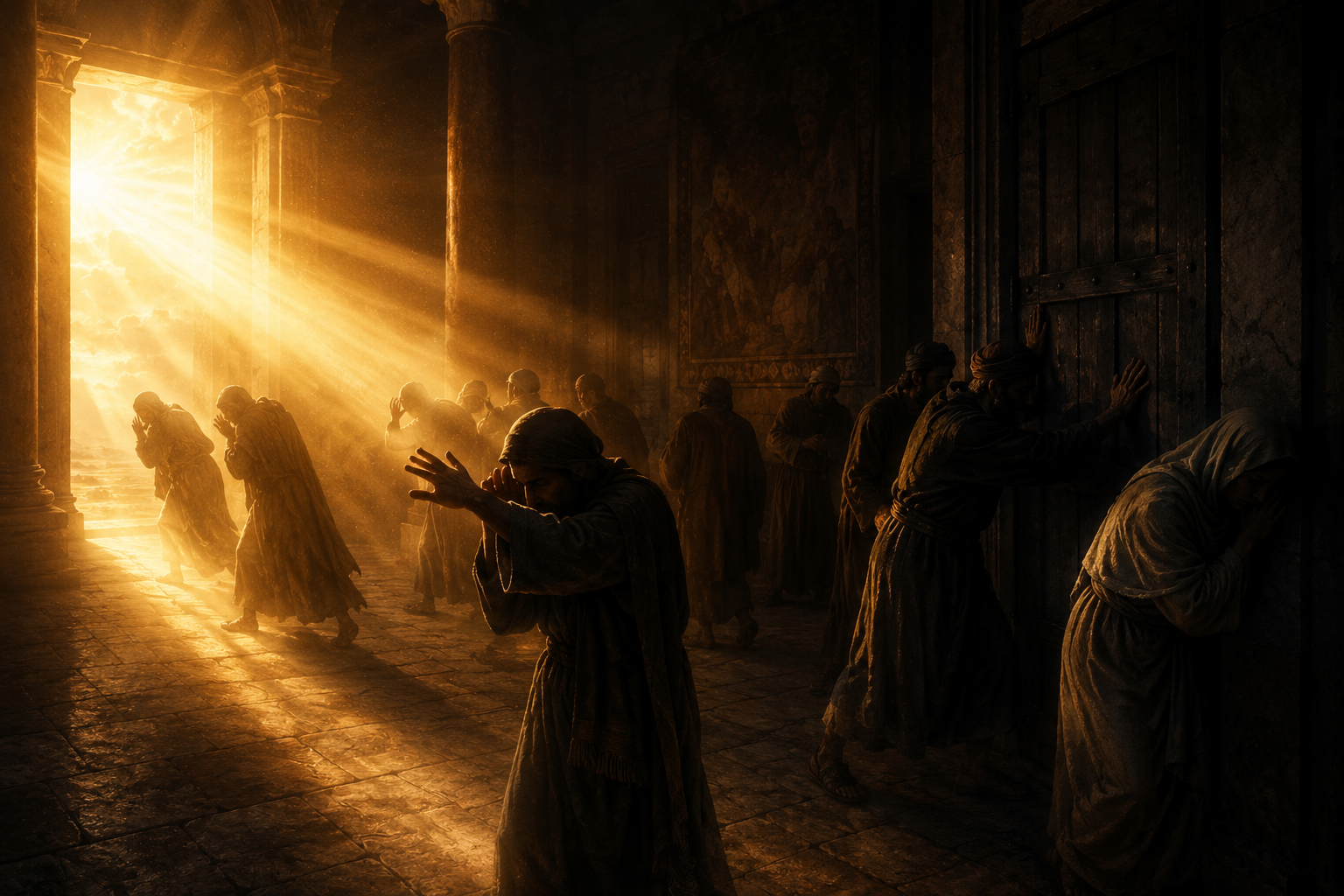
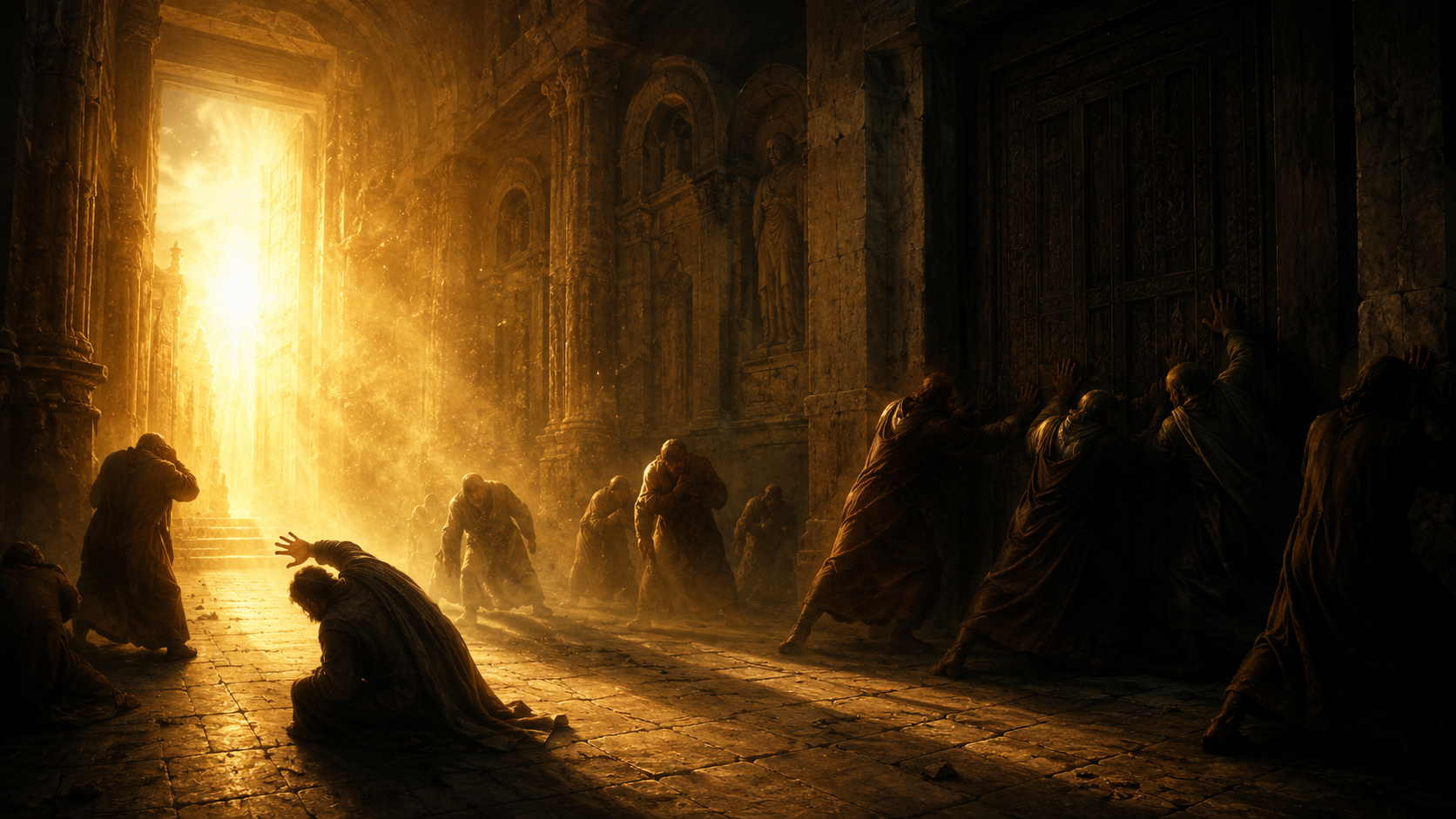
With far more resistance than joy. The message that should have set the church on fire was argued against, suspected, and in large measure pushed aside — and Ellen White spent years lamenting it in language she used for few other things:
An unwillingness to yield up preconceived opinions, and to accept this truth, lay at the foundation of a large share of the opposition manifested at Minneapolis against the Lord’s message through Brethren Waggoner and Jones… The light that is to lighten the whole earth with its glory was resisted, and by the action of our own brethren has been in a great degree kept away from the world.
Sit with that phrase — “kept away from the world” by “our own brethren.” The drift this lesson traces is not a slander invented by outsiders. It is the testimony of the very prophet the movement honors, written about the movement itself.
Question 04
Why would God’s own people resist the gospel?
Answer
Scripture had already diagnosed it, in the message to the last of the seven churches — Laodicea, the church of the last days:
Because thou sayest, I am rich, and increased with goods, and have need of nothing; and knowest not that thou art wretched, and miserable, and poor, and blind, and naked.
That is the exact danger of a people right about so much: the confidence of “need of nothing.” A church sure of its doctrines, its Sabbath, its diet, its prophetic charts, can be the very church least able to hear that its own righteousness is filthy rags. And notice what Christ counsels Laodicea to do — He offers the one thing they thought they already had:
I counsel thee to buy of me gold tried in the fire, that thou mayest be rich; and white raiment, that thou mayest be clothed, and that the shame of thy nakedness do not appear…
White raiment — the righteousness of Christ, received from Him, covering a nakedness they could not see. The 1888 message was the Laodicean remedy. To resist it was to tell the Physician at the door that no one inside was sick.
Question 05
What crept back in its place?
Answer
When righteousness by faith is set down, something always fills the space — and it is almost never open irreligion. It is legalism: a quiet, respectable, hard- working confidence in one’s own obedience. The distinctives that are meant to be the fruit of salvation — the Sabbath, the health message, the standards — slide, almost imperceptibly, into being felt as the terms of acceptance. And in its sharpest doctrinal form, it becomes the teaching that a final generation must reproduce a sinless perfection of its own to vindicate God — which quietly makes our law-keeping a condition of final salvation. Paul named this spirit exactly, and he named it in people with real zeal for God:
For I bear them record that they have a zeal of God, but not according to knowledge. For they being ignorant of God’s righteousness, and going about to establish their own righteousness, have not submitted themselves unto the righteousness of God.
“Going about to establish their own righteousness.” That is the drift — not a denial of Christ, but a steady, sincere, devout substitution of our record for His.
Question 06
How far does that drift go — and where have we seen it before?
Answer
Here we must be precise, because the careful claim is far more serious than the careless one. It would be false to say the Adventist Church officially teaches salvation by works; its stated beliefs affirm grace through faith, and in 1957 the volume Questions on Doctrine in fact moved the church’s public language further toward faith alone. So the charge is not about the words on the statement. It is about the working religion underneath them: that the historic gospel of 1888 was resisted, and that a recurring legalism — capped by last-generation perfectionism — has functionally eclipsed righteousness by faith in much of the church’s lived experience.
And the shape of that functional religion is not new. It is, structurally, the very thing the Reformation broke with. At the Council of Trent, Rome anathematized justification by faith alone and defined salvation as faith plus infused righteousness and human cooperation and merit. Faith plus works is precisely the formula — and whenever a Protestant or Adventist heart makes its standing with God rest on faith and its own obedience, it has, without ever crossing the Tiber, returned to Trent. The one fatal word the Reformers died to remove is the same word that crept back: and. (The historical record of this drift is laid side by side in our Then & Now comparison, and examined further in Answering Modern Adventism.)
Question 07
What must we do now?
Answer
Recover it — personally, before corporately. The everlasting gospel is the very heart of the message this movement was raised up to carry:
And I saw another angel fly in the midst of heaven, having the everlasting gospel to preach unto them that dwell on the earth…
The three angels do not carry a message of law-keeping insteadof the gospel; they carry the everlasting gospel — and the righteousness it gives is the white linen the redeemed are finally seen wearing:
And to her was granted that she should be arrayed in fine linen, clean and white: for the fine linen is the righteousness of saints.
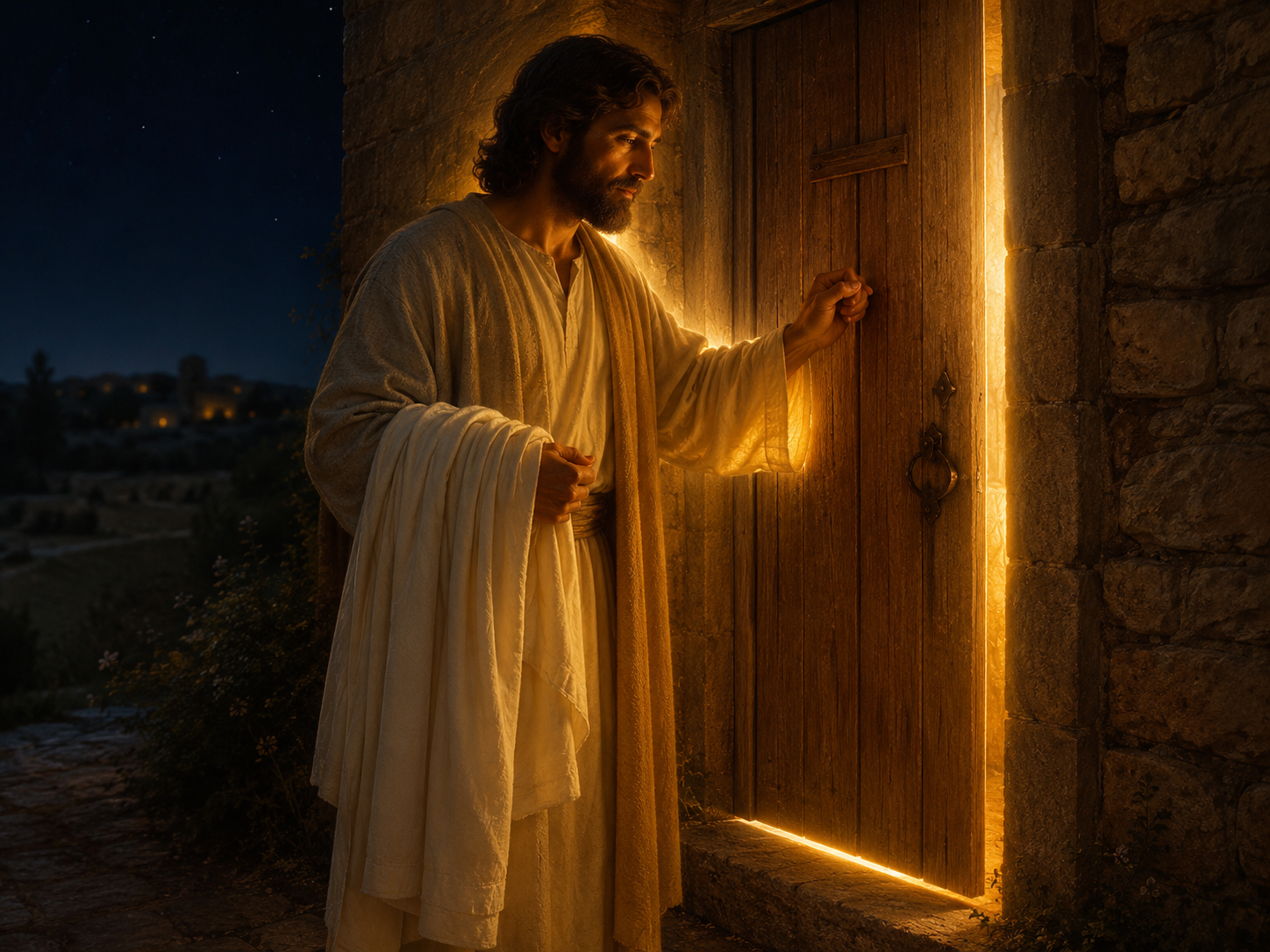
So the message we almost lost is the message we must now receive — and the Christ who counseled Laodicea to buy His white raiment is still standing where He has always stood: “Behold, I stand at the door, and knock” (Revelation 3:20). The door opens from the inside, by faith, with empty hands.
Personal response
This course began at creation and ends at a door. Between them runs one thread: you cannot earn what you were always meant to receive. The irreligious must lay down their indifference; but so must the devout lay down their “need of nothing.” Both come to the same door, the same empty-handed way. If somewhere in these seven lessons you have felt the quiet relief of a weight you were never meant to carry — the weight of being your own savior — then answer the knock. Pray something like this:
Lord, I have been rich and increased with goods in my own eyes, and have not seen my nakedness. I lay down my own righteousness — even my best obedience — as a ground of standing before You, and I receive the white raiment You offer: the righteousness of Christ, by faith. Clothe me, keep me, and let my obedience now be the glad fruit of being loved, never the price of it. In the name of the Son who is Himself my righteousness. Amen.
That is the whole of it. The gospel does not need to be invented for our time; it needs to be recovered — first in you, then through you. If you would like the single-page overview to keep, return to the study Christ Our Righteousness — and then go and live as what you now are: not a hired servant, but a child, clothed in a righteousness not your own.
Foundational text
“I counsel thee to buy of me gold tried in the fire, that thou mayest be rich; and white raiment, that thou mayest be clothed, and that the shame of thy nakedness do not appear.”
— Revelation 3:18