If the New Testament confesses one God, the Father, and one Lord, Jesus Christ, then the Old Testament should agree with it — and it does. Long before Bethlehem, the Hebrew Scriptures already present a single supreme God together with a second divine Being who bears His name, speaks His words, and receives the worship He alone may receive. This lesson follows that witness exactly as it stands written: one God who is the Source of all, His begotten Son at His side, and the Spirit that is God’s own breath and presence — no more, and no less, than the text says.
Question 01
Is the one God alone in the Old Testament?
Answer
The Old Testament is unmistakably monotheistic. “Hear, O Israel: The LORD our God is one LORD” (Deuteronomy 6:4); “I am the LORD, and there is none else, there is no God beside me” (Isaiah 45:5). There are not many gods competing for worship; there is one. Yet alongside that strict oneness, the same Scriptures repeatedly show a second figure who is divine — One who appears, speaks, and is worshipped as God, while still being distinct from the Most High who sends Him. The oneness of God is never threatened by this second Being, because the one God is one Source, and the second Being comes forth from Him. To read the Old Testament honestly is to hold both truths at once: there is one God, and He is not solitary.
Question 02
Who are the two who are both called Jehovah?
Answer
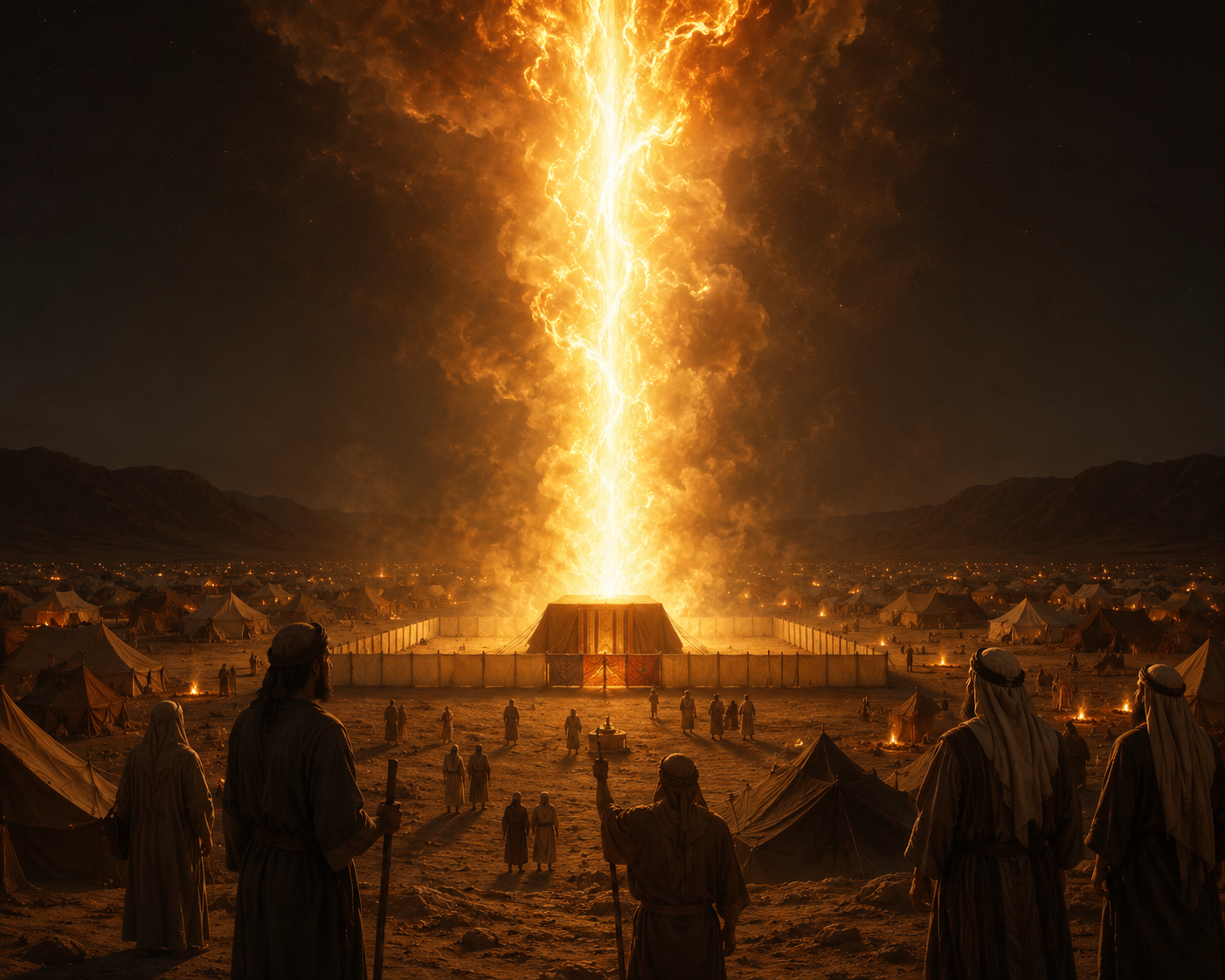
The clearest single line is the destruction of Sodom, where one named Jehovah on the earth calls down fire from another named Jehovah above:
Then the LORD rained upon Sodom and upon Gomorrah brimstone and fire from the LORD out of heaven.
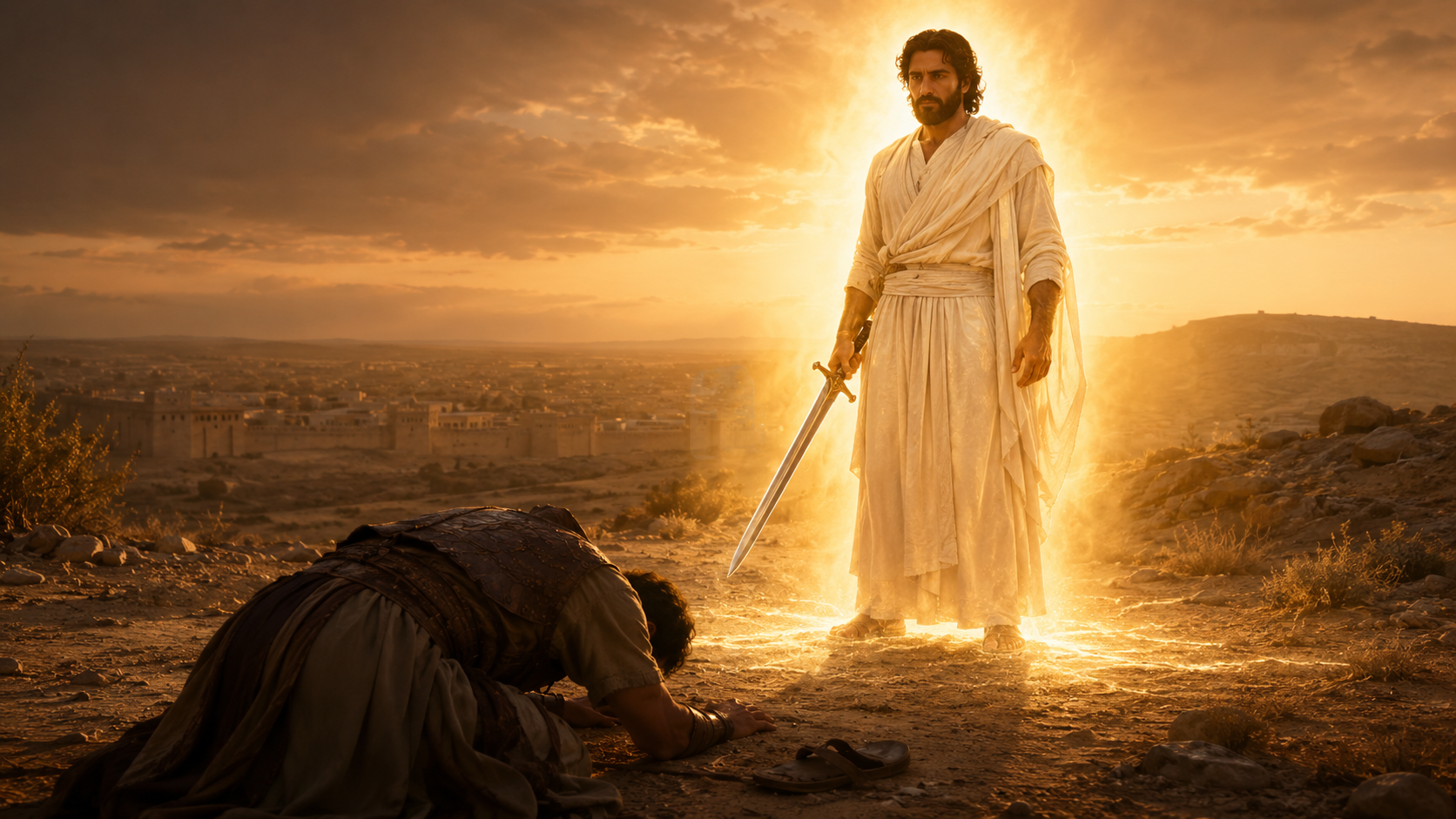
The verse does not say “from Himself”; it names the LORD in two places. The same pattern explains why a divine Person may be worshipped without robbing the Father of His glory. When Joshua met the Captain of the LORD’s host, he fell down and worshipped, and was not rebuked but commanded to remove his shoes — the response of holy ground:
…Nay; but as captain of the host of the LORD am I now come. And Joshua fell on his face to the earth, and did worship… And the captain of the LORD’s host said unto Joshua, Loose thy shoe from off thy foot; for the place whereon thou standest is holy. And Joshua did so.
Set this beside a created angel’s reaction to the very same gesture. When John fell to worship the angel who had shown him the visions, the angel recoiled:
…I fell down to worship before the feet of the angel which shewed me these things. Then saith he unto me, See thou do it not: for I am thy fellowservant… worship God.
A creature refuses worship and redirects it to God. The Captain of the LORD’s host receives worship and accepts holy ground. The two reactions cannot both belong to a creature. Here, then, are two who are rightly worshipped — two divine Beings — which by itself overturns the idea that God is merely one Person wearing different masks.
Question 03
Does the plural word “Elohim” prove a trinity?
Answer
It does not, and honesty requires us to say so plainly. The Hebrew word for God, Elohim, is grammatically plural, and the case has sometimes been built upon it — but the grammar will not carry that weight. Plural forms in Hebrew often signify majesty or fullness rather than number; the same word is even applied to a single man:
And the LORD said unto Moses, See, I have made thee a god [Elohim] to Pharaoh…
No one supposes Moses was three persons. More decisively, when the Lord Jesus and His disciples quoted these very Scriptures, they rendered the plural Elohim with the singular Greek theos, and Jesus affirmed without correction, “the Lord our God is one Lord” (Mark 12:29). The plurality of Elohim is therefore consistent with two divine Beings, but it does not, on its own, demonstrate them — still less a trinity. We will not rest the doctrine on a grammatical form. The weight of the case lies not in the shape of a word but in the persons the Scriptures actually name.
Question 04
Who is the Angel in whom God’s name dwells?
Answer
Throughout the wilderness journey, Israel is led by a Messenger who is no ordinary angel, for in Him resides the very name of God — and to provoke Him is to be unpardoned:
Behold, I send an Angel before thee, to keep thee in the way, and to bring thee into the place which I have prepared. Beware of him, and obey his voice, provoke him not; for he will not pardon your transgressions: for my name is in him.
An ordinary angel cannot pardon or refuse to pardon; only God forgives. And to carry God’s name is to carry His nature, His character, and His authority. This is the second divine Being seen from another side: the Angel — better, the Messenger — who is the Voice and the Word of God among men, the One in whom the Father has placed His own name. He speaks as God because the name of God is in Him, yet He is sent by another. This is precisely the relationship the New Testament names when it calls Him the Word who “was made flesh, and dwelt among us” (John 1:14). Before the incarnation, the same Person walked with Israel as the Messenger of the Presence.
Question 05
Who is the Son, brought forth before creation?
Answer
The Old Testament does not leave this second Being unnamed in His relation to the Father. In Proverbs, the One who is the Wisdom of God speaks of His own origin, and the language is the language of birth:
When there were no depths, I was brought forth; when there were no fountains abounding with water. Before the mountains were settled, before the hills was I brought forth.
Twice the word is brought forth — the word of being born, of coming out from another. This is not the fashioning of a creature out of nothing, but a Son proceeding from His Father, before the depths, before the mountains, before anything that was made. (The same chapter says earlier, “The LORD possessed me in the beginning,” v. 22; but it is verses 24 and 25 that tell us how— He was begotten, brought forth.) The whole question is then put directly, as if to press the reader toward the answer:
…who hath gathered the wind in his fists? who hath bound the waters in a garment? who hath established all the ends of the earth? what is his name, and what is his son’s name, if thou canst tell?
A Father and a Son stand together at the founding of the earth. The second divine Being is the Son — divine not by being a second source, but by inheritance, brought forth from the One who alone has life in Himself.
Question 06
Can the divine One have a God of His own?
Answer
Remarkably, yes — and this single fact draws the line between the two Beings with perfect clarity. In the forty-fifth Psalm, the throne of One addressed as God is declared everlasting; yet in the very next breath He is said to have a God who has anointed Him:
Thy throne, O God, is for ever and ever: the sceptre of thy kingdom is a right sceptre. Thou lovest righteousness, and hatest wickedness: therefore God, thy God, hath anointed thee with the oil of gladness above thy fellows.
The New Testament applies these very words to the Son (Hebrews 1:8–9): He is called God, and He has a God. This is not a contradiction; it is the heart of the matter. The Son is fully divine — addressed as God upon an everlasting throne — and the Father is still His God, because the Father is the Source from whom the Son came forth. One God who has a God: that is exactly what we should expect of a Father and the Son He has begotten.
Question 07
What is the Spirit of God in the Old Testament?
Answer
Here the text guards us against a common error. The Old Testament speaks often of the Spirit of God, but never of “God the Spirit” as a third Person beside the Father and the Son. From the first chapter the Spirit is named as God’s own — His, belonging to Him:
…And the Spirit of God moved upon the face of the waters.
The Hebrew word is ruach — breath, wind, the living energy of a person. And Scripture itself tells us that the creating Spirit is the breath of God’s own mouth:
By the word of the LORD were the heavens made; and all the host of them by the breath of his mouth.
What the first verse calls the Spirit moving upon the waters, this verse calls the breath of His mouth — the same creative power, His own. So too the gift of life: “The Spirit of God hath made me, and the breath of the Almighty hath given me life” (Job 33:4), where God’s Spirit and God’s breath stand in plain parallel. The Spirit of God, then, is the Holy Spirit (God’s own presence and power) — His own life and energizing presence reaching out into His works — not a separate Being to be set beside the Father and His Son. Thus the Old Testament leaves us with exactly what the rest of Scripture confirms: one God the Father, His begotten Son who bears His name and shares His throne, and the Spirit that is God’s own breath among His people.
Personal response
Read these passages slowly, in your own Bible, and ask whether they describe a single Person in three modes, or three co-equal Persons — or whether they describe what they plainly say: one supreme God, and a Son brought forth from Him who bears His name and receives His worship. Let the Old Testament set the pattern before you reach the New. If the Hebrew Scriptures already knew a Father and the Son at His side, then the Gospel did not invent Him; it unveiled the One who had been there from the beginning.
Foundational text
…what is his name, and what is his son’s name, if thou canst tell?