
For God hath not given us the spirit of fear; but of power, and of love, and of a sound mind.
Read that slowly. Fear is called a spirit — a posture, a thing you can be under and a thing you can put down — and Paul says plainly it did not come from God. That single line reframes the whole subject. Worry is not your weather. It is not your fate. It is a faculty, working exactly as designed, aimed in the wrong direction.
A spirit you can put down
Count how many times Scripture says “fear not.” It is everywhere — to Abraham, to Joshua, to the shepherds in the field, to the disciples in the boat. The command recurs because fear is the default. It is the setting the mind drifts to when nobody is steering. You do not have to be taught to worry; you have to be commanded out of it. “Fear not” is not a suggestion to feel better. It is an instruction to override a system that runs on its own unless you take hold of it.
So the question is not why am I afraid — everyone is, by factory setting. The question is what the fear is made of and how it is built, because once you see the machinery, you stop trying to argue with the feeling and start operating the thing that produces it.
Imagination running in reverse
Maxwell Maltz, a surgeon who spent his second career studying the self-image, noticed something the whole field has since confirmed: the deep layer of the mind cannot tell a vividly imagined experience from a real one. Rehearse a success in detail — see it, feel it, walk through it — and the nervous system files it as something that happened. This is why athletes mentally rehearse the race, why the picture you hold of yourself quietly governs what you attempt. The imagination is a recording device the deep layer treats as testimony.
Now look at worry. It is the identical mechanism — vivid, detailed, emotionally charged rehearsal of a future event — aimed at failure instead of success. At the humiliation instead of the win. At the loss instead of the gain. The faculty is neutral. It will render a triumph or a catastrophe with exactly the same equipment and exactly the same care. And here is the bitter joke: almost everyone aims this magnificent instrument at the precise outcomes they least want. They run the imagination in reverse, all day, and call it being realistic.
Worry stripped of drama
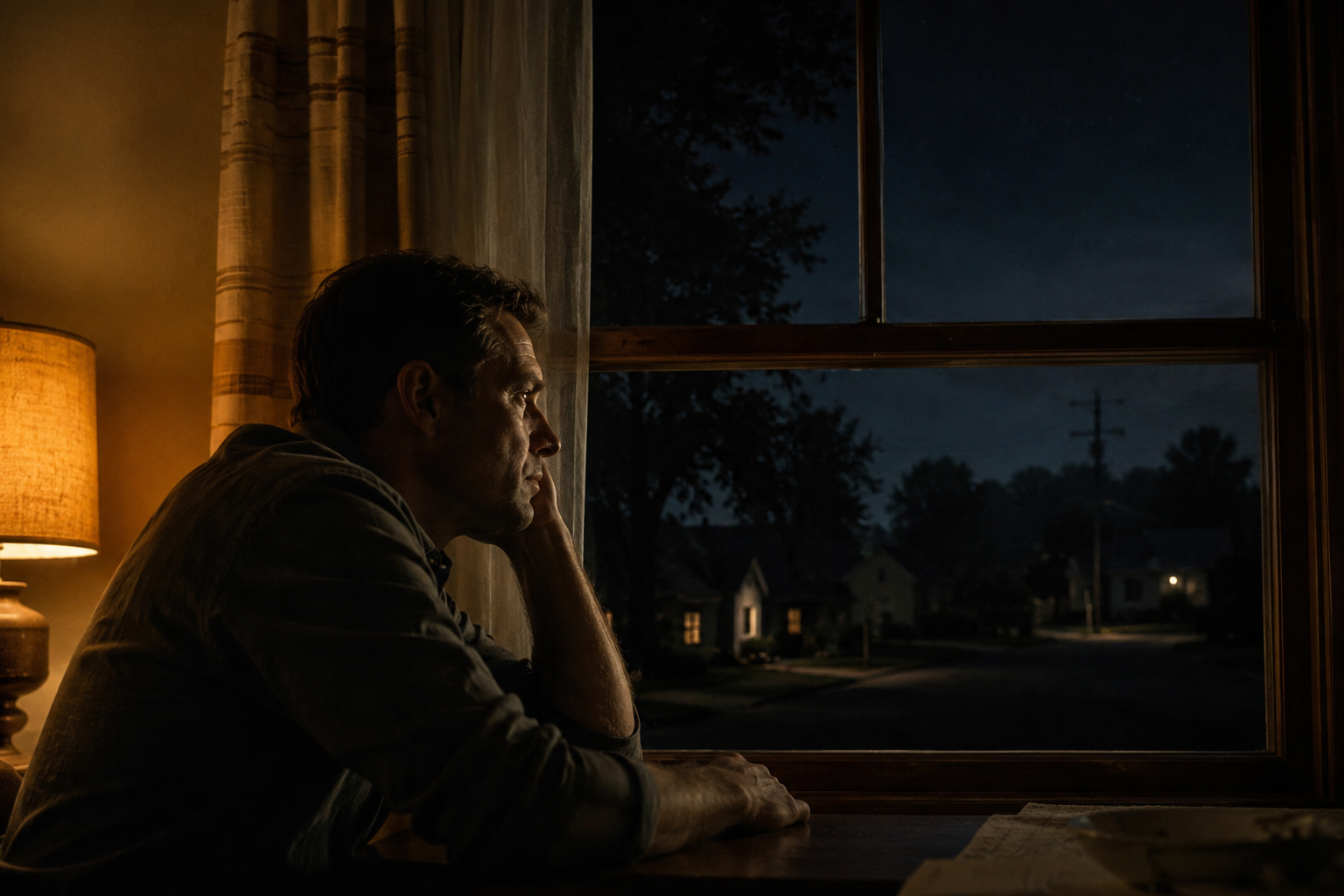
Strip the dignity off worry and look at what it actually is. A person sits in a safe room, in no danger whatsoever, and vividly imagines a detailed disaster — on a loop. The phone call that ruins everything. The diagnosis. The conversation where it all falls apart. Frame by frame, with feeling, over and over. That is not analysis. It is not planning. Nothing is being decided. It is a horror film, self-produced, screened on repeat for an audience of one.
And the body believes it. The heart races. The chest tightens. Sleep will not come. Real cortisol floods a nervous system responding to events that are not happening and, in the overwhelming majority of cases, never will. You are paying the full physiological price of a catastrophe in exchange for a catastrophe that exists only in your own rehearsal. Mark Twain said it best: “I have had a great many troubles in my life, and most of them never happened.”
Most of it never happens
That is not a quip. It is data. Dale Carnegie, gathering the research for How to Stop Worrying and Start Living, found that the enormous majority of what people worry about never comes to pass — and of the small remainder that does, most arrives in a form, or a size, the worrier never predicted. The mind does a quiet, dishonest slide: possibility becomes probability becomes certainty, with no new evidence added at any step. It could happen becomes it will happen becomes a settled fact the body is already grieving.
So you pay a tax — in peace, in sleep, in the joy of the actual day in front of you — on disasters that never arrive. You are billed for a house fire every single night and the house never burns. This is the place to draw the one distinction that changes everything. Planning decides and acts. Worry loops without deciding. Planning asks “what will I do about this?” and produces a step. Worry asks “what if?” and produces another lap. If a thought ends in an action, it was planning. If it only ends in another rehearsal of the fear, it was worry wearing planning’s coat.
Worry is negative rehearsal
Here is the part that should stop a person cold. That deep layer of the mind learns by repetition. It accepts whatever is rehearsed to it, vividly and often, and quietly makes it the default you operate from. Repetition installs belief. This is not mysticism; it is the same mechanism that built every conviction you already carry, the engine of every affirmation practice ever taught.
Which means worry is not idle. It is programming. The chronic worrier is running the most disciplined affirmation practice he owns — several focused, emotionally vivid sessions a day, on behalf of exactly the outcomes he least wants. He rehearses failure with a devotion most people never bring to anything good. And slowly the deep layer files the verdict: I am the kind of person bad things happen to. The self-image bends to match the rehearsal, and the bent self-image starts choosing — flinching from risk, expecting loss, reading every ambiguity as threat. The worry does not just predict a smaller life. It builds one. (The mechanics of how rehearsal installs a self-image, and how to run it on purpose, are the subject of The Self-Image and Affirmations and Vain Repetitions.)
Faith and fear, same machinery
Now the whole thing comes together. What is faith? It is the vivid picturing of an unseen future, held with feeling, that changes how you act in the present. “Now faith is the substance of things hoped for, the evidence of things not seen” (Hebrews 11:1). And what is fear? The vivid picturing of an unseen future, held with feeling, that changes how you act in the present. They are the same machinery, run in two directions. One pictures the promise; the other pictures the catastrophe. Both are unseen. Both are believed. Both reshape today.
So the anxious person is not faithless. He is a person of tremendous faith — pointed at the wrong report. He believes in the disaster with his whole body. He rehearses it, trusts it, lets it govern his choices. All that conviction, all that vivid certainty about the unseen, simply aimed at the lie instead of the promise. The fix, then, is not to manufacture faith from nothing. He already has it. The fix is to turn the faculty around.
Paul tells you exactly how, and he tells you mechanically:
Be careful for nothing; but in every thing by prayer and supplication with thanksgiving let your requests be made known unto God. And the peace of God, which passeth all understanding, shall keep your hearts and minds through Christ Jesus.
Notice the moving parts. Hand the thing over in prayer — transfer the weight to the One actually able to carry it. Then with thanksgiving. That is not a polite flourish. Gratitude is the engineering. You cannot vividly rehearse loss and vividly count what you have been given in the same instant; fear and thanksgiving cannot occupy the same place in the mind. Genuine gratitude crowds the fear out. It does not argue with it — it takes the imagination, by the hand, and turns it to face the good that is already true. And what follows is not a feeling you worked up. It is a peace that “passeth all understanding” — a guard posted over the heart and mind, given, not generated.
What actually works
This is the whole reason the chapter matters. You do not beat fear by sitting in an empty room telling yourself to stop being afraid. Suppression fails, because the mind will not hold a vacuum; tell it not to picture the disaster and the disaster is the only thing in the room. You beat it by displacement — by giving the faculty something better to render. Here is the practice.
- Catch it and name it. The moment the loop starts, label it out loud or in your head: this is rehearsal, not reality. Naming breaks the spell, because the spell depends on you mistaking the film for the world.
- Ask Carnegie’s worst-case question. What is the worst that could realistically happen — and could I accept it? Look straight at it. Most fears shrink the instant they are forced to name a definite, survivable outcome instead of a vague, bottomless dread.
- Convert it to a decision — or drop it. If there is a step to take, take it; the worry becomes a plan and the plan ends the loop. If there is no step, it was never planning. Hand it over and let it go.
- Live in day-tight compartments. Christ said it first: “Take therefore no thought for the morrow: for the morrow shall take thought for the things of itself” (Matthew 6:34). Most worry is about a day that has not come. Seal the future off and spend today on today.
- Act, because fear shrinks in motion. Fear is loudest in the still room. The smallest forward step — one email, one phone call, one honest move toward the thing — drains it, because action collapses the imaginary into the manageable.
- Re-aim the imagination on purpose. Do not leave the screen blank for the fear to fill. Deliberately rehearse the outcome you actually want, and rehearse gratitude for what is already yours. Displace; do not suppress.
How I do this
When I catch myself rehearsing a disaster, the first thing I do is call it what it is. I say it plainly — this never happened; I am writing a horror film about a Tuesday that may never come. That alone deflates most of it. Then I run Carnegie’s question on purpose: what is the actual worst case, named in plain words, and could I live through it? Nearly every time, the honest answer is yes, and the fog that had no edges suddenly has edges, and edges I can deal with.
Then I hand it over. Not as a religious formality — as a literal transfer. I tell my Father the thing I am afraid of, out loud, and then I do the part most people skip: I start naming what I am thankful for, deliberately, until I can feel the fear lose its grip. It always does, because the two cannot share the room. I keep my windows day-tight — I refuse to borrow tomorrow’s trouble into today — and if there is a real step in front of me, I take it immediately, because I have learned that fear cannot survive forward motion. The loop needs me sitting still to keep running.
And underneath all of it is the relationship — ongoing prayer kept open through the day, a conversation with the One Who actually holds the future, not a creature pretending to. I do not hand my fears to the air or to my own mind. I hand them to God, and I take back peace.
Feed it the better one
Here is the thing you cannot opt out of: you are going to picture the future. The imagination does not have an off switch. It will render something on that screen tonight, with feeling, whether you direct it or not — and the deep layer will file whatever it sees as testimony about the kind of life you are headed for. The only choice you actually have is what you feed it.
You are not the author of reality, and you do not need to be. You are a creature made in the image of a Father Who is — given the real, delegated power to govern the small kingdom of your own mind: what you rehearse, what you hand over, what you choose to see. That is power enough. So stop running the faculty in reverse. Hand the fear to the One able to carry it, turn the imagination to face the promise, and feed it the better future. God did not give you the spirit of fear. He gave you power, and love, and a sound mind. Use what He gave you.
Sources
On worry, the imagination, and the self-image:
- Dale Carnegie, How to Stop Worrying and Start Living (1948) — the worst-case method and day-tight compartments.
- Norman Vincent Peale, The Power of Positive Thinking (1952) — displacing fear with faith and gratitude.
- Maxwell Maltz, Psycho-Cybernetics (1960) — the self-image and mental rehearsal.
Scripture (KJV): 2 Timothy 1:7; Hebrews 11:1; Philippians 4:6-7; Matthew 6:34.
Companion piece: The Law of Assumption — the same faculty (Hebrews 11:1) turned toward faith instead of fear.