Online, you will often see an Old Testament verse placed beside a verse from the Qur’an, both about fighting and killing, with a caption asking why one is condemned when the other is not. The comparison looks fair at a glance. It stops looking fair once you ask who each command was given to, for how long, for what reason, and what was built on it afterward.
Verse against verse
The format is popular because it is easy: match one violent text with another and let the reader conclude that the two religions are the same. Sometimes it is used against Islam, sometimes against the Bible, sometimes against both. Its weakness is the same every time. It compares sentences instead of systems.
Both traditions do contain real wars. Both describe a people forming a state under what they believed was God’s direction. On the surface they resemble each other. But a command has a recipient, a scope, a purpose and a lifespan, and on every one of those the Old Testament and early Islam differ. This study walks through both, as fairly as we can, and then sets them side by side.
One thing first. We do not pretend the Old Testament commands are easy. Some of them are among the hardest words in Scripture, and we have written about them at length in The Hard Passages. The question here is narrower: are these two bodies of war the same kind of thing?
The Old Testament: a closed chapter
A covenant with borders
Ancient Israel was a theocracy, a nation in direct covenant with God, and the conquest commands were tied to one piece of land. Moses named the nations involved: “the Hittites, and the Girgashites, and the Amorites, and the Canaanites, and the Perizzites, and the Hivites, and the Jebusites, seven nations” (Deuteronomy 7:1). The total destruction the law commanded was restricted to them. Cities “very far off,” outside the land, were first to be offered peace (Deuteronomy 20:10–15).
Just as telling is what God forbade. On the march toward Canaan, Israel was told not to touch three of its neighbors:
Meddle not with them; for I will not give you of their land, no, not so much as a foot breadth; because I have given mount Seir unto Esau for a possession.
The same order was given about Moab and Ammon (Deuteronomy 2:9, 19). A command to subdue the world would not stop at a border and say “not so much as a foot breadth.” This one did. When the land was taken, the record closes the matter: “And the land rested from war” (Joshua 11:23).
The reasons the text gives
The Bible never says Israel took the land because Israel was better. It says the opposite:
Not for thy righteousness, or for the uprightness of thine heart, dost thou go to possess their land: but for the wickedness of these nations the LORD thy God doth drive them out from before thee, and that he may perform the word which the LORD sware unto thy fathers, Abraham, Isaac, and Jacob.
The conquest is presented as a judgment on specific nations whose wickedness God had waited centuries to judge. Four hundred years earlier He had told Abraham that “the iniquity of the Amorites is not yet full” (Genesis 15:16). The second reason is just as specific: “That they teach you not to do after all their abominations, which they have done unto their gods” (Deuteronomy 20:18).
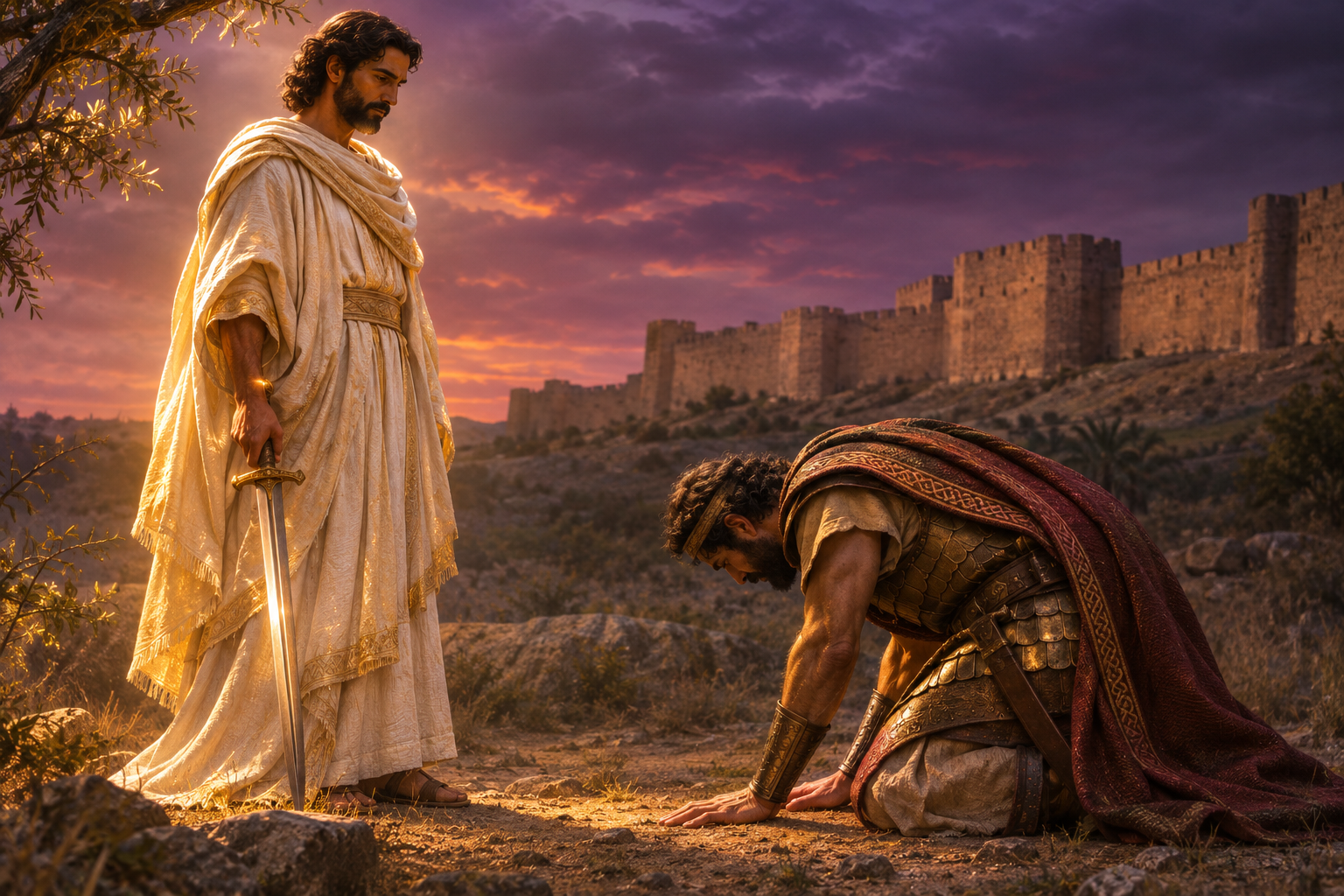
Israel itself was put under the same judgment. If it took up the same practices, “the land spue not you out also, when ye defile it, as it spued out the nations that were before you” (Leviticus 18:28), and “As the nations which the LORD destroyeth before your face, so shall ye perish” (Deuteronomy 8:20). At the walls of Jericho, Joshua asked the divine Commander standing before him, “Art thou for us, or for our adversaries?” The answer was “Nay; but as captain of the host of the LORD am I now come” (Joshua 5:13–14). God was not Israel’s tribal war god. Israel was under His command and under His judgment too.
Keeping the promised line
Behind those stated reasons runs a larger purpose that the whole Bible traces. From the first promise in Eden, God said a Deliverer would come through “the seed” of the woman to crush the serpent’s head (Genesis 3:15). He narrowed that promise to Abraham, “in thee shall all families of the earth be blessed” (Genesis 12:3), then to Judah, “until Shiloh come” (Genesis 49:10), then to David (2 Samuel 7:12–13). Paul names where it led: “to Abraham and his seed were the promises made … which is Christ” (Galatians 3:16).
For that promise to be kept, there had to be a people who still knew the true God when the Messiah came, in a land where the prophecies said He would be born. Canaan’s religion, which burned “their sons and their daughters” in the fire to its gods (Deuteronomy 12:31), was precisely what threatened to swallow Israel, and the law said so: “they will turn away thy son from following me, that they may serve other gods” (Deuteronomy 7:4). Reading the conquest as the protection of the line that led to Christ is an interpretation, but it is the one the Bible’s own storyline points to.
It was a covenant line, not a racial one. Rahab of Jericho was spared and lived in Israel (Joshua 6:25). Ruth the Moabitess said, “thy people shall be my people, and thy God my God” (Ruth 1:16), and both women stand in the genealogy of Jesus. A “mixed multitude” left Egypt with Israel (Exodus 12:38), and the stranger who joined the covenant was “as one that is born in the land” (Exodus 12:48). What had to be guarded was faith in the true God, not ancestry.
A thousand years
By the Bible’s own chronology (1 Kings 6:1), the conquest under Joshua took place around 1400 BC. The last commands of this kind came with Saul against Amalek (1 Samuel 15), around 1030 BC, and David’s wars secured the borders around 1000 BC. After that, there is no further command in the Old Testament to take territory or to devote a nation to destruction.
Israel and Judah still fought wars, and God sometimes gave them victory, but these were wars of defense or wars against rebellious vassals inside the existing kingdom. The clearest example is Moab’s revolt against Israel (2 Kings 3:4–5, 18), which God gave into Israel’s hand. Nothing in that period resembles a mission to extend God’s rule by the sword. Even David, Israel’s great warrior king, was not allowed to build the temple: “Thou hast shed blood abundantly, and hast made great wars: thou shalt not build an house unto my name” (1 Chronicles 22:8).
And when the great invasions came, the prophets read them the other way round. Babylon was not a holy war for Israel. It was God’s judgment on Israel: “Nebuchadrezzar the king of Babylon, my servant … will bring them against this land” (Jeremiah 25:9). By the time Jesus was born, roughly a thousand years had passed since God last commanded Israel to conquer anyone.
Never a blueprint
Nothing in those commands made them a permanent model for later believers. They named particular nations in a particular land, and when those nations and that theocracy were gone, the commands had nothing left to apply to. When Jesus came, He drew the line as clearly as it can be drawn:
My kingdom is not of this world: if my kingdom were of this world, then would my servants fight, that I should not be delivered to the Jews: but now is my kingdom not from hence.
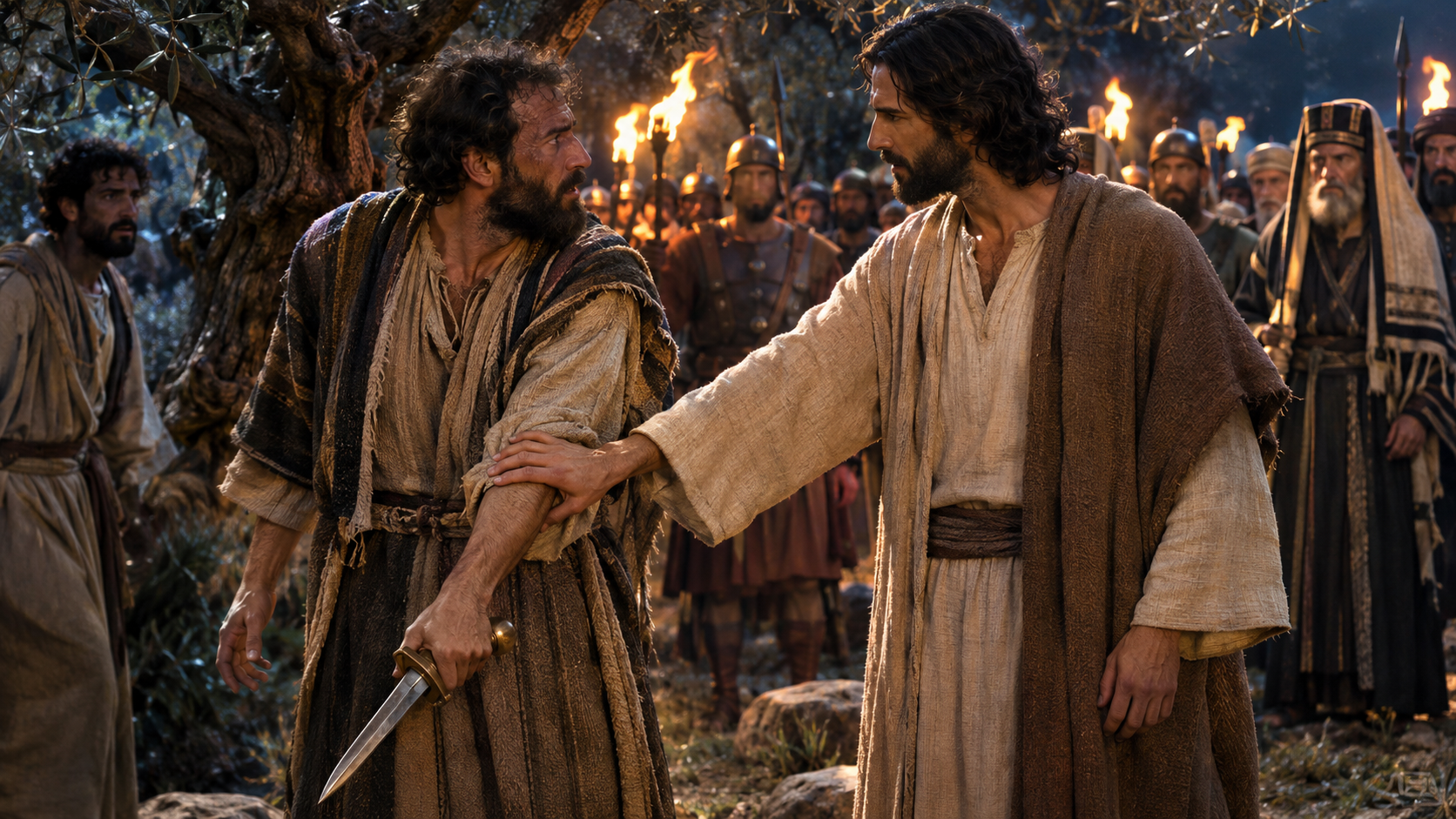
He told Peter, “Put up again thy sword into his place” (Matthew 26:52). When His disciples wanted to call down fire on a Samaritan village, He rebuked them: “the Son of man is not come to destroy men’s lives, but to save them” (Luke 9:56). Paul wrote that “the weapons of our warfare are not carnal” (2 Corinthians 10:4), because the enemy is not “flesh and blood” (Ephesians 6:12). The gospel was carried to “every kindred, and tongue, and people, and nation” (Revelation 5:9) by a Lamb Who was slain, not by an army.
That is why Christians do not practice Old Testament warfare. It is not that they have softened the Bible. It is that the Bible itself closed that chapter. When professing Christians later did wage holy wars, as in the Crusades, they had no command of Christ to point to. They were acting against His words, and the record of those wars is a warning, not a defense.
Early Islam: a community and a state
The ummah
Islam began differently. Its community, the ummah, was never tied to one bloodline or one land. It was open to every people from the start, and within Muhammad’s lifetime it became a state. After the Hijra to Medina in 622, he was not only a prophet but also a lawgiver, judge and military commander. Religion, law and government were joined in one community, and that union became the model for what followed.
Many Muslims point out, fairly, that the first battles followed years of persecution in Mecca and the believers’ flight from their homes. Badr in 624 began with an attempt on a Meccan caravan, and the Quraysh marched out to meet it; at Uhud and the Trench the Meccans came against Medina. Those were wars with an enemy who had driven the believers out. But the campaigns did not stop at defense. Khaybar was attacked in 628, Mecca was brought to surrender in 630, and the expedition to Tabuk the same year marched toward the Byzantine frontier. By Muhammad’s death in 632, most of Arabia answered to Medina.
The texts
The Qur’an contains verses that Muslims quote for a defensive reading, and verses that classical scholars read more broadly. Both should be heard:
Fight in the way of Allah those who fight you but do not transgress.
And fight them until there is no fitnah and [until] the religion, all of it, is for Allah.
Fight those who do not believe in Allah or in the Last Day and who do not consider unlawful what Allah and His Messenger have made unlawful and who do not adopt the religion of truth from those who were given the Scripture – [fight] until they give the jizyah willingly while they are humbled.
The word translated fitnah is disputed: some read it as persecution, others as unbelief. Verse 9:29 comes from one of the last chapters revealed, and it addresses Jews and Christians, “those who were given the Scripture,” and sets the terms of their life under Muslim rule: the jizyah, a tax paid by non-Muslims. A well-known hadith in Sahih al-Bukhari (no. 25) reports Muhammad saying that he had been ordered to fight people until they bore witness to God and to him as God’s messenger, prayed and paid the alms. Muslim scholars debate whether “the people” there meant the Arab polytheists of that time or something wider.
The law the jurists built
Out of these texts and the example of the early community, Islamic jurisprudence (fiqh) built a full legal framework. Jihad means “striving,” and it can describe the inner struggle against sin. In the law books, though, it chiefly meant warfare, and the classical schools generally treated war to extend the rule of Islam as a collective obligation on the community, carried out under the ruler. The jurists divided the world into dar al-Islam, the realm under Islamic rule, and dar al-harb, the realm of war beyond it, with treaties and truces in between. These are legal categories the jurists developed, not words from the Qur’an, but they governed how Muslim states understood their place in the world for centuries.
The same law gave Jews and Christians under Muslim rule a protected but subordinate status, as dhimmis. They could keep their faith and their places of worship, paid the jizyah, and lived under restrictions that varied with the ruler. Many lived in peace for long periods, and some Christian communities of the East preferred Muslim rule to Byzantine persecution. But the framework itself assumed Islamic government as the normal order of things.
The conquests
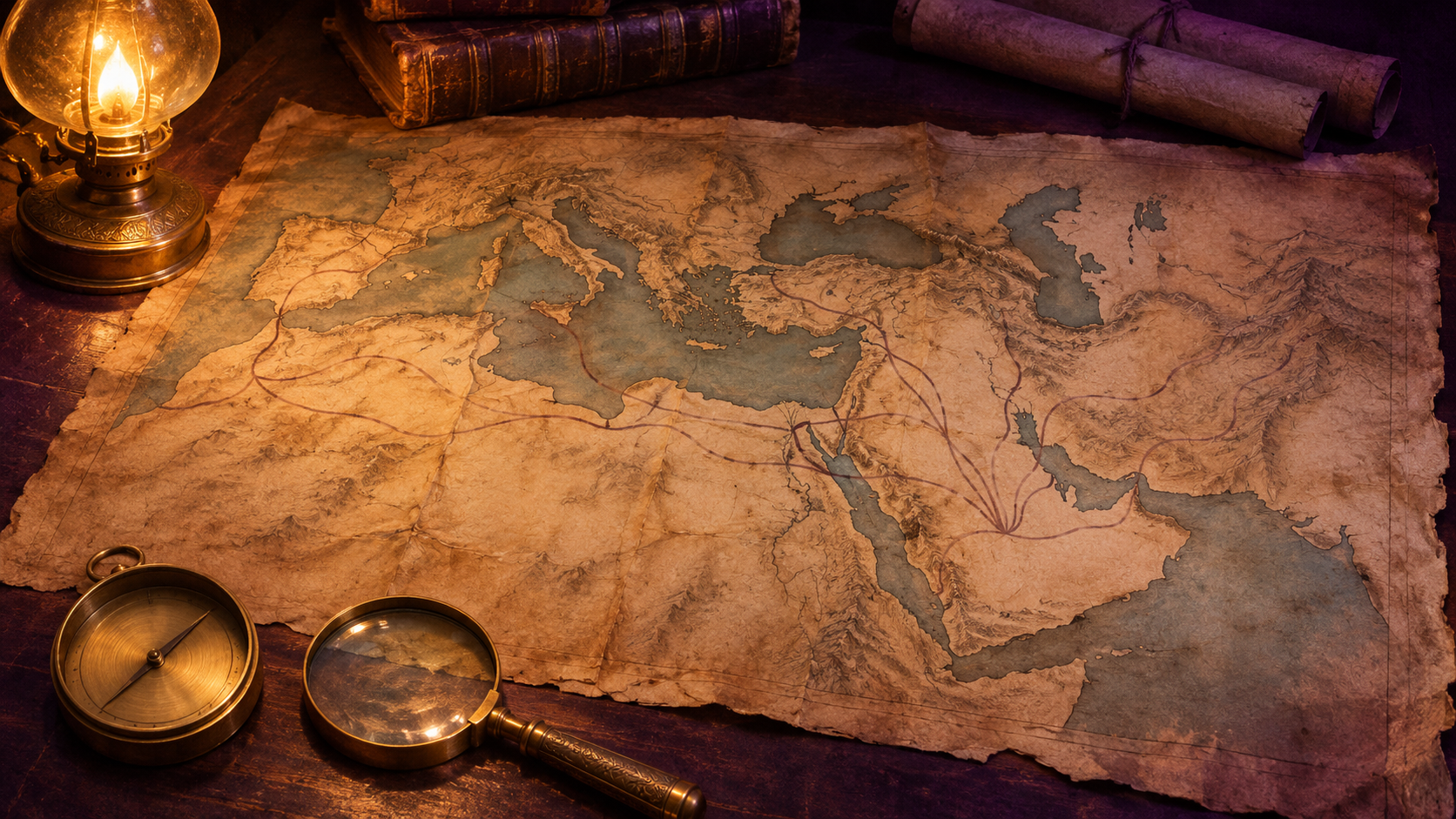
What happened after Muhammad’s death shows how naturally the law and the state carried forward. Within a century, the community that began in Medina ruled from Spain to Central Asia:
| Date (AD) | Event |
|---|---|
| 622 | Muhammad and his followers leave Mecca for Medina (the Hijra) |
| 624–627 | Badr, Uhud and the Trench, against the Quraysh of Mecca |
| 628 | Khaybar, the Jewish oasis north of Medina, is taken |
| 630 | Mecca surrenders; the expedition to Tabuk on the Byzantine frontier |
| 632 | Muhammad dies; most of Arabia is under Medina’s rule |
| 632–633 | The Ridda wars bring the Arabian tribes back under the caliph |
| 636–638 | Byzantine Syria falls (Yarmouk); Jerusalem surrenders |
| 636–651 | The Persian Empire is defeated and absorbed |
| 640–642 | Egypt is taken |
| 711 | Armies cross into Spain and reach the Indus |
| 732 | The advance into France is turned back near Tours |
| 751 | Abbasid forces meet the Chinese at Talas in Central Asia |
Through the Rashidun caliphs (632–661), the Umayyads (661–750) and the Abbasids after them, conquest and religious government went together. The Old Testament conquest ended at a border and was never repeated. The Islamic one had no border written into it, and it continued for as long as the state had strength.
Common arguments, weighed
“Muhammad only fought in self-defense”
The early battles with Mecca can fairly be called defensive. The later campaigns are harder to describe that way, and the classical jurists, who knew the sources best, did not describe them that way. A modern Muslim may sincerely hold the defensive reading. It is a reading many Muslims argue for today, not the position of the classical law.
“The later caliphs hijacked a peaceful faith”
The expansion did not begin generations later under corrupt rulers. It began within months of Muhammad’s death, under Abu Bakr and Umar, the closest companions of the Prophet, whom Sunni Muslims honor as the rightly guided caliphs. If they misunderstood the faith, it is hard to say who understood it. The historical record shows state expansion and religious government intertwined from the beginning.
“The Bible is just as violent”
On the page, some Old Testament passages are as severe as anything in any religion, and we will not pretend otherwise. The difference is not only in content. It is in scope and permanence: one set of commands named seven nations, forbade others, judged its own people by the same rule, and ended about three thousand years ago. The other produced a legal system meant to last. The question is not “Are there violent verses?” but “What were they for, and are they still in force?”
“What about the Crusades?”
They were real, and many atrocities were done in the name of Christ. But the crusaders could not point to a single word of Jesus or His apostles commanding them to take land for God. They had to reach back to Israel and misapply commands that had expired. A Muslim ruler who waged war to extend Islamic rule could cite the jurists of his own tradition. That is the structural difference: one is disobedience to the founder, the other had support in the classical law.
“Jihad only means inner struggle”
The word does carry that meaning, and many devout Muslims live it that way. But in the classical law books, the chapter on jihad is about war: who may be fought, how spoils are divided, how treaties are made. Both meanings are real. Pretending the second does not exist helps no one understand the history.
The two side by side
| Old Testament Israel | Classical Islam | |
|---|---|---|
| Who received the command | One nation, Israel, at one time | The Muslim community as a whole, without end date |
| Where | Fixed borders; Edom, Moab and Ammon expressly off limits | No fixed border; the world divided into the realm of Islam and the realm of war |
| Stated reason | Judgment on the specific sins of named nations | That religion be for God, and that unbelievers be brought under Islamic rule |
| When it ended | Around 1000 BC, with the land’s borders secured under David | Never closed in classical law; it remained a standing obligation |
| What followers do today | Christians and Jews do not claim these commands for themselves | Disputed among Muslims; classical law and modern reformers disagree |
The deeper difference
Underneath the history lies a difference about God Himself, and conversations between Christians and Muslims often stall here. We begin where we agree. There is one God: “Hear, O Israel: The LORD our God is one LORD” (Deuteronomy 6:4), and “to us there is but one God, the Father” (1 Corinthians 8:6). We also reject what the Qur’an rejects. The Qur’an pictures Jesus being asked whether He told people to take Him and His mother as gods beside God (Qur’an 5:116), and no Bible believer should defend such a thing.
The real gap is the Son. The Qur’an says of God, “He neither begets nor is born” (Qur’an 112:3). The Bible says “God so loved the world, that he gave his only begotten Son” (John 3:16). We do not mean anything physical by that, and the Qur’an is right to reject the crude idea of God taking a wife. We mean that the Son was brought forth from the Father before all things, and that God Himself gave what was dearest to Him.
That difference shapes how each faith spreads. A God Who gives His Son wins His enemies by dying for them: “thou wast slain, and hast redeemed us to God by thy blood” (Revelation 5:9). His followers are told, “Love your enemies” (Matthew 5:44), and warned that “he that killeth with the sword must be killed with the sword” (Revelation 13:10). Our letter to our Muslim friends takes up this question gently and at length.
Conclusion
Setting a verse from Joshua beside a verse from the Qur’an makes a striking post, but it compares apples to oranges. Ancient Israel received a bounded, temporary command, given for stated reasons, against named nations, in one land, applied with equal severity to Israel itself, and closed about a thousand years before Christ. Its larger purpose was to keep alive the people and the line through whom the Messiah would come. Early Islam produced a community that was a state from its first decade, a body of law that made expansion a standing duty, and an empire that grew without a border for a century.
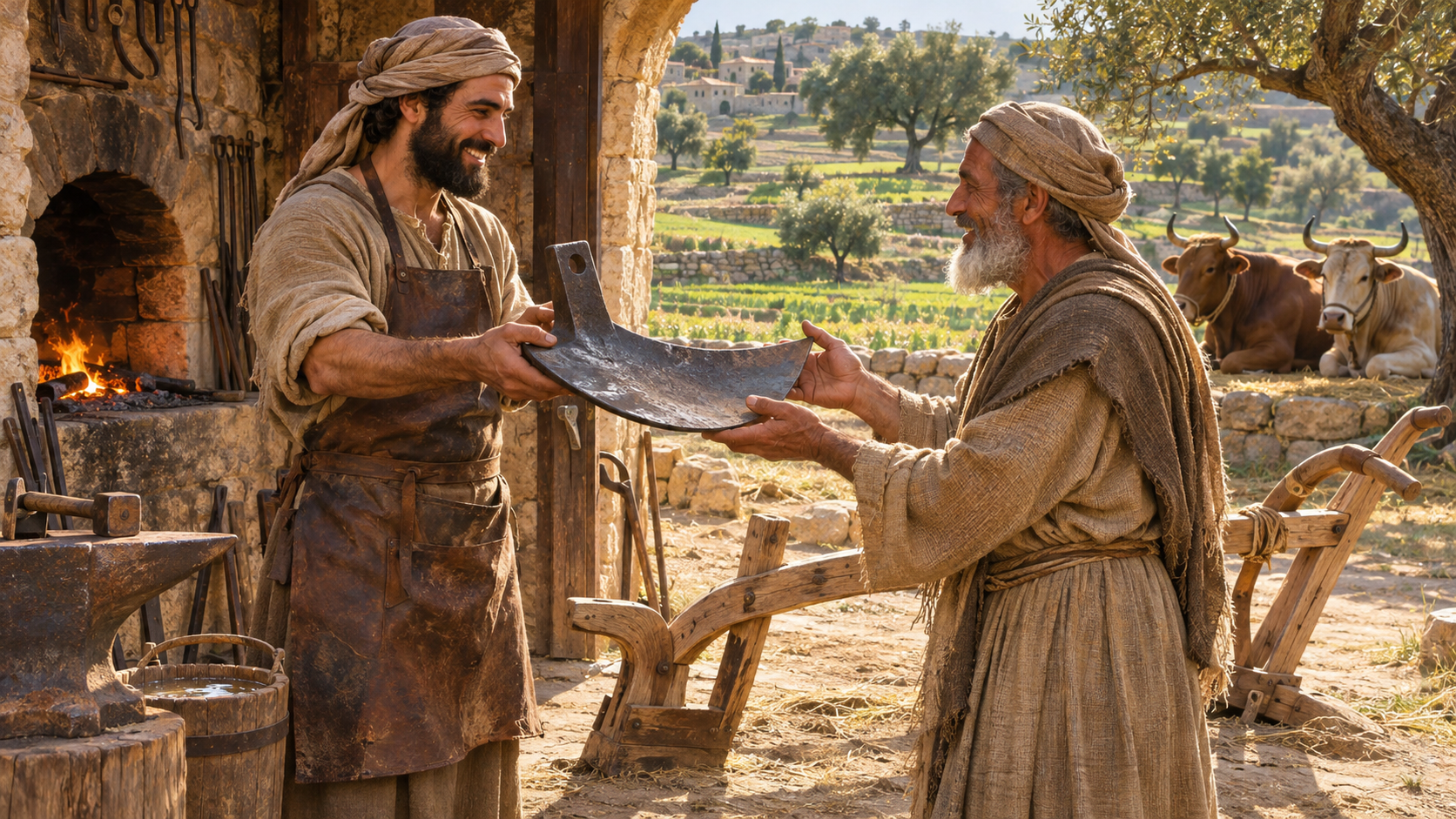
Seeing that difference is not a way of scoring points. Many Muslims today reject aggressive war and read their texts in a peaceable way, and we are glad of it. Christians, for their part, must own the times their own history betrayed Christ. But understanding the structures keeps everyone from the shallow conclusion that kind of comparison invites, that every faith is the same once you find a violent verse. The question that matters is the one the prophets looked forward to: who is the King Whose reign will finally end war? “They shall beat their swords into plowshares, and their spears into pruninghooks: nation shall not lift up sword against nation, neither shall they learn war any more” (Isaiah 2:4).
Further reading
For our Muslim friends
A Letter to Our Muslim Friends
One God, His Word and His Spirit, and the one question that divides us.
Canaan and Amalek
The Hard Passages
The conquest commands read in full, with what we can and cannot explain.
History and prophecy
Does Islam Come from Rome?
The claims about Islam’s origins, sorted into the documented and the contested.
The whole story
The Great Controversy
Why God wins hearts by revealing His character, never by compelling worship.