“Thy way, O God, is in the sanctuary”
Asaph, the singer David set over the music of God’s house, wrote a psalm out of a sleepless night. He had cried out, “Will the Lord cast off for ever?” — and then he remembered the works of God, and found his answer:
Thy way, O God, is in the sanctuary: who is so great a God as our God?
In another psalm the same man confessed that the prosperity of the wicked had nearly made him stumble. Nothing made sense — until he went somewhere:
When I thought to know this, it was too painful for me; Until I went into the sanctuary of God; then understood I their end.
That is the whole case for this sheet. The sanctuary is where God explains His way — how He saves sinners, how He judges, and how He ends sin. Few truths have been attacked as often, and few repay study as richly. Every common objection is here, answered briefly from Scripture, with the texts to open. Where an objection is genuinely hard, the answer says so.
The sanctuary at a glance
The pattern
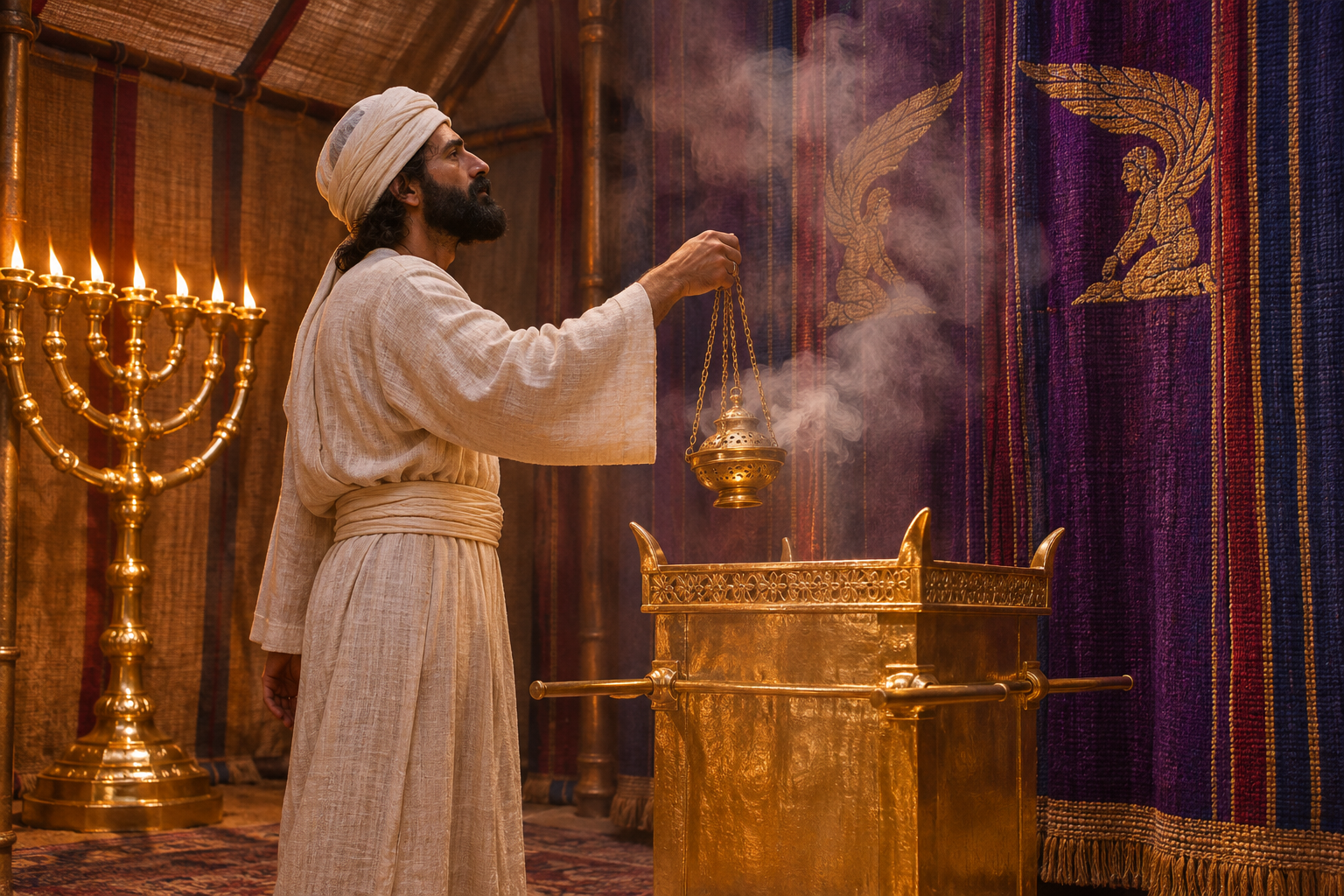
- God told Moses, “let them make me a sanctuary; that I may dwell among them,” built after the pattern shown in the mount (Exodus 25:8-9, 40).
- The earthly was “the example and shadow of heavenly things” — Christ ministers in “the true tabernacle, which the Lord pitched, and not man” (Hebrews 8:2, 5).
- Two services: the daily ministry of forgiveness, and the yearly Day of Atonement that cleansed the sanctuary (Leviticus 4; 16).
The prophecy
- “Unto two thousand and three hundred days; then shall the sanctuary be cleansed” (Daniel 8:14).
- Gabriel returns in Daniel 9 to explain the time: seventy weeks from the decree to restore Jerusalem to the Messiah (Daniel 9:21-27).
- From 457 B.C., 2300 years reach A.D. 1844 — the opening of the judgment-hour ministry (Revelation 14:7).
The High Priest
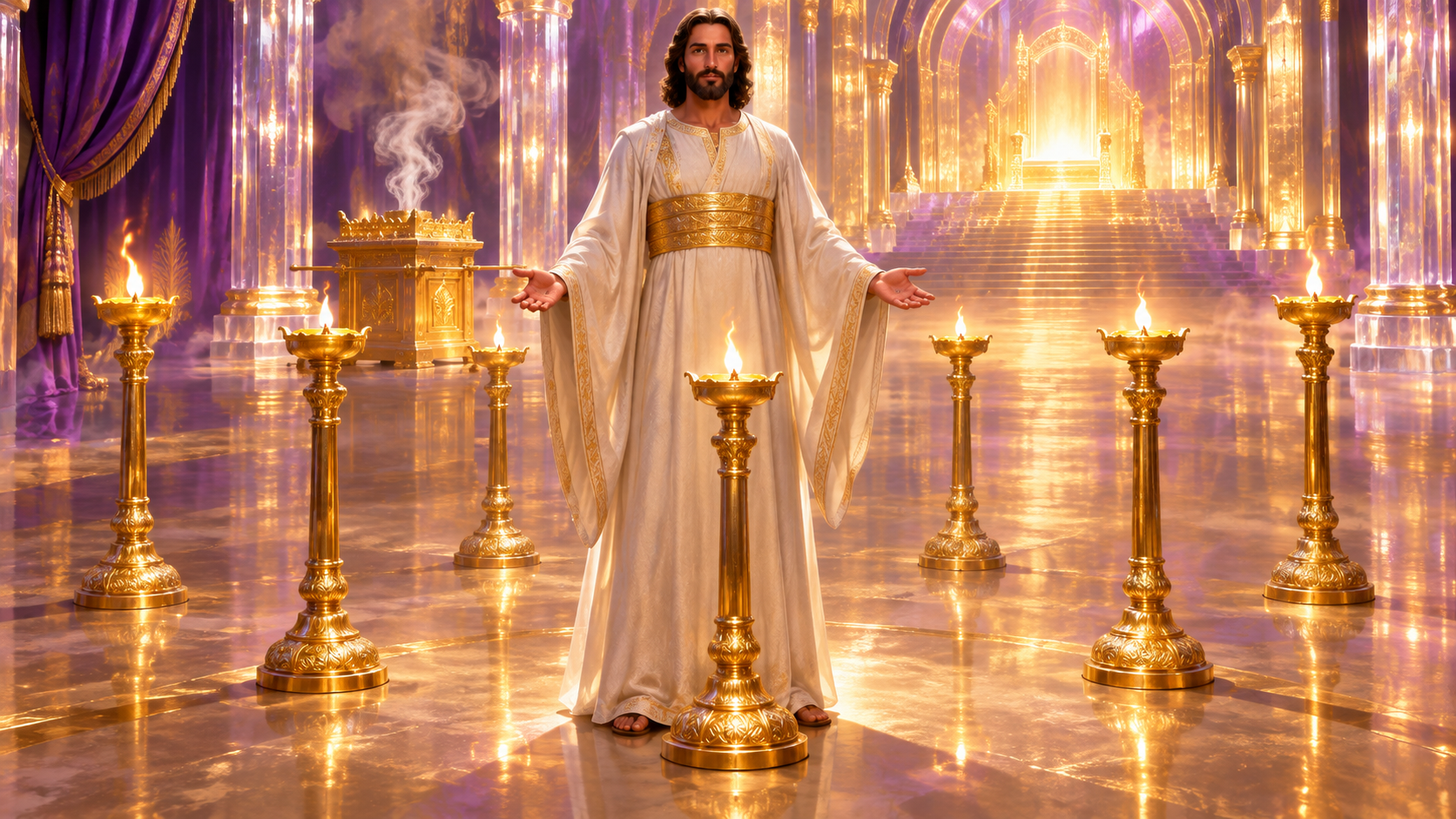
- “We have such an high priest, who is set on the right hand of the throne of the Majesty in the heavens” (Hebrews 8:1).
- “He ever liveth to make intercession for them” (Hebrews 7:25).
- In Daniel’s judgment the Son of man is brought before the Ancient of Days — the Father and the Son, and the verdict is “given to the saints” (Daniel 7:13, 22).
Why it matters
- It shows what Christ is doing for us now, not only what He did.
- It explains the judgment as good news for God’s people and the end of sin.
- It answered the disappointment of 1844 from Scripture, as Luke 24 answered the disciples’.
Find an answer fast
Part I · Daniel 8 & the 2300 days
Daniel 8 & the 2300 days · Objection 1
“The little horn of Daniel 8 is Antiochus Epiphanes.”
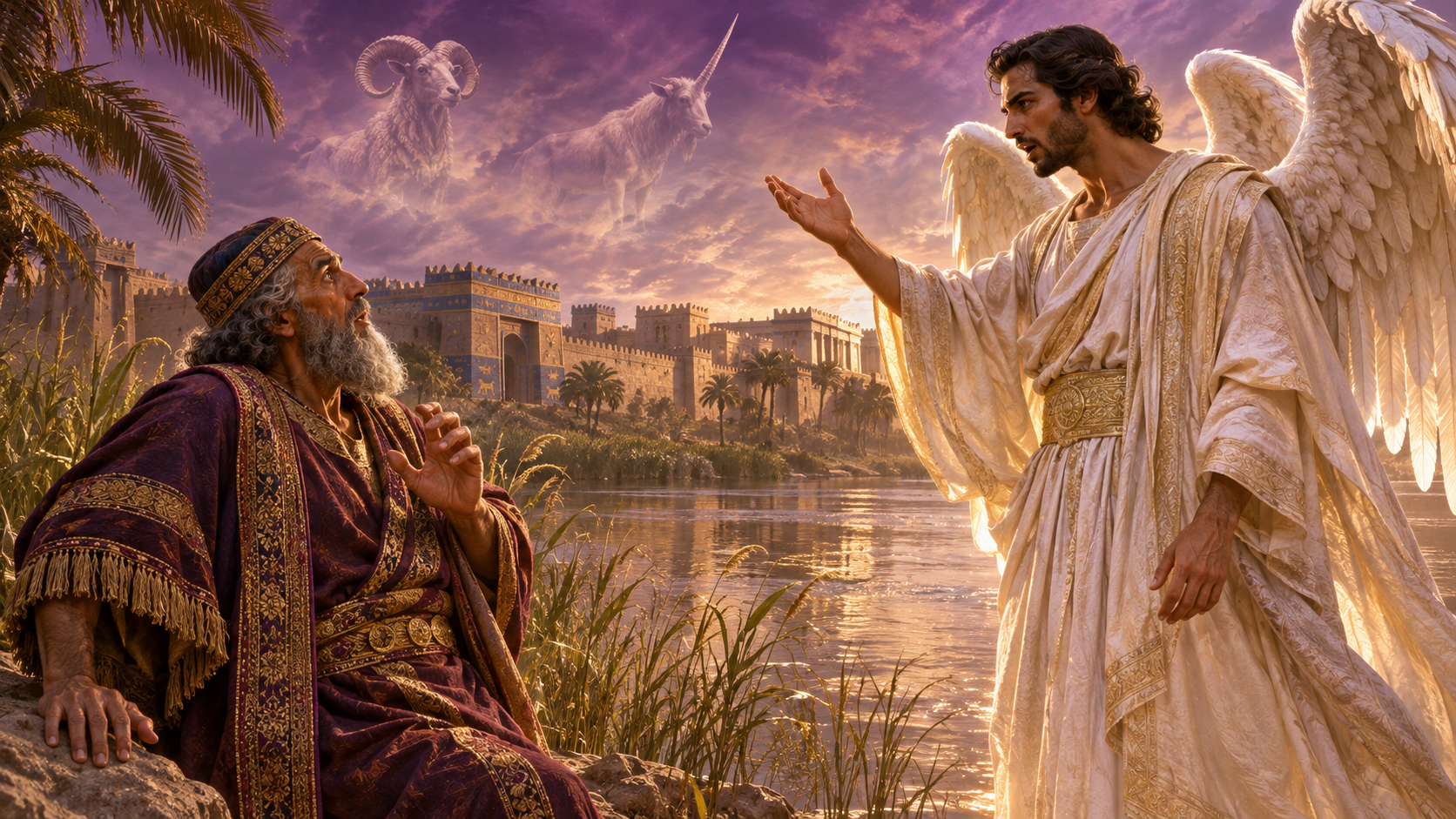
Watch the sizes. The ram (Persia) “became great” (v. 4); the goat (Greece) “waxed very great” (v. 8); the little horn “waxed exceeding great” (v. 9). Antiochus IV was a lesser Seleucid king, turned back from Egypt by a single Roman envoy — not greater than Alexander or Persia. Gabriel says the vision reaches “the time of the end” (vv. 17, 19) and is “for many days” (v. 26), and the horn “shall also stand up against the Prince of princes” (v. 25) — the power that would cut off the Messiah and destroy the city and sanctuary (Daniel 9:26). That is Rome, pagan and then papal.
Honesty: many modern scholars hold the Antiochus view. But the identification with Rome is not an Adventist invention; Protestant expositors such as Isaac Newton and Thomas Newton held it long before 1844.
Refs · Dan 8:4, 8-9, 17, 19, 23-26 · Dan 9:26
Daniel 8 & the 2300 days · Objection 2
“2300 evening-mornings means 1150 days — one evening and one morning sacrifice each.”
The Hebrew is one unbroken expression, “evening-morning,” the very language of creation: “the evening and the morning were the first day” (Genesis 1:5). An evening and a morning make one day, and Scripture never counts sacrifices as separate “evenings” and “mornings.” The oldest Greek translations render it plainly: 2300 days. And even 1150 days does not fit Antiochus, whose desecration of the temple lasted about three years and ten days.
Refs · Dan 8:14, 26 · Gen 1:5, 8 · Exod 29:38-42
Daniel 8 & the 2300 days · Objection 3
“The 2300 are literal days. The year-for-a-day principle is an Adventist invention.”
Start inside Daniel. The seventy “weeks” of chapter 9 only work as weeks of years — almost every school of interpretation counts them that way — so symbolic time in symbolic visions is established by Daniel itself. And the question in 8:13 asks how long “the vision” lasts — a vision that begins with the Persian ram. A span from Persia to “the time of the end” cannot be six literal years. God had already used a day for a year in symbolic judgment (Numbers 14:34; Ezekiel 4:6).
The principle is centuries older than Adventism: Jewish and Christian expositors used it for Daniel’s periods long before 1844. See side note 9 →
Refs · Dan 8:13 · Dan 9:24-27 · Num 14:34 · Ezek 4:6
Daniel 8 & the 2300 days · Objection 4
“Daniel 9 has nothing to do with Daniel 8.”
Gabriel was told, “make this man to understand the vision” (8:16), yet Daniel ended chapter 8 “astonished at the vision, but none understood it” (8:27). The only part left unexplained was the time — “the vision of the evening and the morning” (8:26). In chapter 9 the same Gabriel, “whom I had seen in the vision at the beginning,” returns: “I am now come forth to give thee skill and understanding … consider the vision” (9:21-23). He then gives a span of time — the seventy weeks — measured out of the longer one.
Refs · Dan 8:16, 26-27 · Dan 9:21-24
Daniel 8 & the 2300 days · Objection 5
“The sanctuary in Daniel 8 is the Jerusalem temple.”
The horn reaches up “even to the host of heaven” and against “the prince of the host,” casting down “the place of his sanctuary” (8:10-11) — and the Hebrew word for “place,” makon, is used of God’s dwelling in heaven: “hear thou in heaven thy dwelling place” (1 Kings 8:39). On any reading in years, when the 2300 end there is no temple in Jerusalem. The sanctuary in view is the one where Christ now ministers — “the true tabernacle, which the Lord pitched, and not man” (Hebrews 8:2).
Refs · Dan 8:10-11 · 1 Kgs 8:39, 43 · Heb 8:1-2
Part II · The dates
The dates · Objection 1
“Why start in 457 B.C.? The decree was Cyrus’s (538) or Nehemiah’s (444).”
Daniel names the starting point: “the going forth of the commandment to restore and to build Jerusalem” (9:25). Ezra counts the decrees of three kings as one commandment, completed under Artaxerxes (Ezra 6:14). Only Artaxerxes’ decree in his seventh year restored the city’s government — magistrates, judges, and the law (Ezra 7:25-26). Cyrus’s decree concerned the temple; Nehemiah’s later commission let him finish walls already under construction (Ezra 4:12). And the 444 scheme needs an artificial 360-day year to reach the Messiah; 457 needs only ordinary years.
Refs · Dan 9:25 · Ezra 6:14 · Ezra 7:11-26 · Ezra 4:12
The dates · Objection 2
“Artaxerxes’ seventh year was 458 B.C., not 457.”
Many reference books do say 458, counting the king’s years from spring to spring as the Persians did. But Nehemiah shows the Jews counted a king’s years from fall to fall: the month Chisleu (late in the year) and the following Nisan both fall in the same “twentieth year” (Nehemiah 1:1; 2:1). Counted that way, Ezra’s journey in the seventh year falls in the spring and summer of 457. The difference is one year of reckoning, not a broken prophecy.
Refs · Ezra 7:7-9 · Neh 1:1 · Neh 2:1
The dates · Objection 3
“The seventy weeks don’t land on A.D. 27, 31, and 34.”
From 457 B.C., 69 weeks (483 years, with no year zero) reach A.D. 27 — the anointing of the Messiah at His baptism, when He began to preach, “The time is fulfilled” (Mark 1:15). “In the midst of the week” He was cut off, and the sacrifices lost their meaning as the veil tore (Matthew 27:51). The week closed about A.D. 34, when the gospel went out from Jerusalem after Stephen’s death (Acts 8:1-4).
Honesty: the exact years are argued — some date the baptism to 28 and the cross to 30 or 33. But the prophecy lands on the Messiah in the right window, centuries in advance, and that is the point.
Refs · Dan 9:25-27 · Mark 1:15 · Luke 3:1, 21-23 · Matt 27:51 · Acts 8:1-4
The dates · Objection 4
“Miller set a date and was wrong — so the whole thing is discredited.”
The calculation was shared by many students of prophecy; the mistake was the event. Miller thought “the sanctuary” was the earth, to be cleansed by fire at Christ’s coming. The disciples made the same kind of mistake with Daniel 9: right time, wrong event — “we trusted that it had been he which should have redeemed Israel” (Luke 24:21). Revelation foretells a little book sweet in the mouth and bitter in the belly, followed by “Thou must prophesy again” (Revelation 10:9-11).
Refs · Luke 24:21 · Dan 8:14 · Rev 10:9-11 · Hab 2:3
The dates · Objection 5
“Jesus said no man knows the day or the hour.” (Matthew 24:36)
Agreed — and the sanctuary truth sets no date for the Second Coming. 1844 marks the end of a prophetic time period and the start of a phase of Christ’s ministry, not the day of His return. After the prophetic times run out, Revelation says “there should be time no longer” (10:6), and those who hold the sanctuary truth have set no date since.
Refs · Matt 24:36 · Rev 10:6
The dates · Objection 6
“October 22, 1844 wasn’t even the Day of Atonement on the Jewish calendar.”
The year 1844 rests on the prophecy; the day is secondary. The rabbinic calendar of 1844, with its later rules, placed Yom Kippur in September. The Millerites followed the older Karaite reckoning, which begins the year from the ripening barley as Moses did (Exodus 12:2), and which placed the tenth day of the seventh month on October 22. Either way, the 2300 years end in 1844.
Refs · Lev 23:27 · Exod 12:2
Part III · “Cleansed” & which sanctuary
“Cleansed” & which sanctuary · Objection 1
“The Hebrew word means ‘justified’ or ‘restored,’ not ‘cleansed’ — it has nothing to do with the Day of Atonement.”
The word, nitsdaq, is used only here, and its range is wide: put right, restored, vindicated, justified. Standard lexicons give “put right, in a right condition.” The oldest translators — the Greek and the Latin — rendered it “cleansed.” And the verse answers a question about a sanctuary trodden down and defiled (8:13). A sanctuary put right after defilement is cleansed, restored, and vindicated all at once — the very themes of the Day of Atonement, when the sanctuary was cleansed “from all your sins before the LORD” (Leviticus 16:30).
Honesty: Leviticus 16 uses a different Hebrew word for “cleanse.” The link from Daniel 8:14 to the Day of Atonement rests on the shared themes — sanctuary, sin, judgment, vindication — and on Daniel 7, which describes the same judgment.
Refs · Dan 8:13-14 · Lev 16:16, 19, 30 · Job 4:17
“Cleansed” & which sanctuary · Objection 2
“There is no sanctuary in heaven that needs cleansing — heaven isn’t dirty.”
Hebrews says it outright: “It was therefore necessary that the patterns of things in the heavens should be purified with these; but the heavenly things themselves with better sacrifices than these” (Hebrews 9:23). The earthly sanctuary was not dirty with mud but with the record of confessed sin brought into it by blood. The heavenly holds the record of sins forgiven through Christ’s blood, and its cleansing is the final removal of that record.
Refs · Heb 9:22-23 · Lev 16:16 · Rev 11:19
Part IV · Hebrews
Hebrews · Objection 1
“Christ went ‘within the veil’ at His ascension — the Most Holy Place, in A.D. 31.” (Hebrews 6:19-20)
This is the strongest objection, and it deserves an honest answer. “Within the veil” most naturally means the inner veil — the very presence of God. And Christ did enter God’s presence at His ascension: He “sat down on the right hand of the Majesty on high” (Hebrews 1:3).
But in the Old Testament the inner room was entered at two different occasions: at the sanctuary’s dedication, when it and all its furniture were anointed (Exodus 40:9; Numbers 7:1), and on the yearly Day of Atonement. Christ’s entry at His ascension matches the first — the inauguration of the heavenly sanctuary, which Daniel foretold as “to anoint the most Holy” (Daniel 9:24). Hebrews proves the heavenly sanctuary and Christ’s priesthood; it does not say His Day-of-Atonement work was finished then. Daniel supplies when the judgment begins.
Refs · Heb 6:19-20 · Heb 1:3 · Exod 40:1-9 · Num 7:1 · Dan 9:24 · Dan 7:9-13
Hebrews · Objection 2
“Hebrews says ‘the holiest’ — Christ entered the Most Holy Place, not the first room.” (Hebrews 9:12; 10:19)
The Greek phrase Hebrews uses, ta hagia, ordinarily means the sanctuary as a whole: in the Greek Old Testament the large majority of its uses for the tabernacle mean the whole sanctuary, not one room. So “entered in once into the holy place” (9:12) means Christ entered the heavenly sanctuary. When Hebrews wants a room, it names it — the first is “the sanctuary” (9:2) and the second “the Holiest of all” (9:3). The verses decide where He ministers, not which apartment timeline to draw.
Refs · Heb 8:2 · Heb 9:2-3, 8, 12, 24-25 · Heb 10:19
Hebrews · Objection 3
“Christ entered ‘heaven itself’ — the heavenly sanctuary is only a metaphor.” (Hebrews 9:24)
“Heaven itself” is set against “the holy places made with hands” — it locates the true sanctuary in heaven; it does not dissolve it. Moses was shown a pattern of something real (Exodus 25:40; Hebrews 8:5), and John later saw it: “the temple of God was opened in heaven, and there was seen in his temple the ark of his testament” (Revelation 11:19), with a golden altar before the throne (8:3).
Refs · Heb 8:2, 5 · Heb 9:24 · Exod 25:9, 40 · Rev 11:19 · Rev 8:3
Hebrews · Objection 4
“Two apartments in heaven? God can’t be confined to rooms.”
Solomon held both truths in one prayer: “the heaven and heaven of heavens cannot contain thee” — and “hear thou in heaven thy dwelling place” (1 Kings 8:27, 30). God is everywhere, and He also has a throne. The point is not cubits and curtains but two phases of Christ’s ministry, revealed in Holy Place and Most Holy Place imagery — and Revelation shows both: lampstands and lamps before the throne (1:12-13; 4:5), and the ark in the temple (11:19).
Refs · 1 Kgs 8:27, 30 · Ps 11:4 · Rev 1:12-13 · Rev 4:5 · Rev 11:19
Hebrews · Objection 5
“Christ sat down at God’s right hand — His work is finished.” (Hebrews 10:12)
His sacrifice is finished — “one sacrifice for sins for ever” (10:12). But sitting down is a royal and priestly enthronement, not retirement. The same letter calls the seated Christ “A minister of the sanctuary, and of the true tabernacle” (8:2), who “ever liveth to make intercession” (7:25). Zechariah foresaw it: “he shall be a priest upon his throne” (Zechariah 6:13).
Refs · Heb 10:12-13 · Heb 8:1-2 · Heb 7:25 · Zech 6:13 · Ps 110:1, 4
Hebrews · Objection 6
“Hebrews leaves no room for a second phase of ministry.”
Hebrews uses the Day of Atonement mainly to contrast one perfect sacrifice with many imperfect ones — and that contrast stands. But Hebrews still looks ahead to judgment: “The Lord shall judge his people” (10:30), and Christ “shall … appear the second time” (9:28). Hebrews proves the heavenly sanctuary and the Priest; Daniel gives the timing of the judgment phase.
Refs · Heb 9:27-28 · Heb 10:30 · Dan 7:9-10, 22
Part V · The atonement & the cross
The atonement & the cross · Objection 1
“Jesus said ‘It is finished’ — the atonement was completed at the cross.” (John 19:30)
The sacrifice was complete, once for all, and nothing can be added to it: “by one offering he hath perfected for ever them that are sanctified” (Hebrews 10:14). In the sanctuary, though, atonement included two steps: the death of the victim, and the priest’s ministry of its blood (Leviticus 4:4-7). Christ’s priesthood does not add to the cross; it applies the cross. “If any man sin, we have an advocate with the Father, Jesus Christ the righteous” (1 John 2:1).
Refs · John 19:30 · Heb 9:12, 26 · Heb 10:14 · Lev 4:4-7 · 1 John 2:1
The atonement & the cross · Objection 2
“Christ fulfilled the Day of Atonement at the cross.”
He is the Lord’s goat; His blood is the only thing that cleanses. But the feasts of Leviticus 23 were fulfilled in order. Passover was fulfilled at the cross (“Christ our passover is sacrificed for us,” 1 Corinthians 5:7), the firstfruits at the resurrection (15:20), and Pentecost fifty days later (Acts 2:1). The Day of Atonement comes in the seventh month, after the spring feasts — its fulfillment was still ahead.
Refs · Lev 23 · 1 Cor 5:7 · 1 Cor 15:20 · Acts 2:1
The atonement & the cross · Objection 3
“Sins are blotted out at conversion, not at some later judgment.” (Acts 3:19)
Forgiveness is real and immediate. Yet Scripture treats the record as still open after forgiveness: the forgiven servant who refused to forgive had his whole debt reinstated (Matthew 18:32-34), and the righteous man who turns away has his righteousness “not be mentioned” (Ezekiel 18:24). Peter ties the blotting out to the Lord’s presence and “the times of restitution of all things” (Acts 3:21), and Christ promises, “I will not blot out his name out of the book of life” (Revelation 3:5).
Refs · Acts 3:19-21 · Matt 18:23-35 · Ezek 18:24 · Rev 3:5
Part VI · The judgment
The judgment · Objection 1
“There is no text for a judgment before the Second Coming.”
Daniel 7 shows it: thrones are set, “the judgment was set, and the books were opened” (v. 10) while the little horn is still speaking — and only afterward is the kingdom given to the saints (vv. 22, 26-27). Revelation 14 has an angel announce “the hour of his judgment is come” (v. 7) while the everlasting gospel is still being preached, before the harvest of the earth (vv. 14-16). When Christ comes, His reward is already with Him (Revelation 22:12) — the cases have been decided. Jesus pictured the king inspecting the guests before the feast (Matthew 22:11-13), and spoke of those “accounted worthy” to obtain the resurrection (Luke 20:35).
Refs · Dan 7:9-10, 22, 26-27 · Rev 14:6-7 · Rev 22:12 · Matt 22:11-13 · Luke 20:35
The judgment · Objection 2
“God already knows everything — why would He examine records?”
The judgment is not for God’s information. It is an open judgment before “thousand thousands” of heaven’s beings (Daniel 7:10), so that God’s justice in saving sinners is seen and confessed by all. God has always judged in the open: “I will go down now, and see” (Genesis 18:21) — not because He did not know, but so that His ways would be shown to be right. We are made “a spectacle unto the world, and to angels” (1 Corinthians 4:9).
But before this can be accomplished, there must be an examination of the books of record to determine who, through repentance of sin and faith in Christ, are entitled to the benefits of His atonement. The cleansing of the sanctuary therefore involves a work of investigation—a work of judgment.
Refs · Gen 18:21 · Dan 7:10 · 1 Cor 4:9 · Eph 3:10 · Ps 51:4
The judgment · Objection 3
“An investigative judgment destroys assurance of salvation.”
Read how Daniel ends it: “judgment was given to the saints of the most High” (7:22) — judgment in their favor. The believer’s Advocate is the Judge’s own Son (1 John 2:1). Zechariah 3 shows the scene: Joshua the high priest stands in filthy garments, Satan accuses, and the Lord rebukes the accuser and clothes Joshua in clean raiment. “Who shall lay any thing to the charge of God’s elect? It is God that justifieth” (Romans 8:33). Some older preaching made the judgment frightening; the Bible makes it good news.
Refs · Dan 7:22 · Zech 3:1-5 · 1 John 2:1 · Rom 8:33-34 · John 5:24
The judgment · Objection 4
“Daniel 7 and Revelation 14:7 are just the general judgment at the end.”
Daniel’s court sits while the horn is still speaking great words (7:11), and before the kingdom is given. Revelation 14:7 announces the judgment hour to people still living, with the gospel still going to “every nation, and kindred, and tongue, and people” (v. 6). A judgment announced as a reason to fear God and give Him glory now must be under way before the end.
Refs · Dan 7:11 · Rev 14:6-7, 14-16
Part VII · The scapegoat
The scapegoat · Objection 1
“Making the scapegoat Satan turns Satan into a sin-bearer — a co-saviour.”
Look at the order in Leviticus 16. All the cleansing is done by the blood of the Lord’s goat (vv. 15-19). Only “when he hath made an end of reconciling the holy place” is the live goat brought (v. 20). It is never slain, sheds no blood, and is not an offering. It atones for no one. It carries away, into the wilderness, the guilt of the sins its master tempted others to commit — the instigator receives what he caused, after atonement is complete. Christ alone bears our sins; the scapegoat pictures the one who will finally bear his own. And Revelation shows Satan bound in a desolate place (20:1-3).
Refs · Lev 16:8-10, 15-22 · Rev 20:1-3
The scapegoat · Objection 2
“‘Azazel’ just means ‘removal’ or a place — not a person.”
The two lots are parallel: “one lot for the LORD, and the other lot for the scapegoat” — in Hebrew, la-Azazel, “for Azazel” (Leviticus 16:8). A lot “for the LORD” set opposite a lot “for Azazel” points to a personal figure opposite the Lord. Ancient Jewish writers read Azazel as a fallen spirit, and many commentators outside Adventism agree. The meaning of the name is debated; the parallel is not.
Refs · Lev 16:8 · Lev 17:7
Part VIII · History & 1844
History & 1844 · Question 1
“The doctrine was invented after 1844 to save face.”
The charge is famous — a critic once called it “the most colossal, psychological, face-saving phenomenon in religious history” (D. G. Barnhouse, Eternity, Sept. 1956, as reported). But its parts are older than the disappointment: the year-for-a-day principle (side note 9), the heavenly sanctuary (Hebrews), and the judgment of Daniel 7. What was new after 1844 was the understanding of the event — reached by months of Bible study, just as the disciples understood the cross only after Christ opened the Scriptures to them (Luke 24:27). See side note 9 →
Refs · Eternity, Sept. 1956 · Luke 24:21-27 · Rev 10:9-11
History & 1844 · Question 2
“It all came from Hiram Edson’s vision in a cornfield.”
Edson’s account of what he saw on October 23, 1844 survives only in an undated, damaged manuscript written years later; at most it is a tradition, and nothing rests on it. What followed was Bible study. O. R. L. Crosier published the result in a long exposition of Leviticus and Hebrews in the Day-Star Extra of February 7, 1846:
We see that the Sanctuary of the new covenant is not on earth, but in heaven.
Refs · Edson manuscript (undated) · Day-Star Extra, Feb. 7, 1846
History & 1844 · Question 3
“It rests on Ellen White — she endorsed Crosier in vision.”
The Lord shew me in vision, more than one year ago, that Brother Crosier had the true light, on the cleansing of the Sanctuary, &c; and that it was his will, that Brother C. should write out the view which he gave us in the Day-Star, Extra, February 7, 1846.
The endorsement confirmed a Bible study; it did not create one. The case stands on Leviticus, Daniel, and Hebrews, and every point on this sheet is argued from Scripture. That Crosier later left the Sabbath does not make his study of Leviticus wrong.
Refs · A Word to the “Little Flock” (1847), p. 12
History & 1844 · Question 4
“The early Adventists believed probation closed in 1844 — the ‘shut door.’”
Some did, for several years after 1844, and that is admitted plainly. The view was abandoned as they saw the “open door, and no man can shut it” (Revelation 3:8). What remained was the heart of the matter: a change in Christ’s ministry in heaven, not the end of mercy on earth. A mistaken inference corrected by Scripture is growth, not fraud.
Refs · Rev 3:7-8
History & 1844 · Question 5
“Even Adventist scholars rejected it — remember Glacier View.”
In 1980 Desmond Ford wrote a 991-page manuscript, “Daniel 8:14, the Day of Atonement, and the Investigative Judgment,” concluding that “the Bible does not teach an investigative judgment as we proclaim it” — though he still affirmed “the eschatological cleansing of the sanctuary.” The scholars who studied it at Glacier View answered:
Our conviction that the end of the prophetic period of 2300 days in 1844 marks the beginning of a work of judgment in heaven is supported by the parallelism of Daniel 8 with Daniel 7…
The debate produced years of careful exegesis in response. Disagreement among scholars is not a verdict; the texts are.
Refs · Spectrum 11:2 (Nov. 1980)
History & 1844 · Question 6
“Why do Adventists make so much of this?”
Because it explains what Christ is doing now. Ellen White put it this way:
The scripture which above all others had been both the foundation and the central pillar of the advent faith was the declaration: ‘Unto two thousand and three hundred days; then shall the sanctuary be cleansed.’
The subject of the sanctuary was the key which unlocked the mystery of the disappointment of 1844.
The intercession of Christ in man’s behalf in the sanctuary above is as essential to the plan of salvation as was His death upon the cross.
The last line does not mean the cross was insufficient; it means the cross is applied — the crucified Lord is also our living Priest (Hebrews 7:25).
Refs · GC 409, 423, 489
Part IX · Side notes worth having ready
Side note · 1
“Sanctuary” appears 142 times in the King James Bible — only 4 in the New Testament, all in Hebrews.
Daniel uses it six times, the Psalms nineteen. In the New Testament the word belongs to one book — the book that explains Christ’s priesthood — and there it is “the true tabernacle, which the Lord pitched, and not man” (Hebrews 8:2).
Refs · Heb 8:2 · Heb 9:1-2 · Heb 13:11 · Dan 8:11-14
Side note · 2
The sanctuary was built from a pattern Moses was shown.
“And look that thou make them after their pattern, which was shewed thee in the mount” (Exodus 25:40). Hebrews quotes it to show the earthly was a copy of a heavenly original (8:5). David received the plan of the temple the same way: “the LORD made me understand in writing by his hand upon me, even all the works of this pattern” (1 Chronicles 28:19).
Refs · Exod 25:8-9, 40 · Heb 8:5 · 1 Chr 28:19
Side note · 3
The Psalms place God’s sanctuary in heaven.
“For he hath looked down from the height of his sanctuary; from heaven did the LORD behold the earth” (Psalm 102:19). “The LORD is in his holy temple, the LORD’s throne is in heaven” (Psalm 11:4).
Refs · Ps 102:19 · Ps 11:4 · Hab 2:20
Side note · 4
John saw the ark in heaven’s temple — and the temple closed at the end.
“And the temple of God was opened in heaven, and there was seen in his temple the ark of his testament” (Revelation 11:19). Later the temple fills with smoke, “and no man was able to enter into the temple, till the seven plagues of the seven angels were fulfilled” (15:8) — the close of intercession before the end.
Refs · Rev 11:19 · Rev 15:5-8
Side note · 5
The oldest translations read Daniel 8:14 as “days” and “cleansed.”
The Greek translation renders the time plainly as 2300 days, and both the Greek and the Latin read the sanctuary as cleansed — the way the King James renders it today.
Refs · Dan 8:14 (Greek, Latin)
Side note · 6
In Daniel’s judgment scene there are two divine Beings — the Father and the Son.
“I beheld till the thrones were cast down, and the Ancient of days did sit” — then “one like the Son of man came with the clouds of heaven, and came to the Ancient of days, and they brought him near before him” (Daniel 7:9, 13). The Son comes before the Father to receive the kingdom. The judgment is the Father’s court, with His Son as our Advocate.
Refs · Dan 7:9-10, 13-14
Side note · 7
Jewish tradition has long linked these holy days with judgment and opened books.
…on New Year’s Day all that come into the world pass before him like legions of soldiers…
Three books are opened on Rosh HaShana: one of wholly wicked people, and one of wholly righteous people, and one of middling people.
The undecided, the Talmud says, wait in suspense until Yom Kippur. The Day of Atonement has been a day of judgment in Jewish memory for centuries.
Refs · Mishnah Rosh Hashanah 1:2 · Talmud Rosh Hashanah 16b
Side note · 8
The disciples had a great disappointment too — right prophecy, wrong event.
“But we trusted that it had been he which should have redeemed Israel” (Luke 24:21). Jesus did not tell them prophecy had failed; “beginning at Moses and all the prophets, he expounded unto them in all the scriptures the things concerning himself” (v. 27).
Refs · Luke 24:21, 25-27
Side note · 9
The year-for-a-day principle was held long before 1844 — even by Miller’s critics.
The Sanctuary and Host were trampled under foot 2300 days; and in Daniel’s Prophecies days are put for years.
These two thousand and three hundred days denote the whole time from the beginning of the vision to the cleansing of the sanctuary.
In taking a day as the prophetical term for a year, I believe you are sustained by the soundest exegesis, as well as fortified by the high names of Mede, Sir Isaac Newton, Bishop Newton, Kirby, Scott, Keith, and a host of others…
Bush opposed Miller’s conclusion, and wrote, “Your error, as I apprehend, lies in another direction than your chronology” — which is exactly where the error lay.
Refs · I. Newton (1733) · T. Newton · G. Bush (1844)
Side note · 10
Zechariah 3 is a picture of the judgment — and it ends in clean robes.
Joshua the high priest stands before the angel of the LORD in filthy garments, and Satan at his right hand to resist him. “The LORD rebuke thee, O Satan” — and then, “Take away the filthy garments from him … Behold, I have caused thine iniquity to pass from thee, and I will clothe thee with change of raiment” (Zechariah 3:2, 4).
Refs · Zech 3:1-5
A pastoral note
The sanctuary is not a chart to win arguments with; it is a picture of the heart of God. It shows a Saviour who died once for all, who lives to intercede, who stands as our Advocate in the judgment, and who will one day remove sin and its author forever. Share it the way Asaph found it — as the answer to the pain that made no sense until he went into the sanctuary of God.
Seeing then that we have a great high priest, that is passed into the heavens, Jesus the Son of God, let us hold fast our profession. … Let us therefore come boldly unto the throne of grace, that we may obtain mercy, and find grace to help in time of need.